Chapter VI
Other early settlers of Lewis township were Lewis, Elisha, Joseph and David Puckett, all brothers. They came from North Carolina, some of them as early as 1817. The first Puckett settlement was in Southern Vigo county but by the year of 1830 several of them lived just across the line from Jasonville in Lewis township. David Puckett, grandfather of our fellow townsmen, George and Grover, was one of the founders of the Oak Grove Church which later became the First Methodist Church of Jasonville. I believe we can safely assume that all the Pucketts of this section are direct descendants of the above named brothers. The oldest recorded burial is Jemima Puckett, February 4, 1854.
In the year of 1822, James Briley, a native of South Carolina, who had first stopped in Harrison County, Indiana, moved into Lewis township. His wife rode a pony which carried all the household possessions they brought, Briley trudged alongside the entire distance and led their cow. These constituted the greater part of their earthly possessions. He afterward became a prominent stock dealer and was, for a number of years, one of the leading business men of the township. His son, Dr. Absalom Briley practiced medicine as a resident of Jasonville and was one of the town�s early postmasters.
Ed Butler and family came to Wright township at an early date and built a cabin in the Southeast quarter of the Northeast quarter 4-8-7 along what is now Griffin street, East of Meridian. It is reported he lived to the extraordinary age of 106 and could perform an ordinary day�s work up to a very few years before his death. Our fellow citizens Joe Kirkham and Goldia Saucerman are his great grandchildren.
Philbert Wright located Southwest of Jasonville in 1823 and built a cabin in the vicinity we know as Possum Hollow. He was a grandfather of John Fry�s mother, hence John�s great grandfather. He later had extensive real estate in the township. One hundred and five years ago, 1853, he sold Jason Rogers a tract of 40 acres for the sum of $130. The present boundaries of this tract, one fourth mile in each dimension are as follows: Northern boundary Main street, Western Park Ave., Southern Fulton Street and Eastern Meridian Street. Here we find land, that is now the heart of the city, selling for $3.25 an acre only five years before the town was first platted.
The Mahlon Neal family settled in Lewis Township in 1842, a part of the family later coming into Jasonville. They built their log house in the Southwest quarter of the Northwest of the section 33, Lewis. Township, at the point on the est side of the North Park Avenue road where the Kramer residence now stands. The writer observed part of the understructure of this house a few years ago, huge white oak timbers morticed, and fastened with wooden pins. Mahlon Neal was twice married and there were eleven children by the first marriage and three by the second. Among the sons were James B. and Albert, both long time residents of Jasonville and fathers of our townsmen Watson Neal and Charles Neal, respectively. Another son Henry T. was in the Union army as was James B. At the close of the Civil War Henry T. came to Jasonville and in partnership with his father and brother operated in general store until 1871. In 1879 he was elected Greene County Treasurer and re-elected in 1881. Now, read the following carefully before you contradict it. Henry T. Neal, 77 years ago, was the last Republican from Jasonville as it was then, or as it is now, elected to a full time court house office. Ben McLaughlin and Enos A. Wood were elected coroner and T.C. O�Conner was elected Representative but neither are full time or court house offices. It was a long dry spell for Jasonville Democrats before Clarence Crow was elected county treasurer. John Moore was elected treasurer some years ago but at the time he was a resident of Bloomfield. I leave it to my Democratic brethren to figure out, how long it was B.C. (Before Crow) that they had a Jasonville Democrat in an elective court house office.
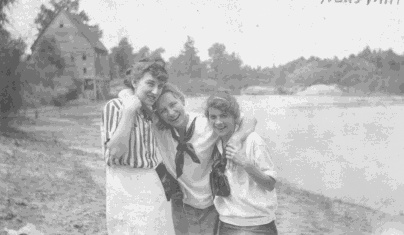
This Neal family played a prominent part in the founding of Union Church and its early history. For several years they operated Neal�s Mill which was the largest of the early day mills of this vicinity. The grounds at the mill became the most frequented place along Eel River. For many years after the mill was abandoned many families pitched tents and camped in the beautiful wooded area along the banks of the river. The writer with fifteen or twenty other young men camped there for a week in 1911, forty seven years ago. The whole surrounding country used the area throughout the summer for baptizing, church picnics, family reunions and like gatherings. Neal�s Mill was such a popular place and afforded so much pleasure to so many people I cannot resist a bit of humor that was spoken so long ago. The mill was in ruins before the time when the nearby bridge across the river was destroyed. The county commissioners proposed to build the bridge farther down the river, which they did and where it now stands. The mill dam remained in tact but the mill was a shambles. However the owner of the land where the mill stood sought to enjoin the commissioner from moving the road away from the mill on the grounds of injury to the milling business. It was in this trial that the beloved John �Honest John� Rawley, later Judge Rawley, quipped, �While I will admit there is a dam there by a mill site, there is no mill there by the dam site.� |