Jasonian Forces
Jasonian Forces
In the micronational
world, war loses most of it's meaning, but it is still something to be
avoided at all costs. Although are main belief is that of peace, we must
still have a trained military in order to prevent our dreams from being
destroyed by those who wish it so.
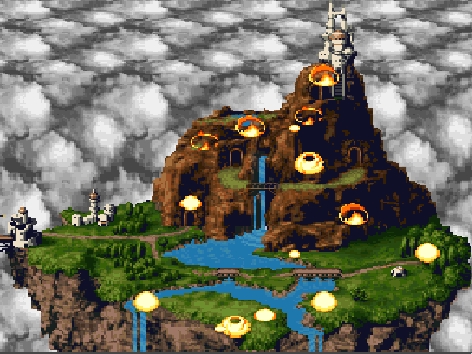
Aircraft are our main offense. Since land and sea units can do little against us but attempt to smash away our landscape, (which has been reinforced to prevent erosion, and also prevents direct bombardment) they can still attack us from the sky. That is why our unique military units have been created.
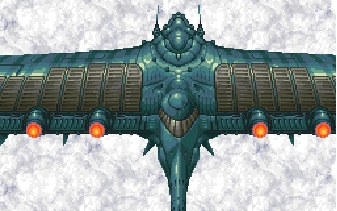
These shuttles
are large, and there is only a bit of space set aside for passenger transportation.
The rest was sometimes used as cargo holds, but this one shuttle, Blackbird
1, was modified. Instead of empty space, it now contains an entire working
command center. From there, the Flying Islands of Jasonia can be effectively
managed. Also, over thirty concealed turrets were added on the wings. Two
forward heavy laser cannons were outfitted on the front and disguised as
radio equipment. In short, there is no way to tell the Blackbird 1 from
any of our other normal shuttles.
Blackbird-class heavy assault jet production information:
Amount of Blackbird-class heavy
assault jets being produced: 0
Amount finished: 15
Amount destroyed: 0
Amount disabled/being repaired/being
tested: 0
Amount of Blackbird-class heavy
assault jets available: 15
Blackbird-class heavy assault jet tactical information:
Forward hyperlaser cannons: 2
Adjustable heavylaser turrets:
30
Bombardment capability: maximum
15 bombs/minute, 120 heavylaser blasts/minute
Special weapons:
Armor: Heavy alloy armor, 3 feet
Engines: 6 heavy 'skylaunch' propulsion
systems (3 on each wing)
Shielding:
Power Source: Energy Capacitors
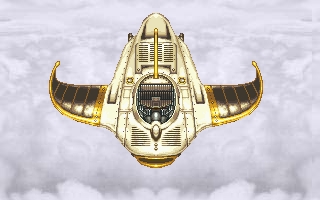
The main secret of the Epoch-class fighter is it's speed. A scram jet was installed on every one of them to give it a boost. When activated, the scram jet fires a powerful blast, propelling the fighter forward. This speed can save the fighter from a loosing battle. The jet can only be activated for about 5 seconds before overheating.
One secret use
of the scram jet is to utilize the 'Epoch'-class fighter's armored nose
as a battering ram. The speed the jet gives allows the fighter to smash
through nearly anything, although the fighter may be crippled in the process.
Epoch-class Fighter production information:
Amount of Epoch-class fighters being
produced: 0
Amount created: 45
Amount destroyed: 2
Amount disabled/being repaired/being
tested: 1
Amount of Epoch-class fighters
available: 42
Epoch-class Fighter tactical information:
Forward anti-aircraft laser cannons:
2 (middle of each wing)
Adjustable turrets:
Bombardment capability:
Special weapons:
Armor: Alloy armor, .5 feet, Heavy
Armor 2 feet (nose)
Engines: 1 heavy 'scramjet'
propulsion system (rear), 2 light 'airflap' maneuvering thrusters (wings)
Shielding:
Power Source: Energy Capacitors
Working together, Blackbird and Epoch aircraft can cover each other's weaknesses. The Blackbird has the firepower to reduce a base to rubble, but has a hard time with smaller aircraft. On the other hand, Epochs are good against enemy jets, but lack the punch to get through reinforced walls. Skilled use of these two aircraft is the key to winning a battle.
The Blackbird-class jet can hold up to four Epoch-class fighters: one in each cargo bay. There, the fighters can be fixed, modified, dispatched, or simply transported.
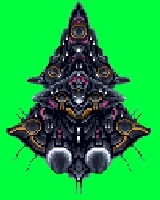
Omen-class gravships have enough shielding to withstand a nuclear blast. They have an internal power source that runs from both the sun and recycling programs, letting them fly virtually forever. They has the processes to synthesize their own food, water, and atmosphere for their occupants. They are armed to the teeth. In short, they are tough.
Using (or even
building) such an awesome super weapon is against our core beliefs. HOWEVER,
one may be built if the situation arrives. This will take a lot of resources,
time, labor, money, and energy. One should not underestimate the costs
of this weapon.
Omen-class Gravship production information:
Amount of Omen-class Gravships being
produced: 1
Amount created: 0
Amount destroyed: 0
Amount disabled/being repaired/being
tested: 0
Amount of Omen-class Gravships
available: 0
Omen-class Gravship tactical information:
Adjustable hyperlaser cannons: 110
Adjustable 'armor blaster' laser
cannons: 20
Anti-aircraft seeker missile stations:
14
Bombardment capability: 330 hyperlaser
blasts/minute, 40 'armor blaster' blasts/minute
Special weapons: 1 'world devastation'
ultra-powered bottom-monuted city-leveling laser emission system
Armor: 'Stockwave' alloy armor,
20 feet
Engines: 35 'SSPC-mark II'
anti-gravity levitation emission systems (bottom)
Shielding:
Power Source: TBD
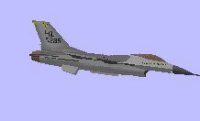
Dio-class Fighter/Bomber production information:
Amount of Dio-class fighter/bombers
being produced:
Amount created: 30
Amount destroyed: 0
Amount disabled/being repaired/being
tested: 0
Amount of Dio-class fighter/bombers
available: 30
Dio-class Fighter/Bomber tactical information:
Forward anti-aircraft defenses:
1 anti-aircraft laser (front mounted, package one), 2 standard chain guns
(wing mounted, package one), 2 anti-aircraft missile launchers (under wings,
package one)
Adjustable turrets:
Bombardment capability: 10 Heavy
Bombs @ 3 bombs/minute (package two)
Special weapons/abilities: Automated
Navigation/Stealth modifications
Armor: Neutronium armor, .5 feet
Engines: 2 rear mounted Epson
001A-001 "Arbitors", 1 "SSPC-mark II" anti-gravity levitation emission
system (bottom, optional)
Shielding: I.R.G Prototype
Power Source: 'AtlanTech-mark'
Miniaturized Nuclear Fission Reactor; Model 0001A-1
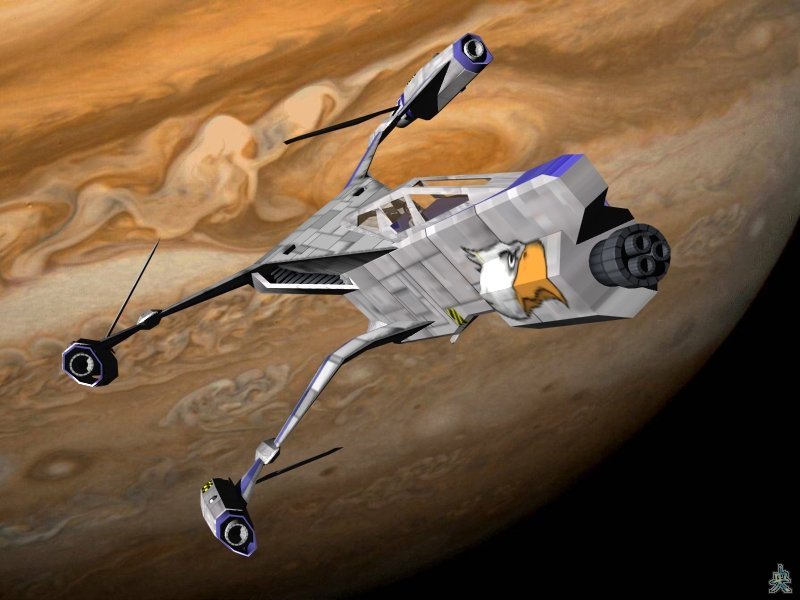
Infinity-class Bomber production information:
Amount of Infinity-class Bombers
being produced: 1
Amount created: 0
Amount destroyed: 0
Amount disabled/being repaired/being
tested: 0
Amount of Infinity-class Bombers
available: 0
Infinity-class Bomber tactical information:
Forward chain gun: 1
Adjustable turrets:
Bombardment capability: 2 nuclear
weapons (package one), 25 cluster bombs (package two), 10 cruise missiles
(package three), 20 sidewinders (package four)
Special weapons: Optional bombardment
packages
Armor: Alloy armor, 3 inches
Engines: 1 'interair' propulsion
system (rear), 4 light 'airflap' maneuvering thrusters (wings)
Shielding:
Power Source: High-Octane Jet Fuel
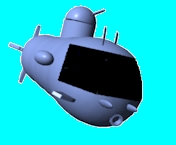
Cyclones carry
a payload of 6 small torpedoes and a crew of only two, with one captain/defensive
engineer and one gunner controlling the powerful adjustable Hyperlaser
turret. Using a specially designed high-stress camera mounted just
below the firing emitter of the turret, the turret can double as a periscope
or visual searching method against stealth enemies. The turret has
been positioned high enough as not to accidentally damage the rudder or
communications array..
Cyclone-class Attack Submarine production information:
Amount of Cyclone-class attack subs
being produced: 0
Amount finished: 1
Amount destroyed: 0
Amount disabled/being repaired/being
tested: 1
Amount of Cyclone-class attack
subs available: 0
Cyclone-class Attack Submarine tactical information:
Forward anti-seacraft defenses:
2 front mounted anti-aircraft laser cannons, 6 torpedoes
Adjustable heavylaser turrets:
1
Special weapons/abilities:
Armor: Alloy Armor
Engines: 1 rear mounted "Aquaspeed"-Underwater
Jet Engine, 2 underwater sidethrusters.
Shielding:
Power Source: Energy Capacitors
Note: The following is used by R&D when designing
new prototypes. Civilians need not read this.
Anti-aircraft seeker missiles
- Seeker missiles make an expensive alternative to their laser counterparts. However, no aim is required: launching a volley of these in battle causes widespread chaos and destruction. The missiles seek using an IPP identifier: any FIoJ or allied fighter not broadcasting the current code might find itself under attack.
- Launch delay: 20 seconds
- Blast piercing capability: 6 inches
- Blast damage capability: 3 feet
Heavy Bombs
- An excellent bombardment weapon, they require no targeting, power or cooling systems: simply a drop tube. They are more cheaper then a laser bombardment system, but then again, once the bombs have been dropped, they are gone until they are restocked.
- Launch delay: 10 seconds
- Blast piercing capability: 4 feet
- Blast damage capability: 9 feet
Cruise Missiles Cruise Missiles are fast and have an option for targeting. They lack the maneuver to follow aircraft but have devastating effects against ground targets. Launch delay: 15 seconds Blast piercing capability: 3 feet Blast damage capability: 8 feet Torpedoes The underwater equivalent of a Cruise Missile, Torpedoes powerful weapons of underwater combat. Although most submarines carry many of these, as extreme depths only a few hits on an enemy craft are needed to weaken it enough for the water pressure to crush it flat. Launch delay: 20 seconds Blast piercing capability: 2 feet Blast damage capability: 6 feet Cluster Bombs Cluster bombs launch like heavy bombs but spread into a mesh of smaller explosives several seconds after launch. These smaller explosives can take out a group of fighters due to their wide covering range. Launch delay: 20 seconds Blast piercing capability: 4 inches Blast damaging capability: 1.5 feet
Alloy Armor Alloy armor is a mixture of several strong metals. The mixture can not be publicly revealed, however it is tough and reliable. It is widely used in FIoJ structures, along with the Epoch-class fighter and Cyclone-class submarine. Heavy Alloy Armor This mixture is more expensive, as it in an alloy where the stronger metals are present in higher concentrations. It is stronger then normal alloy armor, and is used in military bases and the Blackbird-class heavy assault jet. 'Shockwave' Alloy Armor This variant on heavy alloy armor distributes the shocks from low concentration lasers and explosion impacts though out the area. This makes it much more difficult to actually break though the armor. It is very expensive and time consuming to create, and is only planned to be used in the Omen-class Gravship Neutronium armor Neutronium armor is designed specifically to repel light laser fire or chain gun bullets. When equipped on a fighter, it offers better protection against these types of attacks but is weaker then alloy armor against explosive weapons. It is being used in the Dio-class Fighter/Bomber.
'Interair' Propulsion Systems Interair systems are the basic model for fighters. They offer low power propulsion and can function well under extreme circumstances and maneuvers. They are non-energy sources and are useful in fighters that don't have energy weapons or an energy power source, such as bombers.
'Scramjet' Propulsion Systems Scramjets function like normal engines, with one twist: upon command of the pilot, scramjets pull all available power from weapon systems to launch the fighter forward at breakneck speeds. The engines are designed to handle this sort of stress, however, it disables the scramjet function to overheat for a few minutes after a use to prevent excessive damage to engine components Epson 001A-001 'Arbitors' Epson Arbitors are the direct result of the JASO project "Engine Upgrade." It is based loosely on the 'Scramjet' to offer a more controlled acceleration, allowing the aircraft to reach high speeds and maintain control over it's acceleration and maneuver systems. 'Airflap' Maneuvering Thrusters Airflaps provide additional turning power to fighters, allowing them to whip around quickly and surprise an unwary enemy. The faster the fighter goes, the more these thrusters are useful to prevent the wings from being torn off during maneuvers. They have no conventional purpose on slower, heavy aircraft. 'Skylaunch' Propulsion Systems Skylaunches are the standard for large aircraft: they provide high power at a high rate, with a high power consumption. Several of these working together allow the aircraft to maneuver. 'SSPC-mark I' Anti-Gravity Levitation Emission Systems These systems are used by the Flying Islands themselves. They are high power, but reliable and are designed for constant use. They don't offer the quick controls that the mark-II model provides, but they are useful when used by static air institutions. 'SSPC-mark II' Anti-Gravity Levitation Emission Systems A modification on the SSPC-mark I, the mark II model provides both better altitude control and maneuvering capabilities. They would be harmful on FIoJ, where maneuvers would disrupt the cities there. However, on a war craft, they provide the maneuver that would be useful when delivering bombardments.
"Aquaspeed" Underwater Jet Engine A modification on the standard for underwater vehicles, Aquaspeed Engines offer the speed a fighter submarine requires with the power and size limitations of the crafts themselves. Strong and reliable, Aquaspeed Engines are most efficient on smaller types of subs. Underwater Sidethrusters Sidethrusters are the sea equivalent of Airflap maneuvering jets. Mounted on the side of a small submarine, they offer the thrust to turn and maneuver the craft when needed.
High-Octane Jet Fuel A cheap but low efficiency fuel, jet fuel is used best in fighters that don't carry energy weapons and thus don't require capacitors to hold extra power. Energy Capacitors Energy Capacitors can hold a good deal of energy when recharged. This energy can be used to power all laser weapons, maneuvering flaps, and propulsion systems such as the 'Scramjet' and the 'Skylaunch' that give maximum output when powered with an energy source. 'AtlanTech-mark' Miniaturized Nuclear Fission Reactor; Model 0001A-1 Created and manufactured only by the AtlanTech company, this nuclear power source offers far more power then normal capacitors. They are expensive but critical to fighters that use all the latest technology upgrades.
I.R.G Prototype The IP Rotation Generator is currently the only shielding system used by the FIoJ. It offers protection from weapon systems that use banning powers to eliminate intruders, making it useful to equip on fighters that need to intrude into this type of territory.