"Tale Winds"
ONLINE
81st FWA NEWSLETTER
SPRING 2000 EDITION
Newsletter Donations
We need the Lifetime or Annual DONATIONS to keep the Newsletter going. We currently have over 800, 81st Members on the mailing list. The cost of printing and mailings runs about $350.00 per 500 mailings...or around $500.00 for 800 mailings. Writing, Editing and publishing is NO COST to the 81st FWA. All necessary equipment such as computers, scanners, modems, printers has been dedicated by Chuck Wrobel, Secretary/Editor of Newsletter. Thus, your FAIR SHARE for mailing and printing is $20.00 annually.
IF THE NEWSLETTER "TALE WINDS" is of No Value to you, let me know and we'll remove your name from the Newsletter Mailing list; this will not affect your membership status in the 81st. Best Regards, I need your Support, Chuck "FLIPPER" Wrobel, Secretary/Editor. JIM TANSEY, our WEB CREW CHIEF, likewise, needs your support as he makes sure the 81st Web Page and on-line version of the newsletter is in FLIGHT CONDITION. A special thanks for his volunteer efforts to assist.
|
History of The 81st
(A collection from Linn Barringer's and Jim & Maureen Tansey's Web Pages as submitted by Chuck Wrobel in 1999)
Lineage
Established as 81st Fighter Wing on 15 Apr 1948. Activated on 1 May 1948.
Redesignated: 81st Fighter-Interceptor Wing on 20 Jan 1950; 81st Fighter-Bomber Wing on 1 Apr 1954; 81st Tactical Fighter Wing on 8 Jul 1958.
Inactivated on 1 Jul 1993.
Redesignated 81st Training Wing, and activated, on 1 Jul 1993.
Assignments
The 7th Air Division, 1 May 1948
Pacific Air Command, 3 Sep 1948
Twelfth Air Force, 21 May 1949 attached to Western Air Defense Force, 10 Nov 1949-)
Fourth Air Force, 1 Apr 1950 (remained attached to Western Air Defense Force to 1 Aug 1950)
Western Air Defense Force, 1 Aug 1950 (attached to Third Air Force, 5-8 Sep 1951)
Third Air Force, 9 Sep 1951 (attached to 49th Air Division, Operational [later, 49th Air Division (Operational)], 1 Mar 1954-1 Jul 1956)
Seventeenth Air Force, 1 Jul 1961
Third Air Force, 1 Sep 1963-1 Jul 1993. Second Air Force, 1 Jul 1993-.
Components
Group. 81st: 1 May 1948 - 8 Feb 1955. Squadrons. 78th: attached c. 22 Apr 1954-7 Feb 1955, assigned 8 Feb 1955-1 May 1992. 91st: attached c. 22 Apr 1954-7 Feb 1955, assigned 8 Feb 1955-14 Aug 1992. 92d: attached c. 22 Apr 1954-7 Feb 1955, assigned 8 Feb 1955-31 Mar 1993. 116th: attached 10 Feb-9 Aug 1951 (further attached to 81st Fighter-Interceptor Group). 509th: 1 Oct 1979- 1 Jun 1988. 510th: 1 Oct 1978-1 Oct 1992. 511th: 1 Jan 1980-1 Sep 1988. 527th Aggressor: 14 Jul 1988-30 Sep 1990.
Stations
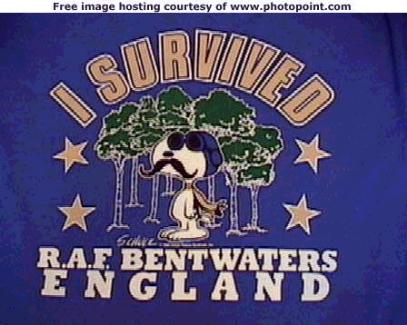
Wheeler AFB, Territory of Hawaii, 1 May 1948-21 May 1949; Camp Stoneman, CA, 27 May 1949; Kirtland AFB, NM, 5 Jun 1949; Moses Lake (later, Larson) AFB, WA, 2 May 1950 -16 Aug 1951; Bentwaters RAF Station (later, RAF Bentwaters), England, 6 Sep 1951 - 1 Jul 1993. Keesler AFB, MS, 1 Jul 1993 -.
Commanders
Col Thomas W. Blackburn, 1 May 1948
 Lt Col Francis R. Royal, 21 May 1949
Col Thomas W. Blackburn, (by 28) Jun 1949
Col Gladwyn E. Pinkston, 28 Apr 1950
Col Robert F. Harris, 22 Aug 1951
Col Gladwyn E. Pinkston, 27 Sep 1951
Col Robert F. Harris, c. 3 Jan 1953
Col Gladwyn E. Pinkston, c. 20 Feb1953
Col Robert J. Garrigan, 20 Jun 1953
Col Gladwyn E. Pinkston, c. 20 Aug 1953
Col Harold N. Holt, 2 Jun 1954
Col Ivan W. McElroy, 10 Jun 1955
Col Lester L. Krause, Jr., 18 Jun 1957
Col Henry L. Crouch, Jr., 8 Jul 1957
Col James R. DuBose, Jr., 6 May 1960
Col Eugene L. Strickland, 9 Jul 1960
Col William C. Clark, 9 Jul 1962
Col Robin Olds, 9 Aug 1963
Brig Gen DeWitt R. Searles, 26 Jul 1965
Col Ramon R. Melton, 28 Jul 1967
Col George S. Dorman, 5 Jul 1968
Col Devol Brett,25 Sep 1968
Col David J. Schmerbeck, 29 Aug 1969
Col John C. Bartholf, 6 Mar 1970
Col James W. Enos, 4 Sep 1970
Col Dwaine L. Weatherwax, 22 Jun 1971
Brig Gen Charles E. Word, 16 Aug 1972
Col John R. Paulk, 19 Apr 1974
Brig Gen Clyde H. Garner, 14 Mar 1975
Col Gerald D. Larson, 11 Feb 1976
Brig Gen Rudolph F. Wacker, 6 May 1977
Col Gordon E. Williams, 7 Aug 1979
Brig Gen Richard M. Pascoe, 24 Apr 1981
Brig Gen Dale C. Tabor, 2 Aug 1982
Col Lester P. Brown, Jr., 20 Mar 1984
Col William A. Studer, 26 Mar 1986
Col Harold H. Rhoden, 30 Jul 1987
Col Tad J. Oelstrom, 5 Aug 1988
Col Roger E. Carleton, 13 Jul 1990
Col Roger R. Radcliff, 12 Jul 1991-1 Jul 1993.
Aircraft
P (later, F)-47, 1948-1949
F-80C, 1949
F-86A, 1949-1955
P (later F)-51, 1951
F-84F, 1954-1959
F-101B, 1958-1966
F-4C, 1965-1979
A-10A, 1978-1993
F-16A, 1988-1990.
Operations
Conducted air defense of Hawaii, Dec 1948-May 1949. Moved to the United States and converted to F-80s and then F-86s. Became part of Western Air Defense Force's air defense structure in Nov 1949 and moved to the Pacific northwest in 1950 to provide air defense from Larson AFB, Geiger Field, and Whidbey Island, WA. Moved to England in mid-1951. From 1951 to mid-1954, worked with Royal Air Force Fighter Command to provide air defense for a
portion of England. Changed in 1954 from fighter-interceptor to fighter-bomber operations, using both conventional and nuclear weapons. Charged with tactical operations in support of USAFE and NATO, with air defense as a secondary mission, 1954-1979 and 1988-1990. Also operated out of RAF Woodbridge, 1958-1993. Began conversion to A-10s in late 1978, and the mission changed to provide close air support and battlefield air interdiction in support of NATO ground forces. Conducted joint operations with US and British ground forces training for close air support. Participated continually in rotational deployments to specified wartime operating
locations throughout Europe. Winner of A-10 category of the 1987 USAF Gunsmoke Gunnery meet. Added the 527th Aggressor Squadron, flying F-16s in 1988. This squadron provided the only Dissimilar Aircraft Combat Tactics training for USAFE and NATO pilots in Europe, from Jul 1988 to Sep 1990, when it inactivated. Conducted escort missions with A-10s for Coalition airlift
forces during relief efforts in Turkey and northern Iraq, 6 Apr 1991-8 Dec 1992. Began preparation for base closure in Dec 1992, ending flying operations on 1 Apr 1993.
Honors
Service Streamers. None.
Campaign Streamers. None.
Armed Forces Expeditionary Streamers. None.
Decorations. Air Force Outstanding Unit Awards: 28 Mar 1959-30 Jun 1961; 1 Jul 1961- 30 Jun 1963; 1 Jun 1966-31 May 1968; 1 Jul 1968-30 Jun 1970; 1 Jul 1976- 30 Jun 1978; 1 Jul 1979-30 Jun 1981; 1 Jul 1981-30 Jun 1983; 1 Jun 1989-31 May 1991; 1 Jun 1991-30 Jun 1993.
Bestowed Honors. Authorized to display honors earned by the 81st Fighter Group prior to 1 May 1948.
Service Streamers. None.
Campaign Streamers. World War II: Algeria-French Morocco; Tunisia; Naples-Foggia; Anzio; Rome-Arno; Air Combat, EAME Theater; China Defensive, China Offensive.
Decorations. None.
Emblem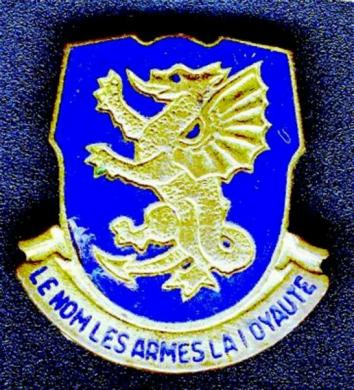
Or a dragon salient wings displayed and addorsed Azure armed and langued Gules, incensed proper, holding in its dexter claw a stylized boll weevil Sable.
Motto: LE NOM LES ARMES LA LOYAUTE-The name, the arms, and loyalty.
Approved for the 81st Group on 2 Mar 1943 and the 81st Wing on 14 May 1956.
(152220 A.C.).
Collected and distributed by Chuck Wrobel ([email protected])
(1953) The Furstenfeldbruck, Germany "Hot Guns" Era
by Colonel Robert Garrigan.
We've printed the RULES OF ENGAGEMENT exactly as provided by Bob Garrigan. Also, an excerpt from Stu Stabley's History of the 81st is attached as printed on page 81 of his authoritative and accurate portrayal of our history.
THE FURSTENFELDBRUCK DEPLOYMENT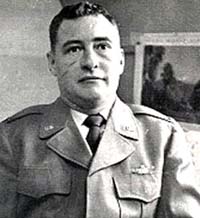
At 1400 hours on Saturday, March 18, 1953 a 3AF operations order to deploy on temporary duty a squadron of Sabres to Furstenfeldbruck Air Base, Germany was received by the commander of the 81st. This was shortly after a Russion-built Mig-15 flown out of Czechoslovakia shot down a USAF F-84 being flown out of "Fursty". The mission was to identify unknown aircraft violatig the U.S. Occupation Zone of Germany. Guns were "hot".
As part of the 81st alert status a 24 hour telephone recall schedule was maintained. All fighter squadron members were required to be available by 'phone when the squadron was on recall status. On Saturday, March 18, 1953 the 92nd had the duty. Col. Garrigan, the Group Commander, got the word at 1400 hours and initiated the recall and Ops order to L/C Jim Carlyle, Commander of the 92nd Fighter-Interceptor Squadron stationed at Shepherds Grove. By nightfall all personnel, equipment and supplies were ready for departure.
On Sunday morning, the 19th of March, 1953 the Sabres were airborne. Following was a C-119 of the 60th Troop Carrier Wing and an 81st C-47. Two thirds of the airmen and all but two of the pilots in the squadron made the move.
Arriving in Germany, the pilots received one day of indoctrination and local familiarization flying. They took over the alert duties of the 36th Fighter-Bomber Group F-84 aircraft.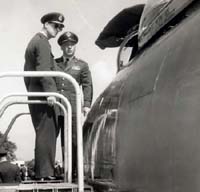
The alert duties required 12 Sabres on alert status from 1/2 hour before and 1/2 hour after sunset - four on the runway for immediate "scramble" and eight on five minute availability. The rest of the squadron was on a fifteen minute status and during the course of the day patrols were flown along the border under control of the ground controlled interceptor radar. The 92nd remained on station for three weeks and was relieved by L/C Ben Cassiday's 91st followed by the 78th commanded by L/C Arlie Blood, each for three weeks. Alert requirements in England continued.
During the nine weeks at Fursty the 81st Sabres made 36 strip alert scrambles to identify aircraft. In England during the same period only eleven were sirened into the air.
The move was a critical and exacting test of mobility. The short fuse during a weekend standby period tested the 81st. As usual the dedicated men excelled.
"Personal Property
of
Colonel Robert J. Garrigan"
Mission:
This unit is now under the operational control of the 12th Air Force, and our mission is to identify aircraft flying within the ten mile buffer zone or aircraft violating the U.S. Boundary.
We are not here to shoot down a MIG 15. The USAF has moved this unit here as a precautionary measure to protect our interest and to identify any barrier violation. This mission is most serious and will be regarded so during your stay here. Our Government and State Department can not afford any incident which involves a USAF aircraft that has violated the border, or any other incident involving the USSR or it�s Satellites. Remember, w4e are not here to shoot down aircraft violating our boundary, but to identify them properly and if possible, direct them to land within our zone.
- FLIGHT RESTRICTIONS:
- No flight will proceed closer that thirty (30) miles to the U.S. occupied
Border unless under positive control of the radar station. No flight will proceed closer than thirty ( 30 ) miles to the U.S. occupied border unless under positive control of the radar station. No flight will proceed closer than ten ( 10 ) miles to the U.S. occupied boundary unless specifically directed by the control. If radio or radar contact is lost at any time, or a pilot recognizes a violation by dead reckoning, will immediately take up a westerly heading. Training flights will not be scheduled within thirty ( 30 ) miles of this border.
- No USAF aircraft will pursue a hostile aircraft across the border even
If a hostile act has been committed. Very serious results could occur,
Even with a situation of this type. For example, what if one our own aircraft was attacked within our zone, and then our pilots pressed their own attack and shot down a Mig within our zone, but the aircraft actually fell and hit the ground in Czechoslovakia. This type situation could easily occur, and its results might possibly involve the United States Government in a very serious problem.
- RULES OF ENGAGEMENT:
- Before I go any further, let me explain in my own words the Rules of Engagement. I might add that before explaining these rules, each pilot will be required to read and initial the TOP SECRET instructions on these rules before he is allowed to fly in this area. Briefly, the rule is this; you cannot fire on any aircraft unless you have been fired on first. If an aircraft has fired at you within our own zone, then you have the right to fire back this aircraft only within our own zone. If there is more than one aircraft within the hostile formation that has fired, then they will all be considered as hostile aircraft. Let me state again that none of these hostile aircraft will be chased across the border and fired on. We know that these rules are definitely not in our favor for longevity, but they are the rules that apply at this moment.
- Intercepts and Defector Flights:
- Now, after you know the rules, you can see how important the intercept will be for identification. If a situation arises where we should make an identification on a MIG 15 or MIG�S, any intercept which would normally be a pursuit curve and closing with our guns fixed on the MIG would certainly indicate to any fighter pilot a hostile pass. Therefore, be very very careful if this situation arises and try t9o fly parallel if possible without bringing your guns to bear directly on the MIG. There is always this situation to consider; he might be a defector and actually wanting to land in our zone. If you could possibly get him to land, it would be a fine catch for our Government. There has already been two cases of Czech aircraft landing in our zone within the last few weeks, so don�t forget this possibility.
- Preparation Prior to Assuming Alert:
- Before any pilot is scheduled for alert, he will accomplish the following:
- Have had one indoctrination flight along the border to acquaint himself with check points.
- Have a map of the area which indicates the U.S. Border in RED.
- Understands the IFR and Scramble procedures. Fly a standard one beacon let-down and GCA.
- Read and Initialed the Rules of Engagement.
- Have been briefed on alternate diversion airfields and facilities.
- Briefed and a thorough understanding of minimum fuel requirements and distance from base.
- Understand VHF channelization.
- Briefed on he necessity of properly signing out when not on duty.
6. Group Policies:
- It will be a Group policy to fly with no less than two ( 2 ) aircraft
While operating within the thirty ( 30 ) mile buffer zone. A high Mach will carried while within this zone.
b. When aircraft abort on a scramble, the next two will be
scrambled to complete the mission, and the other return to base
to base.
c. While flying within the buffer zone, gun switches will be on
Camera with trigger pegged.
d. All local training flights will be conducted within the
Furstenfeldbruck local flying area.
REMEMBER, WE ARE HERE TO PREVENT A WAR, NOT TO START ONE�!
|

Click on above picture for full article (250kb)
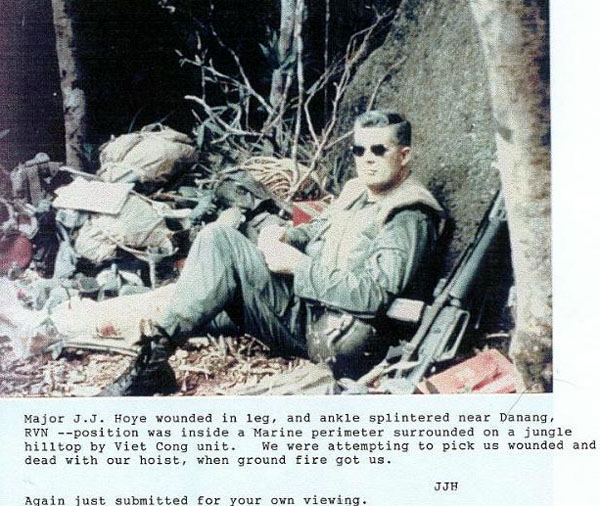
(1953) Enlisted S/Sgt Pilot Extraordinaire; WWII, Korea & Vietnam.
During the Second World War, as in the First WW, there we enlisted pilots. One such pilot, whom I had the opportunity to interview at the 81st FWA Reunion in Seattle, was Jack Hoye. Jack enlisted as a private just before the war began. He served as a Mechanic and was already a Buck Sgt when he was accepted for Pilot Training.
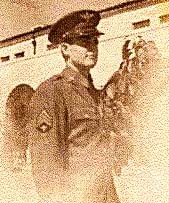
There were about, 1,700 to 2,500 enlisted Army Air Corp and AF pilots who graduated and served during WW 2. They flew everything and produced several ACES. About 11 went on to become General Officers.
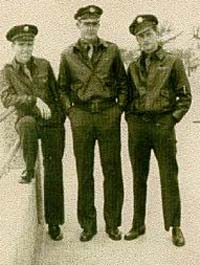
As a typical S\Sgt Pilot, Jack graduated from class 42F in June of 1942, and was designated Flight Officer by February of 1943.
Some flying Sgts, including Jack Hoye were then commissioned in July of 1943. These Pilots went from Regular Army NCO's to Temporary AUS officers. Jack flew combat as a troop Carrier Pilot ( WWII ), Fighter Pilot ( Korea ) and Helicopter Rescue Pilot ( Vietnam).
Anecdotal stories about Officer Pilots being picked up by staff cars upon landing and whisked off to the Officers Club & BOQ: Enlisted Pilots had to hitch a ride to the mess hall and find a place to flop in some barracks for the night. Many Officers in Operations were not aware of ENLISTED pilots and it was sometimes difficult to convince them that enlisted dudes were flying aircraft. They were Pilots without privileges! Equal pay for equal work was not an issue of the time.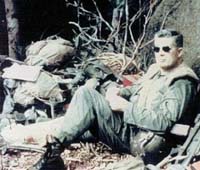
It was often postulated that these ENLISTED Pilots didn't have the HEAVENLY ATTRIBUTES and ASSETS that would allow them to become Officers and Gentlemen. Although, the enlisted cadets made better grades then their cadet counterparts.
Sometimes as a Command Pilot of the Aircraft, as a S\Sgt, you might have an Officer as Navigator. Many an AO would stand and wait for a Pilot to appear only to see these S\Sgt asserting they were the pilots. There were conflicts, to be sure.
Over 155 Enlisted Pilots were killed in action, 17 became fighter aces and 11 reached general officer ranks. However, few of us knew of their contributions to aviation.
Perhaps, the attached pictures will portray the Enlisted Pilots of that early 1940's era, what they looked like, what they wore and how one of them served in three wars. More information is available by contact Jack via the 81st FWA. Jack flew with the 81st from Moses Lake to Bentwaters in the early 1950's. Hopefully, You will be able to talk with Jack at the San Antonio Reunion in October. He is
Very willing to share his PRIDE as a NCO PILOT. . He and his wife Bette reside in Idaho. Another one of our Warriors that we can all be proud of�..just a tribute to Jack !
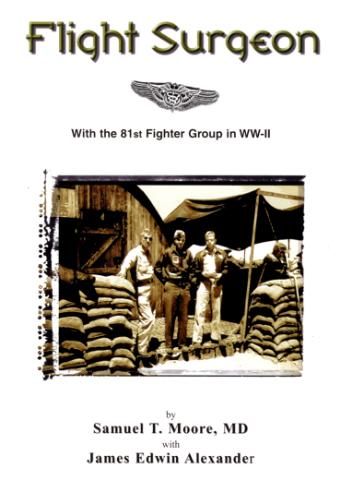
Flight Surgeon
With the 81st Fighter Group in WW-II
Sam T Moore, MD, with James Edwin Alexander
Retired orthopedic surgeon Sam T Moore, MD recounts his experiences as a Flight Surgeon with the Army Air Corps in North Africa, Sicily, Italy, India, and the China/Burma theater, based on daily diaries he kept during that period. Dr Moore sees the war through a surgeon's eyes and presents an accurate and revealing view of life at the forward fighter bases. He offers a fresh, uncensored, first-person account told with characteristic warmth, modesty, and good Humor.
Sam T Moore, MD, is a retired orthopedic surgeon living in Oklahoma City.
James Alexander, PH.D is former dean of the Meinders School of Business at Oklahoma City University.