The Stars
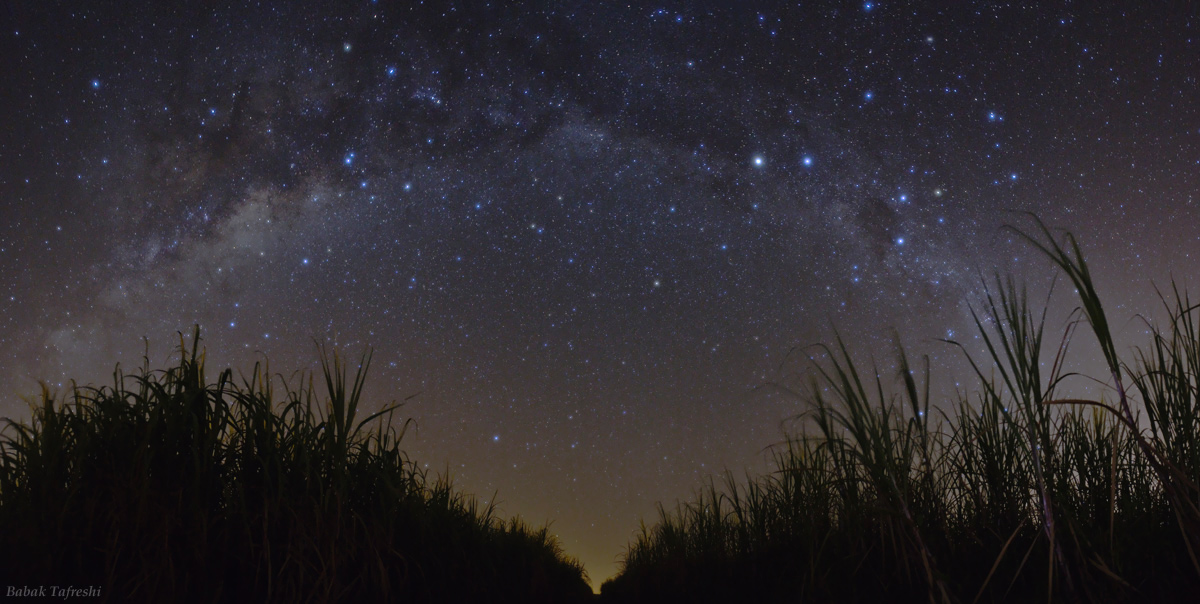
When you look at the night sky you can see many beautiful stars. If you are out in the country or camping in the mountains or the desert away from the city lights, you may see thousands of them. You may even be able to see part of the Milky Way. In a town or city, you can't see nearly as many stars because the city lights create a glow in the sky masking many of them.
There are several different kinds of stars in the sky. Some are very big. A couple of stars have been found that are 100 to 200 times larger than the sun. Some very old stars are smaller than the Earth. Scientists study stars and place them in groups based on how they are alike and how they are different.
Red Dwarf Star |
|
|---|---|
|
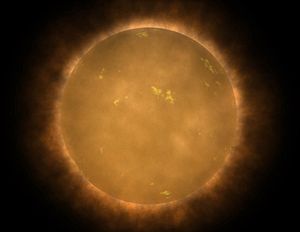
Red Dwarf stars are smaller than our sun. And since they are smaller, they also have less mass. Because of their small size, these stars burn their fuel very slowly, which allows them to live a very long time. This also causes these stars to not shine as brightly as others. Some red dwarf stars will live trillions of years before they run out of fuel. Because red dwarf stars only burn a little bit of fuel at a time, they are not very hot compared to other stars. Think of a fire. The coolest part of the fire is at the top of the flame where it glows red, the hotter part in the middle glows yellow, and the hottest part near the fuel glows blue. Stars work the same way. Their temperature determines what color they are. Thus, we can determine how hot a star is just by its color. |
 |
Yellow Star |
|
|---|---|
|
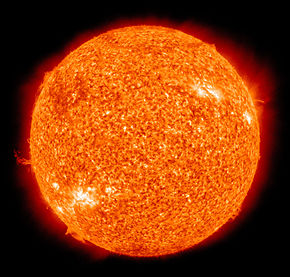
Like the Sun, these medium-sized stars are yellow because they have a medium temperature. Their higher temperature causes them to burn their fuel faster. This means they will not live as long, only about 10 billion years or so. Near the end of their lives these medium-sized stars swell up, becoming very large. When this happens to the Sun, it will grow large enough to engulf even the Earth. Eventually they shrink again, leaving behind most of their gas. This gas forms a beautiful cloud around the star called a Planetary Nebula. |
 |
Blue Giant Star |
|
|---|---|
|
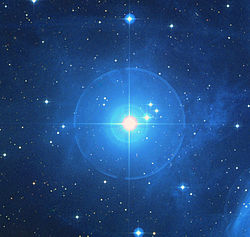
Blue stars are large and compact, this causes them to burn their fuel quickly which in turn makes their temperature very hot. These stars often run out of fuel in only 10,000 - 100,000 years. A blue giant is extremely bright. Like a lighthouse, they shine across a great distance. Even though blue giant stars are rare, they make up many of the stars we see at night because they shine so brightly. Blue giant stars die in a spectacular way. They grow larger just like the sun-sized stars, but then instead of shrinking and forming a planetary nebula, they explode in what is called a supernova. Supernova explosions can be brighter than an entire galaxy, and can be seen from very far away. |
 |
Giant Star |
|
|---|---|
|
As a sun-sized star gets old, it starts to run out of its hydrogen fuel. When the process of burning hydrogen in the star's core begins to slow down, the core gets more compact and dense. This means all the stuff in the middle of the star gets really close together. As the center gets smaller and smaller it starts to heat up again. When it gets hot enough it will start to burn a new fuel called helium. Once ignited, helium burns much hotter than hydrogen. The additional heat pushes the outer layer of the star out much further than it used to be, making the star much larger. Imagine a hot air balloon. As the air inside the balloon gets hotter, it stretches the balloon out further and further. As the giant star gets hotter, its outside stretches out further and further. When our own sun begins to stretch into a giant star, it will engulf Mercury, Venus, Earth and Mars. |
 |
Super Giant Star |
|
|---|---|
|
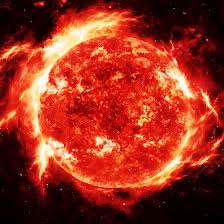
A super giant star is the exact same thing as a giant star only much bigger. Remember that as a star gets older it begins to run out of fuel. As the star runs out of fuel, it will start to burn out. Just like the sun-sized stars, blue giant stars also begin to burn helium. As they do these stars get much hotter. This extra heat makes the outside of an old blue giant star stretch out further. The only difference between Giant Stars and Super Giant Stars is their size. Super Giant Stars are much bigger. If the Sun were replaced by a super giant star, it would extend from the center of our Solar System almost all the way out to Uranus. |
 |
Super Giant Star |
|
|---|---|
|
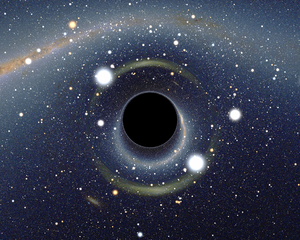
When a large star runs out of fuel it can no longer support its heavy weight. The pressure from the star's massive layers of hydrogen press down forcing the star to get smaller and smaller and smaller. Eventually the star will get even smaller than an atom. Imagine that for a moment, an entire star squashed up into less space than a tiny atom. |
 |