Atomic Number: 10
Atomic Weight: 20.1797
Melting Point: 24.56 K (-248.59�C or -415.46�F)
Boiling Point: 27.07 K (-246.08�C or -410.94�F)
Density: 0.0008999 grams per cubic centimeter
Phase at Room Temperature: Gas
Element Classification: Non-metal
Period Number: 2 Group Number: 18 Group Name: Noble Gas
History and Uses
Neon was discovered by Sir William Ramsay, a Scottish chemist, and Morris M. Travers, an English chemist, shortly after their discovery of the element krypton in 1898. Like krypton, neon was discovered through the study of liquefied air. Although neon is the fourth most abundant element in the universe, only 0.0018% of the earth's atmosphere is neon.
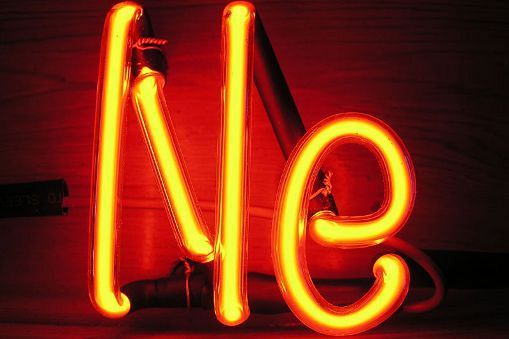
The largest use for neon gas is in advertising signs. Neon is also used to make high voltage indicators and is combined with helium to make helium-neon lasers. Liquid neon is used as a cryogenic refrigerant. Neon is highly inert and forms no known compounds, although there is some evidence that it could form a compound with flourine.