 English
 Espa�ol
 Portugu�s
DeutschEnglishEspa�olPortugu�s
Visitante
habitual, v� direto �s novidades 
Este Web Site foi elaborado com recursos do MS.Front Page 98, � melhor visualizado com o navegadores Microsoft Internet Explorer 4.*

Voc� vai encontrar neste site o que procuro ensinar rotineiramente ao meus pacientes.
O ritmo em que as consultas odontol�gicas s�o aproveitadas, dentro de um hor�rio apertado, n�o permite tempo suficiente para ensinar todas estas preciosas instru��es.
Percebi que a grande maioria dos pacientes demonstra ter esquecido quase tudo do pouco que pude lhes dizer j� no exame de rotina (check-up) seguinte.
Portanto eis a� por escrito e ilustrado, de forma cont�nua e renovada, instru��es para o seu livre acesso, a qualquer tempo, e sem ter que esperar o pr�ximo chek-up.
Quero manifestar minha admira��o a todo aquele que se interessa em recordar e atualizar:
- O que mesmo me disse
o Dentista ?
Tudo o que aqui est� exposto � fruto do que aprendi com Professores num per�odo superior a vinte e quatro anos de formado, na Faculdade de Odontologia da Universidade de S�o Paulo, nos in�meros Cursos de Atualiza��o que frequentei em Congressos Nacionais e Internacionais e em Associa��es de Classe, e, �ltima e especialmente nos Simp�sios Bianuais sobre Neurologia e Dor promovidos pelo Departamento de Neurologia da Faculdade de Medicina da Universidade de S�o Paulo.
Devo creditar tamb�m as muitas Revistas Especializadas a que tive e tenho acesso na Biblioteca da Faculdade onde me formei, durante e depois do curso de gradua��o, e alguns Livros de Texto Odontol�gicos que tenho lido mesmo depois de formado, sendo improdutivo citar cada Autor, mesmo porque, pelo tempo decorrido, nem mesmo me lembro onde foi que li ou ouvi certos aspectos desta mat�ria.
Quero especialmente reconhecer o valor e a oportunidade que tivemos, eu e minha esposa, por quatro anos consecutivos, de participar como Professor Assistente e Auxiliar de Ensino da Equipe que ministra os cursos de Oclus�o e Desordens Temporo-Mandibulares na Cl�nica Di�ria na Escola de Aperfei�oamento Profissional na Sede Central da Associa��o Paulista de Cirurgi�o Dentistas nesta cidade de S�o Paulo, isto nos trouxe muita experi�ncia pelo conv�vio com os colegas interessados neste campo e tamb�m satisfa��o pelo n�mero consider�vel de pacientes carentes atendidos.
A Odontologia, j� h� algum tempo, tem se ocupado em mais do que s� reparar as deteriora��es que o paciente apresenta nos dentes e tecidos de suporte de tempos em tempos.
Evitar que aconte�am estes danos � t�o ou mais importante que repar�-los. Por mais moderno que seja o material de restaura��o, estamos longe de possuir a certeza de estar usando algo que chegue aos p�s da excel�ncia funcional da estrutura dent�ria intacta que � portadora de uma micro-arquitetura espetacular, altamente inervada, capaz de suportar inteligentemente, i.e., minuciosamente monitorada pelo Sistema Neuro-muscular, cargas dignas de um pilar de grandes edif�cios, e isto em movimento.
� de suma import�ncia que o paciente entenda a raz�o da precariedade de sua sa�de bucal, e tamb�m como pode conquistar um elevado padr�o nesta sa�de durante toda sua vida.
N�o � tarefa f�cil remar contra a corrente popular que n�o compreende que simplesmente ir ao dentista a cada seis meses n�o � garantia de que os seus dentes e tecidos afins n�o ir�o se deteriorar, mas que � necess�rio um cuidado pessoal e di�rio, um zelo pelo que lhe pertence: sua sa�de bucal. O exame anual, semestral, ou trimestral tem o indispens�vel papel de orientar este zelo e, claro, quando necess�rio, reparar o que escapou do bom cuidado com o que a tecnologia tem de melhor para oferecer.
A absor��o de ci�ncias mercadol�gicas pelo meio odontol�gico (o que � de se lamentar pois acredito que um servi�o de sa�de deve ser procurado quando necess�rio e n�o por indu��o de marketing) levou o p�blico leigo a acreditar que � poss�vel resgatar plenamente a normalidade funcional do sistema mastigat�rio contando com avan�os tecnol�gicos sendo que ainda hoje o ideal � prevenir e n�o remediar.
Portanto, o leigo necessita aprender a prevenir seus males bucais em lugar de deixar que seu sistema mastigat�rio se deteriore, na esperan�a de que depois � s� consertar que vai ficar perfeito.
O primeiro Item que voc� ir� encontrar neste Web Site, Resist�ncia Relativa dos Dentes, sub-item Esfor�o Localizado, tratar� da utiliza��o paralela de Fisioterapia (RPG) para corre��o da postura craneo-cervical, e da Reeduca��o do Uso da For�a Muscular nos Movimentos de Rotina (Pilates) para Reestabelecer as Bases de Movimentos Corretas (Reestabelecimento de In�cios de Cadeias M�sculares).
Este assunto oferece margem � interpreta��o err�nea.
Quero, pois, esclarecer de antem�o que:- a preven��o, no que diz respeito � for�a localizada, n�o muda a Rotina Operat�ria do Dentista, apenas aumenta a possibilidade de:
1) Evitar a perda do elemento dent�rio,
2) De se manter a polpa dental viva (o nervo vivo) e,
3) Aliviar a dor rapidamente pois certos exerc�cios ajudam ao paciente evitar a continuidade do traumatismo mec�nico do elemento dent�rio em quest�o.
4) Descontinuar as causas mec�nicas da decad�ncia estrutural do(s) dentes e tecidos adjacentes.
Portanto, se houver incid�ncia de c�rie, esta ter� que ser tratada e o dente ter� que ser restaurado; se houver retra��o da crista �ssea alveolar, os tratamentos de praxe ter�o que ser aplicados como o ajuste oclusal, a raspagem manual e/ou ultrass�nica da raiz ou at� mesmo cirurgia periodontal; se houver inflama��o irredut�vel da polpa dent�ria (dor irremedi�vel mesmo com capeamento direto e medica��o geral) e/ou morte pulpar, o tratamento endod�ntico (tratamento do canal) dever� ser realizado.
Portanto, as citadas Fisioterapia e Pilates s�o valiosos recursos adicionais que podem e devem ser usados quando necess�rio para corrigir a din�mica da mastiga��o quando esta se mostrar prejudicada por m� postura craneo-cervical e pela utiliza��o do Sistema Mastigat�rio como in�cio de cadeia muscular para esfor�os que envolvem a Cintura Escapular, o que n�o acontece sem danificar seriamente este Sistema Mastigat�rio.
O submeter-se ao tratamento fisioter�pico e de reeduca��o de movimentos e usufruir do seu benef�cio � inteiramente op��o e responsabilidade do paciente, e em hip�tese alguma, haver� cobran�a desta submiss�o, mas o paciente dever� compreender que � obriga��o do Dentista orient�-lo a respeito deste benef�cio, para n�o incorrer na omiss�o de indicar a necessidade de tratamento complementar.
Verififique, pois, nestes Tres Principais �tens:
Resist�ncia Relativa
Bact�rias
Dieta,
como voc�, paciente, pode ser um Co-Doutor no seu tratamento, voc� s� ter� a ganhar.
Resist�ncia Relativa dos Dentes
 Mais
Novidades
Mais
NovidadesAs novas adi��es ao conte�do deste Web Site, ser�o listado aqui sob a forma de bookmarks.
O Congresso Internacional de 2002 foi palco da apresenta��o incomum de avan�os nas pesquisas de interesse odontol�gico a n�vel de ci�ncias b�sicas como Histologia, Microbiologia, Fisiologia e Nutri��o com riqu�ssimos detalhes aplic�veis na clinica di�ria, especialmente a respeito das consequ�ncias nefastas das doen�as bucais na sa�de geral do paciente, a saber:- Parto prematuro com risco de vida, Doen�as do cora��o e art�rias e a dificuldade do controle da Diabetes frente ao alto �ndice de bact�rias patog�nicas no ambiente bucal. A Edi��o 2004 deste mesmo Congresso deixou claro que a Implantodontia se tornou indispens�vel na clinica di�ria, j� � inaceit�vel o envolvimento de dentes naturais remanescentes na reposi��o de elementos dent�rios perdidos ou condenados (na confec��o de Pontes Parciais Fixas ou Remov�veis), a limita��o do uso de implantes agora fica por conta de impedimentos na condi��o de sa�de geral e bucal do paciente. O planejamento rigoroso e detalhado de um tratamento deste tipo � primordial e requer muita experi�ncia em Pr�tese. Os recursos tecnicos-cir�rgicos para a aplica��o dos implantes e do condicionamento do leito �sseo para tanto se tornaram abundantes e simples, s�o trabalhosos de se aplicar, mas s�o simples, sensatos, e tem uma continuidade compreens�vel at� mesmo para o leigo. Estamos em 2006, e, por ser necess�rio a presen�a de dois cirurgi�es na fase cir�rgica destes tratamentos, minha Esposa e eu temos frequentado, por 4 horas semanalmente de cursos ambulatoriais de aperfei�oamento cirurgico em Implantodontia na Universidade de S�o Paulo nestes dois �ltimos anos (a Biblioteca ali � um fator de peso no embasamento te�rico) e isto nos animou a nos Especializarmos nesta �rea - o que vai nos tomar outros dois anos, 8 horas por semana; apesar de simples, esta �rea da Odontologia requer mais que qualquer outra, muita paci�ncia e habilidade; o Especialista tem a responsabilidade de iniciar, executar, terminar e manter o tratamento rehabilitador, i.e., no �mbito clinico (preparo e indica��o), cirurgico (ambulatorial e hospitalar), prot�tico (clinico e laboratorial) e novamente clinico (controle e manuten��o).
O visitante novo deve resistir ao impulso de espiar as novidades antes de ler toda a mat�ria desta Web Site, pois estas novidades sempre ser�o sub-�tens dos t�tulos principais.
Todo o Texto deste Web Site em Portugu�s est� sendo Atualizado desde 02/Setembro/2006
Muit�ssimo Importante: 
ERRATA : erro de digita��o, faltou digitar a palavra n�o no texto abaixo que alerta sobre as recomenda��es deste Web Site nas exibi��es deste Web Site anteriores a data de 22 de julho de l998
*** As recomenda��es expostas neste site s�o expressamente dirigidas a pacientes j� previamente orientados e sob tratamento e que apenas desejam recordar e atualizar - O que mesmo me disseram os Dentistas ?
O visitante que n�o se enquadra nesta classifica��o est� tendo acesso a estas recomenda��es por pr�pria conta e risco porque as recomenda��es expostas neste site n�o prescindem de exame cl�nico e de orienta��o clinica especializada.
 Seja Muito Benvindo, Bom Proveito e
Comunique-se !
Seja Muito Benvindo, Bom Proveito e
Comunique-se !
A utiliza��o di�ria de
cremes dentais e solu��es para bochechos com Fluor ap�s cada refei��o �
indispens�vel.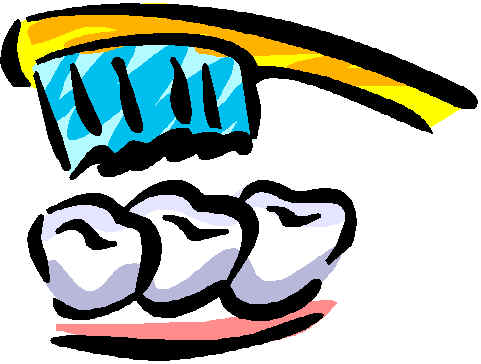
Espero que voc� tenha tido a oportunidade de perguntar ao Dentista sobre a tecnica correta de escova��o especial para o seus dentes e tenha j� tomado uma aula pratica mesmo, com uma escova dental nova e adequada, e fita dental pois � necess�rio adequar a tecnica � posi��o que seus dentes tem no seu arco dent�rio, uma aula te�rica n�o � suficiente mesmo. Uma escova el�trica atual � bastante aconselh�vel, especialmente se voc� � portador de retra��o �ssea alveolar e raizes expostas; para casos graves de perda �ssea existe no mercado eficientes escovas dentais el�tricas providas de vibra��o ultra-sonica.
� importante que voc� esteja ciente que ainda que reste uma raiz com canal tratado, com um pino cimentado dentro deste canal e uma coroa total cobrindo o que resta da estrutura coron�ria, ainda assim, este conjunto deve ser considerado um dente pois o suporte, que � a raiz, � um remanescente de uma estrutura dent�ria natural, e requer todos os cuidados aqui expostos e est� sujeita a todos os danos provocados pelo descuido tamb�m citados neste Web Site.
Vale ainda lembrar, que, no que diz respeito ao esfor�o localizado, tem-se observado que os mesmos fatores que p�em em risco a perman�ncia de um dente em seu alveolo �sseo, p�em em risco a perman�ncia de um implante dent�rio artificial (leia-se tit�nio) em seu leito �sseo.
O esmalte dent�rio � formado por prismas justapostos radialmente obedecendo a disposi��o semelhantes das pedras dum arco g�tico. Estes prismas s�o constitu�dos de hidroxiapatita, uma mol�cula que possui um �on de Calcio que pode ser perdido para o meio bucal quando este meio se torna �cido durante uma refei��o comum, mas assim que o meio bucal volta a ser neutro, o �on de C�lcio � recuperado (este �on � proveniente da pr�pria saliva que � rica em c�lcio).
Se este �on de C�lcio for substitu�do por um �on de Fluor, temos, no lugar da hidroxiapatita, a forma��o da fluoroapatita que � mais resistente a c�rie por ser mais est�vel num ambiente �cido, a resist�ncia da fluoroapatita (pH 4,5)* � descalcifica��o em em ambiente �cido � nada menos que um ponto de pH maior do que a hidroxiapatita (pH 5,5)*. *quanto menor o valor cr�tico deste pH, maior � a resist�ncia do esmalte.
O fluor que existe nos cremes dentais, nos l�quidos de bochecho ap�s-escova��o / e em algumas marcas de fio-dental*, � depositado nas �reas descalcificadas, sob a forma de min�sculas esferas, que s�o solubilizadas e absorvidas por este esmalte descalcificado sob pH �cido.
Portanto higienizar os dentes com cremes dentais enriquecidos com fluor logo ap�s as refei��es protege o dente com um escudo qu�mico altamente eficaz, pois este fluor � depositado em �reas que especificamente necessitam de prote��o contra pH �cido, haja visto que este pH demora nada menos que 3 horas para voltar a ser neutro se houver higiene bucal apropriada logo ap�s a refei��o*.
H� uma NOVIDADE E TANTO nos recursos de higiene direcionados � Preven��o de c�rie: Temos usado, desde 1981, clinica e profissionalmente, uma subst�ncia cariost�tica por excel�ncia - o Di-amino-fluoreto de Prata (Bioride) que � capaz de interromper o processo bioqu�mico da c�rie em uma �nica aplica��o de dois minutos; felizmente este produto direcionado apenas para o uso profissional, tem agora uma vers�o segura para uso dom�stico :- o Amino fluor, capaz de reverter c�rie prim�ria que pode ser utilizado apenas uma vez por semana.
Voc� precisa saber e por em pr�tica dois fatos muit�ssimo importantes:
1) O esfor�o localizado, ou sobrecarga, dentro do sistema mastigat�rio ocorre quando este sistema � utilizado para realizar tarefas n�o pertinentes a comunica��o (falar), respirara��o, mastiga��o, e degluti��o de saliva, que s�o fun��es imprescind�veis a sobreviv�ncia.
2) Os dentes devem ficar livres de qualquer esfor�o para que aconte�a a recalcifica��o, que os mant�m em boa sa�de e, para tanto, � fundamental que sejam mantidos aparte, sem tocar uns nos outros; a exce��o cabe somente para a realiza��o das supracitadas fun��es imprescind�veis a sobreviv�ncia.
Agora eu passo a explicar porque estes dois fatos s�o t�o importantes:
Se voc� j� viu algu�m mordendo a cut�cula das unhas ent�o tem uma boa id�ia do que � esfor�o localizado.
O indiv�duo que sofre deste mal-h�bito aplica todo potencial dos m�sculos mastigadores sobre os dois dentes antagonistas que mordem a cut�cula.
Vale lembrar que quando pouca for�a se faz, p.e., ao engolir a saliva, o sistema mastigat�rio submete os dentes a nada menos que 37,5 kg de for�a, podendo, sem a menor dificuldade, exercer 120 kg para cortar um alimento mais fibroso. H�, na literatura especializada, o relato do exerc�cio de mais de 400 kg de carga num evento noturno de rangismo.
A estrutura dent�ria suporta a carga mastigat�ria sem maiores danos porque existe um servi�o de manuten��o constante, que repara o dente deixando-o pronto para pr�xima tarefa (tarefa = refei��o).
O monitoramento das atividades do sistema mastigat�rio demonstra que os dentes s�o solicitados a tocarem diretamente uns nos outros umas seiscentas (600) vezes ao dia para engolir a saliva, e que este contato direto n�o acontece durante uma refei��o.
A demanda de descanso fisiol�gico destas resistentes estruturas que formam o sistema mastigat�rio � gigantesca, chegando a significar mais de 23 horas por dia. Neste enorme per�odo a manuten��o � realizada. Se os dentes forem solicitados a um contato direto, dente a dente, que totalize mais de 20 minutos por dia (que � o suficiente para as 600 degluti��es de saliva), o equil�brio entre uso e manuten��o fica negativo (recalcifica��o deficiente) dentro daquele per�odo de 24 h. Se o equil�brio for mantido negativo insistentemente, a por��o descalcificada do elemento dent�rio se tornar� hipersens�vel ao meio externo tendo como resposta a sensa��o dolorosa ao tato e a varia��o t�rmica (at� mesmo ao ar frio que entrar pela boca).
Agora, imagine a situa��o de um rangista, que emprega os dentes na danosa tarefa de segurar, raspar ou apertar os dentes uns contra os outros durante horas por dia (ainda que o motivo seja agrad�vel como o acompanhar uma m�sica que se esteja ouvindo), ser� uma quest�o de tempo, para que todo o sistema mastigat�rio entre em decad�ncia estrutural e comece a apresentar :
- descalcifica��o localizada n�o compensada e consequente c�rie, doen�a periodontal, desorganiza��o posicional dos dentes, dores musculares, dores articulares; nem sempre pass�veis de reparo satisfat�rio.
Este limite de 20 minutos de esfor�o m�ximo di�rio n�o � peculiaridade da estrutura dental, � tamb�m o limite de esfor�o m�ximo di�rio de qualquer articula��o sinovial do corpo humano.
O dente � um elemento articular e est� articulado ao osso mandibular (ou maxilar), por meio de um "carpete" de fibras (fibras periodontais), que tem a espessura que varia de 1 a 3 d�cimos de mil�metro** dispostas radialmente a partir da raiz em dire��o � parede do alv�olo �sseo, que o envolve.
De uma maneira muito especial, o dente tem o comportamento das articula��es sinoviais pois a articula��o entre o dente e o seu alv�olo �sseo ocorre sem atrito, sem barulho e sem desgaste.
Estas articula��es sinoviais trabalham utilizando apenas 70% de sua amplitude** total de movimento (a mastiga��o de alimentos � realizada dentro destes 70%, e sem contato direto entre os dentes) mas, a cada per�odo de 24h, num total de 15 a 20 minutos, o 100% da amplitude � eficazmente exercitado de maneira muito breve, variando de uma fra��o de segundo, que � o caso dos dentes quando se deglute a saliva, chegando a alguns segundos como � quando nos espregui�amos esticando o tronco e os bra�os.
O ato de degluti��o de saliva �, pois, a ocasi�o fisiol�gica quando 100% da amplitude de movimento dos dentes dentro do seu alv�olo �sseo pode e � utilizado e,
altera��es na postura da coluna cervical, do osso hi�ide e da cintura escapular podem levar os m�sculos que participam da degluti��o da saliva, a ultrapassar o limite fisiol�gico toler�vel de 37,5 kg de esfor�o, utilizado neste evento, e isto, com tend�ncia segmentar, i.e, apenas um segmento do arco dent�rio (alguns dentes, n�o todos) � submetido a esta sobrecarga.
Esta altera��o da din�mica da degluti��o, a longo prazo, levar� o um segmento do sistema mastigat�rio (articula��o temporo-mandibular, m�sculos, tecidos de suporte periodontais e dentes), a sofrer as consequ�ncias da sobrecarga articular apresentando :
descalcifica��o cronica localizada segmentar (site specific) tanto �ssea quanto dent�ria, desgaste e adapta��es de forma �sseo-dent�rias irrevers�veis e inconvenientes ao bom funcionamento deste sistema mastigat�rio.
H� um agravante no que se refere � descalcifica��o dos dentes, � o fato de estarem expostos ao meio bucal.(saiba mais sobre este assunto no �tem Fluor)
O meio bucal � considerado um meio externo ao corpo e abriga um variedade de esp�cies de bact�rias (Biofilme) que habitam inclusive a superf�cie da coroa e da raiz dos dentes. O uso de sondas de DNA possibilitou idenficar mais de 400 esp�cies de bact�rias habitando o meio bucal, um s� indiv�duo pode hospedar mais de 200 esp�cies.
Se houver um habitual aumento da popula��o de algumas esp�cies destas bact�rias (no caso, apenas as duas esp�cies que se alimentam de glicose), o que acontece ap�s ter-se tomado um caf�zinho com uma colherinha de a�ucar, o processo de descalcifica��o poder� tornar-se irrevers�vel devido ao pH local muito baixo (acidez):-
- da interface dente-placa bacteriana
- e da pr�pria saliva.
Isto leva ao que � universalmente conhecido por c�rie dental.
Este mesmo motivo inviabiliza a recupera��o do osso de alveolar (osso que suporta o dente) perdido na adapta��o ao sobre-esfor�o, pois a superf�cie da raiz, danificada pela descalfica��o decorrente do citado pH �cido e pelos catab�litos provenientes do metabolismo das bacterias acid�filas ali presentes, fica impr�pria para reinser��o das fibras periodontais, que ligam a raiz ao seu osso alveolar.
H� mais que voc� deve saber sobre este tipo de esfor�o.
Insisto que leia atenciosamente os pr�ximos dois itens: esfor�o localizado e rangismo
Em uma refei��o, o esfor�o a que s�o submetidos os seus dentes � caracterizado pela aus�ncia de franco contato. Os dentes n�o chegam a tocar. T�o logo o gr�o ou por��o de alimento fica reduzido a pequeninos peda�os, estes s�o engolidos e uma outra por��o � interposta para sofrer a tritura��o. O esfor�o mastigat�rio � exercido contra os alimentos de forma t�o minuciosa que a falta de consist�ncia do que se est� mordendo � percebida e a for�a mastigat�ria � interrompida antes que aconte�a o contato direto entre os dentes.
Ora, isto n�o � o que acontece quando se morde objetos como palitos, clips de papel, a cut�cula ou as pr�prias unhas pois n�o existe a inten��o de triturar. Estes objetos s�o apenas instrumentos de transmiss�o de um est�mulo mec�nico, francamente danoso para a suspens�o hidr�ulico-fibrosa dos elementos dent�rios envolvidos e tamb�m danoso para a pr�pria estrutura dent�ria, pois promove descalcifica��o localizada.
Os danos causados pelo esfor�o localizado insistente s�o sempre graves.
Numa refei��o, existe um reflexo natural de prote��o que evita que se morda uma ocasional "pedra do feij�o" at� que o dente seja fraturado.
No caso de se mordeliscar objetos ou segurar/apertar/ranger os pr�prios dentes un(s) contra o(s) outro(s), este reflexo de prote��o � "suavemente contornado" e, de forma obstinada o excesso de for�a � insistentemente executado sem que alarme doloroso algum seja "acionado".
Perda do suporte �sseo, morte pulpar, fratura de coroa, fratura de raiz e at� mesmo completa perda do elemento dent�rio resumem o que se pode conseguir com a pr�tica do esfor�o localizado. Estes danos s�o de pouca possibilidade de reparo eficaz por longo prazo, uma vez que a mesma situa��o (a sobrecarga unilateral) que levou ao acontecimento destes danos ir� tamb�m levar a quaisquer tipo de tratamento restaurador a fracassar, seja uma simples restaura��o ou um tratamento prot�tico implanto-suportado, pois estes tratamentos sempre s�o suportados pelo remanescente natural da sua estrutura �sseo-dent�ria.
Um tipo de esfor�o localizado de dif�cil controle, ocorre quando nada � interposto entre os dentes, apenas se segura, range ou aperta um(ns) dente(s) contra o(s) outro(s), isto se chama de rangismo na lingua portuguesa. Rangismo pode e deve ser minimizado, mas depende muito da paci�ncia e perseveran�a do paciente em buscar o bom resultado de um tratamento longo. O paciente rangista � um indiv�duo emocionalmente sobrecarregado, que dificilmente encontra �nimo para tomar atitudes que dependem de dedica��o de tempo, e como se isto n�o bastasse, � incr�dulo pois via de regra, rangismo � um h�bito inconsciente, que acontece quando sua aten��o � requisitada por alguma atividade cr�tica (que exige muita aten��o).
A observa��o cl�nica destes pacientes tem apontado que existe um motivo muito forte que os leva a ranger ou simplesmente apertar/tocar insistentemente os seus dentes.
Ansiedade moment�nea � o maior motivo:
Uma vez tomado de ansiedade em uma atividade/situa��o/trabalho dif�cil de resolver, o indiv�duo busca insistentemente por al�vio a n�vel do Sistema Nervoso Central, que lan�a m�o do mais r�pido meio de promover isto : o bloqueio da entrada cont�nua de dados que alimentem esta ansiedade. Isto � obtido neuro-fisiologicamente de uma forma muito eficaz, i.e., ocupando as vias de acesso destes dados com um tipo de informa��o rotineira suficientemente volumosa, potente, veloz e que tenha prioridade fisica sobre as informa��es estressantes junto ao Sistema Nervoso Central.
As informa��es geradas em articula��es det�m estas quatro caracter�sticas. As articula��es s�o movimentadas por m�sculos esquel�ticos e os sinais do movimento que s�o gerados dentro de articula��es sinoviais participam da manuten��o do equil�brio postural do corpo humano, estes sinais tem alta pot�ncia, velocidade (trafegam a 120 m/s), alta frequ�ncia de gera��o de impulsos e prioridade (car�ter urgente) sobre outras informa��es.
Normalmente as Articula��es Temporo-Mandibulares e os Dentes*** est�o totalmente disponiveis para a gera��o destes impulsos rotineiros sem a necessidade de se interromper a atividade de trabalho que necessite de aten��o cr�tica, seja um trabalho ou qualquer outro tipo de atividade ainda que saudavelmente estressante (como fazer as malas para uma viagem longa ou praticar esportes).
Se somarmos a esta situa��o o fato de que as articula��es da coluna cervical tem proprioceptores (sensores de posi��o tridimensional) que t�m prioridade sobre as informa��es de equil�brio do labirinto (ouvido interno), e que pequenos movimentos da musculatura anterior do pesco�o (que movimentam a mand�bula-ATM) promovem gera��o constante de informa��es que estes proprioceptores da coluna cervical enviam ao Sistema Nervoso Central. Temos aqui mais uma potente fonte de gera��o de dados rotineiros que concorre com prioridade na ocupa��o das vias de acesso de informa��o estressante.
Portanto, ainda que isto pare�a contradit�rio, rangismo pode ser usado para se conseguir descanso para o Sistema Nervoso Central em uma situa��o de ansiedade, i.e., quando a entrada de informa��o pesada � massacrante.
�, portanto necess�rio que o indiv�duo que tem por h�bito a utiliza��o deste meio de escape, tome consci�ncia do potencial desastroso deste h�bito e procure outros meios de extravazar sua ansiedade de forma rotineira, interromper o trabalho a cada 45-50 minutos, levantar-se e ir at� a janela observar a rua, um jardim, ou ir tomar um copo de �gua, isto � mais saud�vel e suficiente para tanto.
*** A Anatomia Neurofisiol�gica do Dente e do Periodonto � surpreendemente rica :
A dentina � uma estrutura tubular irradiada tridimensional. De dentro da camara pulpar partem t�bulos radialmente em dire��o a superf�cie interna do esmalte, a quantidade de t�bulos varia de 90.000 t�bulos p/mm2 perto da superf�cie pulpar a 35.000 t�bulos/mm2 na interface dentina-esmalte. Dentro de cada t�bulo deste existe uma pseudo-termina��o nervosa que � estimulada pela varia��o da press�o hidr�ulica intratubular que acontece sempre que o dente � submetido a qualquer tipo de toque, press�o, ou varia��o de temperatura ou de press�o osm�tica (esta �ltima ocorre sempre que ingerimos algum l�quido hipert�nico como refrigerantes, caf� com leite, etc.)
O periodonto � irrigado (alimentado) por um denso novelo de capilares arteriais (isto � poss�vel visualizar em estudos de anatomia usando a diafanisa��o:- fotografando a estrutura uma vez que o calcio � removido) para garantir a irriga��o r�pida e abundante t�o logo a carga mastigat�ria seja aliviada. Estes capilares tamb�m s�o individualmente inervados e seu conjunto gera uma quantidade excepcionalmente grande de impulsos sempre que o "carpete" de fibras periodontais � estimulado por toque/movimento dos dentes.
A carga de impulsos nervosos gerada pelos pseudo-terminais nervosos da dentina e pelas espirais nervosas que envolvem cada capilar do novelo de irriga��o do periodonto tem volume, potencial, velocidade e car�ter priorit�rio, �, portanto, tamb�m muito eficiente no bloqueio do acesso de informa��es estressantes junto ao Sistema Nervoso Central. Este mecanismo de descanso � l�cito e eficiente mas o seu uso constante promove um desgaste muito acelerado e o envelhecimento precoce do Sistema Mastigat�rio. (um sinal deste envelhecimento precoce � o aparecimento de trincas e micro-fraturas no esmalte dent�rio e os dentes tomam um aspecto amarelado escuro, e esta caracter�stica pouco tem a ver com a idade do paciente e sim com a atividade a que �le tem submetido seus dentes).
O paciente deve, pois, procurar aprender e lan�ar m�o de outros mecanismos de descanso para suas atividades di�rias (trabalho ou lazer) para n�o sobrecarregar o seu Sistema Mastigat�rio.
 Rangismo
pode e deve ser minimizado, e depende da
perseveran�a do paciente em submeter-se a um tratamento
de progresso lento.
Rangismo
pode e deve ser minimizado, e depende da
perseveran�a do paciente em submeter-se a um tratamento
de progresso lento.
� necess�rio e primordial que haja a consci�ncia do h�bito para que se n�o o pratique deliberadamente, doutra sorte, n�o haver� tratamento que o ajude.
A seguir deve-se lan�ar m�o de uma Placa de Mordida que, correta e periodicamente ajustada induz o sistema neuromuscular a diminuir o esfor�o constante que � aplicado aos dentes e tecidos de suporte.
Este al�vio � mais expressivo durante os primeiros 60 dias ap�s a instala��o da Placa de Mordida. Depois deste per�odo o sistema neuromuscular aprende a ranger mesmo com a presen�a da placa. Esta placa deve ser reembasada e reajustada sempre que perder a efici�ncia, isto ocorre num per�odo varia de tres meses a um ano e tres meses.
Aproveitando estes primeiros 60 dias de "expressiva folga" providenciados pela placa de mordida deve-se procurar outros meios que cooperem na minimiza��o do rangismo a longo prazo.
A Adequa��o da Qualidade do Sono e a Corre��o da Postura da Coluna Cervical tem atendido a esta finalidade muito satisfatoriamente.
A Adequa��o da Qualidade do Sono, quando necess�ria, dever� ser monitorada, orientada e medicada em um Centro de Estudo do Sono, temos alguns destes centros aqui na cidade de S�o Paulo geralmente associados � Faculdades de Medicina.
Para a Corre��o da Postura da Coluna Cervical, a t�tulo prec�rio, deve-se exercitar alongamento toda noite, logo antes de dormir, para que n�o se durma com certos m�sculos encurtados pelos afazeres do dia. A t�tulo prec�rio, eu digo, porque uma corre��o eficaz da postura da coluna cervical n�o � poss�vel sem a orienta��o de um Fisioterapeuta que entenda de vertebras e da Articula��o Temporo-Mandibular que ir� corrigir a postura e de um Professor de Educa��o F�sica que conhe�a a tecnica de Pilates, este ir� possibilitar o fortalecimento dos m�sculos respons�veis pela manuten��o da postura obtida no tratamento fisioter�pico.
Para entender como um exerc�cio de alongamento pode ajudar a reduzir o rangismo, � necess�rio entender como o Craneo � equilibrado sobre a coluna cervical:
Espero que os desenhos abaixo o ajudem a entender que ao promover uma hiperatividade dos m�sculos anteriores do pesco�o por uma atitude anteriorizada de Craneo, os m�sculos mastigadores passam a participar pesadamente da fun��o de "sustentar a cabe�a no lugar", o que lhes � uma fun��o danosa.
Esta atitude anteriorizada de craneo � muito comum e normalmente �
adquirida pelo cansa�o proveniente de se estar muitas
horas sentado num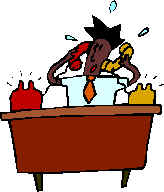
trabalho de escrit�rio, em atividades escolares, em uma linha de montagem de componentes eletronicos, em uma linha de embalagem de cosm�ticos ou produtos farmac�uticos;
ou de p� sem se movimentar muito,
como
quem atende num balc�o, como o pintor de quadros/placas, o banc�rio, o vendedor de lojas de departamento, o cabelereiro, ou quem trabalha na ind�stria controlando uma ferramenta motorizada como um torno mecanico ou uma furadeira de bancada;
este tipo de atividade leva a uma exaust�o r�pida e fraqueza cr�nica dos m�sculos respons�veis pela boa postura, ressalto � necess�rio a orienta��o profissional de um Fisioterapeuta e de um Professor de Educa��o F�sica Especializados na recupera��o destes m�sculos.


Se voc� observar os ponteiros do rel�gio marcando 8:00 h ver�

que eles formam um angulo interno obtuso (maior que 90�), que ilustra muito bem a posi��o que o longo eixo do craneo forma com o longo eixo da coluna cervical inclinada para frente.
Nesta posi��o, n�o � dif�cil entender que se houver apenas uma linha de for�a ligando as extremidades dos ponteiros por dentro do �ngulo obtuso citado, como se fossem os m�sculos posteriores do pesco�o, a tend�ncia � de o craneo cair de queixo para frente.
Para evitar esta tend�ncia de cair, h� necessidade de um linha de for�a que ligue as extremidades dos ponteiros por fora, como se fossem os m�sculos anteriores do pesco�o.
Acontece que os m�sculos anteriores do pesco�o n�o ligam os ombros diretamente ao craneo. Todos estes m�sculos fazem ponte num pequeno osso flutuante chamado hi�ide, e do hi�ide h� m�sculos ligados � mand�bula que est� ligada ao craneo pelo m�sculos mastigadores; com isto, os m�sculos mastigadores s�o induzidos a participar da sustenta��o do peso do craneo sobre a coluna cervical, i.e., um peso de no m�nimo 5,5 kg num indiv�duo adulto, pode chegar a 8 kg em pessoas de grande estatura; e isto ir� ocorrer o dia todo !
Via de regra, esta tarefa induzida promove aumento do tonus muscular destes m�sculos mastigadores que ao conduzir um contato direto entre os dentes no ato da degluti��o da saliva (isto acontece umas 600 vezes por dia, isto mesmo, seiscentas vezes), ultrapassar�o o limite de carga fisiol�gico m�ximo (37,5kg) que os dentes suportam dentro de um per�odo de 24 h, diminuindo-lhes a vida �til.
Outro fator que deve ser considerado � o tipo de m�sculo que constitui os elevadores da mandibula. Estes m�sculos elevadores s�o m�sculos de carga r�pida e muito potentes, atingem uma for�a de contra��o m�xima muito depressa mas n�o suportam manter esta carga sen�o por breve tempo porque tem pouco volume. A dura��o exagerada da carga n�o tem como resposta um relaxamento como � caracter�stico em m�sculos mais longos e maiores em volume como o das pernas e bra�os, ao contr�rio, o que se obtem � uma esp�cie de c�ibra que resulta no aperto dos dentes no per�odo noturno quando quaisquer rea��es conscientes como o ato de falar e express�es faciais que compensariam este aperto est�o suspensas pelo repouso do sono.
Uma observa��o importante antes de praticar o Alongamento simples:
N�o est� impl�cito esfor�o algum num exerc�cio de alongamento, o int�ito � relaxar e n�o se esfor�ar, deve-se tomar cuidado para n�o agredir os m�sculos e as articula��es no af� de "mostrar efici�ncia" neste tipo de exerc�cio. O tempo que cada parte deve demorar depende da pessoa, n�o deve haver exagero, o limite � o seu conforto, sempre que a posi��o ficar desagrad�vel, encerre esta parte da tarefa e inicie a pr�xima se ainda houver disposi��o para isto.
O Exerc�cio de alongamento � expressamente contra-indicado para pacientes hiperlaxos [portadores de lascid�o (frouxid�o) ligamentar].
Exerc�cios Simples de Alongamento
que podem ser praticados logo antes de dormir, observando a respira��o abdominal, que relaxa os m�sculos das costas, ombros e pesco�o, s�o :
(n�o fa�a este tipo de exerc�cio pela manh�, o fato do corpo estar sem aquecimento o torna muito perigoso pois pode provocar c�ibra nos musculos da regi�o lombar e uma pausa muito prolongada na respira��o e desmaio devido a dor intensa e incontrol�vel; nem tente porque n�o d� certo!!!)
(***)Primeira parte, deite-se com o rosto voltado para o ch�o e descansando sobre o ch�o, alterne deixando ora o rosto (a tempora e a ma�� do rosto) do lado direito, ora o esquerdo, sempre deixando o rosto descansar sobre o ch�o com os bra�os extendidos para frente e pernas extendidas para tr�s, as m�os dever�o estar se segurando com os dedos entremeados, respeite a dor que porventura acontecer e tome cuidado para n�o se apoiar sobre a mand�bula - pois isto danificaria as Articula��es Temporo Mandibulares.
 Sempre que
perceber que h� progresso de dor, respeite
sua dor, n�o espere que
fique insuport�vel, calmamente encerre
esta fase do exerc�cio.
Sempre que
perceber que h� progresso de dor, respeite
sua dor, n�o espere que
fique insuport�vel, calmamente encerre
esta fase do exerc�cio.
(***) Segunda parte: Sente-se no ch�o com o quadril rente ao encontro entre o ch�o e a parede (se poss�vel, parede revestida de madeira para n�o esfriar as costas) e lentamente procure esticar as pernas paralelamente e com a ponta dos p�s o m�ximo voltados para voc� mesmo, espere que aconte�a o alongamente dos m�sculos posteriores das pernas. Um sinal de que o alongamento ocorreu � a respira��o que deixa de ser ofegante e volta a ser pausada e agrad�vel.
(***) Terceira parte: Esta etapa � dif�cil de descrever, se n�o puder entender, entre em contato comigo via E-mail descrevendo sua d�vida: (a) Sente-se sobre os calcanhares e tendo os dedos dos p�s flexionados para frente at� que esta posi��o n�o signifique incomodo algum. (b) Em seguida, ainda nesta posi��o, fique apoiado sobre os joelhos e m�os no ch�o para aliviar o peso do corpo de sobre os joelhos e p�s, flexione os dedos dos p�s para tr�s e lentamente, com muito cuidado, evitando dor forte, volte a deixar o peso do corpo sobre os p�s que estar�o com os dedos flexionados para tr�s; permane�a assim at� perceber que houve alongamento do peito dos p�s. (c) Novamente fique apoiado sobre os joelhos e m�os para aliviar o peso do corpo de sobre os p�s e flexione os p�s para tr�s at� que a canela toda encoste no ch�o e, devagar, com cuidado, sem tirar as m�os do ch�o, volte a deixar o peso do corpo sobre as pernas.
(***)Quarta parte:
deite-se com o quadril rente ao encontro entre a o ch�o e a parede com cabe�a descansando sobre o ch�o ("sentado na parede"), os bra�os extendidos para tr�s e paralelos, as pernas extendidas para cima, apoiadas na parede, tamb�m parelas; o rosto olhando para o teto, e as m�os seguras com os dedos entremeados, permane�a assim at� obter um relaxamento confort�vel.(***)Quinta parte: (esta quinta parte � perigosa, s� deve ser exercitada quando voc� j� tiver muit�ssima facilidade para praticar as quatro primeiras partes) volte deitar-se com o rosto voltado para o ch�o, ponha os bra�os extendidos para tr�s paralelos ao tronco, alterne deixando o rosto (a tempora e a ma�� do rosto) pousando no ch�o ora no seu lado esquerdo, ora o lado direito.
(***)Sexta parte: sente-se encostando contra uma parede, de prefer�ncia forrada de madeira para n�o esfriar as costas, deixe o quadril bem encostado no canto onde o ch�o e a parede se encontram e procure extender as pernas tendo os dedos dos p�s voltados para voce mesmo e, apoiando de leve as m�os na coxa, perto do quadril, e, usando a respira��o de grande amplitude,i.e., use a extens�o do abdome para inspirar um grande volume de ar (cuidando de n�o lesar a musculatura do baixo abdome) e use a contra��o intensa dos m�sculos abdominais durante a expira��o (como se quisesse empurrar a coluna lombar contra a parede), extenda o tronco na parede at� tocar a cabe�a em posi��o ereta. A inten��o � ficar com o tronco ereto contra a parede e as pernas extendidas no ch�o. O exito deste sexto exerc�cio � proporcional � boa execu��o dos cinco primeiros. Agora, levante-se bem devagar, mantendo a contra��o abdominal at� conseguir ficar de p�, relaxe e v� dormir.
As bact�rias -- s� se tornam as vil�s no contexto da c�rie dental por nosso descu�do. Apenas duas esp�cies da mais de 400 j� identificadas que habitam a boca s�o favorecidas com a ingest�o de a��cares. As favorecidas, uma vez superalimentadas, se multiplicam em maior propor��o que as outras e passam a ocupar um territ�rio maior em detrimento destas outras; ocorre ent�o um desequil�brio da popula��o bacteriana bucal e uma consequente queda na imunidade local.
As duas esp�cies bacterianas que se destacam por utilizar a sacarose (a��car) como alimento e produzir, a partir da sacarose, �cido que desmineraliza o esmalte e a dentina, s�o o Streptococus Mutans e os Lactobacilus. Estas bact�rias, depois de estabelecer uma ponte de prote�na que a liga � estrutura dent�ria (Streptococus), ou depois de se alojar em acidentes anatomicos como f�ssular e fissuras, ou em interface restaura��es/dente, s� podem ser removidas por meio mec�nico, � preciso "raspar" a estrutura dental com um escova de dentes macia para "desgrud�-las" dali. Uma col�nia j� estabelecida desta e das outras esp�cies forma o que se chama de Placa Bacteriana. O pH* da Placa Bacteriana cai para perto de 5,5 em apenas 20 segundos ap�s a ingest�o de a��car; mal d� tempo de engolir este a��car e j� temos um ambiente prop�cio para a desmineraliza��o da superf�cie do dente.
*O grau de acidez de uma subst�ncia ou meio � medido usando uma unidade chamada pH, o pH neutro � 7,0, menos que 7,0 � acido e mais que 7,0 � b�sico.(voltar ao texto original)
A melhor maneira de controlar a popula��o bacteriana � controlando a dieta e a manuten��o de uma higiene bucal sistem�tica, "n�o pode deixar a peteca cair", se, por algum motivo, voc� se d� o direito de relaxar com a higiene, � bom ter consci�ncia de que o metabolismo das bact�rias � incans�vel, ininterrupto.
A Dieta -- � um grande �tem na coopera��o com a sa�de bucal sob dois aspectos:
Hor�rio certo para se alimentar (m�ximo de quatro refei��es por dia, entenda que uma simples "boquinha" ou um ch� com bolacha s�o considerados refei��o)-- devo o cr�dito deste �tem aos meus professores de Bioqu�mica e Microbiologia. O pH da saliva chega a atingir a alarmante marca dos 4,5 durante uma refei��o normal; se, ap�s a refei��o, dentro de no m�ximo 20 minutos, escovar-se os dentes e utilizar-se a fita dental observando uma boa tecnica, o pH voltar� a ser 7,0 (neutro) lentamente dentro de tres (3) horas, s� ent�o acontece a recaptura dos ions Calcio perdidos pelo pH baixo da saliva. Portanto, n�o h� escolha, � necess�rio um jejum de tres horas somado a um prazo para que haja esta recaptura dos �ons Calcio. Se dermos um prazo de uma hora para esta recaptura para que o dente seja preparado para enfrentar a pr�xima refei��o; temos um total de quatro (4) horas entre refei��es. Durante estas 4 horas, se tiver sede, beba �gua (refrigerante diet n�o serve, � apenas menos ruim que o comum pois � �cido), se tiver fome incontrol�vel, coma, num �nico determinado momento, n�o o tempo todo, um punhado de sementes: amendoim, castanhas de caju, castanhas do par�, etc., um bom peda�o de queijo branco, pipoca salgada, ou palitos de cenoura, e s�. Se voc� tem o h�bito de "lambiscar" o dia todo, � bom estar ciente da possibilidade de ter que passar sua vida toda indo ao dentista tratando dos dentes de uma maneira infrut�fera e frustrante pois a indisciplina alimentar danifica a estrutura dent�ria natural que sustenta estes tratamentos.
Voc� tem todo direito de argumentar in�meras raz�es para quebrar esta r�gida disciplina, mas os seus dentes s�o incapazes de compreender ou aceitar seus argumentos e certamento ser�o danificados por isto.
Diminuir drasticamente a ingest�o de a��car -- No Congresso Internacional de Odontologia, Janeiro de 1998 e novamente em Janeiro de 2002, tive a oportunidade de assistir tres �timos Cursos Nacionais sobre Preven��o (O Brasil tem se destacado nas pesquisas neste campo), num deles, tive confirmado a not�cia de que, se o meu consumo de a��car se resumir �s sobremesas de minhas refei��es, mesmo assim n�o tenho a estat�stica cariog�nica a meu favor, o meu risco de sofrer c�rie dental, comparado a algu�m que n�o consome a��car de modo algum, � muito, muito grande.
Volto a dizer que os dentes s�o incapazes de compreender argumentos pelo que irrevers�velmente sofrem, e a disciplina alimentar comprovadamente funciona.
 voltar
ao in�cio do Web Site
voltar
ao in�cio do Web Site
Regular
Visitors, click here & rush to the latest news
This Web Site was worked out using Microsoft Front Page 98; to visualize it, use preferentially Microsoft Internet Explorer 4.* Navigators
You will find in this Web Site some of the instructions that I routinely try to pass on to my patients. I have noticed that most of them, for some reason, reveal to be completely unable to acknowledge ever having heard about those instructions right at the next check-up ; so I decided to write all those directions down and, as far as possible, continuously update them so my patients may, at any time keep up with fresh instructions on the Internet, without having to wait for the next check-up.
I wish to express my admiration to every patient who sets apart some time to remember:
- What was it The Dentist told me the last time I saw him ?
The subjects here exposed I have learned and collected (I am not the primary author) during these more than 20 years of clinical practice, and with my Dental School tutors and Professors at the University of S�o Paulo Dental School, at the many Updating Courses I took at International Dental Congresses, at S�o Paulo Dental-Surgeons Association, and other Class Associations such as Orthodontists' and Physiotherapists'. I must also mention the knowledge acquired from the many Dental Magazines I have read during and after the Graduate Dental Course at the Dental School Library, and also some Dental Textbooks I have been reading after graduation.
It would not be productive to quote each author in particular, also because due to the length of time that has gone by, I no longer remember where I heard or read certain aspects of this subject. But I do wish to mention the opportunity that my wife and I have had of participating as members of the Staff of Temporo-mandibular Dysfunction Study Group as Assistant Professors at the S�o Paulo Dental Surgeons Association School for Graduated Dentists for the past four consecutive years. Last year, 1999, first semester, we had the privilege of participating in the Monthly meetings of the Orofacial Pain Study Group of the Hospital das Cl�nicas de S�o Paulo and, this second semester, in the Orofacial Pain Group from the Escola Paulista de Medicina at the Dental School Clinics in the Universidade Paulista in the Role of the Dental Oclusion in Orofacial Pain Clinical Practice. I believe it is unnecessary to list all the names of the Professors and Authors since this site is addressed to my patients only.
Dental Science is gradually and progressively dedicating a greater space to prevention rather than to only filling cavities, treating the root canal, repairing broken teeth, replacing missing teeth and medicating gingivitis.
To prevent Cavities and Gum disease from taking place is just as, or even more important than to repair and medicate them. Although we approach the end of the second millennium, we are far from certain of having a dental restorative material that approximates the functional excellency of the natural dental structure.
It is most important that the patient learns the reason for the decay of oral structures and also what is in his or her hands to avoid, and to keep his or her mouth in good condition.
It is not an easy task to row against the tide of popular belief, that simply visiting the dentist every six months is a guarantee for the teeth and surrounding tissues not to deteriorate, but rather, that a daily care is a must in order to maintain a good oral health.
The yearly, six monthly, or three monthly check up is of the utmost importance and also aims at guiding the patient in the practice of such daily care. Whenever necessary, the Dentist will repair whatever was not possible to prevent using the best and the latest that technology has to offer.
The use of the marketing techniques by the dental midia (and I regret this is happening because Dental Health Care should be sought whenever the patient needs it and not through marketing appeal) has lead the public to believe in the possibility of the perfect recovery of the dental and surrounding tissues structure and function. As if it were that simple, by counting on technological progress and without making people aware that even today the ideal is to prevent and not to repair. So the public must learn about prevention of mouth diseases rather than simply depend on the Dentist to repair his or her continuously breaking down masticating system.
The first Item you will find in this web site, The Relative Strength of the Masticating System, sub-item Local Tissue Stress refers to a subject which can easily give rise to misinterpretation, so I must first explain that :- Prevention, with respect to local tissue stress does not change the Dentist operatory routine of handling the matter, but it only increases the possibility of keeping the dental pulp alive (the dental nerve alive) as it accelerates the attainment of pain relief with certain exercises help the patient to relax the muscles responsible for the continuity of mechanical traumatic injury of the dental element in question. If any carious decay is detected, it will have to be treated and the tooth must be properly restored; If any alveolar bone crest resorbtion is taking place, the usual routine prosthetic and periodontal treatments must be performed such as oclusal adjustment, manual or ultrasonic scaling of the roots and even periodontal surgery if necessary. And if irreversible inflammation of the dental pulp happens (continuous pain not reduced by medication or direct pulp capping) or pulpar necrosis, the endodontic treatment (root canal treatment) cannot be avoided. The already mentioned Kinesiotherapy (performed by Faculty Graduated Physiotherapists only, and under the orientation of the Dentist) is a precious and necessary therapy that should be used in cases where the proper dynamic of mastication is being misdirected by a poor cranio-cervical posture.
So I strongly advise you to verify within these Three Main Items: (1)Relative Strength of the Masticating System, (2)Bacteria and (3)The Proper Diet
, how you, the patient, can act as the Co-Doctor in your dental treatment. It will be to your great advantage.
The Relative Strength of the Masticating System
 |
Using Fluorides |
|
Learning how fluoride works |
|
Avoiding Local Tissue Stress |
|
About Local Tissue Stressing |
|
About Bruxing |
|
Severe precautions on the use of Elongating Exercises |
|
Simple Elongating Exercises |
Extra!
Extra!
All Additions and Updates to this Web Site will be listed here as bookmarks.
The new visitor should not read these Updates and Additions before having read all the content of the Web Site once these Updates and Additions necessarily are sub-items of the Three Main Items.
All the Text of this Web Site was revised on October 19th, 2001
Very, Very Important:
*** The instructions published in this Web Site are exclusively addressed to those of my patients who were already clinically instructed about cranio-cervical posture and who only wish to review - What was it the Dentist told me last time I saw Him ?
The visitor who does not fit in the classification described above has access to these instructions on his or her own risk for the instructions published in this Web Site do not forgo proper clinical examination, clinical prescription and clinical follow-up.
Make
yourself at home, "Bom Proveito" and Communicate!
The routine use of fluoride in tooth brushing paste and mouthwash solutions after every meal is a must.
I hope you have already had the curiosity of asking your Dentist about a proper tooth brushing technique that fits best for your teeth only and also a hands-on training using a proper brand new toothbrush, dental floss and even an efficient electric toothbrush. There is need to adequate the tooth brushing technique to the actual position your teeth have in your dental arches. A theoretical class is definitely not enough.
You must be aware of the fact that even a crownless root-canal treated root, containing a post in its root-canal and a prosthetic crown covering what is left of such tooth structure, even though, the complex root-post-crown is to be considered as a tooth for the supporting structure is still a natural tooth structure: the root, which requires the very same precautions with respect to Local Tissue Stress, Bacteria and Proper Diet here exposed.
It is convenient to remember that, with respect to Local Tissue Stress, it has been observed that the factors which threatens a long term stability of a tooth in its bony socket, also threatens a long term stability of a titanium dental implant in its bony bed.
The tooth enamel is composed of minute hydroxiapatite prisms. The hydroxiapatite molecule has a Calcium ion that can be dislodged to the bucal environment whenever the latter becomes acid as it happens during an ordinary meal, but as soon as the bucal environment recovers its neutrality, such Calcium ion is recovered (the bucal saliva is rich in Calcium ions).
If the Calcium ion is replaced by a Fluor ion, we obtain fluoroapatite instead of hydroxiapatite, fluoroapatite is more caries resistant than hydroxiapatite.
The fluoride contained in toothpaste, mouthwash solutions and dental floss*, seats on decalcified spots of the tooth enamel and it is absorbed by such enamel whenever the pH of the bucal environment drops below 7.0 (acid); so the bucal prophylactics with fluoride containing products provides the teeth a very effective chemical shield that is activated by low pH, this is especially important if we consider the fact that it takes not less than 3 hours for the bucal environment to gradually recover the neutral pH (7.0) if a proper bucal hygiene is performed right after any ordinary meal *.
As a curiosity only, you should know that the reliability of fluorides is used by your dentist in the form of a special compound to completely buffer the caries biochemical process so a low calciun content tissue becomes a high fluor content tissue, ie, the carious soft tissue becomes hard again, it is the di-amine-silver-fluoride Bioride*TM (professional use only) which can be used under any non-esthetic restoration in posterior teeth.
Avoiding Local Tissue Stress
If you have already seen anybody biting his or her nail border cuticle while waiting for the traffic light to turn green you also have a good idea of what local tissue stress means, such bad habit demands a special head and neck posture that allows the biting (masticating) muscles to position only two teeth against each other in order to bite that little border of the nail cuticle; I have to point that when a masticating muscle is exerting a light force, like when we swallow saliva, it is using not less than 37,5 kg of force, and this type of muscle is able to exert 120 kg of force very easily and instantaneously as when we need to chew a piece of steak. It has been published in the Dental Literature, the exertion of more than 400 kg during an event of night bruxism.
The dental structure supports the chewing forces suffering very little surface damage, these little damages are constantly repaired by biochemical mantainance service that prepares the dental structure for the next job (meal), it has been observed in monitoring the masticating system that the teeth are requested to directly touch (and this is the toughest type of job a tooth can endure: direct tooth-to-tooth contact) each opponent every time we swallow saliva, this occurs six hundred (600) times a day in average, but such direct touch does not happen when we chew food. The need for physiological rest of such enduring structures that compose the masticating system is enormous, it surpasses 23 hours a day, and it is during this big rest period that maintenance is performed. If your teeth are requested to work for more than 20 minutes per day (which is enough time for three to four regular meals and the swallowing of saliva) the maintenance will not be completed in. You should now be able to predict the bad situation that a bruxist and/or teeth clencher is in for he or she applies his or her teeth to such harmful task of directly touching each opponent for many hour per day (it does not matter the motive, it may a good motive like playing music with the teeth or or a bad one like expecting your boss appreciation of your job). It will be just a matter of time, your entire masticating system will suffer structural decay, it is just like precocious if you overuse machine, it wears out very quickly, you should understand this decay as caries, periodontal disease, positional change of teeth, muscular and joint pain; not always satisfactorily repairable.
The 20 minutes per day physiological limit for maximum range function is not peculiar to teeth structure; it is a common physiological limit for any sinovial articulation (f.e., the knees articulation) of the human body, the tooth is part of an articulation, it is articulated to the mandible through a fibrous "carpet", these fibers are oriented radially from the root of the tooth to its bony socket around it (periodontal fibers), and, in a special way, it behaves much like a sinovial articulation, i.e., the articulation between the teeth and the bony socket is performed without wear, noise or attrition. These articulations work within 70% of its maximum mobility range (the mastication of food is performed within this 70%, there is no tooth to tooth direct contact during an ordinary meal) but, at the end of every 24h period, a total of 15 to 20 minutes of maximum range, 100% amplitude, will have been performed in a very quick and light manner, it may take only a fraction of a second in case the teeth articulation is considered, when we swallow saliva (a teeth full contact is exerted); or it may take a few seconds as when we stretch our arms and yawn. The act of swallowing saliva is the occasion when 100% amplitude of teeth movement in its bony socket is exerted and, important changes in the cervical spine curvature, position of the hyoid bone, and cincture scapular lead the muscles that participate in the act of swallowing to surpass the physiological limit of 37,5 kg that the tooth structure can bear when 100% amplitude is performed, which, in time will take the masticating system to suffer the effects of articular overload : decalcification, premature wear and irreversible anatomical changes not always convenient to the good performance of the system. One should consider the fact that the bucal environment is an external environment to the body and it houses a variety of bacteria species that inhabitate in the bucal saliva, mucosa, crown and root surfaces of the teeth and these bacteria, in time, have the hability of leading a tooth structure reversible adapting decalcification process (induced by articular overload) into irreversibility due to the very low pH of the saliva and bacteria plaque-tooth interface that occur at every meal, the result is universally known as dental caries; low pH root surface damage is also one of the factors responsible for unrecovering of lost alveolar bone crest (i.e., the vertical level of the bony socket that supports the tooth) which is adapted to continuous overfunction like bruxing e.g., once the periodontal fibers wont be reinserted to inappropriate root surface.
There is more that you should know about this type of local stress, take a look into these two items : local tissue stress & bruxing
Your teeth are used during an ordinary meal without direct contact, they do not touch each other directly. As soon as the portion of food that you are chewing becomes small enough, it is swallowed and another portion is interposed between the teeth, the chewing exercise is so minutely monitored that the absence of consistency is detected and the biting force is interrupted so the chewing teeth do not touch each other. Unfortunately this precise and protecting neuromuscular "device" is not put to work when one bites a toothpick, paperclips or nail cuticle for there is no intention of eating what is being bitten. The objects being bitten are only means for mechanical estimuli transmition that are definitely agressive to the fibrous-hydraulic suspention of the teeth involved and for the teeth structure itself for it may induce localized decalcification exactly under the line of force of the movement being exerted.
The damage caused by localized stress are not minor damages,at first the natural protecting reflex, that interrupts mastication to avoid fracturing any teeth if any "little rock" shows up during a meal, is "gently avoided" in a obstinate manner so that this protecting reflex is not activated so you can grip the toothpick or whatever you are bitting for fun or grind your teeth as much as you want. Loss of alveolar bony support, pulpar necrosis (death of the "nerve"), fracture of the crown, fracture of the root and even complete loss of the dental element resumes the damaging power of localized stress. These are not easy to repair damages, and even if it is repaireable, it will not be a long lasting restorative procedure since the very same situation that lead to the damage of the natural tooth will also ruin any type of restorative treatment, for the all dental restorative procedures rely on the remaining healthy tooth and/or bone structure, including implants.
So if you recognize any of these bad practices in your dayly routine, do not blame your teeth' quality for so many visits to your dentist every year, you are overusing your masticatory system.
Please, be patient, I
am still working on the English Version 
Last update to English Version: November 15th, 2000 !
The Following English text is still under construction !!!
JARBAS’ ENGLISH HOMEPAGE
My corrections
(started 30. Aug.2000)
Line 7 of pg.5:
in this colour: there is something I do not understand and thatdoes not quite make sense. Please correct it, Jarbas !
Pg. 9 line 17. Hiperlaxo Can that be translated for hyperlax ?
Pg.9 line 18: frouxid�o ligamentar : slackness of ligaments ?
Pg. 10, line 22: "
Then extend your trunk on the wall until it touches your head in an erect position." This does not make sense !Pg.10, line 48: Placa Bacteriana = Bacteria Plaque ? (BaceteriaL plaque ?)
Make yourself at home, be welcome, and Communicate!
If you need more information, I will be glad to help you within the limits of my
knowledge, just let me know:
E-mail [email protected]
Phone Numbers 055 (011) 5541-0271, 5541-9963, 5524-3365, 5522-6780, 533-2480, cellular 9194-3930
Fax 055 (011) 533-2480 5524-3365
Regular Mail Address:
Av. Aratans 550, apt. 121 - Moema 04081-002 S�o Paulo, SP Brazil
The Relative Strength of the Masticating System
Keeping up this strength by:
Using Fluorides and Avoiding Local Tissue Stress
Fluorides
The routine use of fluoride in tooth brushing paste and mouthwash solutions after every meal is a must.
I hope you have already had the curiosity of asking your Dentist about a proper tooth brushing technique that is appropriate for your teeth only and also a hands-on training using a proper brand new toothbrush, dental floss and even an efficient electric toothbrush. It is necessary to adequate the tooth brushing technique to the actual position your teeth have in your dental arches. A theoretical lesson is definitely not enough.
You should be aware of the fact that even a crownless root-canal treated root, containing a post in its root-canal and a prosthetic crown covering what is left of a tooth structure, is to be considered a tooth, since the supporting structure is still a natural tooth structure. This root requires the very same precautions with respect to Local Tissue Stress, Bacteria and Proper Diet, as it is exposed to the same damages caused by carelessness, which have been mentioned..
It is worth remembering that, with respect to Local Tissue Stress, the same factors which threaten the long term stability of a tooth in its bony socket have been observed to also threaten the long term stability of a titanium dental implant in its bony bed.
Learn How Fluorides work:
The tooth enamel is composed of minute hydroxiapatite prisms. The hydroxiapatite molecule has a Calcium ion that can be dislodged to the buccal environment whenever the latter becomes acid as happens during an ordinary meal, but as soon as the buccal environment recovers its neutrality, such Calcium ion is recovered (the buccal saliva is rich in Calcium ions).
If the Calcium ion is replaced by a Fluor ion, we obtain fluoroapatite instead of hydroxiapatite, which is more caries resistant than hydroxiapatite.
The fluoride contained in toothpaste, mouthwash solutions and dental floss*, is deposited on decalcified spots of the tooth enamel and absorbed by the enamel whenever the pH of the buccal environment drops below 7.0 (acid); so the buccal prophylactics with fluoride containing products provides the teeth with a very effective chemical shield that is activated by low pH. This is especially important if we consider the fact that it takes not less than 3 hours for the buccal environment to gradually recover the neutral pH (7.0) if a proper buccal hygiene is performed right after any ordinary meal *.
As a curiosity only, you should know that the reliability of fluorides is used by your
dentist in the form of a special compound to completely buffer the caries biochemical process so a low calciun content tissue becomes a high fluor content tissue, ie, the carious soft tissue becomes hard again, it is the di-amine-silver-fluoride Bioride*TM (professional use only) which can be used under any non-esthetic restoration in posterior teeth.
return to contents
Avoiding Local Tissue Stress
If you have already seen anybody biting his or her nail cuticle while waiting for the traffic lights to turn green you have a good idea of what local tissue stress means. Such a bad habit demands special head and neck posture that allows the biting (masticating) muscles to position only two teeth against each other in order to bite that little border of the nail cuticle. I wish to point out that when a masticating muscle is exerting a light force, like when we swallow saliva, it is using not less than 37,5 kg of force, and this type of muscle is able to exert 120 kg of force very easily and instantaneously as when we need to chew a piece of steak. The exertion of more than 400 kg during an event of night bruxism has been published in Dental Literature.
The dental structure tolerates the chewing forces suffering very little surface damage, because there is a constant maintenance service as it were, which repairs the tooth biochemically, leaving it ready for its next task (meal). It has been observed in monitoring the masticating system that the teeth are required to directly touch (and this is the toughest type of job a tooth can endure: direct tooth-to-tooth contact) each opponent every time we swallow saliva, this occurs six hundred (600) times a day on average, but such direct touch does not happen when we chew food. The need for physiological rest of these resistant structures that make up the masticating system is enormous, it surpasses 23 hours a day, and it is during this long period of rest that maintenance is performed. If your teeth are required to work for more than 20 minutes per day (which is long enough for three to four regular meals and the swallowing of saliva) the maintenance will not be completed in this time. Now just imagine the situation that a bruxist and/or teeth clencher is in, for he or she applies his or her teeth to the harmful task of directly touching each opponent for many hours per day (the reason for this being irrelevant, it may even be a pleasant one, such as humming a tune in accompaniment to a piece of music one is listening to, or a bad one such as expecting your boss’s appreciation of your job). It will be just a matter of time for your entire masticating system to suffer structural decay. If you overuse a machine it wears out very quickly. This decay means caries, periodontal disease, positional change of teeth, muscular and joint pains which are not always satisfactorily repairable.
The 20-minute per day physiological limit for maximum range function is not peculiar to teeth structure; it is a common physiological limit for any sinovial articulation (i.e., the knee articulation) of the human body. The tooth is part of an articulation, it is articulated to the mandible through a fibrous "carpet". These fibres are oriented radially from the root of the tooth to its bony socket around it (periodontal fibres), and, in a special way, it behaves much like a sinovial articulation, i.e., the articulation between the teeth and the bony socket is performed without wear, noise or attrition. These articulations work within 70% of their maximum mobility range (the mastication of food is performed within this 70%, there is no tooth to tooth direct contact during an ordinary meal) but, at the end of every 24h period, a total of 15 to 20 minutes of maximum range, 100% amplitude, will have been performed in a very quick and light manner; it may take only a fraction of a second in case the teeth articulation is considered, when we swallow saliva (a teeth full contact is exerted); or it may take a few seconds as when we stretch our arms and yawn. The act of swallowing saliva is the occasion when 100% amplitude of teeth movement in its bony socket is exerted and, important changes in the cervical spine curvature, position of the hyoid bone, and cincture scapular lead the muscles that participate in the act of swallowing to surpass the physiological limit of 37,5 kg that the tooth structure can bear when 100% amplitude is performed, which, in time will take the masticating system to suffer the effects of articular overload : decalcification, premature wear and irreversible anatomical changes not always adequate to the good performance of the system. One should consider the fact that the buccal environment is an external environment to the body which houses a variety of species of bacteria that inhabit the buccal saliva, mucosa, crown and root surfaces of the teeth and that these bacteria, in time, have the ability of leading to an irreversible process of decalcification due to the very low pH of the saliva and bacteria plaque-tooth interface that occur at every meal The result of this process is universally known as dental caries. Low pH root surface damage is also one of the factors responsible for the irretrievable loss of the alveolar bone crest (i.e., the vertical level of the bony socket that supports the tooth) which is adapted to continuous over-function like bruxing e.g., since the periodontal fibres cannot be reinserted to inappropriate root surface.
There is more that you should know about this type of local stress, take a look into these two items : local tissue stress & bruxing
Local Tissue Stress
During an ordinary meal your teeth are used without direct contact, that is, they do not touch each other directly. As soon as the portion of food that you are chewing becomes small enough, it is swallowed and another portion is interposed between the teeth. The chewing exercise is so minutely monitored that the absence of consistency is detected and the biting force is interrupted before direct contact of the teeth occurs..
Unfortunately this precise and protecting neuromuscular "device" is not put to work when one bites a toothpick, paperclips or nail cuticle for in this latter case there is no intention of grinding what is being bitten. The objects being bitten are only means for mechanical stimuli transmission that are definitely aggressive to the fibrous-hydraulic suspension of the teeth involved, and to the teeth structure itself for it may induce to localized decalcification exactly under the line of force of the movement being exerted.
The damage caused by localized stress is not minor damage. At first the natural protecting reflex, that interrupts mastication to avoid fracturing any teeth if any "little rock" shows up during a meal, is "gently avoided" in an obstinate manner so that this protecting reflex is not activated and you can grip the toothpick or whatever you are biting for fun or grind your teeth as much as you want. Loss of alveolar bone support, pulpar necrosis (death of the "nerve"), fracture of the crown, fracture of the root and even complete loss of the dental element resumes the damaging power of localized stress. These injuries are not easy to mend, and even if they are repairable, the repair will not be a long lasting restorative procedure since the very same situation that led to the damage of the natural tooth will also ruin any type of restorative treatment, for all dental restorative procedures rely on the remaining healthy tooth and/or bone structure, including implants.
So if you recognize any of these bad practices in your daily routine, do not blame the quality of your teeth. The reason for having to pay your dentist so many visits every year is simply that you are overusing your masticatory system.
Please, be patient, I am still working on the English Version
(HERE STARTS MY TRANSLATION, sgn. the English Teacher)
There is one type of localised stress which is hard to control . This is when there is nothing interposed between the teeth, but one just grinds them or presses them hard one against the other. In English this is called "bruxing", and in Portuguese "rangismo".
Bruxing can and must be minimised, but success in this endeavour depends a lot on the patience and determination of the patient who has to submit to a long treatment. The "bruxer" is an emotionally overburdened person who finds it difficult to dedicate time to fight this bad habit and furthermore he is skeptical because on the whole, bruxing is an unconscious habit which is practised when attention is required to carry out some critical activity which requires concentration.
Bruxing can and must be minimised, and success depends on the willpower of the patient to submit to a slow treatment.
To start with a "biting sheet" is used, which when correctly adjusted induces the neuro-muscular system to lessen the constant strength which is applied on the teeth and supporting tissues. The success is felt more strongly during the first 60 days, because after this period the neuro-muscular system learns to go on with the bruxing, even with the sheet in place. Therefore the sheet has to be regularly readjusted.
While making use of these first 60 days of "significant achievement" granted by the "biting sheet", other means of controlling bruxing on a long term have to be sought. Among the various alternatives, correcting the posture of the cervical region has answered this purpose in a very satisfactory way.
Every night, before going to bed, elongation exercises should be practised so as not to go to sleep with certain muscles shortened by the routine tasks performed during the day. However, a really efficient postural correction of the cervical spine is not possible without the orientation of a physiotherapist who knows about vertebrae and temporo-mandibular articulations.
In order to understand how elongation exercises can help reduce bruxism, one has to understand how the skull is balanced on the cervical spine.
I hope that the drawings will help you to understand how the masticatory muscles participate in "holding the head in its place", which is a highly harmful function for them, when hyperactivity of the frontal muscles of the neck occurs due to a frontal posture of the skull.
(Or else :
I hope that the drawings will help you to understand that when hyperactivity of the frontal muscles of the neck occurs due to a frontal posture of the skull, the masticatory muscles participate in "holding the head in its place", which is a highly harmful function for them.)
This posture of holding the skull in a forward position is very common and usually occurs due to tiredness caused by sitting during many hours, doing desk work, school activities or working on a production line of electronic components or in a packing line of say cosmetic or pharmaceutical products. Or even during activities carried out standing, for instance sales people behind a counter, tellers in a bank, hairdressers or people who work in an industry operating a motorised control of a mechanical lathe or a drilling machine. These types of activities lead to rapid exhaustion and chronic weakness of the muscles responsible for right posture.
I emphasize once more that the professional orientation of a physiotherapist is required to recuperate these muscles.
If you look at the hands of a clock pointing at 8 o’clock, you will see
that they form an internal obtuse angle which illustrates very well the position which the long axis of the skull forms with the long axis of the cervical spine tilted forward.
In this position it is easy to understand that if there were just one line of force connecting the points of the hands, as if they were the posterior neck muscles, the tendency would be for the skull to fall with the chin forward . In order to avoid this falling tendency a line of force is required which connects the ends of the hands outwardly, as if they were the anterior muscles of the neck.
It so happens that the anterior muscles of the neck do not connect the shoulders directly to the skull. All muscles lead to the hyoid, which is a small fluctuating bone, and from there there are muscles which lead to the jaw, which is connected to the skull by the masticatory muscles. In this way the masticatory muscles are made to help in the support of the weight of the skull on the cervical spine, i.e. a weight of at least 5,5 kg. for an adult and which can even reach 8 kg. for very heavy and tall people.
This induced task usually leads to an increase of muscular tension of the masticatory muscles, which, when coming into direct contact with the teeth while swallowing saliva (and this happens some 600 times a day, yes, that’s right, six hundred times), exceed the limit of physiological stress the teeth can endure within a 24 hour period, thus shortening their active life. Another factor to be taken into account is the type of muscle which makes up the elevators of the jaw, i.e. these elevator muscles are very strong and fast and are able to reach a high contraction force very quickly but can only maintain this force for a short period because they are not bulky and the duration of the exaggerated force does not lead to the relaxation which is characteristic to longer and bulkier muscles. This leads to a sort of cramp which causes a tightening or pressure of the teeth during the night when any conscious reactions such as speech or facial expressions would compensate this tightening are in abeyance due to the rest induced by sleep.
AN IMPORTANT REMARK BEFORE PRACTICING SIMPLE ELONGATION:
No effort is implied in an elongation exercise. The idea is to relax and not to exert oneself. Care should be taken in order not to harm muscles and articulations in one’s eagerness to do this exercise well. How long each exercise should last depends on each person; there should be no exaggeration and the limit is one’s wellbeing . As soon as a position becomes uncomfortable it should be given up.
Elongation exercises should not be practised by hyperlax patients, that is those who suffer from slackness of ligaments.
Simple elongation exercises
Which can be practised just before going to bed, paying attention to abdominal breathing, and which relaxes the muscles of the back, shoulders and neck:
(do not do this exercise during the morning. Because the body is not warmed up it can be very dangerous and may lead to cramp in the muscles of the lumbar region and a long pause in breathing and a fainting fit due to great and uncontrollable pain. Don’t even try because you will not succeed).
(***) First Part. Lie on the floor face down and turn your face (temple and cheek) alternating between the right and the left side of the face always lying on the floor, with arms stretched out ahead of you and legs stretched out backwards. The hands should be together and the fingers interwoven. Respect any pain which you might feel and pay attention not to lie on your jaw, as this might harm the temporo-mandibular articulations.
Whenever you feel pain coming on, respect it . Quietly end that phase of the exercise without waiting for it to become strong..
(***) Second part: Sit on the floor with your backside hard against the wall (if possible against a wood panelled wall to protect the back from cold) and stretch your legs as much as possible with the tip of the toes turned hard back pointing at you. Wait until the muscles at the back of the legs stretch to their maximum. This happens when your breathing ceases to be puffy and returns to being regular and pleasant.
(***) Third part: This stage is hard to describe. If you do not understand it send me an e-mail telling me about your uncertainty.
(***) Fourth part: Lie down with your hips hard against the floor and the wall and rest your head on the floor, arms stretched parallel and backwards, legs stretched upwards resting against the wall, also parallel, face towards the ceiling and hands together with fingers interwoven. Stay like that until you feel pleasantly relaxed.
(***) Fifth part: (this stage is dangerous and should only be tried when you do the former four parts with great ease.) Once again lie down with your face turned towards the floor. Stretch your arms backwards parallel to the trunk and alternate leaving your face (temples and cheeks) once towards the left and then towards the right.
(***) Sixth part: Sit leaning against a wall, preferably wood-panelled so as not to chill your back, with your hips leaning hard against the angle formed by the floor and the wall and stretch your legs with the toes turned towards you, and your hands resting lightly near your knees. Then extend your trunk on the wall until it touches your head in an erect position. The aim is to keep the trunk erect against the wall and the legs stretched out on the floor. The success of this sixth exercise is proportional to the successful performance of the previous five.
And now get up and slowly go to bed.
Return to contents
BACTERIA
How to control these essential inhabitants of the mouth
Bacteria only become villains in regard to dental cavities, due to our own carelessness.
Some of the species in our mouth are fostered by our intake of sugar, others are not.. The ones that are benefited by the sugar multiply at a greater rate than the others when they are overfed, and occupy a larger territory to the detriment of the others. This leads to an imbalance of the bacterial population in our mouths.
The Streptococus Mutans is the species which uses sucrose (sugar) to feed on and produces an acid which demineralises the enamel and the dentine. After these bacteria have established a bridge of proteins to connect them to the dental structure, they can only be removed mechanically, that is, the dental structure has to be "scraped" with a soft tooth brush to "unstick them", as it were. A colony of these and other bacteria already established forms what is called Bacteria Plaque. The ph* of this Bacteria Plaque drops to almost 5,5 in only 20 seconds after sugar intake. We hardly have time to swallow the sugar before damage is done.
* The degree of acidity of a substance or environment is measured using a unit called pH. The neutral pH is 7.0; less than 7,0 is acid and more than 7,0 is basic. (Return to original text.).
The best way to control buccal bacteria is by controlling diet and systematically looking after one’s buccal hygiene. One can at no moment be careless about this. If for any reason you happen to relax in regard to hygiene, bear in mind that the metabolism of the bacteria never does.
Return to contents
DIET
Not exactly a diet, but a discipline.
Diet is an important item which co-operates with buccal health under two aspects:
Regular times for meals (maximum four a day and remember that a simple little snack is considered a meal). (For this item I am indebted to my professors of Biochemistry and Microbiology) The pH of saliva reaches the alarming score of 4,5 during an ordinary meal. If within a maximum of 20 minutes the teeth are brushed and dental floss is applied with the right technique, the pH will slowly revert to 7,0 (neutral) in a period of three (3) hours. It is only then that the ions of Calcium lost due to the low pH of the saliva will be retrieved. Consequently there is no choice. There must be a period of three hours plus another hour for the retrieval, for the teeth to be ready to face the next meal. During these four hours, if you are thirsty drink water (not even "diet" or "light" soft drinks, which are only slightly better than the ordinary, because they are acid). If you are uncontrollably hungry eat, but at once and not all the time, a handful of peanuts, cashew nuts or the like, and nothing else. If you are in the habit of "nibbling" all day long you might just spend the rest of your life going to the dentist without much success, because lack of dietary discipline damages the natural dental structure which sustains these treatments.
It is your right to bring up innumerable reasons to break this rigid discipline, but your teeth will not understand or accept your excuses for the harm which they will certainly suffer.
To cut down drastically on sugar intake. During the last International Congress of Dentistry in January 1998, I had the opportunity to attend two excellent national courses on Prevention (Brazil is distinguishing itself for research in this field). During one of them I sadly learnt that if my sugar intake were restricted to the desserts after my meals even then, the cavity statistics would be against me and my risk of having dental caries is greater than that of someone who does not consume any sugar.
I repeat that teeth do not accept excuses, nor do they understand arguments. They suffer irreversibly. Dietary discipline works and this is what counts.
Visitante
habitual, vaya directamente a las novedades
Este Sitio fu� elaborado com recursos del MS.Front Page 98 y ser� visualizado mejor con el /los navegador /es Microsoft Internet Explorer 4.*
Ud. encontrar� en este sitio lo que rutinariamente trato de ense�ar a mis pacientes; me d� cuenta que la gran mayor�a de estos pacientes parece haber olvidado ya en el pr�ximo chequeo casi todo lo que les hab�a dicho; por lo tanto tiene Ud. aqu� por escrito e ilustrado, de forma continua y renovada, aquellas instrucciones para su libre acceso, a cualquier momento, y sin tener que esperar el pr�ximo chequeo. Y aprovecho para manifestar mi admiraci�n a todo aquel que se interesa por recordar :
" Qu� fu� lo
que me dijo aquel Dentista ?
Todo lo expuesto aqu� es fruto de lo que aprend� con profesores en estos casi veinte a�os de recibido en la Facultad de Odontolog�a de Universidad de S�o Paulo, en los in�meros cursos de actualizaci�n que asist� en congresos nacionales e internacionales y en asociaciones de clase. Debo tambi�n dar cr�dito a las muchas revistas especializadas a las que tuve acceso en la biblioteca de la facultad durante y despu�s del curso de graduaci�n, y algunos libros de texto odontol�gicos que le� inclusive despu�s de graduaci�n. Ser�a improductivo citar cada autor, tambi�n porque por el tiempo transcurrido, ni siquiera me acuerdo d�nde fu� que le� u o� ciertos aspectos de esta materia. Pero quiero mencionar la oportunidad que hemos tenido, mi esposa y yo, ya por el cuarto a�o consecutivo, de participar como Profesor Asistente y Auxiliar de Ense�anza del Equipo que ministra los cursos de Oclusi�n en la Cl�nica Diaria, una Visi�n Contempor�nea y de Des�rdenes Temporo-Mandibulares en la Escuela de Aperfeccionamiento Profesional en la Associacion Paulista de Cirurjanos Dentistas.
La Odontolog�a, ya hace alg�n tiempo se ocupa de m�s que solamente reparar las deterioraciones que el paciente, de tiempos en tiempos presenta en los dientes y tejidos de soporte.
Evitar que estos da�os acontezcan es tan o m�s importante que repararlos. Por m�s moderno que sea el material de restauraci�n, estamos lejos de tener la seguridad de estar usando algo que llegue a los pies de la excelencia funcional que es la estructura dentaria intacta.
Es de suma importancia que el paciente entienda la raz�n de la precariedad de su salud bucal, y tambi�n c�mo puede conquistar un alto nivel de esta salud.
No es tarea f�cil remar contra la corriente popular que no entiende que simplemente ir al dentista cada seis meses no es garant�a para que sus dientes y tejidos no se deterioren, pero que cuidados personales diarios son necesarios. Es decir, celar por aquello que le pertenece: su salud bucal. El examen anual, semestral, o trimestral tiene el papel indispensable de orientar este celo, y claro est�, de reparar, cuando se haga necesario, aquello que escap� al buen cuidado, con lo que la tecnolog�a tiene de mejor para ofrecer.
La absorci�n de las ciencias mercadol�gicas por el medio odontol�gico (lo qual es lamentable, pues creo qu este tipo de servicio de salud es algo que el paciente debe buscar cuando necesario y no por inducci�n de marketing) llev� al p�blico lego a creer que es posible rescatar plenamente la normalidad funcional del sistema masticatorio, contando con los progresos tecnol�gicos. Sin embargo todav�a hoy en d�a lo ideal es prevenir y no remediar.
Por lo tanto el lego debe aprender a prevenir sus males bucales y no dejar que su sistema masticatorio se deteriore en la esperanza que despu�s es s�lo arreglar y que todo va a quedar perfecto.
El primer Item que Ud. va a
encontrar en esta p�gina, Resistencia Relativa de
los Dientes, sub-�tem Esfuerzo Localizado,
va a tratar de un asunto que puede dar margen a una interpretaci�n equivocada. Por lo
tanto quiero esclarecer antes que surja cualquier mala interpretaci�n: La
prevenci�n, en lo que se refiere a la fuerza localizada no cambia en
nada la rutina operatoria del dentista, a no ser para aumentar la posibilidad de mantener
la pulpa viva (el nervio vivo) y la rapidez en la obtenci�n de alivio del dolor, pues
ciertos ejercicios ayudan al paciente a evitar la continuidad del traumatismo mec�nico
del elemento dentario en cuesti�n. Si hubiera incidencia de carie, esta
tendr� que ser tratada y el diente tendr� que ser restaurado; si
hubiera retracci�n de la cresta �sea alveolar, los tratamientos de costumbre, como el
ajuste oclusal, el raspaje manual o ultras�nico de raiz, y talvez hasta una cirurg�a
periodontal tendr�n que ser aplicados. Si hubiera una inflamaci�n
irreductible de la pulpa dentaria (dolor irremediable hasta con capeamiento directo y
medicaci�n general) o muerte pulpar, el tratamiento endod�ntico deber� ser realizado
(tratamiento de canal). En resumen, la
citada Fisioterapia es apenas un valioso recurso
adicional que puede y debe ser usado cuando necesario para corrigir la din�mica de la
masticaci�n cuando esta din�mica se muestra perjudicada por mala postura
craneo-cervical. Someterse al tratamiento fisioter�pico y hacer usufructo de sus
beneficios es una opci�n enteramente del paciente, y en ninguna hip�tesis puede haber
exigencia para que este tratamiento sea realizado. Pero el paciente tiene que comprender
que es la obligaci�n del dentista orientar al paciente a respecto de este beneficio para
no incurrir en omissi�n de tratamiento complementario.
Compruebe, pues,
en estos Tres
�tens Principales: Resist�ncia
Relativa, Bacterias y Dieta, c�mo Ud., paciente, puede ser un Co-Doutor eno su tratamiento. Ud. saldr� ganando.
Resistencia Relativa de Los Dientes
Mas
NovedadesLas �ltimas adiciones al contenido de este Sitio, ser�n mencionadas aqu� en forma de bookmarks.
El visitante nuevo debe resistir al impulso de vichar las novedades antes de leer toda la materia de esta p�gina, pues estas novedades siempre ser�n sub-itens de los t�tulos principales.
El Texto de este Sitio fu� Revisado el 19/10/2001
Sumamente Importante:
ERRATA : error de digitaci�n, falt� digitar la palabra in en el texto que sigue e que alerta sobre las recomendaciones de este Sitio en las exhibiciones de esta p�gina, anteriores a la fecha de 22 de julio de l998
*** Las recomendaciones expuestas en este sitio son expresamente dirigidas a pacientes ya previamente orientados y bajo tratamiento y que apenas quieran recordar - "Que fu� lo que dijo el Dentista ?
El visitante que no se encuadra en esta clasificaci�n tiene acceso a estas recomendaciones por responsabilidad y riesgo propios porque las recomendaciones expuestas en este sitio hacen examen y orientaci�n cl�nicos expecializados inprescindibles .
BIENVENIDO, APROVECHE y
COMUN�QUESE !
La utilizaci�n rutinera de pastas dentifricias y soluciones para enjuagar con Fluor despu�s de cada comida es indispensable.
Espero que Ud. haya tenido la curiosidad de preguntarle a su Dentista acerca de la t�cnica correcta de cepillar, especial para sus dientes y aue haya tomado una clase pr�ctica, con. un cepillo dental nuevo y adecuado, hilo dental y hasta Un cepillo el�trico eficiente. No es exageraci�n,. sino que es necesario adecuar la t�cnica a la posici�n que sus dientes tienen en su arco dentario. Una clase te�rica, realmente no alcanza.
Es importante que Ud. est� ciente de que mismo si queda una raiz con un canal tratado, con un pino enclavado dentro de este canal y una corona total cubriendo lo que queda de la estructura coronaria, este conjunto es considerado un diente, pues el soporte que es la raiz, es un remanente de un estructura dentaria natural, que requiere todos los cuidados aqu� expuestos y est� sujeta a todos los da�os provocados por el descuido que tambi�n fueron citados en esta p�gina.
Vale la pena tambi�n recordar, que en lo que se refiere a esfuerzo localizado, se ha observado que los mismos factores que ponen em riesgo la permanencia de un diente en su alv�olo, tambi�n ponen en riesgo la permanencia de un implante dentario artificial (l�ase titanio) en su lecho �seo.
El esmalte dentario est� formado por prismas yuxtapuestos tal como est�n dispuestas las piedras en un arco g�tico. Estos prismas consisten de hidroxiapatita que tiene un ion Calcio que se puede perder para el medio bucal cuando �ste se vuelve �cido durante una comida, pero ni bien este medio bucal vuelve a ser neutro, el ion Calcio es recuperado (este ion proviene de la saliva que es rica en calcio).
Si este ion Calcio es substituido por un ion Fluor, tendremos en lugar de hidroxiapatita, la fluoroapatita que es m�s resistente.
El fluor que existe en las pastas dentifricias, en los l�quidos de hacer buches despu�s de haberse cepillado / hilo dental *, es depositado en las �reas descalcificadas bajo la forma de min�sculas esferas que son solubilizadas y absorvidas por este esmalte descalcificado bajo pH �cido. Por lo tanto, higienizar los dientes con fluor protege al diente con un escudo qu�mico altamente eficaz, pues este fluor es depositado en �reas que especificamente necesitan la proteci�n contra pH �cido, ya que este pH demora nada menos que 3 horas para volver a ser neutro despu�s de haberse efectuado una higiene bucal apropiada*.
Evitar esfuerzo localizado
Si ya vi� alguien moedi�ndose la cut�cula de las u�as, entonces ya tiene una buena idea de qu� es esfuerzo localizado. La persona que tiene esta mala costumbre aplica el potencial de los m�sculos masticatorios sobre los dientes antag�nicos que muerden la cut�cula.
Vale recordar que cuando hace poca fuerza, por ejemplo al tragar saliva, el sistema masticatorio ejerce nada menos que de 30 a 37,5 kg. de fuerza, pudiendo sin la m�s m�nima dificultad ejercer 120 kg. para cortar un alimento m�s fibroso. Hay, en la literatura especializada, el relato de ejercer m�s de 400 kg. de carga en un caso de rechinamiento.
La estructura dentaria soporta la carga masticatoria sin mayores da�os porque existe un servicio de manutenci�n constante que repara el diente dej�ndolo pronto para la pr�xima tarea (l�ase comida).
El monitoramiento de las actividades del sistema masticatorio demuestra que se exige que los dientes toquen unos a los otros unas seiscientas (600) veces por d�a para tragar saliva, pero este contacto directo no acontece durante una comida.
La demanda de descanso
fisiol�gico de estas resistentes estructuras que forman el sistema
masticatorio es gigantesca, llega a m�s de 23 horas por d�a, y
es en este enorme per�odo que se realiza la manutenci�n.
Si se le exigiera a los dientes un trabajo que totalice
m�s de 20 minutos por d�a (lo cual es lo
suficiente para masticar todas las comidas diarias y la degluci�n de saliva) la
manutenci�n queda incompleta dentro de aquel per�odo de 24 horas.
Ahora imagine
la situaci�n de un "rechinador" que usa
los dientes para esta da�ina tarea de raspar o apretar los dientes unos contra los otros
durante horas por d�a (mismo que el motivo sea agradable como acompa�ar
una melod�a que se est� oyendo).
No ser� m�s que una cuesti�n de tiempo para que todo el sistema
masticatorio entre en decadencia estructural.
Enti�ndase por esta decadencia, la carie, la enfermedad periodontal, la
desorganizaci�n posicional de los dientes, dolores musculares, dolores articulares, no
siempre pasibles de reparo satisfactorio.
Este l�mite
de 20 minutos de esfuerzo m�ximo por d�a es una
peculariedad de la estructura dental; el l�mite de cualquier articulaci�n sinovial del
cuerpo humano.
El diente es un elemento articular y est� articulado con el hueso de la
mand�bula o maxilar por medio de una "alfrombra" de fibras dirigidas
radialmente a partir de la ra�z en direcci�n a la pared del alv�olo �seo que envuelve
(fibras periodontales), y de una manera muy especial,
tiene el comportamiento de las articulaciones sinoviales, esto es, la articulaci�n entre
el diente y el alv�olo �seo ocurre sin atrito, sin barullo y sin desgaste.
Estas
articulaciones trabajan utilizando apenas 70% de la amplitud total
del movimiento (la masticaci�n de los alimentos es realizada dentro de
estos 70%, pues no hay contacto directo entre los dientes)
pero a cada per�odo de 24 horas, en un total de 15 a 20 minutos, el 100%
de amplitud es utilizado de manera muy breve, variando de una fracci�n
de segundo en el caso de los dientes cuando se traga saliva, a algunos segundos como es el
caso cuando nos desperezamos estirando los brazos.
El acto de la degluci�n de la saliva, es pues la ocasi�n cuando 100% de la amplitud del movimiento de los dientes dentro de su alv�olo �seo es utilizada y alteraciones en la postura de la columna cervical, del hueso hioideo y de la cintura escapular pueden llevar a los m�sculos que participan de la degluci�n de la saliva a ultrapasar el l�mite fisiol�gico tolerable de 37.5 kg de esfuerzo utilizado en este acto; es decir, a largo plazo lleva al sistema masticatorio a sufrir las consecuencias de sobrecarga articular: descalcificaci�n, desgaste y adaptaciones de forma irreversible y ni siempre convenientes al buen funcionamiento de este sistema.
Hay un agravante
en lo que se refiere a la descalcificaci�n de los dientes por el hecho
de estar expuestos en el medio bucal, considerado un medio externo al
cuerpo y que abriga una variedad de especies de bacterias que
habitan inclusive la superficie
de la corona y de la ra�z del diente y que pueden convertir el proceso de
descalcificaci�n irreversible debido al pH local muy bajo de la
interfase diente-placa bacteriana y de la propia saliva; esto lleva a lo que es
universalmente conocido por carie dental.
Por este mismo motivo la recuperaci�n del hueso alveolar (que sostiene el diente) queda imposibilitada, perdida en la adaptaci�n al sobre-esfuerzo, ya que la superficie de la ra�z damnificada por la descalcificaci�n decorriente del pH �cido queda impropia para la reinserci�n de las fibras period�nticas que ligan la ra�z al hueso alveolar.
Hay m�s detalles que Ud. debe saber sobre este tipo de esfuerzo.
Insisto que consulte los dos �tems: esfuerzo localizado y rechinamiento
Durante una refeci�n, el esfuerzo a que son sometidos sus dientes es caracterizado por la ausencia de un verdadero contacto; los dientes no llegan a tocarse, pues ni bien un grano o una porci�n de alimento es reduzido a peque�os pedazos, son tragados, otra porci�n es interpuesta. De esta forma el esfuerzo es ejercido contra los alimentos de forma tan minunciosa que se llega a notar la falta de consistencia de lo que se est� mordiendo e interrumpimos la fuerza antes que pueda haber un contacto directo entre los dientes. Ahora bien, esto no es lo que sucede cuando se muerden objetos como palitos, clips de papel o las u�as, porque no hay intenci�n de triturar, estos objetos son apenas instrumentos de transmisi�n de un est�mulo mec�nico agradable pero francamente da�ino para la suspensi�n hidr�ulico-fibrosa de los elementos dentarios y tambi�n para la propia estructura dentaria, pues provoca descalcificaci�n localizada.
Los da�os causados por el esfuerzo localizado son bastante graves y comienzan con el reflejo natural de protecci�n que evita que se muerda una "piedra de habichuela o frijol" hasta el punto en que se quiebra el diente. Esto es "suavemente contornado" de forma que el exceso de fuerza es ejecutado sin que cualquier alarma de dolor sea "acionado". P�rdida de soporte �seo, muerte pulpar, fractura de corona, fractura de raiz e hasta mismo completa p�rdida del elemento dentario resume lo que se puede conseguir con la pr�ctica de esfuerzo localizado. Hay poca posibilidad de arreglar eficazmente y con larga duraci�n estos da�os, ya que la misma situaci�n que caus� los acontecimientos de estos da�os tambi�n va a llevar al fracaso a cualquier tipo de tratamiento de restauraci�n, sea una simple restauraci�n o un tratamiento prot�tico demorado porque estos tratamientos siempre sn sustentados por el remanente de su estructura dentaria.
Hay un tipo de esfuerzo localizado dif�cil de controlar, y cuando no hay nada que interponga entre los dientes, apenas se cruje/n y se apreta/n el/los diente/s contra el/los otros, y esto es lo que se denomina "rechinamiento", "rangismo" en portugu�s, "bruxing/clentching" en ingles.
El rechinamiento puede y debe ser minimizado, y depende de la perseverancia del paciente en someterse a un tratamiento de progreso lento.
El paciente que rechina los dientes es un individuo emocionalmente sobrecargado que raramente encuentra �nimo para tomar actitudes que lleven tiempo, y como si esto no bastase, es esc�ptico. El rechinamiento generalmente es un h�bito inconsciente que tiene lugar cuando se concentra la atenci�n en alguna actividad cr�tica.
El rechinamiento puede y debe ser minimizado, y depende de la perseveransia del paciente en
someterse a un tratamiento de
progreso lento.
Para empezar
se debe recurrir a una placa de mordida que cuando correctamente ajustada, induce al
sistema neuromuscular a disminuir el esfuerzo constante aplicado a los dientes y tejidos
de soporte; este alivio es m�s expresivo durante los primeros 60 d�as.
Despu�s de este per�odo, el sistema neuromuscular aprende a rechinar
mismo con la placa, que debe ser reajustada siempre que pierde su eficacia.
Aprovechando
estos primeros 60 d�as de "expresivo desahogo" otorgados por la placa de
mordida, se deben buscar otros medios que puedan controlar el rechinamiento a largo
plazo.
Entre las alternativas, la correcci�n de la postura de la columna
cervical atiende esta finalidad muy satisfactoriamente.
A t�tulo
precario se debe obtener un relajamiento, mismo si esto significa algunas consultas con un
masagista, o hacer ejercicios de alargamiento todas las noches, inmediatamente antes de
acostarse, para no ir a dormir com ciertos m�sculos encortados por las quehaceres
rutinarios del d�a a d�a.
Y digo a t�tulo precario porque una correcci�n eficaz de la postura de la columna cervical no es posible sin la orientaci�n de un fisioterapeuta que entienda de v�rtebras y de
articulaci�n temporo-mandibular.
Para entender c�mo un ejercicio de alargamiento puede ayudar a reducir el rechinamiento, hay que entender c�mo el cr�neo se equilibra sobre la columna cervical:
Espero que los dibujos m�s abajo lo ayuden a entender que al promover una hiperactividad de los m�sculos anteriores del pescuezo por una actitud anteriorizada del cr�neo, los m�sculos masticatorios pasan a participar de la funci�n de "sostener la cabeza en su lugar", lo cual les es da�ino.
Esta actitud anteriorizada del cr�neo es muy comun y generalmente es adquirida por el cansancio proveniente de estar sentado muchas horas, por ejemplo al trabajar en un escritorio, con actividades escolares, o en una cadena de montaje de componentes electr�nicos o cadena de empaquetamiento de cosm�ticos o productos farmec�uticos; o al estar de pie sin moverse mucho, como quien atiende atr�s de un mostrador, el bancario o el vendedor de una tienda, el peluquero o quien trabaja en la industria controlando una herramienta o m�quina motorizada tal como un torno o un taladro.
Este tipo de actividad conduce a un agotamiento r�pido y a una debilitaci�n cr�nica de los m�sculos responsables por la postura correcta.
Resalto que la orientaci�n profesional de un Fisioterapeuta es esencial en la recuperaci�n de estos m�sculos.
Si Ud. observa los punteros de un reloj que marca las 8.00 hs., ver�
que forman un �ngulo interno obtuso, que ilustra muy bien la posici�n que el largo eje del cr�neo forma con el largo eje de la columna cervical inclinada para adelante. En esta posici�n no es dif�cil entender que si hubiera apenas una l�nea de fuerza ligando las extremidades de los punteros, como si fueran los m�sculos posteriores del pescuezo, la tendencia ser�a de el cr�neo caer de ment�n para adelante; para evitar esta tendencia de caer, se necesita una l�nea de fuerza que una las extremidades de los punteros por fuera, como si fuesen los m�sculos anteriores del pescuezo.
Pero los m�sculos anteriores del pescuezo no unen los hombros directamente al cr�neo, sino que todos estos m�sculos hacen un puente en un peque�o hueso fluctuante llamado hioide. Y de este hioide hay m�sculos ligados a la mand�bula que est� ligada al cr�neo por los m�sculos mastigadores; y de esta forma los m�sculos mastigadores son inducidos a participar de la sustentaci�n del peso del cr�neo en una actitud anteriorizada sobre la columna cervical, es decir, un peso de en lo minimo 5,5 kg. para una persona adulta y que puede llegar a 8 kg. en personas de gran estatura. Generalmente esta tarea inducida, promueve el aumento del tonus muscular de estos m�sculos mastigadores que al conducir un contacto directo entre los dientes en el acto de la deglutici�n de la saliva (y esto acontece unas 600 veces por dia, eso mismo, seiscientas veces), ultrapasara el limite de carga fisiol�gica que los dientes soportam en un per�odo de 24 h, lo que les disminuye la vida �til. Otro factor que debe ser considerado es el tipo de m�sculo que constituye los elevadores de la mandibula, es decir, estos m�sculos elevadores son m�sculos de carga r�pida e muy potente y llegan a una fuerza de contracci�n alta muy r�pidamente pero s�lo soportan mantener esta carga por un per�odo corto porque tienen poco columen. La duraci�n exagerada de la carga no tiene como respuesta un relajameinto como es caracte�stico en m�sculos m�s largos y de volumen m�s grande, sino que al contrario, lo que se obtiene es una especie de calambre que resulta en un apretar de los dientes durante la noche cuando cualquier reacci�n consciente como hablar y expresiones faciales que compensar�an este acto de apretar est�n suspensas debido al reposo del sue�o.
Una observaci�n importante antes de practicar el Alongamiento simple:
Ning�n
esfuerzo est� impl�cito en un ejercicio de alongamiento. El intuito es relajar y
no esforzarse.
Se debe
tener cuidado para no agredir los m�sculos y las articulaciones en un af�n de
"demostrar eficiencia" en este tipo de ejercicio.
El
tiempo que cada parte debe demorar depende de cada persona. No debe haber exageros;.el
l�mite es su bienestar.
Cuando la posici�n empiece a quedar inc�moda encierre esta parte de la tarea.
El Ejercicio de alargamiento es terminantemente contra-indicado para pacientes hiperlaxos [portadores de lascitud (flojedad) ligamentar].
Ejercicios Simples de Alargamento
que pueden ser practicados inmediatamente antes de acostarse, observando la respiraci�n abdominal, que relaja los m�sculos de la espalda, ombros y puescuezo :
(no haga este tipo de ejercicio de ma�ana, el hecho que los m�sculos del cuerpo no est�n calentados lo hace mui peligroso y puede provocar calambres en los m�sculos de la regi�n lombar y una pausa prolongada en la respiraci�n y desmayo debido al dolor intenso e incontrolable; no trate de hacerlo, porque no funciona!!!)
(***)Primera parte, acu�stese con el rostro para el piso y reposando sobre �ste; alterne, dejando ora el rostro (la sien y los p�mulos) del lado derecho, ora del lado izquierdo siempre con el rostro descansando en el suelo con los brazos extendidos para adelante y las piernas extendidas para atr�s; las manos deber�n estar agarradas con los dedos entrelazados. Respete el dolor que por ventura pueda sentir y tenga cuidado para no apoiarse sobre la mand�bula - porque esto da�aria las Articulaciones Temporo Mandibulares.
Siempre que
sienta que el dolor aumenta, respete
el dolor y no espere hasta
que se haga insuportable,
sino que calmamente encierre esta
fase del ejercicio.
(***) Segunda parte: Si�ntese en el suelo con el cuadril apoyado contra la pared (a ser posible, una pared revestida de madera para que no se enfr�e la espalda) y trate de estirar las piernas paralelamente y con la punta de los pies apuntando lo m�s posible para Ud. mismo. Espere que se estiren los m�sculos posteriores de las piernas. Una se�al de que el alongamiento ocurri� es la respiraci�n, que deja de ser jadeante y vuelve a ser pausada y agradable.
(***) Tercera parte: Esta etapa es dificil de describir y si Ud. no la entiende, entre en contacto conmigo via e-mail describiendo su duda:
(a) Si�ntese de cuclillas y con la punta de los pies apoyados en el suelo, mantenga los dedos de los pies flexionados para adelante hasta que esta posici�n deje de ser inc�moda.
(b) Todav�a
en esta posici�n, qu�dese apoyado sobre las rodillas y las manos en el suelo para
aliviar el peso del cuerpo sobre los pies, flexione los dedos de los pies para atr�s y
lentamente, con mucho cuidado, evitando el dolor fuerte, vuelva a dejar el peso de su
cuerpo sobre los pies que estar�n con los dedos flexionados para atr�s; permanezca
as� hasta percibir que hubo un alargamiento del pecho de los pies.
(c) Nuevamente
quede apoyado sobre las rodillas y las manos para aliviar el peso del cuerpo sobre los
pies y flexione los pies para atr�s hasta que toda la canilla de la pierna
est� bien apoyada en el piso, y despacio, con cuidado, sin sacar las manos del suelo,
vuelva a dejar el peso del cuerpo sobre las piernas.
(***)Cuarta parte:
acu�stese con la cadera contra el �ngulo donde el piso y la pared se encuentran, con la cabeza descansando sobre el piso, los brazos extendidos para atr�s y paralelos, las piernas extendidas para arriba, apoyadas en la pared, tambi�n paralelas; el rostro hacia el techo y las manos juntas con los dedos entrelazados; permanezca as� hasta obtener un relajamiento agradable.(***)Quinta parte: (esta parte es peligrosa, y solo debe ser hecha cuando Ud. ya tenga much�sima facilidad con las primeiras cuatro partes) acu�stese otra vez con el rostro para abajo, hacia el piso, ponga los brazos extendidos para atr�s paralelos al tronco, alterne dejando el rostro (la sien y los p�mulos) en el suelo, una vez del lado izquierdo y outra del lado derecho.
(***)Sexta parte: si�ntese apoyado contra una
pared, preferentemente revestida de madera para no enfriar la espalda, y deje la cadera
bien apoyada contra el �ngulo formado por el piso y la pared y trate de extender las
piernas con los dedos de los pies apunt�ndolo a Ud. mismo y apoyando suavemente las manos
en el muslo, cerca de la rodilla, extienda el tronco en la pared hasta tocar la cabeza en
posici�n erecta. La intenci�n es quedar com el tronco erecto contra la pared y las
piernas extendidas en el suelo. El �xito de este
sexto ejercicio es proporcional a la buena ejecuci�n de los primeros cinco. Ahora, lev�ntese despacio y vaya a dormir.
Las bacterias -- s�lo se vuelven villanas en el contexto de la carie dental por nuestro proprio descuido.
Algunas de las especies que habitan la boca son favorecidas con la ingesti�n de az�cares y otras no. Las favorecidas, una vez superalimentadas, se multiplican en una proporci�n m�s grande que las otras y pasan a ocupar un territorio m�s grande en detrimento de �stas otras; ah� ocurre un desequilibrio de la populaci�n bacteriana bucal.
La especie bacteriana que se destaca por utilizar la sacarosa (az�car) como alimento y producir, a partir de la sacarosa, el �cido que desmineraliza el esmalte y la dentina, es el Streptococus Mutans.
Esta bacteria, despu�s de establecer un puente de prote�na que la liga a la estructura dental, s�lo puede ser removida mec�nicamente, es decir, es preciso "raspar" la estructura dental con un cepillo de cerdas suaves para "despegarla" de all�.
Una colonia ya establecida de �sta y de otras especies forma lo que se llama la Placa Bacteriana.
El pH* de la Placa Bacteriana cae para cerca de 5,5 en apenas 20 segundos despu�s de la ingesti�n de az�car; casi no da tiempo de tragar este az�car y el estrago ya est� siendo causado.
*El grado de acidez de una substancia o medio es medido usando una unidade llamada pH. El pH neutro es 7,0, menos que 7,0 es acido y m�s que 7,0 es b�sico.(volver al texto original)
La mejor manera de controlar la
populaci�n bacteriana es controlando la dieta y la manutenci�n de una higiene bucal
sistem�tica.
�No se descuide! Si por alguna raz�n Ud. se da el derecho de aflojar con la
higiene, acu�rdese que el metabolismo de las bacterias no afloja nunca.
La Dieta -- es un gran item en la cooperaci�n con la salud bucal bajo dos aspectros:
Horario fijo para alimentarse (m�ximo de cuatro comidas por dia, entienda que una simple "picadita" tambi�n es considerada una comida)
Debo el cr�dito de este �tem a mis profesores de Bioqu�mica y Microbiolog�a.
El pH de la saliva llega a alcanzar la alarmante marca de 4,5 durante una comida normal; Si en lo m�ximo 20 minutos se cepillan los dientes y se utiliza el hilo dental observando la buena t�cnica, el pH s�lo volver� a ser 7,0 (neutro) lentamente dentro de tres (3) horas, y s�lo entonces acontece la recaptura de los ions Calcio perdidos por el pH bajo de saliva.
Por lo tanto, no hay caso. Tres horas de ayunas son necesarias para que haya esta recaptura y el diente est� reparado para enfentar la pr�xima refecci�n; tenemos un total de cuatro (4) horas entre comidas.
Durante estas 4 horas, si tiene sed, beba agua (refrigerantes diet no sirve, es apenas un poco mejor que el com�n pues es �cido), y si tiene hambre incontrolable, coma en un �nico momento y no todo el tiempo, un pu�ado de semillas: man�es, nueces de acaj�, etc. y nada m�s.
Si Ud. tiene la costrumbre de "picar" todo el d�a, ser� bueno acordarse que tendr� la probabilidad de pasar el resto de su vida yendo al dentista para tratar de sus dientes en vano, pues la indisciplina alimentaria da�a la estructura dental natural que sustenta estos tratamientos.
Ud. tiene todo el derecho de encontrar inn�meras razones para quebrar esta r�gida disciplina, pero sus dientes no comprender�n ni aceptar�n sus disculpas por el da�o que com seguridad esto les causar�.
Disminuir dr�sticamente la ingesti�n de az�car -- En este �ltimo Congreso Internacional de Odontolog�a, Enero de 1998, tuve la oportunidad de asistir a dos excelentes Cursos Nacionales sobre Prevenci�n (El Brasil se ha destacado en las pesquisas en este campo) y en uno de ellos tuve la triste noticia que si mi consumo de az�car se resume a los postres despu�s de mis refecciones, igual no tendr� la estat�stica de la ocurrencia de caries a mi favor y el riesgo de tener caries, comparado al de alguien que no consume az�car de ninguna manera, es grande.
Repito que los dientes
no aceptan disculpas ni entienten argumentos por lo cual, irreversiblemente sufren.
La disciplina alimenticia
funciona, y esto es lo que cuenta.
volver
al inicio de la p�gina
Stammbesucher,
gehen Sie direkt zu den Neuigkeiten �ber
Dieser Website wurde mit Mitteln des MS.Front Page 98 erarbeitet und kann am besten mit dem Surfer Microsoft Internet Explorer 4, gesehen werden.*
Sie werden auf diesem Site das vorfinden, was ich normalerweise versuche, meinen Patenten beizubringen; ich habe gemerkt, das die mesten dieser Patienten schon bei der n�chsten Kontrolle fast Alles vergessen haben, was ich ihnen gesagt habe; aus diesem Grund jetzt schriftlich und mit Illustrationen, kontinuierlich un aktualisiert, die Ratschl�ge, frei un jederzeit zug�nglich, und ohne dass man bis zum n�chsten Check-up wartem muss. Und ich m�chte meine Bewunderung f�r all diejenigen zum Ausdruck bringen, die daran interessiert sind, sich zu erinnern :
- Was hat denn damals
der Zahnarzt gesagt ?
All das was hier vorgebracht wird ist das Ergbnis von dem, was iich mit Dozenten in diesen fast Zwanzig Jahren gelernt habe, an der Zahn�rztlichen Fakult�t der Universit�t von Sao Paulo, an den zahlreichen Aktualisierungskursen, die ich an nationalen und internationalen Kongressen, sowie in Klassenverb�nden besucht habe. Ich muss auch meinen Dank an die vielen Fachzeitschriften aussprechen, zu denen ich an der Bibliothek der Fakult�t w�hrend und nach meinen Graduierungskurs, Zugang hatte, sowie einigen zahn�rztlichen Fachb�chern, die ich auch nach meinen Studium gelesen habe. Es w�re nicht sinnvoll, jeden Author zu nennen, weil ich auch aufgrund der Zeit, die seitdem vergangen ist, mich nicht mehr erinnern kann, wo ich gewisse Aspekte dieses Fachs gelesen oder geh�rt habe.
Ich m�chte ebenfalls die M�glichkeit erw�hnen, die meine Frau und ich gehabt haben, als Hilfsprofessoren schon im dritten aufeinanderfolgenden Jahr an der Gruppe teilzunehmen, die die Kurse f�r Okklusion in der t�glichen Klinik, eine gegenw�rtige Sicht, und �ber Schl�fen-Kiefer-St�rungen, and der Schule f�r berufliche Fortbildung des Verbands der zahn�rztlichen Chirurgen von Sao Paulo, erteilt.
Die Zahnarztskunde hat sich schon l�nger damit befasst, mehr als nur die Sch�den, die der Patient von Zeit zu Zeit an senen Z�hnen und Unterst�tzungsgewebe aufweist, zu reparieren.
Zu vermeiden, dass diese Sch�den entstehen ist es genauso oder noch wichtiger als sie zu reparieren. Auch wenn das Ersatzmaterial noch so modern sein mag, sind wir weit davon entfernt sicher zu sein, dass wir etwas anwenden, dass nicht mal ann�hernd die funktionelle Qualit�t aufweist, die eine unversehrte Zahnstruktur bedeutet.
Es ist besonders wichtig, dass der Patient den Grund f�r die Ungewissheit seiner Mundgesundheit versteht, und auch auf welche Weise er einen hohen Standard dieser Gesundheit erreichen kann.
Es ist keine leichte Aufgabe gegen die allgemein verbreitete Meinung anzugehen, die nicht versteht, dass einfach alle sechs Monate zum Zahnarzt zu gehen keine Garantie daf�r ist, dass ihre Z�hne und naheliegendes Gewebe sich nicht verschlechtern werden, dass jedoch eine pers�nliche und t�gliche Pflege, erforderlich ist, ein Aufpassen f�r das, was ihnen geh�rt: ihre Mundgesundheit. Die j�hrliche,sechs- oder dreimonatige Untersuchung spielt die unabk�mmliche Rolle, diesen Eifer zu orientieren und, naturlich, wenn n�tig, das was der regelm�ssigen Pflege entgangen ist, mit dem Besten, was die Technologie zu bieten hat, zu reparieren.
Die Aufnahme der Marketingwissenschaften seitens des Zahn�rztlichen Wesens (was zu bedauern ist, da ich denke, dass diese Art von Gesundheitsdienst etwas ist, was der Patient aufsuchen sollte, wenn er es braucht, und nicht aufgrund vom Marketing) hat das Laienpublikum dazu gebracht, dass es gluabt, dass es m�glich ist, die funktionelle Normalit�t des Kaussystems aufgrund des technologischen Fortschritts v�llig zu normalisieren, wenn eigentlich Tatsache ist, dass es heutzutage noch viel besser ist vorzubeugen als zu heilen. Daher muss der Laie lernen, seine Mundprobleme vorzubeugen bevor er es erlaubt, dass sein Kaussystem sich verschlechtert, mit der Hoffnung, dass man es dann sp�ter einfach repariert und es dann perfekt sein wird.
Den ersten Punkt, den Sie auf dieser Seite finden werden, Relativer Zahnwiderstand, Untertitel: Lokalisierte Anstrengung, wird ein Thema behandeln, dass falsch interpretiert werden kann; daher m�chte ich es kl�ren, bevor dies geschieht: die Vorbeugung, was die lokalisierte Anstrengung betrifft, �ndert garnicht die Operationsroutine des Zahnarzts, was nicht die M�glichkeit einschliesst, den Nerv lebend zu erhalten und die Schnelligkeit, mit der bestimmte Schmerzen gelindert werden k�nnen, da gewisse �bungen den Patienten helfen, die Kontinuit�t des mechanischen Traumas des betroffenen Zahnelements, zu vermeiden. Wenn es eine Karie geben sollte, dann muss diese behandelt werden, und der Zahn wiederhergestellt werden; wenn es eine Retraktion der Krone (Kamm) des Zahnknochens gibt, m�ssen die Routinebehandlungen wie die der Okklusionsanpassung, das manuelle oder Ultraschallauskratzen der Wurzel oder sogar parodontale Chirurgie, angewandt werden; wenn es eine unerbittliche Entz�ndung der Zahnpulpa gibt (sehr starke Schmerzen, sogar unter direkter Beschichtung und allgemeine Medikamenteneinnahme) oder Zahnfleischtod, muss eine endodontische Behandlung erfolgen (Kanalbehandlung);zusammenfassend kann man sagen, dass die erw�hnte Krankengymmastik lediglich ein
wertvolles Mittel ist, das man benutzten kann und soll, wenn n�tig, um die Kaudynamik zu korrigieren, wenn diese Dynamik durch eine schlechte Sch�del-Genick-Haltung beeintr�chtigt wird.
Ob man sich einer krankengymnastischen Behandlung unterzieht und ihre Vorteile geniesst ist alleine eine Entscheidung des Patienten, und keinesfalls wird diese Behandlung berechnet werden; jedoch muss der Patient verstehen, dass es die Pflicht des Zahnarztes ist, den Patienten �ber diesen Nutzen zu orientieren, um dann nicht in Unterlassung einer Zusatzbehandlung zu geraten. �berpr�fen Sie bitte unter diesen Kriterien drei Hauptpunkte: relativer Widerstand, Bakterien und Di�t, wie Sie, als Patient, einen Mitarzt bei ihrer Behandlung werden k�nnen; dabei werden sie nur etwas dazugewinnen.Relativer Widerstand der Z�hne
Mehr
NeuigkeitenDer Text dieser Website insgesamt wurde am 06.09.1999 �berpr�ft.
Es wurde etwas wichtiges beim Thema Mit-Doktor am 06.Juni.1999 hinzugef�gt.
Der Text �ber Di�t wurde am 19.07.1999 erweitert und revidiert.
Sehr wichtig:
Druckfehler: Es ergab sich ein Schreibfehler, es wurde vers�umt das Wort "nicht" beim unteren Text, der �ber die Empfehlungen dieser Web Site bei den Ausf�hrungen dieser Seite vor dem 22.Juli.1998 aufmerksam zu machen.
*** Die Empfehlungen, die auf diesem Site gemacht werden, richten sich ausdr�cklich an die Patienten, die schon fr�her �ber diese Behandlung orientiert wurden, und die lediglich sich daran erinnern m�chten - Was hat denn der Zahnarzt gesagt?
Der Besucher, der nicht dazu geh�rt, erh�lt Zugang zu diesen Empfehlungen auf eigenes Risiko, da die in diesem Site gemachten Empfehlungen nicht die klinische Untersuchung und spezialisierte klinische Orientierung ersetzen k�nnen.
Seien Sie herzlich Willkommen, Alles
Gute und lassen Sie was von sich h�ren !
Es ist unerl�sslich, dass man routinem�ssig Zahnpasta und Mundsp�lmittel mit Fluor nach jeder Esseneinnahme benutzt.
Ich hoffe, dass Sie so neugierig waren, den Zahnarzt �ber die korrekte Spezialtechnik des Z�hneputzens f�r Ihre Z�hne zu fragen, und dass Sie auch praktischen Unterricht mit einer neuen und angemessenen Zahnb�rste, Zahnfaden und sogar einer wirksamen elektrischen Zahnb�rste, genommen haben. Dies ist keine �bertreibung, es ist notwendig, die Technik an die Lage Ihrer Z�hnne in ihrer Zahnbeugung anzupassen, theoretischer Unterricht is nicht ausreichend.
Es ist wichtig, dass Sie sich dar�ber im klaren sind, dass solange es eine Wurzel mit einem behandelten Kanal gibt, mit einem Stift im Kanal eingesetzt und einer ganzen Krone auf dem Rest der Kronenstruktur, selbst dann, wird diese Gruppe als einen Zahn mit einer Basis, die Wurzel, erachtet; es handelt sich um einen Restbestand einer nat�rlichen Zahnstruktur, die alle Pflegemassnahmen erfordert, die hier aufgef�hrt werden, und auch allen Sch�den aussgesetzt ist, die ebenso aus Fahrl�ssigkeit entstehen, wie auch auf dieser Seite erw�hnt.Es lohnt sich daran zu erinnern, dass was die lokalisierte Anstrengung betrifft, es beobachtet wurde, dass es die selben Gr�nde sind, die die Haltbarkeit eines Zahns in seinem H�hlenboden in Gefahr bringen, die auch die Dauer einer k�nstlichen Zahneinpflanzung (verstehen Sie darunter Titan) in ihrem Knochenbett gef�hrden.
Die Zahnglasur besteht aus aneinandergereihte Prismen, die wie die Steine eines gotischen Bogens zusammengesetzt ist. Diese Prismen bestehen aus Hydroxylapatit, die einen Ion Kalzium hat, der f�r den Mund verloren gehen kann, wenn er w�hrend des Essens sauer wird, jedoch, sobald der Mund wieder neutral ist, wird der Ion Kalzium zur�ckgewonnen (dieser Ion stammt aus dem Speichel, der reich an Kalzium ist).
Wenn dieser Ion Kalzium durch einen Ion Fluor esetzt w�rde, erhalten wir statt dem Hydroxylapatit, Fluorapatit, der widerstandsf�higer ist.
Der Fluor, der in den Zahnpasten, in den Mundsp�lungen nach dem Zahnputzen, und in dem Zahnfaden* enthalten ist, setzt sich auf den entkalkten Gebieten in Form von winzigen Kugeln nieder; diese werden von dieser unter dem sauren PH entkalkten Emaille aufgel�st und aufgefangen; daher sch�tzt die Zahnhygiene mit Fluor den Zahn mit einem chemischen Schild, der sehr wirksam ist, da dieser Fluor in Gebieten abgesetzt wird, die spezifischen Schutz gegen den sauren pH ben�tigen , da dieser pH nicht weniger als 3 Stunden braucht, um nach einer angemessenen Mundhygiene* wieder neutral zu werden.
 Zur�ck
zum Inhaltsverzeichnis
Zur�ck
zum Inhaltsverzeichnis
Vermeiden Sie lokalisierte Anstrengungen
Wenn Sie schon jemanden beobachtet haben, der sich die Nagelhaut beisst, dann haben Sie schon eine gute Idee dar�ber, was eine lokalisierte Anstrengung bedeutet, das Individuum, das diese schlechte Gewohnheit hat, wendet das Potential der Kaumuskeln auf die zwei antagonistischen Z�hne, die auf der Nagelhaut kauen; es lohnt sich daran zu erinnern, dass wenn man wenig Kraft anwendet, z.B. beim Schlucken des Speichels, das Kausystem nicht weniger als 30 bis 37,5 kg Kraft anwendet, auch wenn es ohne jede Schwierigkeit 120 kg anwenden kann, um ein faserhaltigeres Nahrungsmittel zu zerschneiden. In der Fachliteratur gibt es die Nacherz�hlung �ber eine �bung von mehr als 400 kg Belastung in einem Fall von Aneinanderreiben der Z�hne. Die Zahnstruktur h�lt die Kaubelastung ohne gr�sseren Sch�den aus, weil es ein Dauer-wartungsdienst gibt, der den Zahn repariert, und ihn f�r die n�chste Aufgabe (lesen Sie Essen) bereitstellt; die Kontrolle der T�tigkeiten des Kausystems beweist, dass die Z�hne ca. Sechshundert (600) Mal t�glich direkt miteinander in Kontakt kommen, um Speichel zu schlucken, jedoch dieser direkter Kontakt geschieht nicht w�hrend des Essens.Die Nachfrage nach physiologischer Entspannung seitens dieser widerstandsf�higen Strukturen, die das Kausystem bildet, ist enorm, sie erreicht mehr als 23 Stunden t�glich, und es ist w�hrend dieser langen Zeit, dass die Wartung stattfindet. Wenn die Z�hne f�r eine Arbeit zur Verf�gung stehen m�ssten, die 20 Minuten t�glich insgesamt betragen w�rde (die zum Kauen aller t�glichen Esseneinnahmen und zum Schlucken des Speichels ausreicht), ist die Wartung innerhalb der 24 Stunden-Periode nicht vollst�ndig. Stellen Sie sich jetzt die Lage eines Zahnreibers, der die Z�hne dazu benutzt, um diese sch�digende T�tigkeit auszuf�hren, die darin besteht, die Z�hne mehrere Stunden am Tag aneinander zu reiben oder zusammenzudr�cken (auch wenn der Grund angenehm sein mag, wie z.B. die Musik zu begleiten, der man gerade zuh�rt). Dabei ist es lediglich eine Zeitfrage, wann das ganze Kausystem ein Strukturverfall erlebt, m�ge man unter diesem Verfall Karies, paradontale Krankheiten, Schwierigkeiten bei der Lage der Z�hne, Muskelschmerzen oder Gelenkschmerzen verstehen; diese k�nnen nicht immer zufriedenstellend repariert werden.
Diese Grenze von h�chstens 20 Minuten t�glicher Anstrengung ist nicht eine Eigenschaft der Zahnstruktur; es ist die Grenze jedes synovialen Gelenks des menschlichen K�rpers; der Zahn ist ein Gelenkteil, und ist mit dem Kiefer- oder Kinnknochen durch eine "Faserstruktur" verbunden, die radial von der Wurzel in Richtung Knochenh�hlenwand, die sie umfasst (parodontale Faser) geht, und auf eine sehr besondere Art und Weise, verh�lt er sich wie die synovialen Gelenke, d.h., dass die Verbindung zwischen dem Zahn und die Knochenalveole ohne Reibung, ohne Ger�usch und ohne Abnutzung stattfindet. Diese Gelenke arbeiten, indem sie lediglich 70% der gesamten Bewegungsm�glichkeiten nutzen(das Kauen der Nahrungsmittel ist in diesen 70% eingeschlossen, da es kein direkter Kontakt zwischen den Z�hnen gibt). Jedoch wird innerhalb jeder Zeitspanne von 24 Stunden f�r insgesamt 15 bis 20 Minuten , das Gesamtpotential von 100% nur f�r sehr kurze Zeit benutzt, ausgehend von einer Fraktion einer Sekunde, im Falle der Z�hne, wenn der Speichel geschluckt wird, bis zu einigen Sekunden, was der Falle ist, wenn wir g�hnen und unsere Arme dabei ausstrecken.Der Fall, des Schluckens von Speichel ist daher die Gelegenheit, wenn 100% der Bewegungsm�glichkeiten der Z�hne innerhalb ihrer Knochenalveole genutzt wird, und Ver�nderungen der Haltung der Halswirbels�ule, des Zungenbeins und des Schulterblatt-g�rtels k�nnen die Muskeln, die beim Schlucken des Speichels beteiligt sind, dazu f�hren, die ertr�gliche physiologische Grenze von 37,5 kg Anstrengung
, die daf�r gebraucht werden, zu �berschreiten. Dies f�hrt langfristig dazu, dass das Kaussystem die Folgen der �berlastung der Gelenke su sp�ren bekommt: Entkalkung, Verschleiss und Anpassungen, die teilweise unumkehrbar und nicht immer f�r das richtige Funktionieren dieses Systems angemessen sind. Gravierend, was die Entkalkung der Z�hne betrifft kommt die Tatsache hinzu, dass sie der Mundumgebung ausgesetzt sind, ein Milieu, das sich ausserhalb des K�rpers befindet, und das verschiedene Arten von Bakterien beherbergt, die sogar auf der Oberfl�che der Zahnkrone und –Wurzel verweilen, und die den Entkalkungsprozess aufgrund des sehr niedrigen �rtlichen pH des Zwischenbereichs Zahn-Bakterienplatte und des Speichels selbst, f�rdern k�nnen. Dies f�hrt zur weltweit bekannten Zahnkarie; aus diesem selben Grund kann sich der Alveolenknochen (der den Zahn h�lt) nicht erholen, wegen seiner �beranstrengung in seiner Anpassung verloren, da die �berfl�che der durch Entkalkung durch den sauren pH besch�digte Wurzel, f�r die Wiedereingliederung der parodontalen Fasern, die die Wurzel mit dem Alveolenknochen verbinden, ungeeignet geworden ist. Es gibt noch mehr, was Sie �ber diese Art von Anstrengungen wissen sollten. Ich bestehe darauf, dass Sie beide folgenden Punkten aufsuchen: lokalisierte Anstrengung und Z�hnereiben.Bei einer Mahleinnahme, ist die Anstrengung der Z�hne durch den Kontaktmangel gekennzeichnet, sie ber�hren sich nicht, da die Nahrung sich auf kleine St�cke beschr�nkt, und sp�ter werden sie geschluckt, und eine weitere Portion kommt dazwischen; die Anstrengung, die f�r die Nahrungsmitteleinnahme erforderlich ist, ist so genau, dass sie den Mangel an Festigkeit des gekauten sp�rt, und die Kraft aussetzt bevor der direkte Kontakt zwischen den Z�hnen erfolgt. Jedoch ist dies nicht der Fall wenn auf Objekten wie Zahnst�cher, Papierklips oder die Fingern�gel gekaut wird, weil die Absicht nicht zerkauen ist, diese Objekte sind lediglich Instrumente der Wiedergabe eines mechanischen Reizes, der f�r die hydraulisch-faserartige Suspension der entsprechenden Zahnelementen und auch f�r die Zahnstruktur selbst wirklich sch�dlich ist, da sie lokalisierte Entkalkung als Folge hat.
Die Sch�den, die durch die lokalisierte Anstrengung verursacht werden, sind ziemlich ernst, angefangen mit dem nat�rlichen Schutzreflex, der es vermeidet, dass man ein Stein im Essen beisst bis der Zahn gebrochen wird, in diesem Fall wird er "sanft geformt", und, Ganz beharrlich wird der �bermass an Kraft ausgef�hrt, ohne dass ein Schmerzzeichen erscheint; Verlust der Knochest�tze, Schwund der Pulpa, Kronen- und Wurzelbruch, und sogar, vollst�ndiger Verlust des Zahnelements, all dies fasst das zusammen, was mit der Aus�bung der lokalisierten Anstrengung erreicht werden kann. Es besteht wenig M�glichkeit, dass diese Sch�den langfristig wirksam repariert werden k�nnen, da es die Situation selbst ist, die zum Entstehen dieser Sch�den gef�hrt hat, und die ebenso jede Behandlung zum Scheitern bringen wird, handle es sich um eine einfache Wiederherstellung oder um eine versp�tete Behandlung der Protese, da diese Behandlungen immer vom Rest seiner Zahnstruktur getragen werden.
Es gibt eine Art von lokalisierte Anstrengung, die schwer zu kontrollieren ist, und wenn nichts zwischen den Z�hnen ist, sobald ein (mehrere) Zahn (Z�hne) aneinander gerieben wird, heisst es im Portugiesischen Z�hnereiben. Dieses kann und sollte zu einem Minimum gebracht werden, jedoch h�ngt es sehr von der Geduld und Ausdauer des Patienten, das gute Ergebnis einer langen Behandlung zu suchen. Der Patient, der seine Z�hne reibt ist emotionell �berlastet und wird schwerlich den Mut finden, um Verhaltensweisen anzunehmen, die viel Zeit in Anspruch nehmen, und falls dies nicht ausreichen sollte, ist dieser Typ Mensch meistens ungl�ubig, und das Z�hnereiben ist meistens eine unbewusste Gewohnheit, die geschieht, wenn die Aufmerksamkeit durch irgend eine kritische T�tigkeit in Anspruch genommen wird.
Das Z�hnereiben kann und sollte minimisiert werden, und es h�ngt von der Ausdauer des Patienten ab, ob er sich einer Behandlung unterzieht, die durch langsamen Fortschritt gekennzeichnet ist. Von Anfang an sollte man sich eine Beissplatte besorgen, die, wenn richtig eingesetzt, das Nerven-Muskelsystem dazu verleitet, die Daueranstrengung, die gegen die St�tzz�hne und -Gewebe angewandt wird zu verringern; diese Erleichterung zeigt sich eher w�hrend den ersten 60 Tagen; nach dieser Zeit lernt das Nerven-Muskelslsystem sogar mit der Platte zu reiben. Diese Platte sollte immer wieder, sobald sie ihre Wirksamkeit verliert, neu angepasst werden. Diese ersten 60 Tage "expressiver Pause", die durch die Beissplatte besorgt wird, sollten dazu gen�tzt werden, andere Mittel zu finden, die das Z�hnereiben langfristig kontrollieren k�nnen. Einer der M�glichkeiten besteht darin, die Haltung der Halswirbels�ule zu korrigieren. Als vor�bergehende Vorbeugung sollten jeden Abend Streckungen durchgef�hrt werden, kurz vor dem Einschlafen, damit man nicht mit durch t�gliche Aktivit�ten verk�rzten Muskeln einschl�ft. Ich spreche von vor�bergehend, weil eine wirksame Korrektur der Haltung der Halswirbels�ule nicht ohne die Orientierung eines Krankengymnasten, der von Wirbeln und vom Schl�fen-Kiefergelenk etwas versteht. Um zu verstehen, wie eine Streckungs�bung dazu verhelfen kann, das Z�hnereiben zu reduzieren, ist es n�tig zu verstehen, wie der Sch�del �ber die Halswirbels�ule im Gleichgewicht steht: Ich hoffe, dass die Zeichnungen unten Ihnen dabei helfen zu verstehen, das indem eine Hypert�tigkeit der vorderen Halsmuskeln durch eine nach vorne gebrachten Haltung des Sch�dels gef�rdert wird, die Kaumuskeln dazu �bergehen, die Funktion "den Kopf am Platz zu behalten" zu �bernehmen, was f�r sie eine sch�digende Funktion darstellt. Diese nach vorne gebrachte Haltung des Sch�dels ist sehr verbreitet, und meistens aufgrund von M�digkeit durch vielen Stunden Arbeit am Schreibtisch, bei Schult�tigkeiten, oder bei der Arbeit am Band zum Aufbau von Elektronikelementen, oder eines Verpackungsbands f�r Kosmetik- und Pharmaprodukte verursacht. Auch wenn man viel steht ohne sich viel zu bewegen, wie diejenigen, die am Bankschalter bedienen, oder bei Verk�ufer in grossen Einkaufsl�den, oder bei Friseuren, oder bei diejenigen, die in der Industrie arbeiten und ein motorisiertes Werkzeug, wie z.B. eine mechanische Drehbank bedienen. Diese Art von T�tigkeit verursacht einen schnellen Verschleiss und chronische Schw�che der f�r die gute Haltung verantwortlichen Muskeln. Ich wiederhole, dass eine fachliche Orientierung durch einen Krankengymnasten f�r die Erholung dieser Muskeln erforderlich ist.
October 6, 2000 09:19 h AM

Se voc� observar os ponteiros do rel�gio marcando 8:00 h ver�
que eles formam um angulo interno obtuso, que ilustra muito bem a posi��o que o longo eixo do craneo forma com o longo eixo da coluna cervical inclinada para frente. Nesta posi��o, n�o � dif�cil entender que se houver apenas uma linha de for�a ligando as extremidades dos ponteiros, como se fossem os m�sculos posteriores do pesco�o, a tend�ncia � de o craneo cair de queixo para frente; para evitar esta tend�ncia de cair, h� necessidade de um linha de for�a que ligue as extremidades dos ponteiros por fora, como se fossem os m�sculos anteriores do pesco�o.
Wenn Sie sich die Uhranzeiger anschauen, und sehen, dass sie Acht Uhr anzeigen, werden sie bemerken, dass sie
einen stumpfen Winkel bilden, der die Position sehr gut veranschaulicht, die die lange Achse des Sch�dels mit der langen Achse der Halswirbels�ule, die nach vorne geneigt ist, bildet. In dieser Lage ist es nicht schwer zu verstehen, dass wenn es nur eine Linie geben sollte, die die Spitzen der Uhranzeiger verbinden sollte, als ob sie die hinteren Halsmuskeln w�ren, ist die Tendenz des Sch�dels, dass der Kinn nach vorne kippt; um diese Tendenz zum Fallen zu vermeiden, ist es erforderlich, dass es eine Linie gibt, die die Spitzen der Uhranzeiger von aussen verbindet, als ob sie die vorderen Halsmuskeln w�ren.
Es geschieht, dass die vorderen Halsmuskeln die Schultern nicht direkt mit dem Sch�del verbinden; all diese Muskeln bilden eine Br�cke an einem kleinen schwankenden Knochen, der Hioide heisst, und von dem Muskel gehen andere Muskeln aus, die mit dem Kiefer verbunden sind, die wiederum mit dem Sch�del durch Kaumuskeln verbunden sind. Deswegen werden die Kaumuskeln dazu verleitet, bei der Aufrechterhaltung des Sch�delgewichts �ber der Halswirbels�ule mitzumachen, ein Gewicht, das nicht weniger als 5,5 kg bei einen Erwachsenen bedeutet, und 8 kg bei Personen von grosser Statur erreichen kann. Man kann sagen, dass diese induzierte Aufgabe die Erh�hung des Muskeltons dieser Kaumuskeln zur Folge hat, da sie, indem sie den direkten Kontakt zwischen den Z�hnen beim Schlucken des Speichels f�rdern (dies geschieht ungef�hr 600 Mal am Tag), sie die Grenze der physischen Belastung, die die Z�hne innerhalb einer Zeitspanne von 24 Stunden aushalten, �berschreiten, was ihre Lebensdauer verk�rzt. Ein weiterer Faktor, der ber�cksichtigt werden sollte, ist der Muskeltyp, der die Kieferhebemuskeln bildet, d.h. dass diese Hebemuskeln, eine Art von Muskeln sind, die von schneller und starker Belastung sind, und, dass sie sehr schnell eine hohe Kontraktionskraft erreichen, jedoch halten sie diese Belastung nicht lange aus, weil sie wenig Volumen hat; die Belastungsdauer hat keine Entspannung als Antwort, wie es f�r l�ngere und gr�ssere Muskeln �blich ist, im Gegenteil, was erreicht wird ist eine Art von schmerzlicher Kontraktion, die die �ffnung der Z�hne nachts zum Ergebnis hat, wenn jede bewusste Reaktion, wie z.B. das Sprechen oder Gesichtsausdr�cke, die diese �ffnung aufwiegen w�rden, aufgrund der Ruhe des Schlafes nicht aktiv sind.
Eine wichtige Beobachtung, bevor man die einfache Streckung durchf�hrt:
Bei der Streckungs�bung ist keine Anstrengung vorgesehen, das Ziel ist sich zu entspannen und sich nicht anzustrengen, man soll vorsichtig sein, um die Muskeln und Gelenke nicht anzugreifen, indem man Effizienz zeigen m�chte. Die Dauer h�ngt von jedem ab, man sollte es nicht �bertreiben, die Grenze ist das Wohlsein, sobald die Position unangenehm wird, unterbrechen Sie die �bung.
Die Streckungs�bung ist f�r Patienten, die Hyperlax sind (dessen Muskelb�nder zu lax sind) nicht angebracht.
Einfache Streckungs�bungen
Diese �bungen k�nne vor dem Schlafen ausge�bt werden, indem man die Bauchatmung beobachtet, die die Rippen-, Schulter und Halsmuskeln entspannt.
(Machen sie diese �bung nicht morgens, da der K�rper nicht aufgew�rmt ist, wird es gef�hrlich, es kann Schmerzen bei der R�ckenmuskulatur verursachen, und eine zu lange Atmungspause und Ohnmacht, wegen der starken und unkontrollierbaren Schmerzen; versuchen Sie es garnicht, da es nicht klappen wird!!!).
(***) Erster Teil, legen Sie sich mit dem Gesicht zum Boden und auf dem Boden liegend hin, und wechseln sie ab, indem sie das Gesicht (die Schl�fen und die Backen) mal rechts mal links hinlegen, und immer wieder das Gesicht auf dem Boden ruhen lassn, mit den Armen nach vorne und die Beine nach hinten ausgestreckt; die H�nde sollten sich mit gekreuzten Fingern sichern; respektieren Sie die Schmerzen, die erscheinen k�nnten und passen Sie auf, dass Sie sich nicht auf den Kiefer st�tzen, dies w�rde den Schl�fen-Kiefer-Gelenken Schaden zuf�gen.
Immer, wenn Sie sp�ren, dass die Schmerzen gr�sser werden, respektieren Sie Ihre Schmerzen, warten Sie nicht darauf, dass Sie sie nicht mehr aushalten k�nnen, schliessen Sie diese �bungsphase in Ruhe ab.
(***) Zweiter Teil: Setzen Sie sich auf dem Boden mit der H�fte dicht an der Verbindung zwischen Boden und Wand (wenn m�glich, eine mit Holz verkleidete Wand, damit Sie nicht an den Rippen frieren) und versuchen Sie die Beine parallel dazu auszustrecken und die Fussspitzen so weit wie m�glich in Richtung Ihres K�rpers zu wenden; und warten Sie bis die Streckung der hinteren Beinmuskeln geschieht. Ein Zeichen daf�r, dass die Streckung gelungen ist, ist die Atmung, die nicht mehr schnell, sondern wieder ruhig und angenehm geworden ist.
(***) Dritter Teil: Diese Phase ist schwer zu beschreiben, wenn Sie sie nicht verstehen, setzen Sie sich bitte mit mir �ber Mail in Verbindung: (a) Setzen Sie sich auf Ihre Fersen und halten Sie die Fussfinger nach vorne gebeugt, bis zu dem Zeitpunkt, wo diese Position Ihnen nicht mehr unangenehm ist. (b) Gleich darauf und noch in dieser Position, st�tzen Sie sich auf Ihre Knien und H�nden auf dem Boden, um das K�rpergewicht auf den F�ssen zu entlasten, biegen Sie die Fussfinger langsam, sehr vorsichtig nach hinten und vermeiden Sie starke Schmerzen; verbleiben Sie in dieser Position bis Sie merken, dass eine Streckung des Fussspannes erfolgt. (c) St�tzen Sie sich nochmal auf Knien und H�nden um das K�rpergewicht auf die F�sse zu entlasten, biegen Sie die F�sse nach hinten bis das ganze Schienbein vollkommen auf dem Boden liegt, und langsam und vorsichtig, ohne die H�nde vom Boden zu nehmen, lassen Sie wieder den K�rpergewicht auf den Beinen ruhen.
(***) Vierter Teil: Legen Sie sich mit der H�fte dicht am Schnitt zwischen Boden und Wand mit dem Kopf auf dem Boden ruhend, die Arme paralell nach hinten ausgestreckt, die Beine ebenso paralell nach oben gestreckt, auf die Wand gest�tzt; das Gesicht schaut zur Decke, und die H�nde sicher mit den Fingern verbunden; verbleiben Sie in dieser Stellung bis Sie angenehm entspannt sind.
(***)F�nfter Teil: (dieser Teil ist gef�hrlich, und sollte nur ausgef�hrt werden, wenn Sie schon sehr leicht die ersten vier Teilen ausf�hren k�nnen). Legen Sie sich wieder mit dem Gesicht zum Boden hin, legen sie die ausgestreckten Arme parallel zum Rumpf nach hinten hin, und legen Sie abwechselnd das Gesicht (die Schl�fen und Backen) auf dem Boden, mal die rechte und mal die linke Seite hin.
(***)Sechster Teil: Setzen Sie sich hin, indem Sie sich auf die Wand st�tzen, wenn m�glich auf eine mit Holz verkleidete Wand, damit Ihre Rippen nicht frieren; lassen Sie die H�ften gut am Rand, wo Boden und Wand zusammenkommen angelehnt, und versuchen Sie Ihre Beine mit den Fussfingern nach Ihnen hin gebeugt zu strecken, und st�tzen Sie dabei kaum die H�nde auf den Schenkeln, nah zu den Knien; strecken Sie den R�cken gegen die Wand bis Sie den Kopf aufrecht halten. Die Absicht ist, mit aufrechtem Rumpf gegen die Wand und ausgestreckten Beinen auf den Boden zu verbleiben. Der Erfolg dieser sechsten �bung ist proportional zur richtigen Ausf�hrung der f�nf ersten. Stehen Sie jetzt langsam auf und gehen Sie schlafen.
Zur�ck zum Inhaltsverzeichnis
BAKTERIENBESTAND
Wie man die Bev�lkerung dieser notwendigen Mundbewohner kontrolliert
Die Bakterien – Sie werden erst zu Sch�dlinge im Kontext der Zahnkaries, weil wir nicht aufpassen. Einige der Spezies, die den Mund bewohnen werden durch die Einnahme von Zucker beg�nstigt, andere nicht. Wenn sie erstmal vollgen�hrt sind vervielf�ltigen sich die Beg�nstigten vielmehr im Vergleich zu den anderen, und nehmen ein gr�sseres Gebiet zum Nachteil der anderen ein; dann ergibt sich ein Ungleichgewicht der Bakterienbev�lkerung im Munde.
Die Bakterienart, die sich wegen ihrer Nutzung der Sacharose (Zucker) als Nahrungsmittel auszeichnet, und auch daf�r, dass sie mit der Sacharose eine S�ure erzeugt, die die Zahnemaille und die Dentine entmineralisiert, heisst Streptococus Mutans. Diese Bakterie, nachdem sie eine Br�cke aus Eiweiss herstellt, die sie mit der Zahnstruktur verbindet, kann nur durch mechanische Mittel entfernt werden; es ist erforderlich, die Zahnstruktur mit einer weichen Zahnb�rste zu "kratzen" um sie von dort zu entfernen. Eine Kolonie dieser und anderer Spezies, die sich etabliert hat, bildet das was man Bakterienplatte nennt.
Das ph* der Bakterienplatte f�llt auf nahe 5,5 in nur 20 Sekunden nach der Einnahme von Zucker; kaum haben wir Zeit gehabt dieses Zucker zu schlucken, und wir haben schon Sch�den im Gange.
Der S�uregrad einer Substanz oder Milieu wird mittels einer Masseinheit gemessen, die pH heisst; das neutrales pH betr�gt 7,0; weniger als 7,0 ist s�urehaltig, und mehr als 7,0 ist Basis. (zum Haupttext zur�ckgehen)
Die beste Art die Bakterienbev�lkerung zu kontrollieren ist indem man die Di�t kontrolliert, und eine sistematische Mundhygiene durchf�hrt; Sie d�rfen sich nicht fallen lassen, wenn Sie sich das Recht erteilen, die Mundhygiene su vernachl�ssigen, ist es gut sich dar�ber im Klaren zu sein, dass der Bakterienmetabolismus nie ruht.
Zur�ck zu Inhaltsverzeichnis
Di�t
Nich gerade ein System, aber Disziplin
Die Di�t – ist ein sehr wichtiger Punkt der Zusammenarbeit mit der Mundgesundheit unter zwei Gesichtspunkten:
Festgelegte Zeiten um Nahrungsmittel zu sich zu nehmen (h�chstens vier Mahlzeiten am Tag, verstehen Sie, dass ein einfaches "probieren" als Mahlzeit verstanden wird)—
Ich bin dieses Thema meinen Biochemie- und Mikrobiologieprofessoren schuldig. Das Speichel-pH erreicht die alarmierende Marke von 4,5 w�hrend einer normalen Mahlzeit;
wenn Sie sich innerhalb von 20 Minuten die Z�hne putzen und Zahnfaden mit einer guten Technik benutzen, wird das pH langsam, innerhalb von drei Stunden wieder neutral sein (7,0); nur dann geschieht die Wiederaufnahme der Kalziumionen, die durch das niedrige pH des Speichels verloren gegangen sind. Daher gibt es keine Wahl, es ist erforderlich, drei Stunden zu fasten, plus einer Zeitfrist um die Wiederaufnahme der Kalziumionen zu erm�glichen; wenn wir uns eine Frist von einer Stunde gew�hren, damit der Zahn f�r die n�chste Mahlzeit vorbereitet ist, haben wir eine Pause von vier (4) Stunden zwischen Mahl und Mahl. Wenn Sie w�hrend dieser vier Stunden durstig sein sollten, trinken Sie Wasser (ein Di�tgetr�nk taugt nicht, es ist nur weniger sch�digend als das normale, weil es sauer ist); wenn sie sehr hungrig sein sollten, essen Sie auf einmal, nicht die ganze Zeit, eine Handvoll N�sse: Erdn�sse, Caju, etc. Wenn Sie die Gewohnheit haben, den ganzen Tag �ber an etwas zu naschen, ist es gut sich dar�ber im Klaren zu sein, dass man das ganze Leben lang oft zum Zahnarzt gehen muss, und die Z�hne wenig erfolgreich behandelt, da keine Disziplin bei der Nahrungseinnahme die nat�rliche Zahnstruktur schadet.
Sie haben volles Recht mehrere Gr�nde zu nennen, um diese Disziplin zu brechen, aber Ihre Z�hne werden das weder verstehen noch Ihre Entschuldigungen f�r die Sch�den annehmen, die sie sicher deswegen erleiden werden.
Verringern Sie ganz stark die Zuckereinnahme.—In diesem letzten Internationalen Odontologiekongress im Januar 1998, hatte ich die M�glichkeit, an zwei hervorragenden nationalen Kursen �ber Vorbeugung teilzunehmen (Brasilien hat sich bei den Forschungen auf diesem Gebiet hervorgetan); bei einer dieser Kurse erhielt ich die traurige Nachricht, dass, wenn mein Zuckerkonsum sich auf die Nachtische meiner Essenseinnahmen beschr�nken w�rde, dass selbst dann die Kariesstatistik nicht zu meiner Gunsten steht; mein Risiko an eine Zahnkarie zu erkranken, im Vergleich zu jemandem, der �berhaupt kein Zucker zu sich nimmt ist gross.
Ich wiederhole, dass meine Z�hne keine Entschuldigungen akzeptieren, und auch keine Argumente verstehen, weshalb sie unwiderbringlich leiden; die Disziplin bei der Nahrungsmitteleinnahme funktioniert, und das z�hlt f�r sie.
Zur�ck zum Seitenanfang.