A HISTORY OF JAPAN


I always enjoyed history so when I arrived in this country I thought it would be fun to look into the goings on of "Olde Japan". With all the temples and castles to whet my historical appetite I sallied forth into the realms of ancient Japan, became totally fascinated and also completely bewildered at the complexity of it.

Please don't mistake me for an expert on the subject. Everything on this page was found in a book or books ( no two of which appear to agree on just about anything!). If you do manage to learn anything then please don't blame me.

I have deliberately left out all the boring bits ( which has thankfully made it a lot shorter ) and I have also avoided using too many dates and names, for the simple reason that it would have been far too much darn trouble to include them (and you probably wouldn't be interested anyway!)


ONCE UPON A TIME IN THE EAST.....( Big Bang > 300BC )

According to legend, the history of Japan begins with the god Izanagi and the goddess Izanami . The fruit of their labours seems to be that Izanami gave birth to the islands of Japan and all water surrounding. Big job! What happens next seems to depend on which version of the legend you listen to but in one popular version Izanami then gives birth to the Moon God, the Sun Goddess 'Amaterasu' and a whole host of other gods culminating in the birth of the Fire God 'Ho-musubi' ,an event which unfortunately resulted in the fiery death of his mother Izanami. It is claimed that from the goddess Amaterasu was descended the Emperor Jimmu, the first emperor of Japan (and something of a hero), from whom was descended every subsequent emperor of Japan. Well, that's the legend and though some Japanese still like to believe it, a legend it is. Though not a bad one at that. Rather like Genesis and King Arthur all rolled into one.

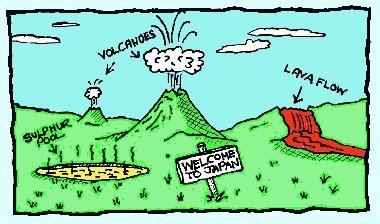
There is of course another theory regarding the birth of the Japanese islands, which goes something like this: Some millions of years ago, a great volcanic upheaval caused the birth of the Japanese archipelago. I say some millions of years because no one knows exactly when it happened. At least, I think it is safe to say that nobody actually witnessed the event ( not many humans around at the time ) and even if they did I doubt very much if they would have lived to tell anyone about it.

Of course, it was a very long time before anyone considered moving to Japan. After all, what with the lava flows and the sulphur pools, Japan wasn't a terribly hospitable place to put up shop. Therefore we had to wait until fairly recent times before anyone ventured out this way. Again no one seemed to know exactly when human beings first came to these islands, but estimates between 30,000 and 10,000 years ago would appear reasonable since no palaeolithic remains have ever been discovered in Japan. OK, hands up everyone who knows what 'palaeolithic' means. No, I didn't know either. Apparently it refers to the first half of the Stone Age starting at about 180,000 years ago to about 40,000 years ago. I do hope you are paying attention.


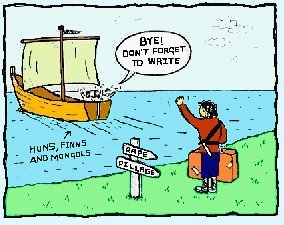
What we do know is that the first settlers didn't all arrive at once. The first bunch to arrive came by way of North Eastern Europe and appeared to have colonised Japan from Hokkaido down. They didn't go in for cultivation and seem to have been hunter gatherers and also very fond of fish. Nothing has changed there. This culture probably remained unchanged for several thousand years and would have remained so even longer had it not been for the appearance of another group which began migrating to the south-west of Japan from the Korean peninsular. This new group started arriving in Kyushu in about 300BC.Apparently they belonged to an ethnic group which also included Finns, Huns and Mongols. I'm not sure how the Finns got into such bad company, but still.

It isn't clear if the new breed came to rape, pillage and conquer or simply to colonise. In any event, they seemed to have had a very clear advantage over the locals so they probably did both!
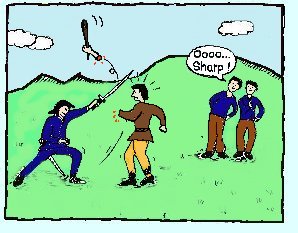
During their migratory travels they had passed not only through Korea but also through China which was extremely busy inventing all kinds of new technologies like bronze working, land irrigation and perhaps most importantly, bladed weapons. Things that the poor old hunter gatherers could only dream of ( really, really sharp bladed weapons being especially bad news).

Consequently, over the next 600 years or so the new masters of Kyushu first consolidated their position and set up a new state all of their own, and, having had quite enough of the Stone Age they started to import bronze tools and weapons which had spread from northern China. Not so that the Bronze Age was to be long lived. It was soon overtaken by the Iron Age which the Chinese Han dynasty ( 206BC -220AD) had thoughtfully developed. Even in those days, the Japanese were not slow in utilising foreign technologies!


MIGRATION EAST : THE YAYOI PERIOD ( 300BC > 300AD )

So, just to recap, we have two separate cultures living in Japan. An older culture which is fairly widespread throughout all of Japan and a newer, rather more advanced culture which has settled in Kyushu. Unfortunately for the newer culture, Kyushu didn't have much going for it. There were plenty of mountains and the fishing was probably OK but that was probably about it. Not much to start a new civilisation with.( I hear the Vikings had a similar experience in Greenland).

So what happened next? Well that all depends if you believe the legend or to the opinions of archaeologists. According to the 'Chronicles of Japan', in about 600BC the Emperor Jimmu led an expedition from Kyushu and founded a new state called Yamato in the centre of Japan. The problem with the Chronicles of Japan is that they were not written until the 8th century. Rather like someone in the 20th century writing out the legends of King Arthur and saying,"Hey man.This is true! It really is."

Well, it turns out that although the Japanese hadn't figured out how to write things down, the Chinese were already pretty good at it. It also turns out that the Chinese records - and there were a LOT of them - contain the odd reference to Japan. Not that it was called 'Japan' in those days, of course. Actually, it was called 'Wo', which isn't much of a name so I'm not surprised that it soon got changed. Anyway, these Chinese references and other archaeological evidence suggest that though the migration itself was factual, it didn't happen until about 300AD. So the Emperor Jimmu either had little to do with it or lived a very, very long time!
Not that the archaeologists really know what happened either. All they can say for sure is that between 265 and 369AD, the Kyushu guys moved east , absorbed or exterminated the locals and founded the state of Yamato. Why then, I hear you ask? Well, in 265, the Chinese 'Wei' dynasty - the dynasty that did all the writing - bit the dust. And 369 is the year when forces from the new Yamato state invaded Korea and started a fashion that was to last 1600 years.
Exactly how or when the new state was founded is unclear. Historians say, "It is one of the unsolved mysteries of Japanese history", which means they don't have a clue ......and neither do I!
The best guess is that the Kyushu Japanese lived in a clan system similar to the Scots. However, unlike the silly Scots they managed to stop fighting each other long enough ( but only just ) to expand a little and make it more profitable to fight together - against someone else!


THE YAMATO STATE: THE KOFUN PERIOD ( 300 > 710 )

As mentioned previously, Kyushu was a bit low on natural resources. The biggest pain was that there was a distinct lack of land suitable for cultivation. So quite naturally the more adventurous folk decided to explore other regions to see what was out there. After all, they had learnt all about irrigation from the Chinese if you remember and probably couldn't wait to find some decent land on which to try out their new found science. Once they reached what is now the Osaka plain they realised they had found just what they were looking for. Though little is understood about the initial workings of the new Yamato state, they had obviously got their act pretty well together. Not only did they build a new capital in the centre of Japan, they also doubled back to Korea and pinched the southern tip from the previous owners. Land grabbing in both directions!
By this time the Japanese had adopted Shinto as their religion and it is apparent that the leader of their most important 'imperial' clan was not the big boss in terms of politics and military matters, but was primarily their most sacred spiritual leader. The day to day stuff was handled by his aids, who were most likely lesser chieftains. So here was set a president that was to last until the nuclear age.

In this period of Japanese history relations between Yamato and Korea became quite close. After all, they were of the same stock. In fact, the invasion of Korea was at the request of the king of Paichke. King of where?? Well, in those times, Korea was divided into three countries. The kingdom of Koguryo, which approximates to what is now North Korea, the kingdom of Paichke, which would be the western half of South Korea, and the kingdom of Silla which would be the remainder. Paichke was, at the time getting loads of hassle from Koguryo, which was getting way too big for it's boots. As Paichke and Yamato were best mates, Yamato sent an army to help out. The result was that Koguryo came second, the king of Paichke was really, really happy and Yamato won a piece of Korea which they called Mimana. At least, it probably happened that way. Mind you, Paichke came to grief in the end, but more of that later.
As far as our story is concerned, the really good news is that the king of Paichke was so chuffed that in the year 400 (or so ) he sent the Japanese a present. Writing. Yes, writing! After that the Japanese started to write stuff for themselves so at last we can start to trust the Japanese Chronicles. Well, a bit. Anyway, this is a BIG event because now we start to hear names and places that we are pretty sure are true. ( A big help when writing history ).
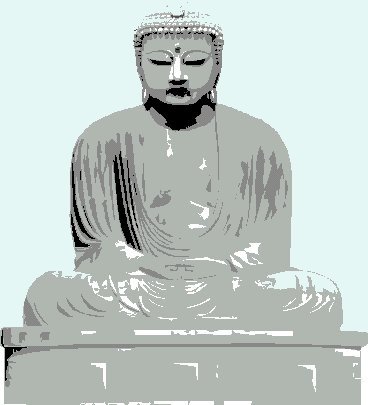
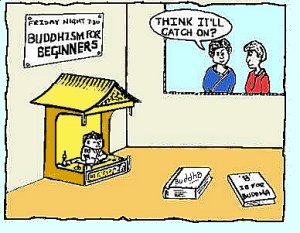
As a matter of fact, in the middle of the sixth century Paichke was responsible for the next great revolution in Japan. Buddhism. As ever, the motive force was war, and as ever Paichke was in deep,deep trouble,being threatened by just about everyone in range. True to form Paichke appealed to Yamato for help, offering many gifts and such, one of which was a new religion which had spread from India and was "of all doctrines most excellent". As a result a bronze image of Buddy - I'm sorry - Buddha arrived at the Yamato court along with some volumes of scriptures. Not that everyone turned Buddhist straight away. As a matter of fact most Japanese were quite happy with the Shinto way of things and weren't about to change at the drop of a hat.


However, seeing as they were still mates with Paichke they went off to war again anyway and though they gave a good account of themselves, Paichke unfortionately found itself on the wrong end of a beating. This time Silla were the bad guys and although Silla and Yamato later made a treaty, continued Japanese presence in Korea was looking decidedly iffy. It was no surprise when the Japanese were finally kicked out of Korea a few years later in 562. ( And that date is probably correct!)


REFORM: THE ASUKA PERIOD ( 593 > 710 )

Getting unceremonially dumped out of Korea came as a rather rude awakening to some of the Yamato leaders. Getting knocked over the Koreans was no position to be in and the more earstwhile leaders looked for reasons. They didn't have to look much further than the Yamato clan system .
Things were fine if everyone stuck together. Problem was that intrigue, greed and plain old jealousy tended to throw the odd spanner in the works. Korea, meanwhile, had learned from the ever so smart Chinese that a centralised government was the way to go. Less chiefs and more indians.
As you might expect, there were those who were in favour of change and those who rather liked things the way they were. Change did come but it took fifty years of what was later to become a Japanese national sport, namely civil war. That and the machinations of one Soga no Umako, the leader of the powerful Soga clan and the chief advocator of reform. After eliminating the military Mononobe and religious Nakatomi clans Soga became the most influential leader of his time. Powerful enough even to choose the Emperor. On the death of the Emperor Yomei in 589 Sogo put Yomei's brother Sujun ( the son of a Soga lady) on the throne. He then promptly asassinated him and replaced him with the Empress Suiko ( Soga's niece ) and so began the Asuka Period.
Suiko chose as her regent the Prince Shotoku who was, by all accounts an all round good guy and if Soga was the driving force behind reform, Shotoku was the guy who made it happen. He promoted Buddhism, building temples here, there and everywhere, opened a dailogue with China and wrote down Japans's first official constitution.
Things really started to look up for Japan but for Soga, things kind of got screwed up. His basic idea was to rule Japan by reducing the power of all the clans except for his own and keeping a rigid control over the monarchy. Not a bad idea at all but although he managed the first bit, Prince Shotoku and his successor Emperor Tenji got really fed up of being manipulated. Tenji eventually teamed up with the up and coming Fujiwara family and the Soga clan became something of a historical footnote.

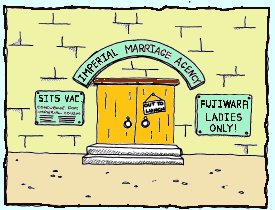
With an eye to returning power to the imperial house Tenji then completed the process of reform by making all clan lands the property of the state and installing regional governers who administered affairs on behalf of the capital. Meanwhile, the emperor's Fujiwara allies embarked on exactly the same strategy as the Soga and married as many of their daughters as possible into the imperial household. After all, it's not what you know, it's WHO you know!


NEW CAPITAL: THE NARA PERIOD ( 710- 794)

Up until the end of the Asuka period, on the death of his predecessor each new emperor would erect a new palace - reason being that according to Shinto belief any dwelling was polluted by death and quite unfit for future habitation. At least, if you were someone important like an emperor. People like you and me had to make do. Consequently, the imperial court ( and therefore the capital ) tended to move around quite a lot.
As Buddhism had become the 'in' thing , pollution by death became less of an issue and in 710 an imperial edict put an end to the inconvenience ( and probably put a lot of construction workers out of a job ). A nice, new capital was created in Nara which was chosen because it was in the middle, had lots of nice temples and had "a favourable feng shui" ( but don't ask me why!).
The new capital proved the catalyst for an amazing cultural explosion, with religious philosophers and artisans of all kinds reaching for - and attaining - new heights. Fighting was out - thinking was definitely in! Things in the capital couldn't be better.
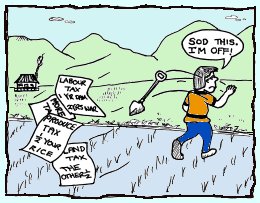
Only problem was that while all this cultural flowering was going on in Nara, life for the guy at the bottom, the lowly peasant out in the fields , didn't improve at all. And things were about to get worse. As far as the peasant was concerned, he'd simply had a change of master. Before, he had a clan leader. Now, he had the government which, in it's wisdom, took all the land it had pinched from the clans, divided it up and gave it back to the peasants. Well, it sounds OK. Where's the catch?

Well, first the poor old peasant had to pay a land tax - which was bad enough. Then there was a produce tax - which was worse. The real killer, however, was a labour tax which meant that he had to go off and work for the state for some period of time - maybe even years - the 'labour' in question meaning anything from building a dam to fighting a war. It wasn't long before folk took a look at their tiny plot of land, weighed up the pros and cons and then said, "No thanks!" A great many sold out to the wealthy while others simply downed tools and did a bunk. "You keep the land and I'll keep the taxes!"
In no time at all virtually all the land was in the pockets of the rich and powerful ( just like today!),which included the nobility, the gentry and also the Buddhist hierarchy, which was about to make it's first power play..... and not without a little success.


From time to time, every country suffers it's natural disasters. You'd have thought Japan would have been satisfied with having earthquakes, volcanoes and tidal waves to contend with, buy not so! They also fell foul to a small pox epidemic in 737 which bumped off huge numbers of Japanese far more effectively than any of their wars ever did (and that's saying something !). Low born, high born, small pox had absolutely no respect for social status Among the unfortunates were about half the Fujiwara family who, if you recall, were busy marrying into the imperial household.
In that era, acts of God such as the small pox epidemic were not thought of as random affairs. They were believed to be Buddha's expression of displeasure at some misdeed committed by the Emperor and the only way to placate the almighty was by making some kind of offering. As the Japanese had become all civilised, the easy option of human sacrifice was out. Instead of this, it was the in thing to create some mighty construction to the greater glory of Buddha. In this case the Japanese took it upon themselves to construct a whacking great bronze statue of Buddha. It it took years to finish, involved the labours of many and cost an absolute fortune, but the end result was a 53 feet tall, gold leaf covered bronze statue seated in what is still the worlds largest wooden building . The statue can still be seen in all it's glory at Nara's Todaiji temple if you fancy taking a look.
The result of all this religious fervour was that the religious hierarchy gained quite a lot of political muscle - mostly at the expense of the Fujiwaras, half of whom had died of small pox anyway. One particular religious figure, a monk by the name of Dokyo, became extremely close to the retired Empress Kouken. Apparently he was doing rather more for her than simply conducting her morning prayers, though as this is a family show I will not go into any more detail . Please use your imagination!
Dokyo was a real character. Not only was he a religious leader, he was also a dab hand of politics, and an expert at outwitting and , if necessary murdering his rivals - namely the surviving ( and extremely angry ) Fujiwaras. Oh yes, and something of a womaniser too - but I'm sure you had that worked out for yourselves. He managed to have himself appointed regent of Japan and even had himself set up as the next Emperor when his meal ticket, ex-Empress Kouken most inconveniently died on him. Never trust a woman! After her death the Fujiwara family gained in power and support and succeeded in banishing that 'turbulent priest' Dokyo.
The eventual results of the Dokyo affair were twofold. Firstly, it was decided that women should be banned from the ruling Japan, presumably on account of their susceptibility to monks with a high libido. Secondly and more importantly, a few years down the road in 794, the Emperor Kammu decided it would be a good idea to move the capital away from Nara, it's temples and most of all, it's religious busybodies. Bye bye Nara, next stop Kyoto!


THE HEIAN PERIOD ( 794 > 1185 )

The new capital of Japan was named Heian Kyo, "the Capital of Peace and Tranquility". It was, by all account, the place to be. Not only was everything shiny and new, Heian Kyo also boasted a road system based around city blocks, with all the roads running east to west and north to south. Actually they pinched the idea from the Chinese who had built their own capital in the same way.
Though Kammu built his new capital in part to escape the influence of the Buddhists - and indeed, he made loads of new laws to keep them in their place - Heian Kyo was only about 30 miles away from the old capital in Nara. These days it's only about 30 minutes on the train but back then, travelling from Nara to Heian Kyo meant crossing a bunch of mountains - on foot, which meant lots of blisters. So 30 miles was most likely enough.
It should be noted that Kammu was, as emporers went in those days, made of quite stern stuff and actually had the audacity to rule in his own way, rather than being content to have his string pulled by those around him. However, his death in 806 brought in another bunch of softies which was just what the Fujiwara family ( whose population had more or less returned to normal ) was waiting for. The Fujiwara family already had enough connections to fill every important government post, and since most of the subsequent emperors were sons or Fujiwara ladies, the family was soon able to attempt a power takeover by having one of their own named as regent or better yet, Kwampaku, which was a kind of supreme civil dictator. A bit like a shogun but without any armies.
And so it came to pass. A few subsequent emperors tried to made a bit of a political show, but that's about all it was - a show. The Fujiwaras were after power and, I'm tempted to say, the wealth that went with it. However, it turns out they had most of the wealth anyway. The poor old Emperors were continuously skint 'cos they were never able to controll the great landowners - which meant they could never collect any taxes. Since the Fujiwaras owned half the country anyway, revenue - and wealth - wasn't a problem. The main issue was power. Personally, I'd have settled for the wealth. However, unlike the bloodthirsty warlords of later centuries who slashed and hacked their way to the top amid a sea of dismembered corpses, the Fujiwaras generally kept their hands clean and relied on political pressure, subversion, guile, cunning, duplicity, deception, trickery and intrigue. Most civilised, if you ask me. If they'd ever started a company they'd have probably called it Microsoft.
So what did these Fujiwaras do? Well, though many were simply looking after number one, some really did have the well being of the state at heart. And it has to be said that many of the Emperors were a pretty use less buch in any case. One of them, Yozei was described as "criminal and insane". Then again, that's a label which you could quite fairly stick on more than a few world leaders today, I suppose.

During the next 100 years the Fujiwara regents consolidated their control of Japan to the extent that all important political decisions - made in the name of the Emeror, of course - were taken not at the Imperial Court but at the headquarters of the Fujiwara family - over lunch, as it were. The family reached its zenith during the reign of Regent Michinaga (996-1027), one of Japan's most famous historical figures.
Well, as everyone knows, all good things come to an end, and so it came to pass for the Fujiwara family. The reasons were manifold. Other clans were beginning to flex their muscles and a reaction against self-serving style of the Fujiwaras gradually began to emerge. The Fujiwaras didn't help matters by continuing to appoint any damn fool in a top job so long as his name was - well, Fujiwara! There is even the question weather their hearts were really in the job after all this time. Actually running the country turned out to be far less interesting than the political intrigue that had made it possible in the first place. As in romance, all the fun is in the chase!

Of course, while all this was going on Japan still had emperors but as most of them were related to the Fujiwara family and relied on them for virtually everything. As a consequence they generally kept very, very quiet, behaved themselves and were good little emperors. Members of the imperial family who were not related to the Fujiwaras tended to get the thin end of the wedge - threats, slander and general abuse being the order of the day.

One such character - a certain Go-Sanjo - had the misfortune to be named Crown Prince by his father and as a consequense suffered 20 years of abuse by the Fujiwara household. Threatened and slandered on an almost daily basis, he was even accused of trying to assassinate another Emperor by means of witchcraft.
Go-Sanjo, who probably expected his corpse to be found in some back alley sooner or later was quite possibly more surprised than anyone else when he actually became Emperor in 1068, by which time of course he was totally brassed off with the Fujiwara clan. Perhaps with a certain disregard for his own safety he set out to throw a few spanners in the works. In fact he did rather more than that and within a year the newly appointed Fujiwara Kampaku bitterly described his new title as a "worthless ornament".
Way to go, Go- Sanjo! Within three years the power of the Fujiwaras was broken forever and though much was still to be done, rule was out of the grip of the dictators.


Well,I'm afraid you'll have to wait a while for the next installment. It's still in research, which really means I don't quite know what happened next!


And by the way.....


I really, really don't have any particular axe to grind about the relationship between Japan and Korea.Considering the small number of people who have visited this site you would be surprised at the number of people I seem to have offended.There is never any shortage of Japanese "scholars" to "advise" me so to even it up I have been also in contact with a very amenable Korean gentleman, on whose advice I have previously amended my text.His comments can be found in the guestbook.
As I hinted above, there are any number of publications dealing with the history of Japan. Some are probably more biased than others; perhaps deliberately so. My principal source of information has been "A History of Japan" by Sir George Sansom.For myself I have attempted to take a broad view. If you think I have failed in some respect I would be pleased to hear your own view of events.
Like the English and the French, the Japanese and the Koreans have had rather too much of each other. Whatever the truth, someone isn't going to like it.

Of course, if you really can't agree with my interpretation of things, my best advice is simply to write your own!


Quick link:-

Hosted by www.Geocities.ws

1