 |
The beginning of June sees a change in weather in southern Japan as warmer air from
the south gradually pushes northwards. The warm front carries a belt of rain with it which takes about a month
or so to pass. This is the time of "tsuyu", the rainy season.
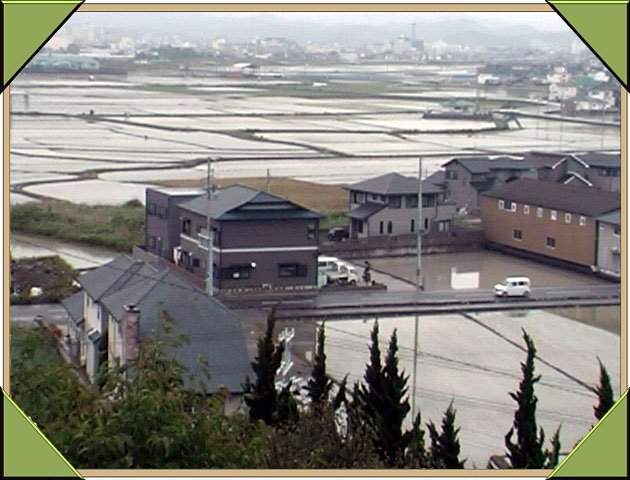
The fooded landscape isn't a disaster. It didn't happen by accident either.
|
| The beginning of June is also the season for planting the rice fields and, as young rice plants need
to be planted in flooded fields, an abundance of water is necessary. This abundance is provided for by the rainy season.
|  |
 |
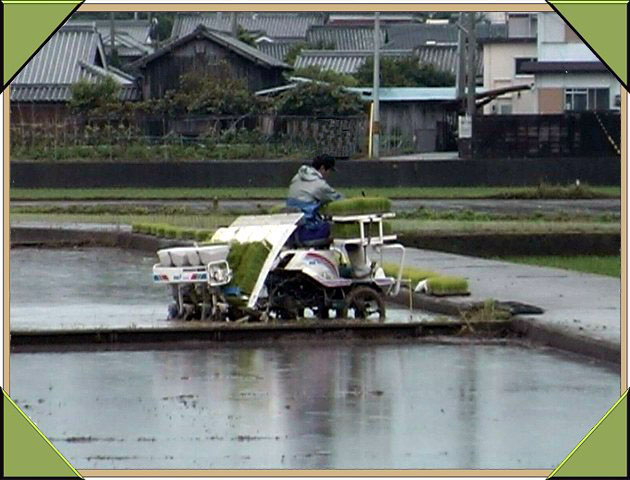
Peasants,up to their knees in muddy water
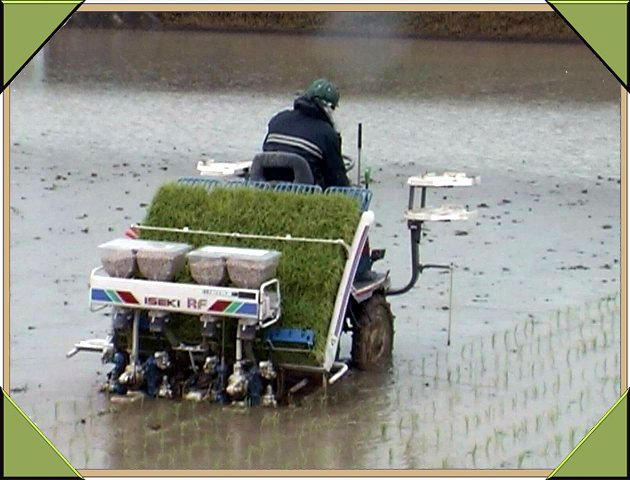
and backs bent double for hours on end. It still happens that way in the less advanced parts of Asia. Things have become a mite more technical around these parts these days.
Mechanisation and all that. However, the relatively small
scale of things is interesting. The average field is little bigger than a couple of tennis courts and the
tractors in these pictures are about as big as they get. Really manouverable, though. |
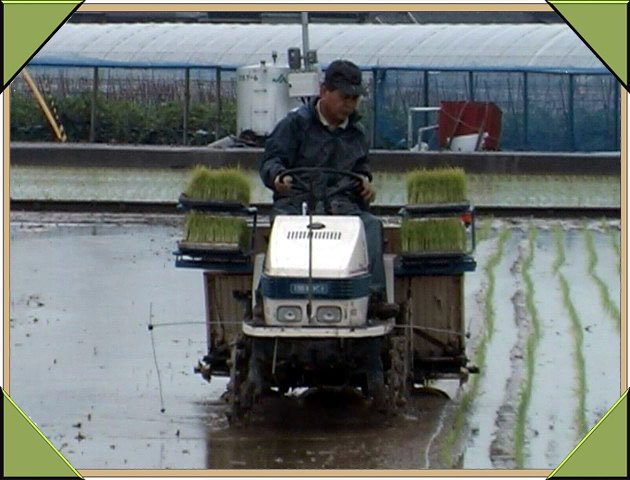
| As mentioned elsewhere, the average Japanese farm is a tiny 1.4 hectares.
Though some farms are somewhat larger, many farmers do not rely solely on agriculture for their income. The guy
driving this machine may very well be a mechanic, a shopkeeper or even a doctor.
|  |
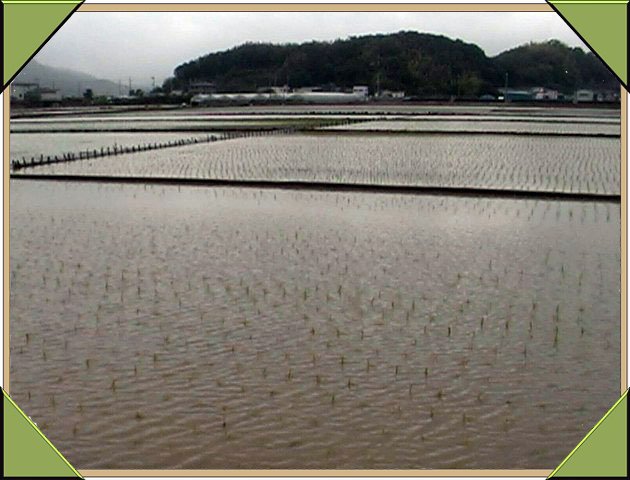 |
The end result. Neat rows of young rice plants. The fields will remain flooded for a one month or two after which the fields will be drained and the plants will mature. Rice is harvested at about the end of September.
|
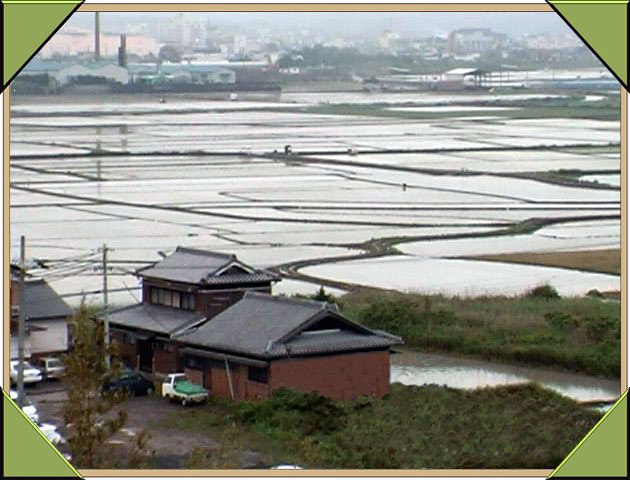
Water, water everywhere. If you're headed this way don't forget your rubber boots.
Mind you, in a couple of months time, the scene will be very different. Check out theSea of Green.
|  |