
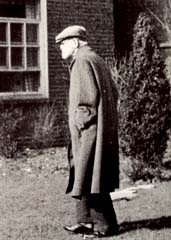
Freud's case study of colleges and sexuality raised many eyebrows in the psychological community. Never before had there been such a study done in such a public setting.
There were many complaints by the parents of the students at the colleges where the studies were conducted. A court injunction almost destroyed Freud's valuable research in this area. Luckily for psychologists everywhere Freud was allowed to proceed with his work.
Freud did not participate directly in all the studies, many graduate students from many different colleges worked with him to collect the data.
He found that there was a large, but predominatly silent homosexual population at the medium to large schools. In particular, schools numbering above 12,000 students. He found that about 70% of the homosexual population were studying in the Social Science areas. While 25% were in theatre and other artistic venues. The remaining 5% were spread around the other sciences (ie Political, Biological, Chemisty, etc.). Of this homosexual population nearly 98% where studying or attempting to study at the higher (ie Masters and Ph.D) level.
Freud conjectured, that this was because the distraction of a higher education helped to temporarily repress homosexual traits. This repression he said "if gone unreleased for a significant time, could result in a mental breakdown". He later goes on to claim that his is the cause for nearly 40% of all college suicides, and 85% of college drop-outs.
Universities, although skeptical of Freud's work, started to make plans for facilities to help and support the homosexual population. The majority of these plans were soon cancelled because of the general apprehension of homosexuality. It was not to the AIDS crisis that Universities implemented these facilities. To help combat the spread of the disease, and as support for this population.