| What is Center Time? |
 |
 |
 |
 |
| Sierra is standing in front of our center board. At the centerboard students pick their own center and develop decision making skills. |
| Ask our kindergarten students what they like best about school and they will most likely say "Center Time!" So what exactly do we do during center time, and more importantly, why do we do it? During Center Time, students are allowed to move around our classroom and participate in a variety of activities. In my opinion, this is one of the most important times of the day for a kindergarten child. Play is children's work, but Center Time play includes all subject areas. Though it is play, it is a structured time because I consider it an extension of learning. Here is a description of what goes on during Center Time at Scarbro Kindergarten. As a teacher, this is one of my favorite times of the day also. I love to watch the children interact and make choices, and I love to watch them discover new learnings on their own, without the direction of the teacher. It also gives me time to work with individual students and listen to them read or work on important skills. Organization 1. Center Board - I use two plastic pocket charts, each of which has 12 clear pockets. I have made pictures for each center on my computer. At any one time, we have 24 centers up and running. The center selection can be changed easily, just by slipping in a new picture in the pocket. Under each picture, Velcro circles are attached. The circles represent how many children can be at that center at one time. For example, you can see two blue circles for the easel, but four blue circles for the kitchen. A picture of our Center Board can be found below. 2. Center Names: I use plastic chips such as poker chips for center names. Using a permanent Sharpie marker, I write each child's name on a chip. Then, I put a Velcro circle on the back of each chip. One of our helpers for the day is given the job of "center names." This helper picks up a chip, one at a time, and calls that child to receive their name. This is great practice for learning to read each other's names. After receiving their name chip, children then go to the centerboard and pick their center. Only two children are a time are allowed to be at the centerboard at a time. The rest of the children take turns waiting in line behind the stop sign. I made the stop sign out of a red plastic placemat. I cut it into the correct shape, then used a Sharpie to right the word stop. Because this stop sign just sits on the floor at the beginning of the line, it has to be pretty durable because the children will be walking over it. This idea has worked for me for six years. I find that children are eager to pick their centers, so they don't spend much time waiting in line. 3. Children are usually allowed to remain in the center for as long as they like. However, if a center is new or extremely popular, we sometimes set a timer so everyone can take a turn! Before leaving a center to pick a new activity, children make the center tidy and put away the materials so it will be ready for the next group. 4. When our Center Time is over, the teacher or aide blinks the classroom lights twice to signal the children. Then, the flurry of cleanuptime begins and children look like little bees scurrying around, cleaning up the centers. The children are very responsible for cleaning up, because they love this special time of day. |
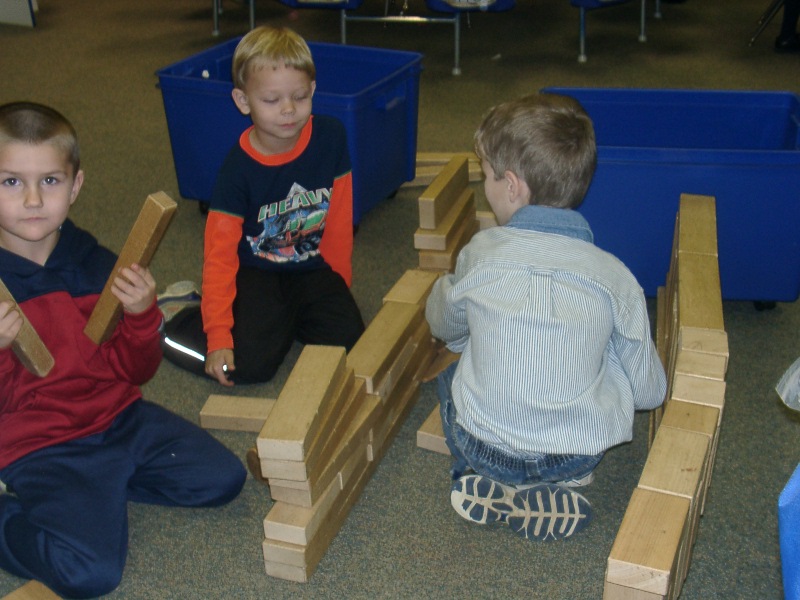
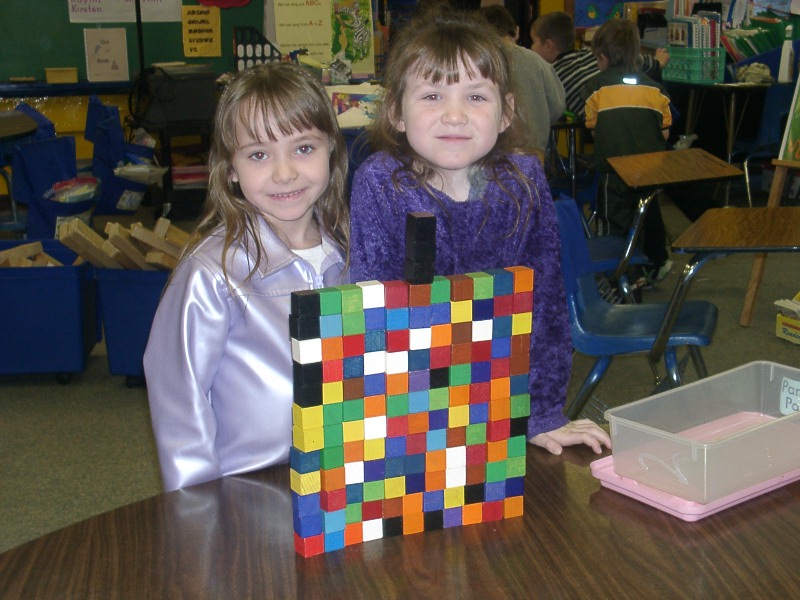
| Block Center: Here our future architects and builders work on the skills of measurement and balance, counting and sorting, and gross and fine motor development. |
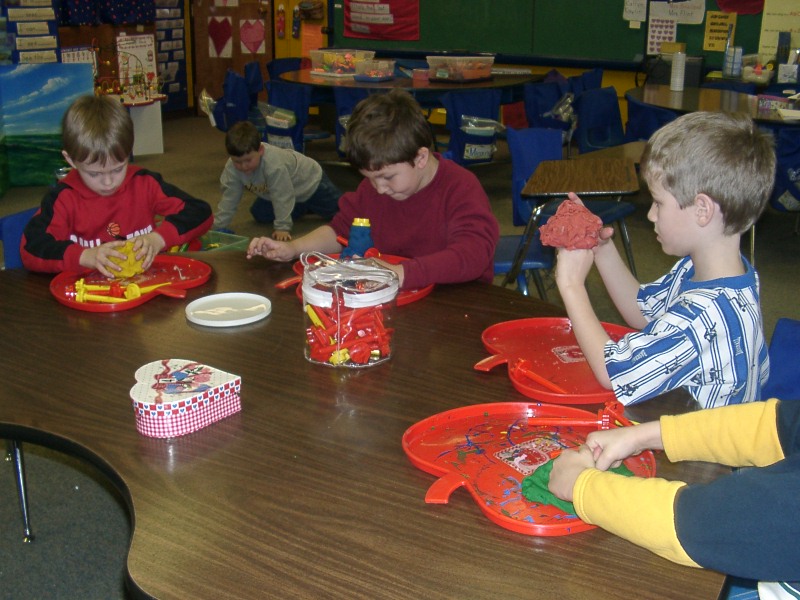
| Table Centers: The activities at these centers change daily. Activites focus on fine motor development and may include pegboards, lacing beads, geoboards, puzzles, dominoes, etc. |
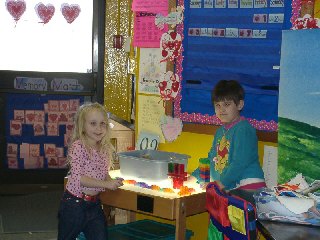
| Light Table: Children are fascinated by color and light, and light table lets them observe, experiment and �hands on! Using crystal climbers students build in all directions while working on skills of patterning, balance and classification. |
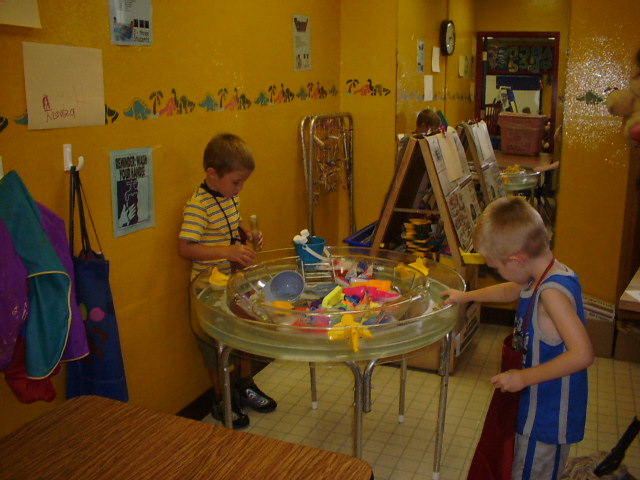
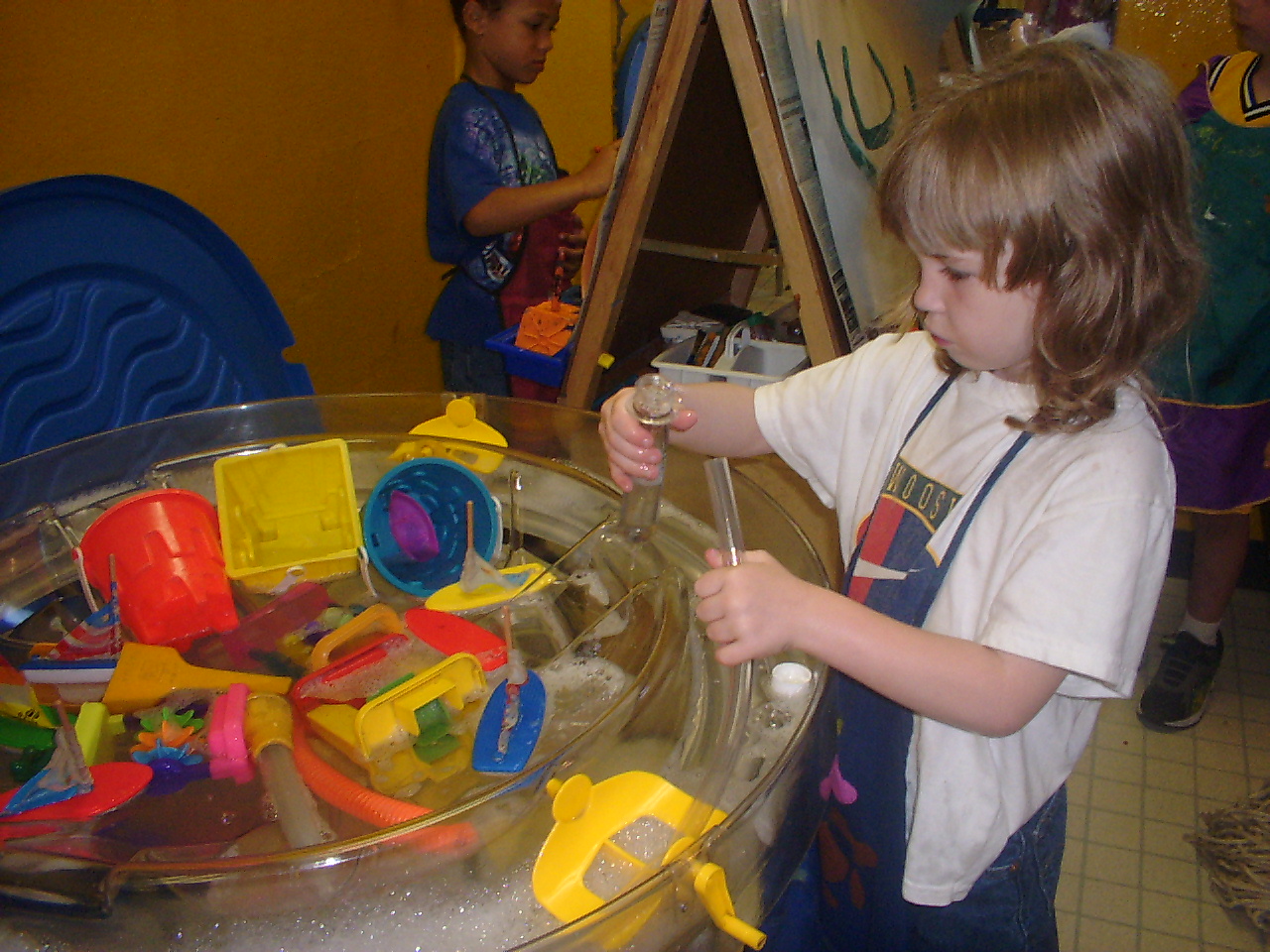
| Water Table: Children can pour water down a rippling waterfall or float boats around bends and turns! At this center children are developing measurement skills and mathematical skills as well as predictions, fine motor control. and scientific inquiry. |
 |
| Art Table: Special projects such as Easter eggs, Valentines, Christmas ornaments and such are reserved for the art table. As we develop creativity, we are also developing cutting, coloring, and drawing skills. |
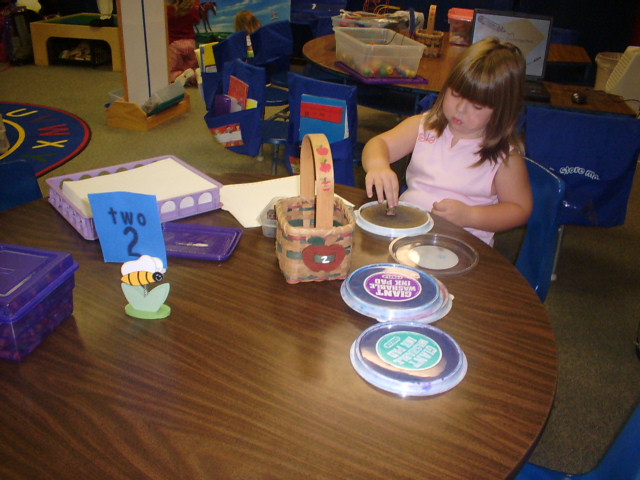
| Table Two: A variety of materials such as special papers, markers, stencils and pictures encourage writing, creativity and publishing. Samantha is stamping with alphabet stamps |
 |
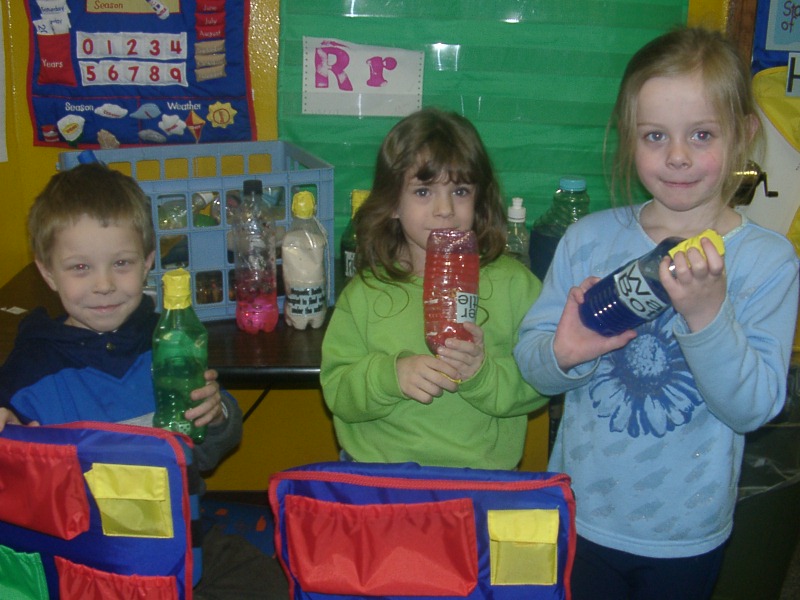 |
| Science Table: Materials here may include hands on activities to learn about insects, animals, magnets, weather, etc. Today the children are exploring our Discovery Bottles. To learn more about how to make your own bottles, click the picture. |
 |
 |
| Flannel Board: Students can manipulate pictures, alphabet letters numbers or shapes or use story pieces to retell familiar tales. Here Miranda is dressing community helpers in a variety of costumes. |
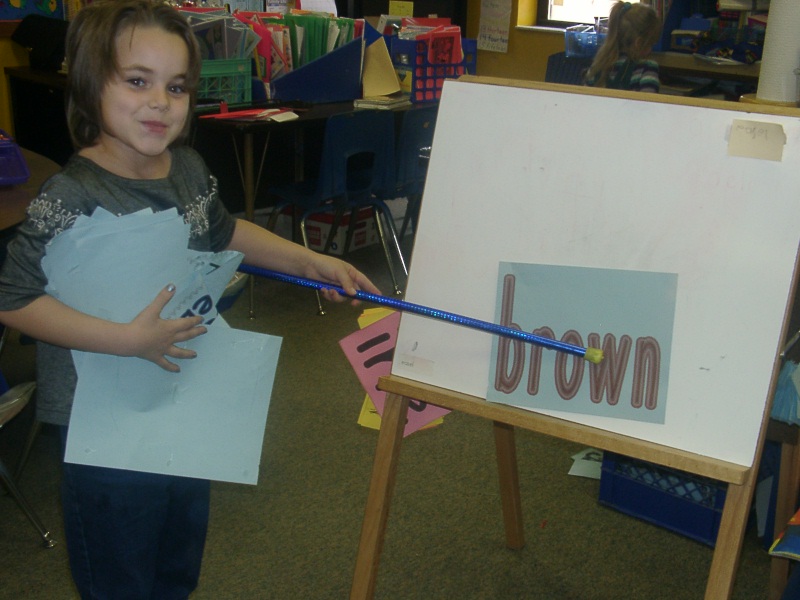
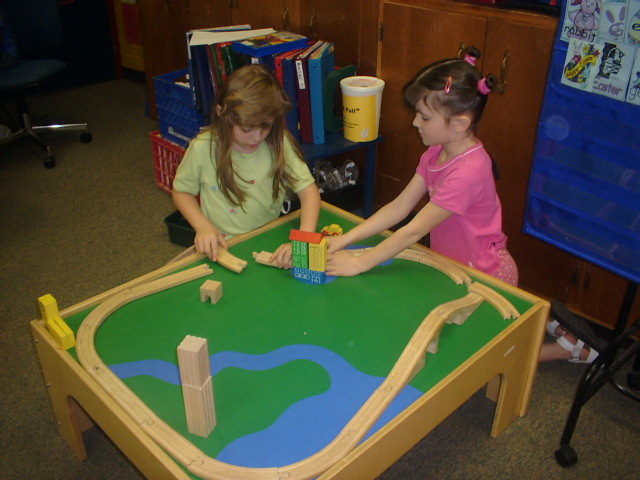
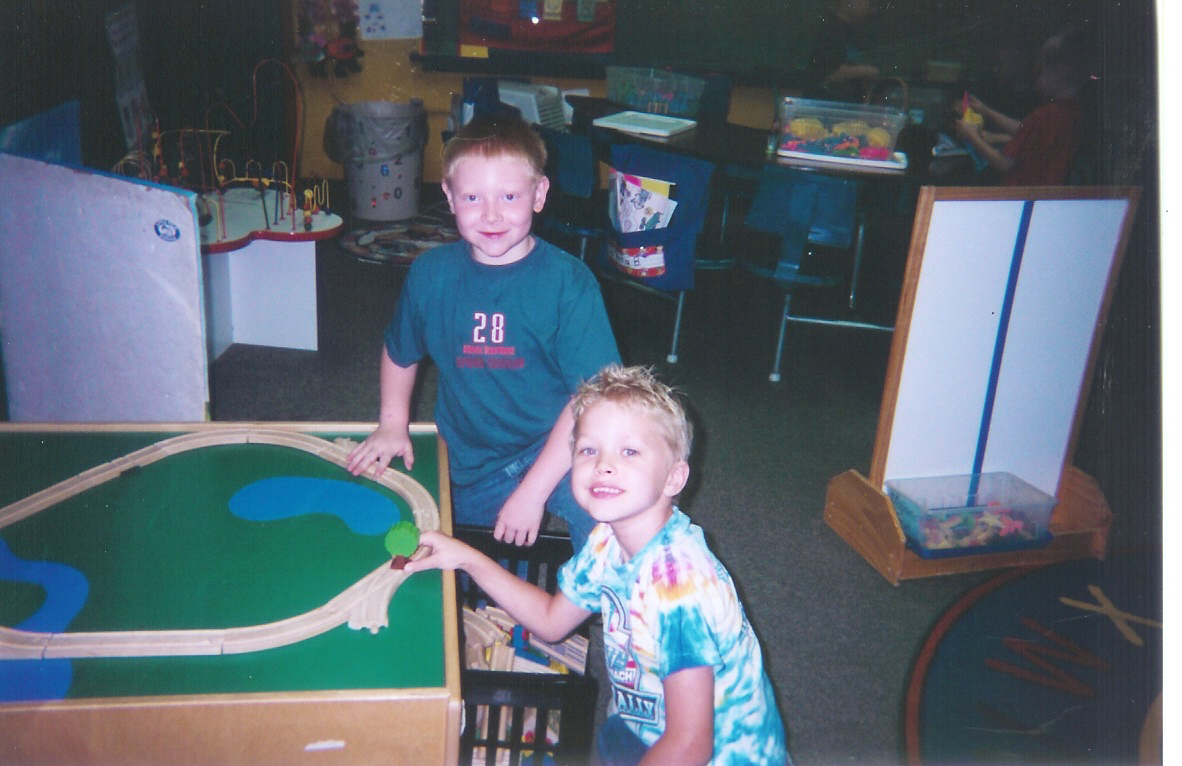
| Train Table: Students can create their own trains and cities while developing spatial relationships, directionality and creativity skills. Magnet Board: One the right you see our white magnetic board. Shapes, letters, or numbers are placed in a box on the bottom. |
 |
 |
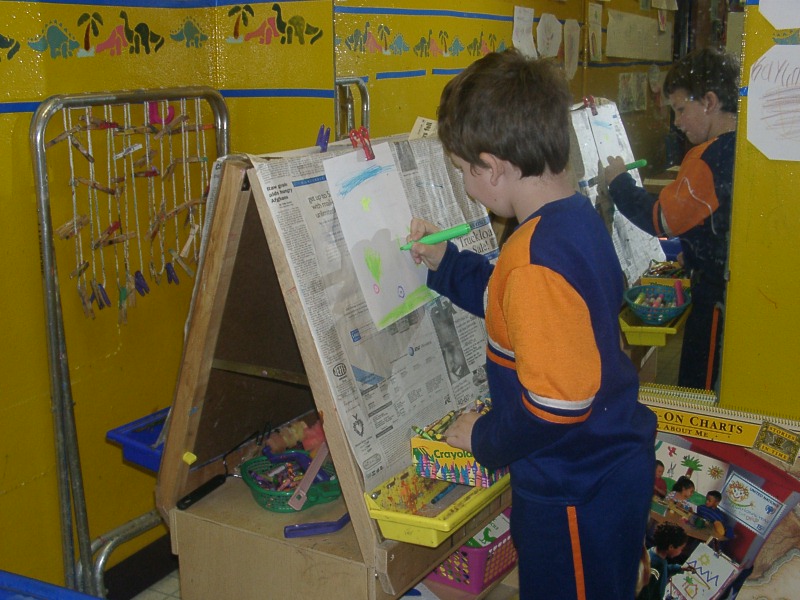 |
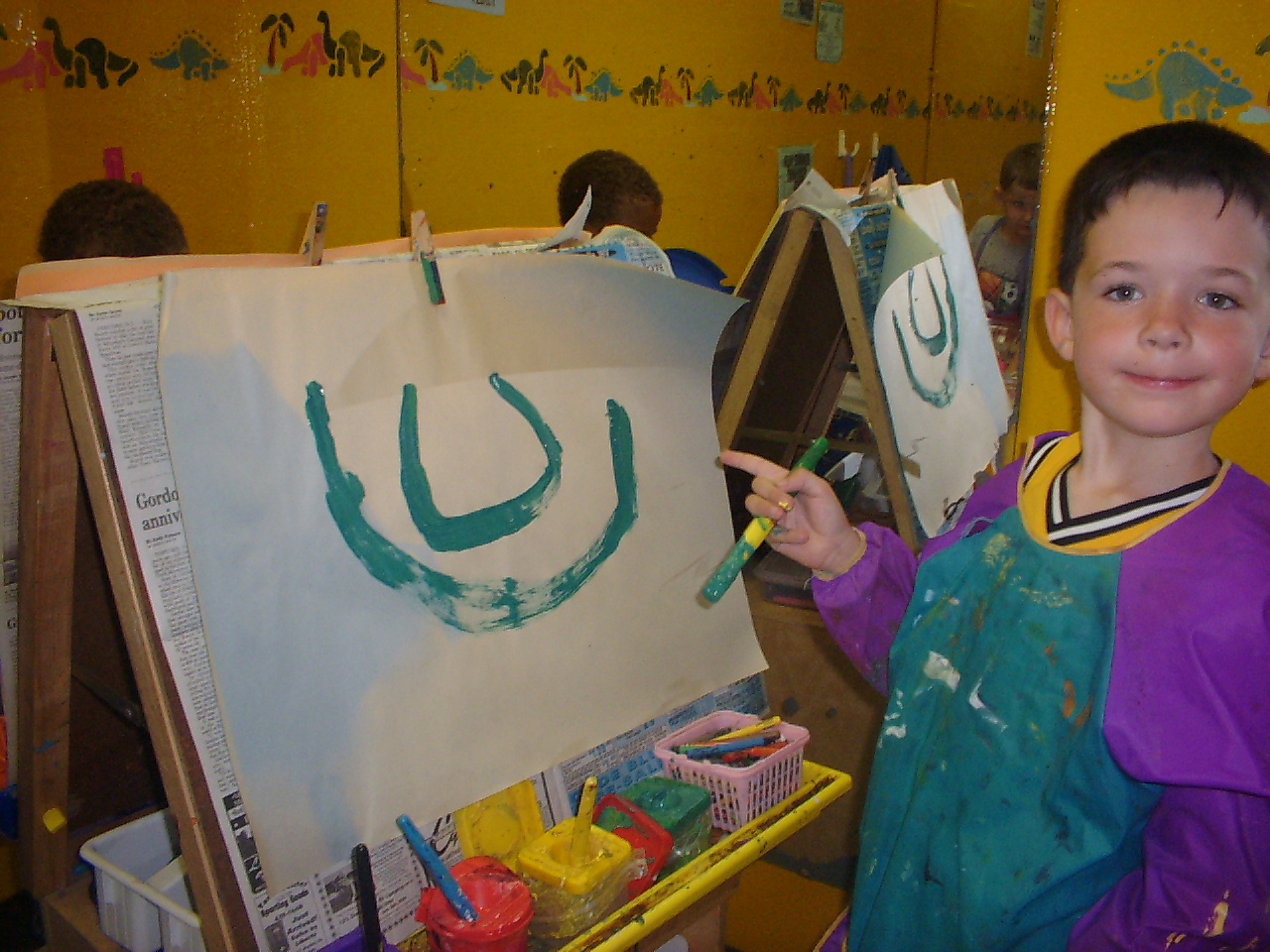
| Easel: We like to provide a variety of art experiences here. Painting, chalk drawings, sponge prints, are some of the ways we use this kindergarten favorite. You're not seeing double! There is a mirror on the wall next to our easel. It provides an experience with symmetry. |
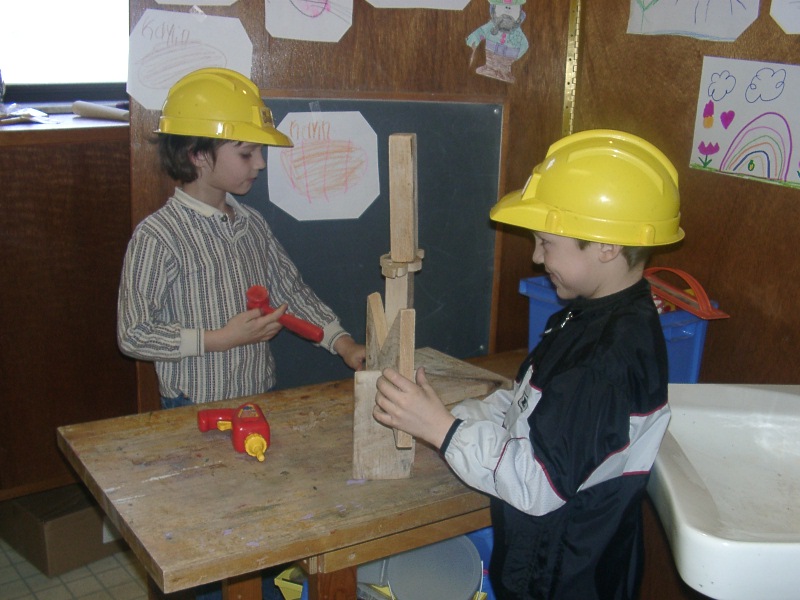 |
| Workbench: It's great fun to roleplay being a carpenter! We also add measuring tapes, and pencils that children use to "draft" their creations. While Josie and William are working on their projects they are developing fine motor and problem solving skills,they also get a chance to develop their creativity! |
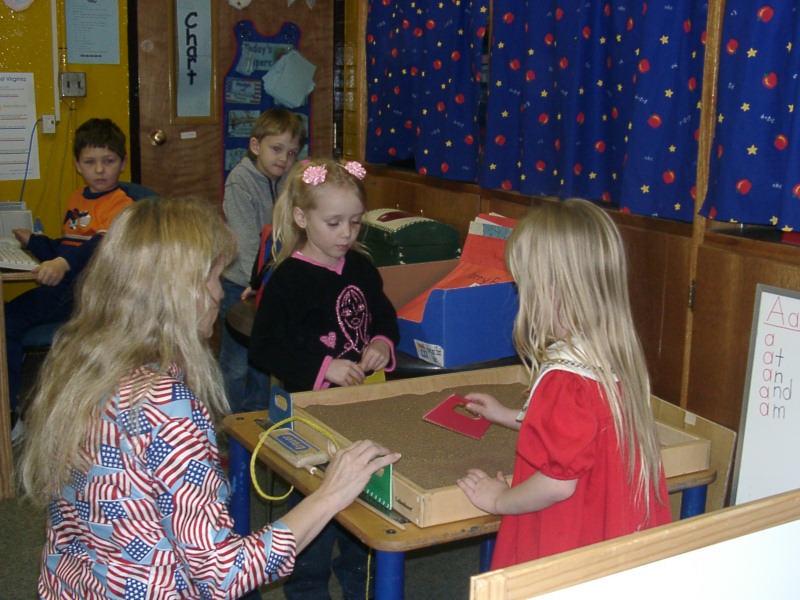
| Sand Table: At this table the girls are using tools to write letters or words or create pictures. Cailtyn's mom seems to be having a good time! We love having parents and little brothers and sisters visit us for Centertime! |
| Centertime is a flurry of activity during which an incredible amount of learning takes place! Play is children's work! |
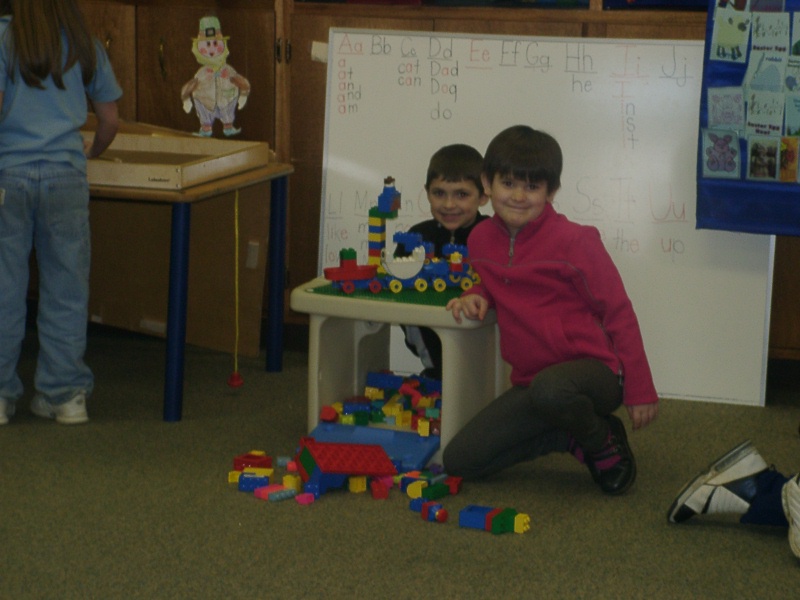 |
| Lego Table: William and Cameron have built an interesting structure while working on balance, design, matching, and fine motor co-ordination. |
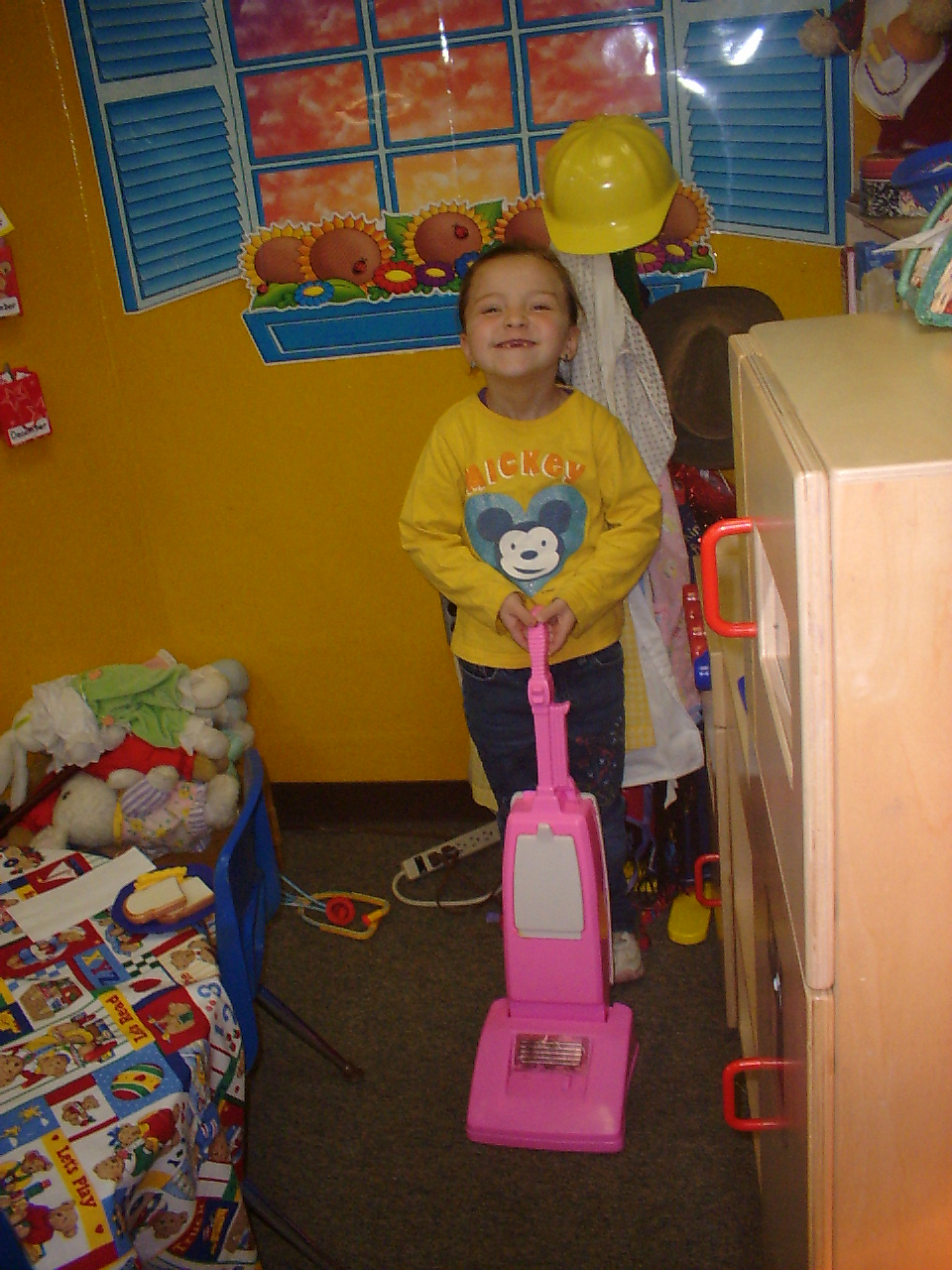
| Teacher Center: Just like I did when I was a little girl, Heather loves to play teacher! She is developing dramatic play as well developing kindergarten concepts! We've added a couple of desks from our first grade neighbors to this center. |
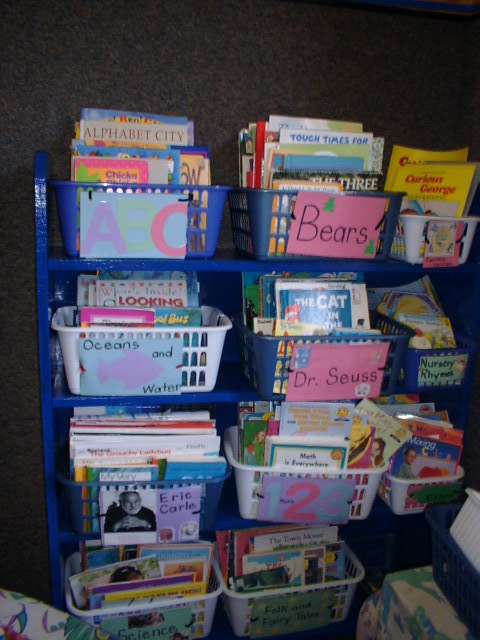
| Reading Room: Loads of books to share, organized by subject or genre. |
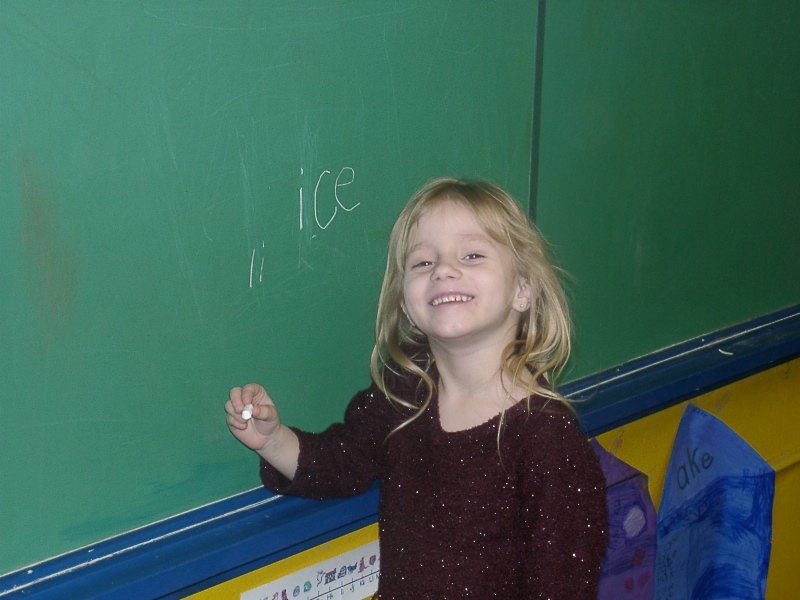 |
| Chalkboard: Miranda practices handwriting and vocabulary! Must have been a cold day.. she has written the word ice! |
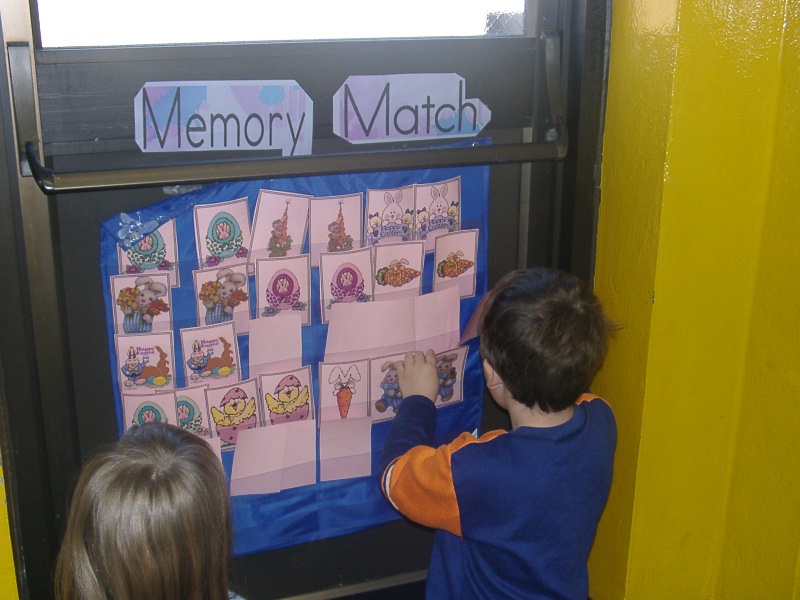 |
| The Memory Match Game: This game was made by using a pocket chart on our back door. You can make a memory game for every season using a program such as Print Shop. I make duplicates of seasonal pictures using the 1/4 greeting card template. |
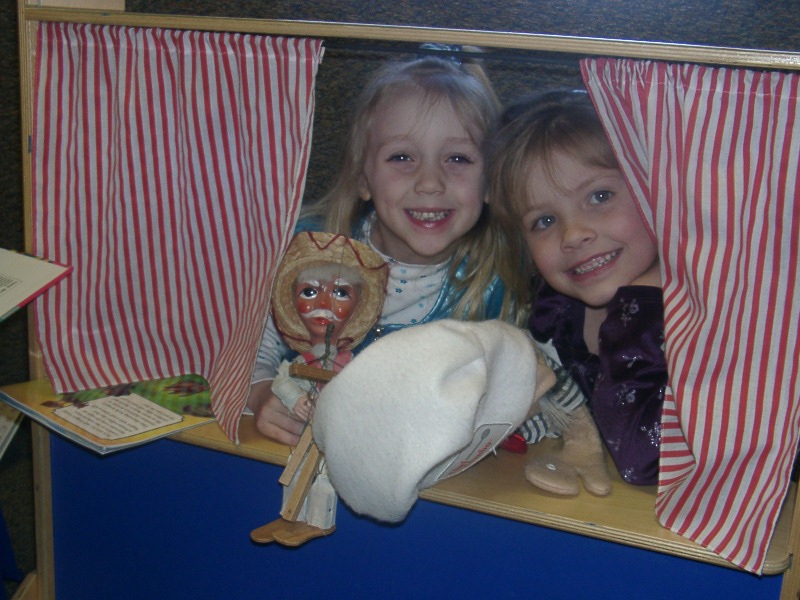 |
| Puppet Stage:Isn't it fun to pretend? While we play here we are developing language skills. |
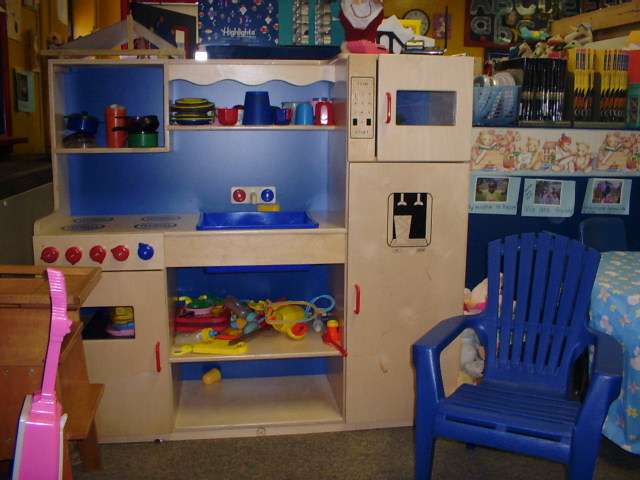
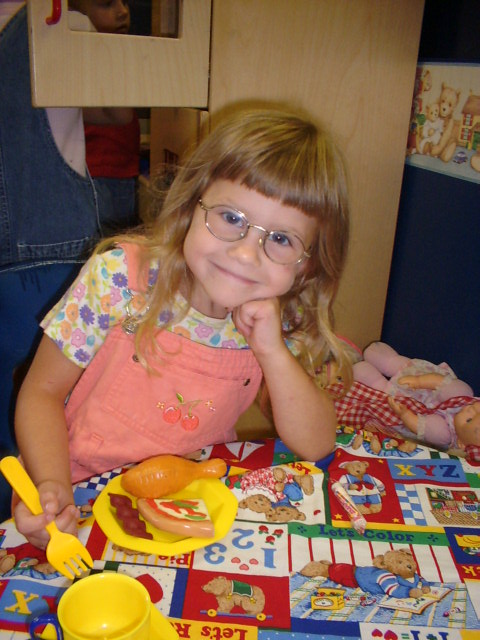
| Kitchen: Life skills and dramatic play are developed here. And if you're lucky... you just might receive an invitation for a tea party! |
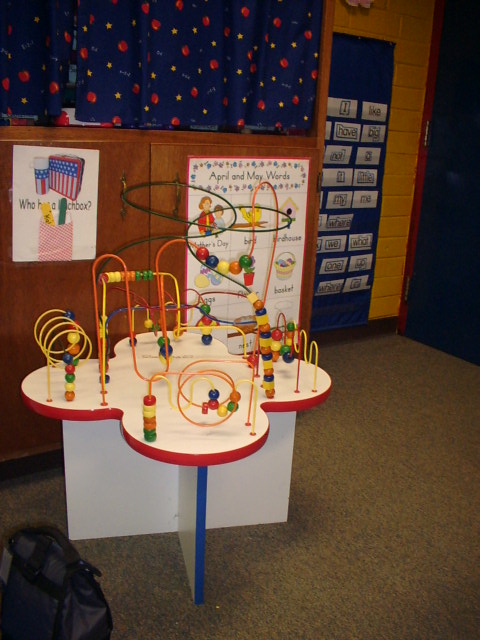
| Rollercoaster Table: Here we are learning patterning, problem solving and directionality, while developing fine motor co-ordination. |
 |
 |
 |
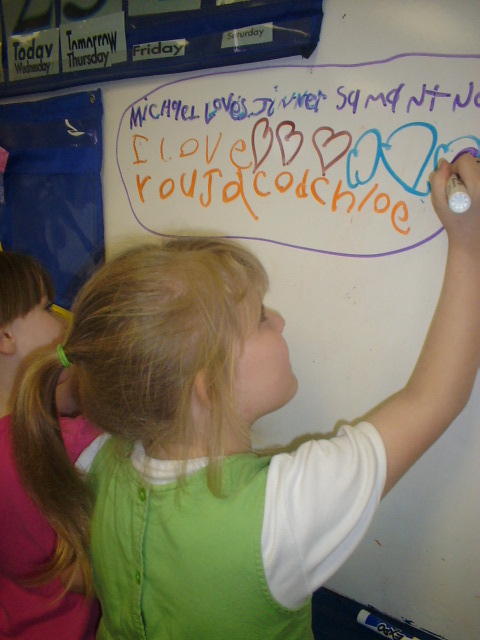 |
| Markerboard/Whiteboard: This is one of their favorite centers. Students write stories, high frequency words, alphabet letters, or develop fine motor skills through drawing. |
 |
 |
 |
 |
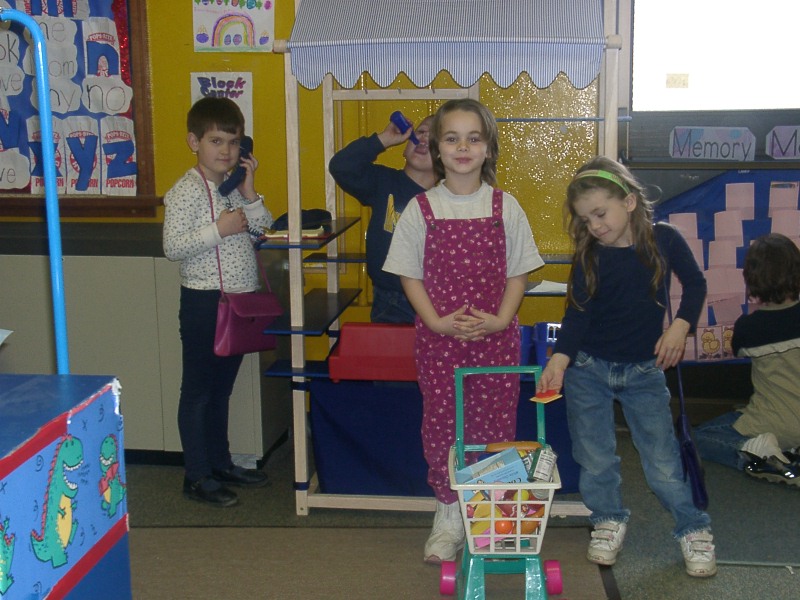 |
| At our store we learn about money and shopping. |
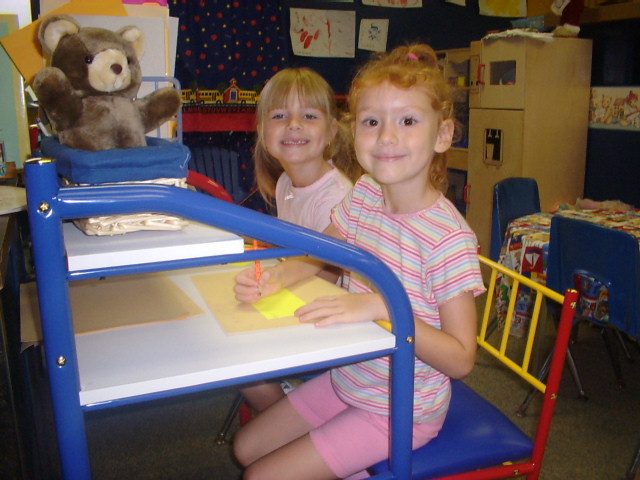 |
| Writing Table: Our kindergarten Author's are the best! |
 |
 |
 |
 |
 |
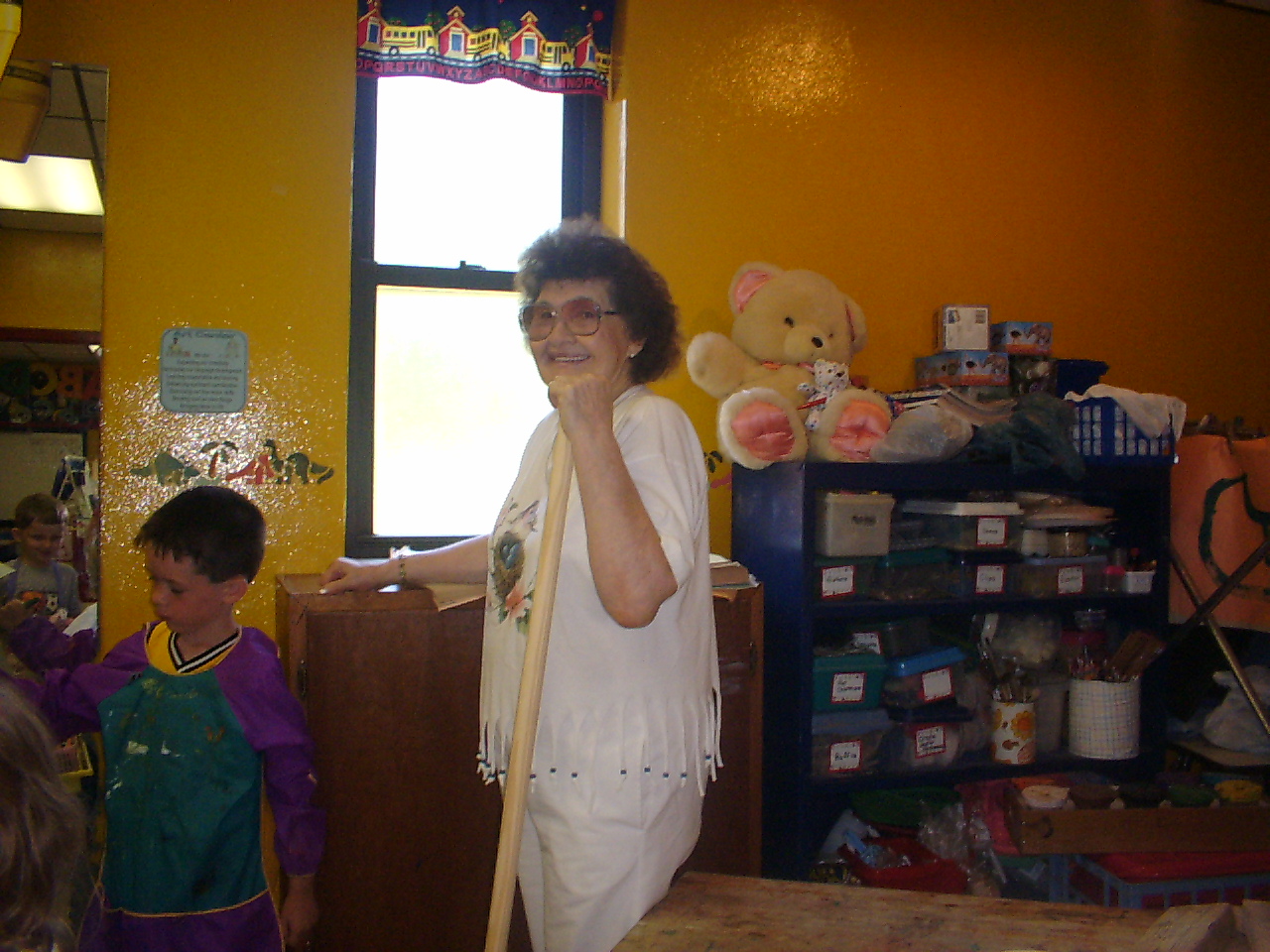 |
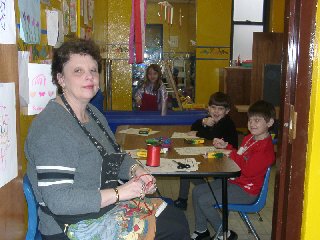
| Our Fostergrandparent , Miss Minnie is a big help to us at centertime. |
|