�� killer
All of these people, if they had episodes of dizzyness, faintness, unconsciousness or seizures in the past, may have been falsely diagnosed with epilepsy, hypoglycemia or vaso-vagal syncope. A low heart rate, fast heart rate or other symptoms during childhood went unnoticed or overlooked. No symptoms may have been present at all. All of these people may have LQTS, a frequently misunderstood disorder of the heart's electrical system. If a child or young adult dies suddenly with no apparent cause, it is too often just chalked up as 'one of those things'. Yet, other young people, presenting symptoms to their doctors are told-- you are too young for heart problems--you have epilepsy--You are dehydrated--You have stress or an anxiety disorder. Some patients or his/her parents may know there is something else perhaps seriously wrong, but being unable to put their finger on it will trust doctor's judgement. This mistake can be dangerous, even fatal. Some people go 20 years on anti-seizure medication until their children start showing the same symptoms, and some astute doctor realizes what else may be going on.
What is actually going on is that these people are experiencing a problem with their heart--it is taking too long to recharge (repolarize) between heart beats. This is due to cell scructures in the heart, called ion channels, not working correctly. In some it is potassium ion channels, in some calcium, and in some sodium. Each channel affects the rhythm of the heart, and if your cells do not allow the proper minerals to work, your heart may not work correctly. With LQTS, rushes of adrenaline may cause your heart to overreact and trigger a dangerous rhythm.
Current research suggests that six genes may be responsible for the disorder.� A possible link of LQTS to Sudden Infant Death Syndrome is also being explored. People may also develop a prolonged q-t interval through dietary insufficiencies; usually severe as in bulimia or anorexia, through the use of certain medications including bronchodilators and some diuretics, through alcohol or drug abuse, neurological trauma, as well as a result of damage to the heart from other conditions.
Treatment options include beta-blocker drugs to slow conduction of the heart, implanting a pacemaker or internal cardiac defibrillator to override a possibly lethal arrhythmia.� In cases such as asthmatics where beta blocker therapy is not recommended, a procedure called a left cervico-thoracic sympathectomy can be performed to remove the nerves that over-stimulate the heart.
Dr. G. Michael Vincent, a professor of medicine at the University of Utah founded the American Sudden Arrhythmia Death Syndrome (SADS) Foundation in 1991.� He has been instrumental in forming a Canadian SADS group operating in Toronto.� Dr. Vincent's extensive research on LQTS, his desire to educate health care professionals about his findings, to provide support and to increase public awareness of LQTS has no doubt saved many lives.
According to an article published in The Toronto Star in 1994, Dr. Vincent lists three key points for health care professionals to keep in mind:
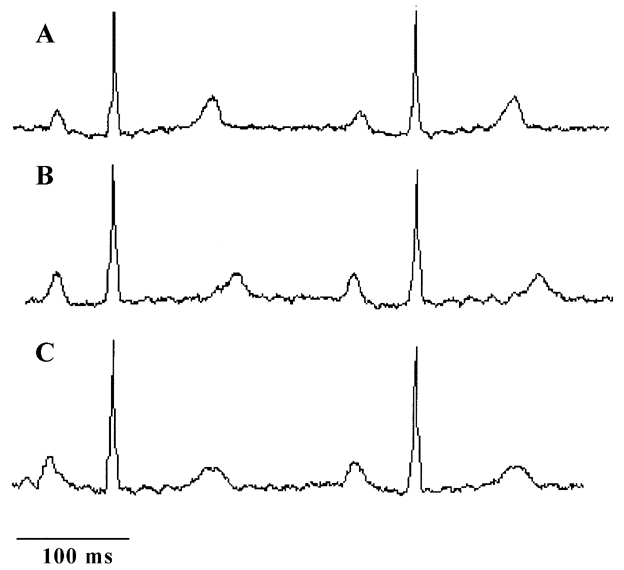
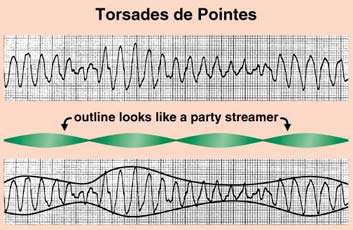
The QT interval is a period of time measured by an ECG.� The interval represents the period of time in which the heart needs to recharge or repolarize.� When the QT interval is prolonged, the patient is vulnerable to ventricular arrhythmias, especially torsades des points, a kind of ventricular tachycardia, represented as a sort of twisted helix on the ECG.
* When a young person presents with these symptoms, suggest to the attending physician that an ECG be done with special attention to the QTc interval. (q-t interval corrected for heart rate)
* If a family member is identified as having LQTS, all members of the family and extended family should be tested.
508E South Temple, Suite 20 Salt Lake City,� Utah 84102
1-800-786-7723�� www.sads.org
.������������������������������ � 6-2400 Dundas St. W. Suite 250
������������������������������������Mississauga, Ontario, L5K 2R8
����������������������������������������WWW.sads.ca
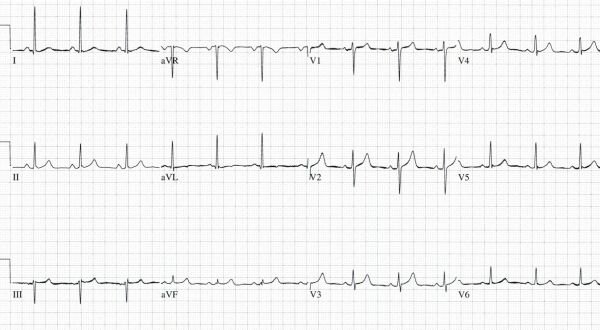
My journey with LQTS began when I was 14 and pregnant with my first child. Several weeks before I even knew I was pregnant, I began having dizzy spells, seizures and fainting during times of intense emotion, startling and intense physical activity such as dancing. I saw my doctor, who was unconcerned. He told me that in the old days, fainting was how people knew a young woman was pregnant. This reassured my mother and my future mother-in-law, but not me or my then boyfriend (now husband). Later on in my pregnancy it seemed I was fainting at least once a week, and I had chest pain, so my doctor scheduled an EKG "just to be on the safe side". It showed nothing. When I was in the hospital delivering, some undefined arrhythmias were noted and I was given beta-blockers which I stopped taking during my second pregnancy. The dizzyness, tiredness, nausea, seizures and fainting spells continued through my second pregnancy, as well right up to the time I moved out of my Mom's house and in with my boyfriend at the age of 16, when they seemed to taper off. The came back when I was 18 and had lost a job I really enjoyed, I became depressed for almost a year (until I found a job I enjoyed more!) and I passed out several times a month. I was terrified to be alone with my children in case something happened to me, like fainting and hitting my head, and then something would happen to them. Because I had fainted during pregnancy before, I was almost convinced that I must be pregnant again, even though I had my fallopian tubes clipped after my second child, but the doctor assured me I was not. I didn't mention the new bout of fainting spells. I began to believe that perhaps it was hormone related, as the spells were more likely to occur, and to occur more frequently around my time of the month. I began to recognize the feelings I would get right before I became dizzy and/or passed out--tiredness, a sense of unreality, a little headachy sometimes, sometimes a feeling of bubbling in my chest as if I had to cough and sometimes chest pain going up into my shoulder. These spells seemed to completely disappear when I started my new job, and did not come back to haunt me until I was 22 and in a high-stress job working for the Canadian Government. One day when I was walking up the hill from the parking lot and dreading my day, I dropped. When I woke up, I was 15 minutes late for work and my boss (who REALLY didn't like me) gave me a hard time about it. I had to run to the bathroom to be sick, and there had a seizure on the floor. Over the next 2 months I had several spells, and had an ambulance called 3 times, all of which I refused, because I felt that noone would be able to figure out what was going on, or would just chalk it up to stress or anxiety. I was wondering myself if I wasn't neurotic or a little crazy. During this time I began to fear balloons--if one of my kids had one and it popped near me, I would faint. Every time! I was afraid that I would be driving and have an episode, so finally my husband was able to convince me to go back to the doctor. She diagnosed me with epilepsy on the spot, and scheduled me for a CT scan, an EEG and an ambulatory (24 hour) EEG, and an appointment with a neurologist. Everything came back normal, and the neurologist was baffled, but sent me back to my family doctor. I asked her if there was anything else it could be, and she said "possibly an arrhythmia, but I don't think so". But scheduled me for a Holter monitor test just in case. I wore the holter monitor for a total of 6 days, three of them consecutive, and my body refused to 'cooperate' and give anyone reason to raise an alarm--it showed nothing unusual but a lot of extra and skipped beats. During this time my contract ran out, and I left the job, and then the spells tapered off again! I was relieved but frustrated and scared. I KNEW that what was going on was NOT epilepsy, but I didn't know how to prove it I knew very little about either epilepsy or arrhythmias, and I didn't know WHAT was going on. I was worried, my husband was TERRIFIED and my kids were worried, which was what bothered me the most. One night a few months later, the phone rang in the middle of the night and I got up to answer it. I picked up the phone and fell to the floor--I am very bad at seeing the warning signs when I am half asleep. This time, the episode did not self-terminate and when my husband came out to see who was on the phone, I was blue. He called an ambulance and began CPR. I was defibrillated twice in the hospital, and came out with some burns on my chest,lasting memory and fine-motor-skill problems. Still no-one knew what was going on. Then my brother who lives several hours away fainted one day while playing with neighborhood kids, and was lucky enough to be diagnosed right away with LQTS. I printed off all the information I could find, and the more I read, the more I realized that this could be ME. I sent the information to my doctor and scheduled another appointment, and she then scheduled a 12 lead EKG and a ten minute exercize stress test. The 12-lead showed nothing, but on the treadmill my QTc interval became borderline and then I went into an arrhythmia (ventricular tachycardia and then ventricular fibrillation). Luckily they self-terminated. Now we had a diagnosis!!! Now I had to make the decision whether or not to get an ICD. I was terrified of 2 things--the fact that doctors would have to stop my heart to test the device during implantation, and the possibility of it shocking me needlessly--as it turns out a well founded fear. I was finally convinced to have the implant 'for my kids' sake'. Within a month I began receiving shocks during physical activity (walking too fast), and I had many appointments with my EP doctor to adjust the settings on the device and to adjust my new beta-blockers. Despite this I still got 'zapped' sometimes for seemingly no reason at all. I felt like I had escaped one nightmare only to be caught in another. One day my husband and I were trail walking when the mosquitoes became intolerable and we began to run. The ICD started going off and wouldn't stop. I actually threw me into a lethal rhythm and continued shocking me until it was so discharged the interrogation of the device was useless. I was very lucky that we were close to a road and my husband was able to get someone to stop. He carried me and felt every 'zap' with me. I was clinically dead for almost an hour, and came out of that experience with severe (but mostly temporary, thank the Goddess) left sided weakness, memory loss and other functional problems. I have almost fully recovered now (that was 3 years ago). I opted at that time not to have the device replaced, just removed. I found out later that the problems were due to a break in one of the leads, and I am currently considering getting another one. Just in case. But until I make that decision, I seem to be doing well on large doses of beta-blockers and a natural supplement called taurine. My only lasting problems are that I am a little 'spacey' sometimes, have trouble remembering words or names I know, and my speech slurs a little.
I am grateful to be alive and with my children. I am grateful neither of my children has this. I intend to be there to watch grandchildren grow up.
:-D
'An it harme none, do as ye will'