Area: 20,251 sq km (7898 sq mi)
Population: 2,051,000
Capital city: Ljubljana (pop 330,000)
People: Slovenian 91%
Language: Slovene
Government: Democratic Republic
|
|
| Full
country name: Republic of Slovenia (Republika Slovenija) Area: 20,251 sq km (7898 sq mi) Population: 2,051,000 Capital city: Ljubljana (pop 330,000) People: Slovenian 91% Language: Slovene Government: Democratic Republic |
|
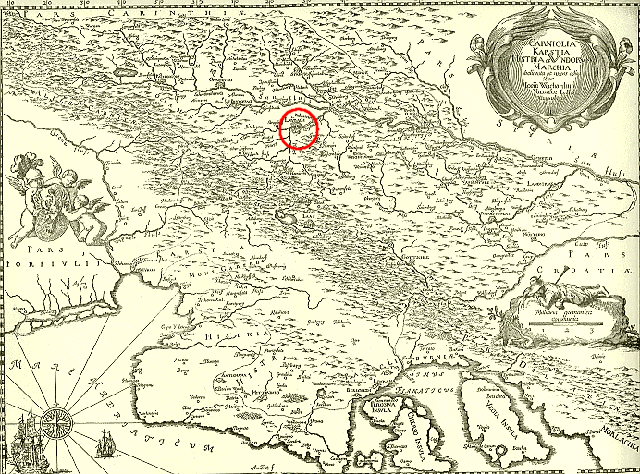
Slovenia occupies about 2% of central Europe and it's about the size of Yellowstone National Park. To the north is Austria and to the south Croatia. Shorter borders separate Slovenia from Italy in the west and Hungary in the east. Slovenia is predominantly hilly. Forest covers almost half of the country (making Slovenia one of the world's `greenest' countries) and agricultural land - mostly made up of fields, orchards, vineyards and pastures - covers a further 43%. |
Main regions: the Alps; the pre-Alpine hills; the Dinaric karst (a limestone region of caves and underground rivers) below the hills; the Slovenian littoral, 47km (29mi) of Adriatic coastline; and the lowlands, making up around one-fifth of the country mostly in the east and north-east. The interior is drained by rivers Sava and Drava which empty into the Danube, Soca flowing into the Adriatic, and Mura. Kolpa river marks much of the border with Croatia. |
|
|
The country is home to 2900 plant species, many unique to Slovenia. Triglav National Park is especially rich in endemic flowering plants. Common European animals are abundant in Slovenia, including deer, boar, chamois, bear, lynx, and some rarer beasts such as moor tortoise, cave hedgehog, scarab beetle and various dormice. One of the world's most mysterious creatures, Proteus anguinus, the `human fish', is unique to Slovenia's karst caves. |
The north-west has an Alpine climate, temperatures are moderate in summer but cold in winter. The Adriatic coast and littoral have a Mediterranean climate with warm, sunny days and mild winters. Eastern Slovenia has a Continental climate with hot summers and cold winters. January is the coldest month when the average daytime temperature is -2 �C, (28�F) and July is the warmest with an average of 21�C (70�F). |
|
|