About the Author
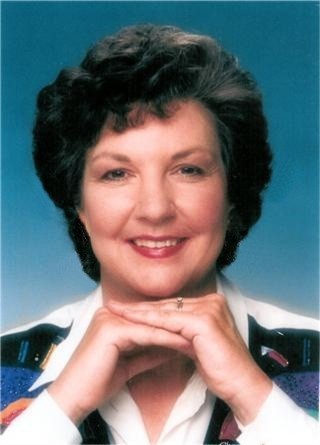
About the Author
Jane Lloyd is a registered nurse with almost thirty years experience in hospital practice. For the writing of this book, she has also drawn on the input of hospital professionals and executives from across the country. She is the author of Friends Of Loss, published by Abbey Press, St. Meinrad, Indiana, in 1988. She resides in North Carolina, and may be contacted at [email protected]
Like many people, I remember where I was when I heard of President Kennedy's assassination. That afternoon, Ms. Eunice Medhurst, Director of Nursing, abruptly summoned all off-duty students to class. We gathered in silence, sensing that something important had happened, and she informed us of what was taking place in Dallas. Afterwards, we walked back to the dorm lobby and stood in front of the television to await further news, which was quickly forthcoming and was not good.
It is the only news event I remember during my years as a student nurse. During that time, Kruschev gave his famous shoe-pounding speech, and the Reverend Martin Luther King delivered the magnificent "I-have-a-dream" speech. The Vietnam war was just beginning. It was one of the most turbulent periods of political and cultural change in our nation's history; yet, I can count on one hand the number of times I watched television or read a newspaper. When we were informed about President Kennedy, I remember feeling both sad and afraid, but I also recall how odd it felt to be diverted to any other subject besides nursing.
On another occasion, Ms. Bernstein made the off-hand remark, "Girls, whenever you're on a date, please talk about something besides nursing!" That was one of the few times any instructor or other school official ever hinted to us that there were other subjects besides nursing. And her casual expression of concern was clearly more for our date than for us.
Anyway, telling us was one thing; what influenced us most was that we lived in a strictly-controlled environment that focused almost exclusively on nursing, everyday, year-round. Looking back, I'm not sure whether our training in this three-year nursing school was more like that of the military or a convent. One half of us stayed to graduate, and although our lives later acquired broader dimension as we moved away, married, had children and otherwise engaged in life, we were permanently indoctrinated. Regardless of whether we advanced our education in other areas or even left nursing for another career, we were nurses at the core forever after.
From time to time over the years since, I have asked myself whether I was glad I chose that path. I would not do it again. To this day, looking through my nursing school yearbooks evokes feelings I don't care to re-live. Ours was not designed to be a well-rounded education. It was not meant for self-discovery or the development of a broad range of talents or interests. It was not meant to open a world of possibilities. It was demanding work --- mentally, physically, emotionally, spiritually. All the while, it molded me according to someone else's design. Since then, like many nurses, I have also begun countless days not looking forward to my work.
Fortunately, there's a lot more to it than that. For one thing, my family roots had set me on a path that enabled me to persevere and to understand the value of work. Both my parents were talented people, but they entered their own adulthood during the Great Depression; consequently, they placed a high value on the ability to make a living at their work and the willingness to work hard, enjoy it or not. They also loved and cared for their children, and they felt a responsibility for those in the community who needed their help. With that background, I too cared about my patients, even more so as I grew and matured.
Almost all the nurses I've ever known find gratification and happiness in taking care of patients. Yet, nurses leave the profession in droves. Today over one third -- one million -- nurses in this country are not practicing or are practicing only part time. Amid the abundant speculation about why they do not stay the course, the most frequent reason nurses themselves give is the poor practice conditons in hospitals. It is not the challenges of the profession itself; instead, it is what seems to be a losing battle against hospital systems that do not permit a professional practice.
Still, whenever I have asked myself over the years if I were sorry I chose nursing, I have been intrigued to find that I said, "No." (That does not contradict my earlier statement that I would not do it again. Many of us have had past experiences that we would not wish to repeat, but we're not sorry we lived them.) Although my career has not always been gratifying, it has surely had its moments. And it has never been dull. As it happens, my supposedly one-dimensional career enabled me to learn much about life, and it required self-discovery. Moreover, it placed me in the path of some excellent nurses, physicians, hospital leaders and other health professionals. It has been an honor to associate with so many persons of both talent and intellect. By now, I have witnessed first-hand a good-sized chunk of nursing and medical history, rich in theory, practice, research and altruism.
But one of the most important reasons I am grateful for my career is that, in the end, it enabled me to write this book. Having gained the insights and the contacts to complete this project make the past pressures and disappointments count for something greater than I had envisioned. It is my hope that I have accomplished through this book that which I often could not accomplish in practice.
