|
In the Name of Allah, the Compassionate, the Merciful |
|||||||||||||||||||||||||||||||||||||||||||||||||||||||||||||||||||||||||||||||||||||||||||||||||||||||||||||||||||||||||||||||||||||||||||||||||||||||||||||||||||||||||||||||||||||||||||||||||||||||||||||||||||||||
|
From the Numeric Miracles In the Holy Qur'an | |||||||||||||||||||||||||||||||||||||||||||||||||||||||||||||||||||||||||||||||||||||||||||||||||||||||||||||||||||||||||||||||||||||||||||||||||||||||||||||||||||||||||||||||||||||||||||||||||||||||||||||||||||||||
| |||||||||||||||||||||||||||||||||||||||||||||||||||||||||||||||||||||||||||||||||||||||||||||||||||||||||||||||||||||||||||||||||||||||||||||||||||||||||||||||||||||||||||||||||||||||||||||||||||||||||||||||||||||||
|
| ||
|
| ||
|
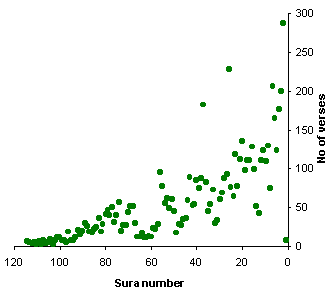
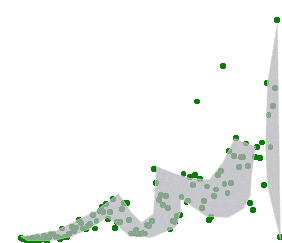
The illustration on the left shows a scatter
graph of the number of verses in a sura against the number of the sura.
The result resembles the word "Allah" in Arabic (right).
The Qur'anic revelation was made by Archangel Gabriel
to Prophet Mohamrned (PBUH). It took place over a period of more than 20
years beginning with the first verses of sura 96. After a three year
hiatus, the revelation continued up to the death of the Prophet (PBUH) in
632 C.E.
Whenever a fragment of the Qur'an was revealed,the
Prophet (PBUH) called one of his literate companions and dictated it to
him, indicating at the same time the exact position of the new fragment in
the fabric of what had already been revealed. Extremely diverse materials
were used for this initial record e.g. leather, parchment,wooden tablets,
bones and soft stones for inscription. At the same time the Prophet (PBUH)
recommended his followers to memorise the Qur'an, thereby doubly
preserving the text.
Following the death of the Prophet (PBUH)in 632 C.E.,
Abu Bakr (RA), the first Caliph of Islam, asked the Prophet's (PBUH) main
scribe, Zaid Ibn Thabit, to make a copy which he duly did. On Omar's (RA)
initiative (the then future second Caliph), Zaid consulted all the
information he could assemble in Medina and produced a very faithful copy
of the book.
Omar, Abu Bakr's successor in 634 C.E. subsequently
made a single volume (mushaf) which he preserved and passed on to Hafsa,
his only daughter and the Prophet's (PBUH) widow. The third Caliph, Uthman
(RA), entrusted a commission of experts with the preparation of the great
recension that bears his name. The commission evaluated the authenticity
of the document produced under Abu Bakr (RA) and which had remained with
Hafsa until then. They also consulted Muslims who had memorised the
Qur'an. The critical analysis of the authenticity of the text was carried
out very stringently. The agreement of the witnesses was deemed necessary
before the slightest verse containing debatable material was retained. The
result was a text containing an order of sura that reflects the order
followed by the Prophet (PBUH) during his recitals in Ramadan. The 114
suras were arranged in approximately decreasing order of length although
there were exceptions.
The sequence of the suras in the Qur'an has proved to
be of much interest in modern times. A young Turkish Engineering student
at Istanbul Technical University was fascinated by this topic, so much so,
that he plotted by hand, a graph of he number of verses in a sura against
the number of the sura. The result startled him as it resembled the word
"Allah" (God) in Arabic. His findings appeared in a Turkish
national newspaper in February 1986.
At the beginning of this article is a computer
generated scatter graph of "length of sura" (ie number of verses that it
contains) against "number of the sura". The graph is provided both in its
raw form and with added shading. There is a distinct similarity between
the graph and the Arabic word "Allah". Is this a coincidence
or something much more? |