|
JAMES K. BAXTER'S OTAGO WORLDS Lawrence Jones
|
Page 45
|

|
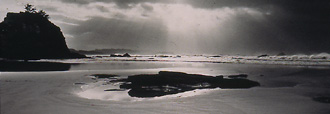
Brighton and the Otago coast, as the Fallen Eden and as the fringe between City and Wilderness, Dunedin as the City, both bohemian and Calvinistic, and Central Otago as the Wilderness - these are Baxter's three Otago worlds, contributing the images that become symbols in his mythic structures. They are the mythic backdrop against which his mythologised life, the central subject of his poetry, is acted out. A study of Baxter's poetic notebooks, putting the published poems in the context of the unpublished ones, shows that there was a definite pattern of development in the use of Otago images. In the very early poems (1937-41) they scarcely appear. The nature imagery is not from the New Zealand world so much as from English poetry and also the English countryside (for he did spend 1937-38 in England at Sibford School). The few specific places evoked are European: Serrieres, Loch Leven, or the countryside around Sibford, with its streamlets, meadow grass, and moorland hills. A poem from 1941 about a rocky island is not about Green Island, but rather some unnamed island 'Beneath the glinting of a northern sun'. When a New Zealand image appears, it is in the tradition of the poems in Alexander and Currie, as the very early 'Ode to a Tui' which opens 'Hail! Feathered songster of the bushland wild'. Dunedin is the first named Otago place, but the imagery is conventional and generalised. |
 |
 |