|
JAMES K. BAXTER'S OTAGO WORLDS Lawrence Jones
|
Page 28
|

|
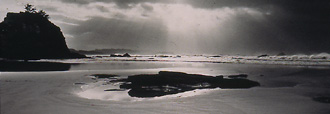
The symbolism of the rocks varies. If those half-buried rocks between Barney's Island and the swimming beach become the limbs of Prometheus, Lion Rock out off Big Rock, surrounded by the sea, 'shaped like a lion, fronting the south, / With mane of greybrown kelp alive and coiling', is associated with a cynical love affair between a young man and a middle- aged woman living in a cottage opposite it. To the older poet it seems to speak of death: out there Where the waves never cease to break In the calmest weather, there's
a hump-backed
Growling with its wild white
mane
Death is the one door out of the labyrinth! With Lion Rock, as with Barney's Island, rock as symbol
merges with island as symbol.
|
 |
 |