|
JAMES K. BAXTER'S OTAGO WORLDS Lawrence Jones
|
Page 21
|

|
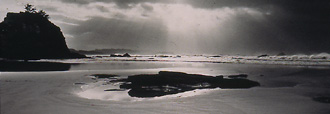
Thus for Baxter that mythical scene of the ancestors crossing the river at Brighton Bay relates to a complex ancestor myth, one in which the ancestors both, as remnants of the primitive tribe, contrast to the present technological and rationalistic culture, and, as puritans, carry the seeds of that culture's disease. This complex myth appears again in the last section of 'Notes on the Education of a New Zealand Poet', when the poet again contemplates Brighton Bay, 'where a thread of brackish brown water is flowing out to the river mouth, where the early settlers crossed once, leading their horses'. He feels an 'unfathomable sadness' as he views the place. He would like to imagine that the bird-tracks left on the hard sand on the beach were 'made by the feet of human dancers, meeting around an altar or a bonfire in a nightlong dance, men and women joined, or perhaps women only, honouring the Earth Mother'. That is, he attempts to imagine a more primitive tribe than his ancestors, unfallen; but present-day Brighton stands in utter contradiction to such a vision: But the glass-fronted houses above the bay will supply no ritual, nothing to join the intellect or body to the earth it came from - only TV aerials, trucks of bricks, washing hung out to dry, ice cream cones stacked behind the counter of a shop - the trivia of a culture that has ceased to understand itself. The spondaic thud I hear is not the noise of feet but the beating of my own heart. |
 |
 |