|
THE
MYTHOLOGY OF PLACE:
JAMES
K. BAXTER'S OTAGO WORLDS
Lawrence Jones
I
|
 |
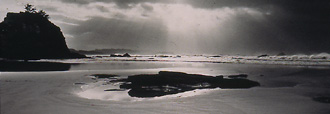 |
| The
Brighton World |
|
Page 1
|
|
'What happens is either meaningless
to me, or else it is mythology' - this much-quoted
statement of James K.Baxter's is a starting place for a discussion of his
uses of Otago places in his work, for it takes us into the heart of the
Romantic poetic which determines those uses. To Baxter, 'Poetry is not
magical but mythical', presenting 'the crises, violations and reconciliations
of the spiritual life in mythical form because this is the only way in
which the conscious mind can assimilate them'. Myth is central to poetry
because it 'is the form the poet uses to crystallise experience'. That
crystallisation is in the form of symbols, which 'cannot be explained'
but rather 'must be regarded as a door opening upon the dark - upon a world
of intuitions and associations of which the poet himself is hardly conscious'.
The symbols in turn are drawn from concrete sense experiences in the immediate
environment. This process is most fully described in 'the tenets of the
Horse religion' in Baxter's posthumously published autobiographical novel
Horse:
|
|
|