|

|
|
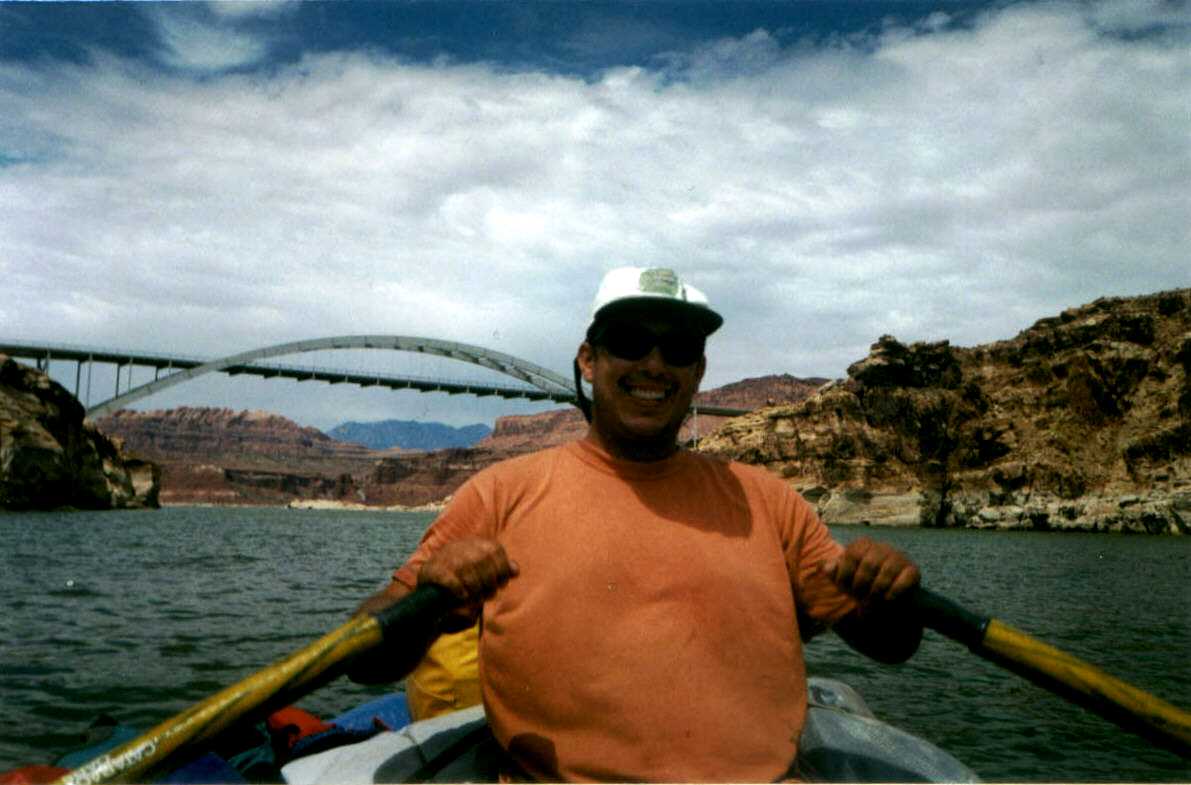 Lake
Powell. Lake Powell buries 184 miles of the Colorado River through
Glen Canyon. It is far to say that the lake is beautiful - but we
end up thinking still of what was lost. It's as if someone had cut
the last supper in two leaving out Jesus and the right hand
disciples. What was lost? There are books of photos, there
is prose and poems but I will never know what was there before. I
can imagine and dream but it's gone. Some of you may well be aware
that there are some movements afoot to drain the lake and re-mediate it
to its former glory. Having traveled on the lake, I can give you
my opinion. The lake has been trapping sediment in side canyons
for a while and up river above Hite Marina it has been catching the silt
of the Colorado. If we were to drain the lake would that stuff
eventually make its way downstream? Sure and it would fill Lake
Mead behind Hoover dam - one of the reasons that Lake Powell was
created. Would the canyon be the same? I think not.
Not for a while. Why? Because the water that is sitting
there now has leached out a lot of cementing chemicals from the top few
inches of sandstone. You can see the effect of this in the white
ring that is visible when the water fluctuates from its high full pool
state and when it is lower. This has to extend to the lake bottom
that is not visible. How long would it take for that to erode
off? And then it won't be exactly like it was when millennia of
desert varnish striped and covered the surface. Is it worth
draining? I'd still like it to be. But we shouldn't be naive
about what it'll take to return to normal - time. Lake
Powell. Lake Powell buries 184 miles of the Colorado River through
Glen Canyon. It is far to say that the lake is beautiful - but we
end up thinking still of what was lost. It's as if someone had cut
the last supper in two leaving out Jesus and the right hand
disciples. What was lost? There are books of photos, there
is prose and poems but I will never know what was there before. I
can imagine and dream but it's gone. Some of you may well be aware
that there are some movements afoot to drain the lake and re-mediate it
to its former glory. Having traveled on the lake, I can give you
my opinion. The lake has been trapping sediment in side canyons
for a while and up river above Hite Marina it has been catching the silt
of the Colorado. If we were to drain the lake would that stuff
eventually make its way downstream? Sure and it would fill Lake
Mead behind Hoover dam - one of the reasons that Lake Powell was
created. Would the canyon be the same? I think not.
Not for a while. Why? Because the water that is sitting
there now has leached out a lot of cementing chemicals from the top few
inches of sandstone. You can see the effect of this in the white
ring that is visible when the water fluctuates from its high full pool
state and when it is lower. This has to extend to the lake bottom
that is not visible. How long would it take for that to erode
off? And then it won't be exactly like it was when millennia of
desert varnish striped and covered the surface. Is it worth
draining? I'd still like it to be. But we shouldn't be naive
about what it'll take to return to normal - time.
The thing about this is that at some point in the future - it might be 200 or 300 years or maybe 1000 (depending on the vagaries of rain fall and climate), but the lake will fill with sediment. What happens then? What scheme will man cook up to handle it? And before that even - the lake will not be able to fluctuate as it can now - as its capacity diminishes. Enough. Think about it. We were always able to find camping along the lake. It wasn't always the nicest but we always found something. We'd rise early at first light, before the sun rose. We'd have a good breakfast, pack the boat and start rowing. Each of us spelling about once an hour. We'd sing and read to each other. We'd row until we got hungry for lunch - stop and eat lunch and then row on. Usually we'd be able to row 30 minutes to an hour after lunch and then we'd have to stop again. The reason is that the powerboats would come out and create waves that would slap off the vertical walls and head back to us. We'd get the waves of one boat multiple times. The wind would also rise in the afternoon and increase the resistance and waves we had to battle. The affect of chop on rowing a boat is that you are no longer able to pull nice smooth long strokes. Your cadence is hampered, you have to push the oars way down to lift them over the wave tops. It just doesn't work well. We'd stop and hunt for some shade. Shade is in short supply on the reservoir. But we'd find some and hide out. Later the boaters would retire for the evening and we'd row another hour or so, stop, set up camp and have dinner and go to sleep. I want to apologize for the lack of photos of Lake Powell but someone stole a camera of Angie's that had some pretty good shots in it. |
||