
Sockeye Salmon
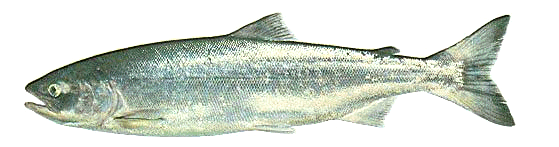
Sockeye Salmon , generally 5-12lbs, can be the second most abundant salmon species during July, August and September. Like Coho, Sockeye tend to feed along rip lines, often well offshore. These fish are prized for their great taste.
Chum Salmon
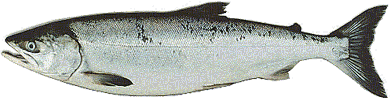
The Chum Salmon , generally 7-15lbs, is most abundant salmon species during September and October. Like Coho and Sockeye, Chum Salmon tend to feed along rip lines, often well offshore. These fish pound for pound can be the fiestiest fish of all. They are an oily fish so smoking seems to be logical way to process these fish
Pacific Halibut
The Mighty Halibut's size accounts for its value as a trophy catch. Not all halibut are huge, but even the common size taken from provincial waters is quite substantial at 15-45lbs. Catching one weighing 100 lbs or more is not unlikely. Fish over 500lbs have been caught commercially. The most reliable way to catch halibut is with fairly strong tackle, dropping large baits (large whole herring), metal jigs, or spoons to the bottom.
Large Halibut are often times hooked but never seen, leaving behind only tell tale signs of straightened hooks or broken lines (and hearts), sore arms and aching backs. Once at the boat, halibut have traditionally been gaffed. In any case, large halibut should not be boated directly as their powerful thrashing can be dangerous. Once tired out, they can be noosed and towed. The halibut's edibility is excellent. The flesh is dense, white, with low oil content and will keep well in the freezer for up to 12 months. There are no real aliases, but anglers will hear the terms chicken halibut for smaller fish (up to 30lbs) or barn doors for the more impressive 80-200lb.
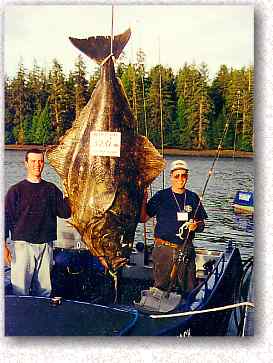
This monster halibut was caught up in the Queen Charlotte Islands and is currently the Canadian record of 320lbs although fish over 500lbs have been caught by comercial fisherman. So fish bigger that this are still out there.
