 |
 |
| Allusions in the Games |
| The land of Hyrule, itself, is a Gaelic legend. "Zelda" is the traditional name given to the head Witch in a Wiccan coven. |
| The creators of the Zelda games are obviously well-read. Check out some of the allusions to literature, history, etc. I have noticed in the games. |
 |
 |
| Poe ghosts are named after one of the world's most well-known and respected horror writers, Edgar Alan Poe. |
 |
|
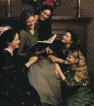
| The four sister Poe ghosts in the Ocarina of Time Forest Temple are named after the four sisters in Louisa May Alcott's Little Women: Jo, Meg, Beth, and Amy. Just as the sisters in the book, the Poes get killed and disconnected from each other. However, they go in the wrong order in the game. |
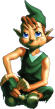 |
| Mido of Kokiri Forest may be named for King Midas, possibly the greediest guy in mythology. |
 |
 |
| The mythical Master Sword set into sacred stone in A Link to the Past and Ocarina of Time is a nice parallel to Arthur's Excalibur that only a hero can relieve from its bondage. |
| Allusions Outside of the Games |
| Allusions Within the Games |
| Several tools are a perpetual presence in the Zelda games. Of course there is always a Master Sword, a bow, a boomerang/hookshot. It is interesting, though, to track the development of certain tools. For example, the flute in A Link to the Past was used only to move Link from place to place in Light World. But it became the whole premise of the next big game: Ocarina of Time. Likewise, the Happy Mask shop in Ocarina of Time that plays such a minor role in the series became the entire purpose of Majora's Mask. |
 |
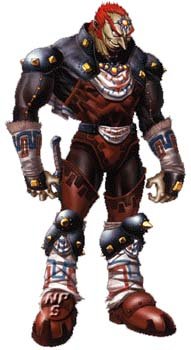
| It's also fun to watch how enemies develop in the games. Agahnim's lightning attack in A Link to the Past is modified slightly and then used extensively by Ganondorf and Phantom Ganon in Ocarina of Time. The Stalfoes are a constant presence in the games, as are the Keese and Wallmasters. |
 |
 |