Jah.Com


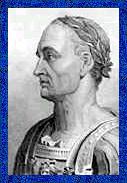
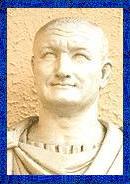
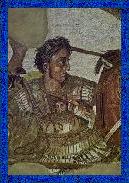
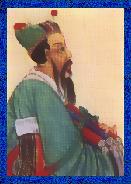
          Gaius Julius Caesar                Emperor Vespasian               Alexander the Great                        Confucius                      Frederick Barbarossa


Coming soon...
-Conquest of Alexander the Great
-The Papal States


"A Crocodile Story"

       Towards the end of the last century Egypt was being flooded by archaeologist. Archaeologist that was digging up all sort of priceless pieces and valuable historical information. Five native thieves, despite the laws, went into the scrubland near the edge of the Egyptian desert and started digging for priceless goods to sell on the black market in Cairo. After hours of digging they hit something. What they uncovered was something that least expected. They uncovered a mummified crocodile which to them as thieves was useless. They couldn't sell it on the black market because it was to big to smuggle into the city, so they burned the crocodile. As they dug futher they uncovered more mummified crocodiles. They burn all of those also. Crocodile, in ancient days, were worship by the Egyptains and the thieves knew that if they keeped digging they would adventually find the crocodile temple. For one year they keep their digging site secret and ended up burning over one hundred crocodiles. Finally they dug down to the roof of the temple. In the temple the thieves found not one priceless artifact, but there on top of a stone altar was a baby mummified crocodile. In disappointment the thieves flip and grabed the mummified baby and smashed it into the stone altar. Out came half a dozen papyrus scrolls with two thousand year old letters, poems, accounts and temple records. And for the other one hundred crocodiles filled with valuable historical info gone up in smoke!!


The Founding of Rome

       When the Greeks sacked Troy a man named Aeneas escaped. Him and his followers sailed out of Troy and ended up in a land called Latium. There Aeneas settled down and founded the town of Lavintium. After his rule Julus became king of Lavintium. With vast numbers of people Lavintium was expanding quickly, so Julus founded a new town not to far away called Alba Longa ("the long white town"). Later on down the line Procas was king of Alba Longa and had two sons. Numitor, the elder son, was the heir to the throne. The younger son was Amulius. After Procas died Amulius overthrew his brother and became king. Amuliuswas afraid that he would be dethroned by his brother's children, so he had them all killed except one. Numitor's daughter Rhea Silvia escaped and had twins. When she was found she was killed. They took the twins laid them into a basket and threw them into the Tiber river. A shepherd named Faustulus found the twins in the basket wraped in Rhea Silvia's robe. He took them with him to his house and his wife called them Romulus and Remus. They raised them along with the rest of their children. When Romulus and Remus was older they helped restore their grandfather, Numitor, to the throne and killed Amulius. Their grandfather was king, but they wished for their own kingdom, so they agreed to build a city. A city inbetween seven hills not to far from Alba Longa at the place where they was pull from the river. They took the land, divided it, and started their city. Romulus greedy and jealous of his brother wanted this city for himself. He killed Remus, proclaimed himself king, and named the city after himself. A city called Rome.

Consul Gaius Julius Ceasar

       Julius Caesar was born in Rome on Quinctilis (July) 12 or 13, 100 BC. Quinctilis later was named July (from Julius) in his honor. Caesar father died when he was only 15. His uncle Gaius Marius (general and six times consul) gave him the position of Flamen Dialis (high priest). After his marriage to Cornelia in 84 BC, Caesar left Rome to escape Sulla who overthrew the Marian party and assumed dictatorship in 81 BC. He then served with the governor of Asia before transferring in 78 BC to military service with P. Servilius Isauricus in Cilicia. After Sulla's death, Caesar returned to Rome. By his 20's he won the highest military decoration & gained valuable experience in warfare. In 77 BC he left Rome to study rhetoric which was considered to be essential for a political career. Returning to Rome in 73 BC Caesar was elected to the college of pontiffs. He became governor of Gaul 15 years later. Caesar was elected military tribune in 72 BC, the first office assigned him by popular vote of the people. Caesar served as quaestor in 69 BC under the governor of Hispana. This allowed him to attend meeting of the senate. In 65 BC, Caesar was elected curule aedile, an urban magistracy involving police control of market trade. This was a popular position for crowd-pleasing; Caesar threw unusually lavish public entertainment and funded spectacular building projects. In 62 BC he reached his father's position of praetor. At age 39, he was now in position to seek consulship, the highest and most revered office in the Roman Republic. He then form the "First Triumvirate" along with Marius Licinius Crassus and Gaius Marius Pompey. In 59 BC Caesar was elected to a consulship and married again (Calpurnia, daughter of Lucius Piso). Caesar's campaigns of 58-55 BC appeared largely successful as he took all of Gual. In 49 BC, motions were renewed to strip Caesar of his command. At this time, the majority of the Senate voted against Caesar’s most recent offer and ignored the vetoes of his two tribunes. The tribunes immediately left to bring word to Caesar that the Senate had formally declared against him. Caesar and one of his legion began the Civil War of 49 BC by defying the Senate, crossing the Rubicon, and marched on Rome. Pompey fled to Greece and then into Egypt where he was killed. Caesar followed Pompey and ended up in Alexandria where he found himself in the middle of a power struggle between young Ptolemy and parties supporting Ptolemy elder sister, Cleopatra. Even though Ceasar had close relations with Cleopatra, he still decided to support her in the struggle for power. Ceasar left with eastern Asia and Egypt under firm roman control. Later in 45 BC Caesar was finally was appointed dictatator for life. This caused an assassination plot in 44 BC created by a group of senators, including Caius Cassius and Marcus Brutus. That year on the 15th of March Caesar was murdered. It is said the assassination was done for the best of Rome. With Octavain became emperor only 13 years later do you think the assassination best for Rome?


Interesting Facts

-The Roman empire lasted an outstanding total of 1,244 years.
-Alexander the Great's real name was Alexander III.
-Cleopatra's real name was Cleopatra VII.
-The Yamato dynasty of Japan is longest unbroken dynasty in the world.
-Pharaoh Sneferu was able to build three pyramids in his lifetime!
-After Napoleon's great defeat in Russia, Hitler made the same mistake!


Chronology of the Romans

ROMAN KINGS

-Romulus 753-716 BC
-Numa Pompilius 715-674 BC
-Tullius Hostilius 673-642 BC
-Ancus Marcius 641-617 BC
-Tarquinis Pircus 616-579 BC
-Servius Tullius 578-535 BC
-Tarquinis Superbus 535-510 BC

ROMAN EMPERORS

-Octavain (Caesar Augustus) 31 BC-AD 14
-Tiberius AD 14-37
-Caligula (Gauis Caesar)AD 37-41
-Claudius AD 41-54
-Nero AD 54-68
-Galba AD 68-69
-Otho AD 69
-Vitellius AD 69
-Vespasian AD 69-79
-Titus AD 79-81
-Domitian AD 81-96
-Nerva AD 96-98
-Trajan AD 98-117
-Hadrian AD 117-138
-Antoninus Pius AD 138-161
-Marcus Aurelius AD 161-180
-Lucius Verus AD 161-169
-Commodus AD 177-192
-Pertinax AD 193
-Didius Julianus AD 193
-Septimius Serverus AD 193-211
-Caracalla AD 198-217
-Geta AD 209-212
-Macrinus AD 217-218
-Elagabalus AD 218-222
-Severus Alexander AD 222-235
-Maximinus I AD 235-238
-Gordian I AD 238
-Gordian II AD 238
-Pupienus AD 238
-Balbinus AD 238
-Gordian III AD 238-244
-Philip AD 244-249
-Decius AD 249-251
-Hostilian AD 251
-Gallus AD 251-253
-Aemilian AD 253
-Valerian AD 253-260
-Gallienus AD 253-268
-Claudius II Gothicus AD 268-270
-Quintillus AD 269-270
-Aurelian AD 270-275
-Tacitus AD 275-276
-Flofian AD 276
-Probus AD 276-282
-Carus AD 282-283
-Carinus AD 283-285
-Numerian (co-emperor) AD 283-284
-Diocletian AD 285-286

Western Roman Empire

-Maximian AD 286-305
-Contantius I AD 305-306
-Severus AD 305-307
-Maxentius (usurper) AD 307-312
-Constantine I AD 307-324

Eastern Roman Empire

-Diocletian AD 286-305
-Galerius AD 305-311
-Maximinus II AD 310-313
-Licinius AD 308-324

Re-united Roman Empire

-Constantine I AD 324-337

                          Chronology of the Chinese Dynasties

PRE-IMPERIAL CHINA

Bronze Age
Emperor Yao
Emperor Shun
Xia Dynasty 2183-1752 BC
Shang Dynasty 1751-1112 BC
Zhou Dynasty 1027-249 BC
-Western Zhou 1066-771 BC
-Eastern Zhou 771-221 BC
Spring and Autumn 722-481 BC
Warring States 480-222 BC

THE EARLY EMPIRE

Qin Dynasty 221-206 BC
Han Dynasty 206-220 BC
-Western Han 206-23 BC
-Jin 23-9 BC
Eastern Han AD 25-220
Three Kingdoms
-Wei AD 220-265
-Shu Han AD 221-263
-Wu AD 222-280
Western Jin AD 265-316
Eastern Jin AD 317-420
Sixteen Kingdoms AD 304-420
Northern & Southern Dynasties
North:
-Later Wei AD 386-535
-Eastern Wei AD 534-550
-Western Wei AD 535-556
-Northern Qi AD 550-577
-Northern Zhou AD 557-581
South:
-Liu Song AD 420-479
-Southern Qi AD 479-502
-Liang AD 502-557
-Qen AD 557-589

THE MIDDLE EMPIRE

Sui Dynasty AD 581-618
Tang Dynasty AD 618-907
Five Dynasties
-Later Liang AD 907-923
-Later Tang AD 923-936
-Later Jin AD 936-947
-Later Han AD 947-950
-Later Zhou AD 951-960

THE LAST EMPIRE

Liao AD 947-1125
Song Dynasties
-Northern Song AD 960-1127
-Southern Song AD 1127-1279
Western Xia Dynasty AD 1032-1227
Jin Dynasty AD 1115-1234
Yüan Dynasty AD 1279-1368
Ming Dynasty AD 1368-1644
Qing Dynasty AD 1644-1911


Western Roman Empire

-Constantine II AD 337-340
-Constans AD 337-350
-Magnentius AD 350-353

Eastern Roman Empire

-Constantine II AD 337-361

Re-united Roman Empire

-Julian AD 361-363
-Jovian AD 363-364

Western Roman Empire

-Valentinian I AD 364-375
-Gratian AD 375-383
-Valentinian II AD 375-392
-Honorius AD 395-423
-Johannes AD 423-425
-Valentinian II AD 425-455
-Petronius Maximus AD 455
-Avitus AD 455-456
-Majorian AD 457-461
-Libius Severus AD 461-467
-Anthemius AD 467-472
-Olybrius AD 472
-Glycerius AD 473-474
-Julius Nepos AD 474-475
-Romulus Augustulus AD 475-476

Eastern Roman Empire


-Valens AD 364-378
-Procopius AD 365-366
-Theodosius I AD 379-395
-Arcadius AD 395-408
-Theodosius II AD 408-450
-Marcian AD 457-454
-Leo I AD 457-474
-Leo II AD 474
-Zeno AD 474-491

The East becomes the
Byzantine Empire.

            
1
Hosted by www.Geocities.ws