|
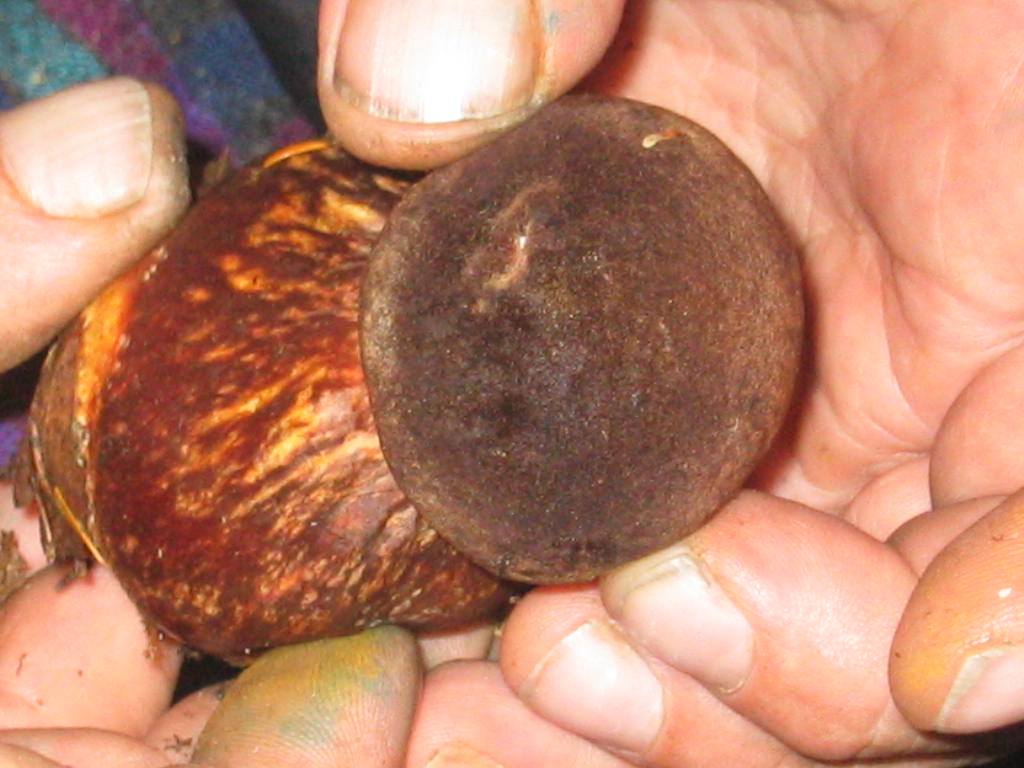
- Cap: 2-6 inches, convex flattened, margin inrolled, deep redish brown, liver-colored, wooly.
- Stem: white, ;
3 - 6 inches X
1 1/4 - 2 inches
deep; smooth with renticulum at apex.
- Gills: On the underside of the cap, spore-bearing tissues are composed of hollow tubes joined together side by side, forming a spongy, pore-filled surface, as opposed to the gills or folded tissue of other mushrooms. Pores that are white when young and that do not bruise blue further distinguish this highly prized mushroom from other boletes. When older, the underside will turn a dark brownj.
- Taste: best mushroom for cooking with anything beef flavored, a strong rich flavor.
- Odor: pleasant
- Habitat: Found in Southeast Alaska, on or near hemlock logs; season July - November
- A few boletes are poisonous. To avoid these, don't eat any boletes that have orange or red pores.
- Some boletes, while not poisonous, are very distasteful. Check this by tasting a pinch of the raw mushroom cap. If it is bitter or otherwise unpleasant, throw it out.
- To make them more digestible, boletes should be cooked before eating. If the cap is slimy, peel off the slime layer; it sometimes causes diarrhea.
- Bugs seem to like boletes as much as people do, so check your specimens carefully. Boletes also tend to decay quickly. Be sure to collect and eat only fresh specimens.
- Cooking Hints: Remove tough stems, and peel off the pore layer in all but the youngest specimens.
Saute in butter and add to any cheese dish. Dried boletes also are good in soups.
|