Frilled Shark
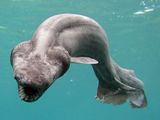
Frilled Sharks prefer to remain in the oceans' depths, up to 5,000 feet below the surface. This 5.3-foot specimen was found in shallow water in Japan in 2007 and transferred to a marine park
Frilled Sharks prefer to remain in the oceans' depths, up to 5,000 feet below the surface. This 5.3-foot specimen was found in shallow water in Japan in 2007 and transferred to a marine park
Giant Spider Crab
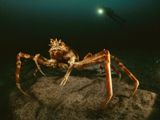
Thought to be the largest arthropods on Earth, giant spider crabs spend their time foraging on the ocean floor up to a thousand feet deep. These rare, native to the waters off Japan, can measure up to 12 feet from claw tip to claw tip.
Thought to be the largest arthropods on Earth, giant spider crabs spend their time foraging on the ocean floor up to a thousand feet deep. These rare, native to the waters off Japan, can measure up to 12 feet from claw tip to claw tip.
Atlantic Wolffish Pair
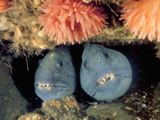
The sinister-looking Atlantic wolffish makes its home in the rocky coastal depths up to 1,600 feet below. Reaching 5 feet , wolffish have conspicuous dentition suited to a diet of hard-shelled mollusks, crabs, and sea urchins.
The sinister-looking Atlantic wolffish makes its home in the rocky coastal depths up to 1,600 feet below. Reaching 5 feet , wolffish have conspicuous dentition suited to a diet of hard-shelled mollusks, crabs, and sea urchins.
Fangtooth Fish
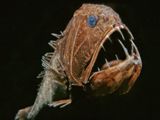
The fish's normal habitat ranges as high as about 6,500 feet, but it has been found swimming at icy, crushing depths near 16,500 feet . Fangtooth fish reach only about six inches, but their namesake teeth are the largest, proportionate to body size, of any fish.
The fish's normal habitat ranges as high as about 6,500 feet, but it has been found swimming at icy, crushing depths near 16,500 feet . Fangtooth fish reach only about six inches, but their namesake teeth are the largest, proportionate to body size, of any fish.
Six-Gill Shark
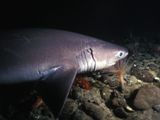
Six-gill sharks, like this one off the coast of Vancouver, cruise the ocean floor during the day, sometimes as deep as 8,200 feet, then move toward the surface at night to feed. They can reach impressive lengths of 16 feet on a diet of other sharks, rays, squids, crabs, and occasionally seals.
Six-gill sharks, like this one off the coast of Vancouver, cruise the ocean floor during the day, sometimes as deep as 8,200 feet, then move toward the surface at night to feed. They can reach impressive lengths of 16 feet on a diet of other sharks, rays, squids, crabs, and occasionally seals.
Giant Tube Worms
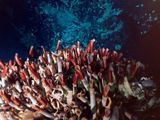
Crushing pressure, freezing temperatures and zero sunlight isn't enough of a challenge for giant tube worms. They've adapted to thrive at the edge of hydrothermal vents, which spew superheated water saturated with toxic chemicals
Crushing pressure, freezing temperatures and zero sunlight isn't enough of a challenge for giant tube worms. They've adapted to thrive at the edge of hydrothermal vents, which spew superheated water saturated with toxic chemicals
Flamingo Tongue snail
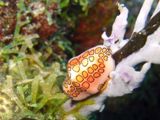
Flamingo Tongue Snail is common on many Caribbean and Atlantic coral reefs. Shell collectors are often attracted to the colorful snails, but in fact the shell itself is white—it’s only the living animal inside that produces the striking color pattern.
Flamingo Tongue Snail is common on many Caribbean and Atlantic coral reefs. Shell collectors are often attracted to the colorful snails, but in fact the shell itself is white—it’s only the living animal inside that produces the striking color pattern.
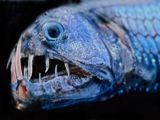
Pacific Viperfish
The Pacific viperfish has jagged, needlelike teeth so outsized it can't close its mouth. They troll the depths up to 13,000 feet (4,400 meters) below, luring prey with bioluminescent photophores on their bellies.
The Pacific viperfish has jagged, needlelike teeth so outsized it can't close its mouth. They troll the depths up to 13,000 feet (4,400 meters) below, luring prey with bioluminescent photophores on their bellies.
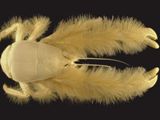
Yeti Crab
The yeti crab is so unusual that a whole new family of animal had to be created to classify it. Its hairy pincer arms host colonies of bacteria, which it may cultivate for food, for protection from toxic fluids issuing from nearby volcanic vents, or as “sensors” that help the blind animal find a mate.
The yeti crab is so unusual that a whole new family of animal had to be created to classify it. Its hairy pincer arms host colonies of bacteria, which it may cultivate for food, for protection from toxic fluids issuing from nearby volcanic vents, or as “sensors” that help the blind animal find a mate.