|
|
|

|
Small Arms
Type-If personal Phaser
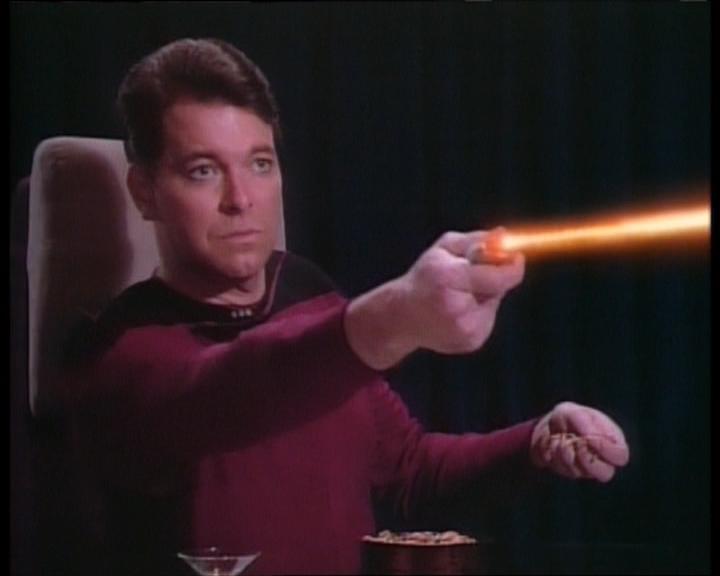
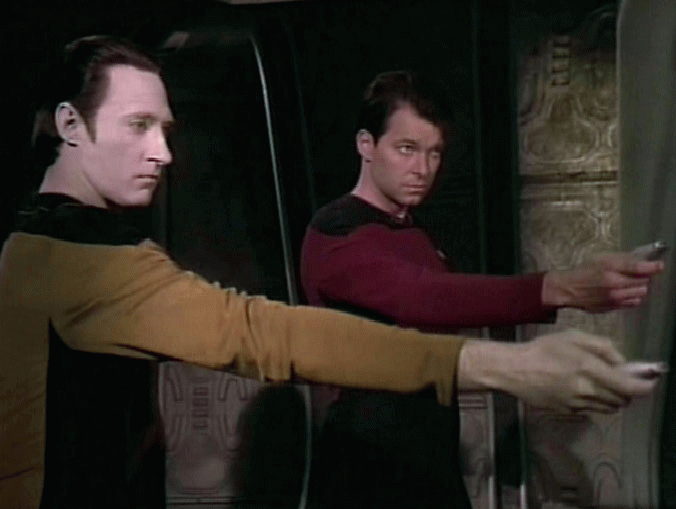
Type-IIf hand Phaser 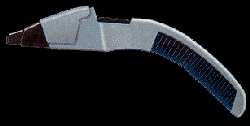 The Phaser IIf is the latest hand Phaser to come out of AFY's R&D. This weapon has 22 settings rather than the standard 16 of the Type IIe issued to most of Starfleet. The Type IIf, due to the extra power availability, is the standard sidearm for Bravo Fleet, including the Marines. The Marine version looks slightly different to the Starfleet issue Type-IIf due to the black covering around the muzzle.This help keep the weapon clean and capable of firing. Also, it's control buttons are slightly larger making it easier to use when the hand is gloved. These minor alterations make the Type-IIf look just like it's predecessor, the Type-IIe. This weapon has two additional Sarium Krellide power cells embedded into the center section, giving the Phaser the ability to reach the extra 6 power settings and longer power life. As with any sidearm, the main three type of beam are Stun, Heat, and Disruption. The added 6 settings allow for greater precision when using these functions and slightly further range.  
Rifles
Type-IIb Photon Rifle
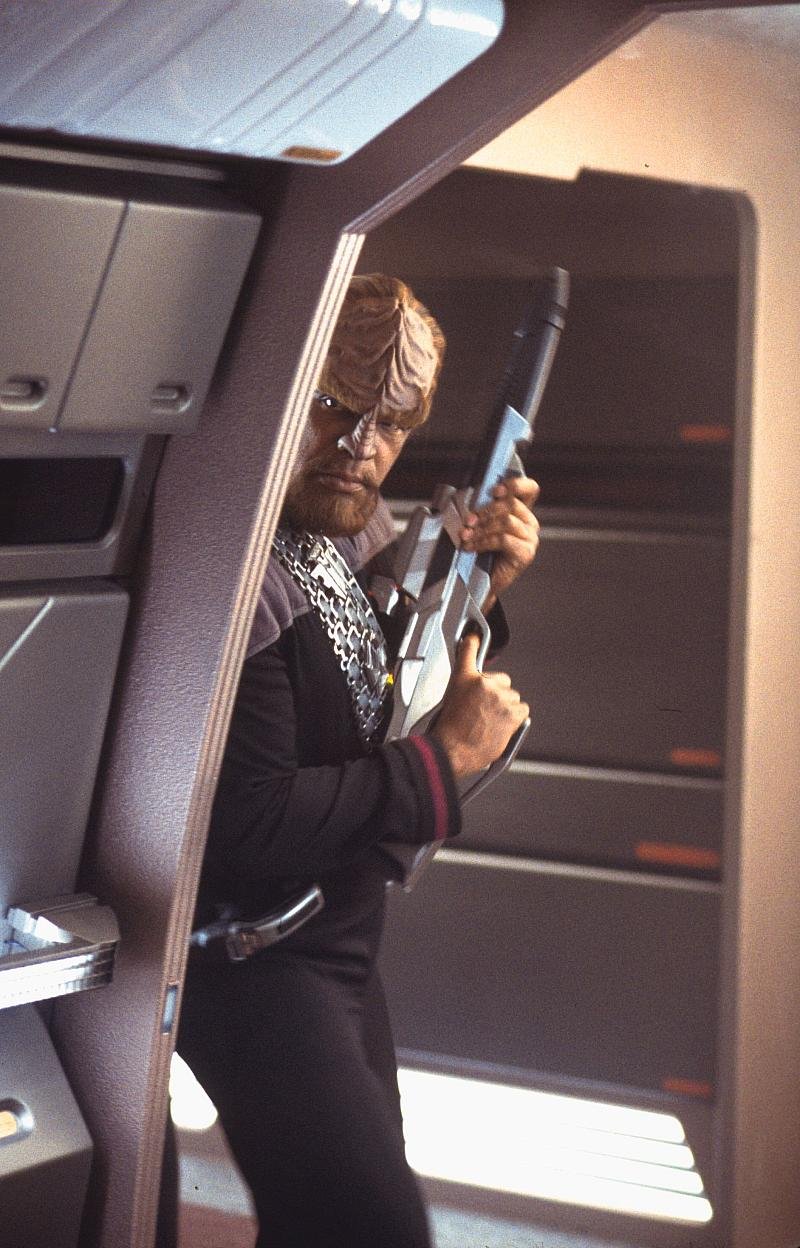
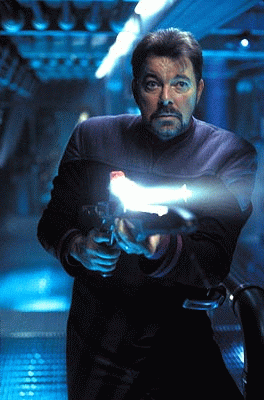
Marine Phaser Assault Rifle: The Marine CPR is a much larger, more sophisticated weapon than its Type 3 Phaser rifle counterpart. It is capable of firing phaser energy in either beams or pulses of variable length. It uses a computer control system to allow the beam characteristics to be modified much more easily than in previous phaser rifles, a measure clearly important when dealing with the Borg. As well, the addition of a fifth prefire energy compression chamber allows for several additional settings. The Marine Phaser rifle also includes a much more effective and elaborate targeting system, and a larger energy reserve. The Rifle is equipped with a gyro-stabilized targeting unit. This targeting unit incorporates sensors capable of detecting and tracking life forms and can perform the equivalent of tricorder short range biological scans. Images of the targeted life forms would be displayed on the units display screen. The frequency of the beam can be varied so that on settings 1 to 6 the phaser beam can be set on a special wide-beam setting that only effects carbon-based living tissue. Though this is an exceptionally useful feature, it uses ten times the normal energy required by normal beams. In addition, the Marine Phaser Rifle is also capable of two additional settings above the normal sixteen. The Marine Phaser Rifle is equipped with an integral grenade launcher. This launcher has a capacity of five rds. These grenades are propelled by the unit’s graviton accelerator. Size: .6 m x .2 m x .1 m Weight: 4.05 kg Phaser: Power: Enlarged Sarium Krellide power cell, with hot swap capability. Power consumption: 500 watts per shot Casing: Classified organic sensor-opaque covering Range: 350 m Settings: 1-18 Low velocity grenade launcher: Magazine: 5 rds Range: 1000 m Marine CQB Carbine Phaser:
Squad Support Phaser Weapon (SSPW): Star Fleet Marine Corps realizing the need, resolved to manufacture a lighter, more rapid firing version of the common phaser rifle. The result was the SSPW . The differences between it and its distant cousin the Type IV Phaser Rifle is that the SSPW is designed for rapid pulse Phaser fire. In order to accommodate its additional mechanisms, its height had to be expanded (although its width was unchanged). The SSPW uses high strength polymers in its construction in an attempt to cut down on weight yet still retain strength. Also on the top of every unit, there is a hard point for any sight deemed tactically necessary. Like its cousin, the Type IV Phaser Rifle, the SSPW has one grip forward of the butt, and a collapsible bipod near the muzzle. The is the new rapid firing capability. The SSPW utilizes not one, but five firing chambers with associated emitter crystals to avoid crystal recovery/reload time when expended. The firing chambers are arranged internally in a "Gatling" arrangement around an elliptical axis. The unit also has two over/under tandem subspace transceiver assemblies to help with the increased firing load. In order to save weight and size, the power cell for the unit is not built very large to hold energy for tremendous intensive shots that can detonate solid material or vaporize living material. The danger of destroying a high value target or ricochets off shielded items is not a necessary risk. Size: .92 m x .2 m x .1 m Weight: 5 kg Power: Enlarged Sarium Krellide power cell Power consumption: Variable according to setting Casing: Classified organic sensor-opaque covering Range: 450 m Maximum setting: 7 (Damage index: 50) Type IV Phaser Sniper Weapon: Support Weapons: Isomagnetic Disintegrator:
Tetryon Pulse Launcher: A newly designed weapon for the use by Starfleet ground forces and security personnel, the Tetryon Pulse Launcher is perhaps the most powerful handheld weapon in Starfleet’s arsenal. The device was designed as a single-person plasma cannon for use against small craft and heavily fortified emplacements. Building on the success of the SF Avalon R&D facility to grow nearly flawless emitter crystals in a ground-based micro-gravity environment, the pulse launcher is effectively a miniaturized version of the pulse phaser used on starships. While, much of this theoretical research has been applied to the type-IVb phaser assault rifle, making it the first true transitional-phase accelerator, the Tetryon pulse launcher takes this a step further. As such, this weapon lacks the variety of power settings typical of a type-II or type-III phaser. When the trigger is depressed, the weapon fires a collimated beam of Tetryon particles which rebound from the target to the unit, providing range and vector information to the acquisition sub-systems. A rapid-discharge Sarium Krellide power cell, coupled with high-speed plasma accelerator coils and a ten-stage cascading prefire chamber, allows for longer periods than previous models of phasers. The beam emerges as a focused pulse of superheated, rarefied plasma. While the typical type-I phaser is capable of emitting no more than 1.05 kilojoules per hour, the pulse launcher emits energy comparable to a type-4 phaser emitter. The Tetryon pulse launcher incorporates the safety interlocks and subspace transceiver assembly common to standard-issue phasers; it is capable of firing continuous or wide beam settings. Size: .135 cm long; 4.08 liters in volume Weight: 3.1 kg Power: heavy duty Sarium Krellide power cell Power consumption: Variable according to setting Casing: Classified organic sensor-opaque covering Range: 145 m Settings: 1= Vaporize most substances (energy rebound prior to vaporization common) 2= Explode 10 cubic meters of rock into glowing rubble 3= Explode 50 cubic meters of rock into glowing rubble 4= Explode 100 cubic meters of rock into glowing rubble 5= Explode 160 cubic meters of rock into glowing rubble 6= Explode 400 cubic meters of rock into glowing rubble 7= Explode 600 cubic meters of rock into glowing rubble 8= vaporize 50 cubic meters of Duranium. 9= vaporize cubic meters of Duranium, explode up to 1,200 cubic meters of rock into rubble. Auto-Grenade launcher: The Auto-Grenade Launcher (AGL) is a support weapon version of the grenade launcher found on the Marine Assault Phaser Rifle. It can fire in both Semi, and Full Automatic modes. In Full Auto mode, three and five round bursts can be selected. This weapon uses the same rounds as the rifle weapon, but has a much more powerful Graviton accelerator that allows for greater range and velocities. The weapon is equipped with a dual feed mechanism allowing for two fifty round magazines to be loaded and the mixing of rounds during firing. The feed mechanism is also equipped to hand the loading/insertion of single rounds for special purpose use. The weapons integral tripod incorporates its own inertial damping system that totally nullifies what little recoil that occurs from the weapon’s firing even at high cyclic rates. The main role of this weapon is area suppression as it can deliver a large volume of ordnance to the targeted area accurately and promptly. Though less accurate, the AGL can be fired in an indirect firing role rather than direct. This method though not as accurate, gives the weapon the ability to fire over obstacles, and provides even greater range. Mounts for a variety of targeting and sighting aids are present. Mass: 9.5 kg M-2240 Mortar: One of the largest problems with modern warfare’s reliance on small unit actions, is the problem of providing fire support. The M-2240 Mortar system is a self contained short-barreled 60 mm mortar with powered elevation and servo traverse. It is also equipped with a encrypted comm unit, inertial positioning sensor, and a computerized fire control system. This unit is the size of a large backpack and has a unloaded mass of 25 kg. To deploy the user sets the unit on the ground and folds out three stabilizing legs. The mortar is fed from a 4 rd magazine, or individual rounds can be loaded manually. One key feature is the fact that once setup, the mortar’s fire control computer can be accessed by troops with the proper codes via the units comm unit. Once the proper codes are used, the unit can be targeted and fired remotely. This ability makes the unit valuable in ambush/counter ambush operations, decoy tactics, providing fire support for units engaged in unconventional warfare operations where normal support is impractical. The rounds are propelled by a micro-graviton accelerator. Effective Rng: 5 km Types of Rounds Fragmentary rds are designed to inflict wounds with both concussion effect and shrapnel. They have a 15 meter blast radius. These rounds use an UV LADAR fuse to determine the proper height above the ground/surface to detonate for maximum effect. HEDP rd with PEM (Passive Electro Magnetic) imaging guidance: for anti-armor (top attack), and FERRET missions. First of all the warhead is of the High Explosive Dual Purpose variety. It has a blast radius of only 10 meters, but has fairly good armor penetration. Once the round has reached its maximum height in its trajectory, the passive electro-magnetic sensor unit activates. Depending on how the unit was set prior to firing, the sensor unit locks on the selected type of energy (neutrino from a power cell, body heat, radio waves from a transmitter etc.). The unit controls a set of steerable fins on the round. This allows the round to track and hit most targets very accurately! Jammer rd: this round does no physical damage per-say, but can cause an enemy plenty of grief. It contains a high out, short life ECM generator. This unit can interrupt/disrupt sensors and communications for a 2 km radius. Very handy for cutting off that lone OP or LP. SEFOP Anti-Armor rd: SEFOP anti-armor artillery rounds are designed to strike armored vehicles from above, where they are most vulnerable. These rounds work by delivering what is known as an Self-Forging Penetrator or SEFOP. It is a stream of molten metal that hardens into a dart shape due to atmospheric resistance. These SEFOP travel at velocities in excess of 6,560 ft/s (2,000 m/s) and are usually capable of punching through the relatively thin upper armor of many vehicles. These munitions are also sometimes used against underground bunkers and fuel storage sites. The now solid penetrator reduces the effect of electrostatic armor and makes explosive reactive armor completely ineffective. Once at its peak of its trajectory, it deploys a drag chute. Then a PEM sensor unit activates. As the warhead swings around under the chute, it scans for a target. When it is aimed at a target and within its effective range (100 meter radius), It simply fires. Metallic Incendiary Smoke rd: these rounds are intended to obscure enemy observation/sensors. The round generates a cloud of dense smoke through the combustion of certain compounds. This smoke is heated and contains metal particulates. These factors degrade/prevent the use of IR/Thermal and certain types of active scans (LADAR, RADAR, etc) Slayer MPIM/SRAW: (Multi-Purpose Individual Munition/Short Range Attack Weapon) for direct anti-armor/fortification capability at squad level and organic Aerospace defense capability. In the nose of the Slayer is an PEM imaging sensor which is used to lock on to a target. Behind the sensor unit is the warhead of HEDP variety. The minimum range is 17 m (determined by warhead arming safety) making it an ideal weapon for ambushes in urban or wooded terrain. Maximum velocity is 600 m/s, and the flight time to 500 m is only 1.125 seconds. It has a maximum range of 2000 m. The Slayer system has two components. The missile round in a 5 kg disposable launch tube, and the reusable 2 kg Command Launch Unit (CLU). The Slayer gives the Rifle Squad its lethality back against Armor, Aerospace craft, and other heavy targets. Explosives/Pyrotechnics M-160 Command Detonated Anti-Personal Mines: The M-160 Mine is a directional fixed fragmentation mine primarily for anti-personnel use, and is also effective against thin-skinned vehicles. When detonated, a hourglass-shaped area of effect. Spherical metallic fragments are projected over a 60-degree horizontal arc, covering a casualty area of approximately 6 m wide by 75 m long forward. A rear cone of approximately 6 m wide by 6 m long. These cone shaped zones are connected by a 6 m diameter blast circle centered on the mine. The M-160 can be set to be fired by a variety of triggers or any period of time delay up to 72 hours. While the M-160 mine can accept input from just about any type of sensor, it comes with a passive IR motion detector and a trip wire. There is on the back of the unit a molecular adhesion strip for attaching the M-160 to various surfaces. Length: 20.0 cm Width: 3.0 cm Height: 12.0 cm Weight: 500 g Breeching charges: Breeching charges are self-contained shaped explosive charges used for rapid/dynamic entry. The force of their blasts are used to blow holes in surfaces to allow for rapid entry/exit from one area to another. Breeching charges come in a variety of shapes and sizes depending on the job they are intended for. Frame style charges are composed of sections of “angle iron” like structures containing a measured amount of explosive. They can be assembled/liked into a variety of shapes and sizes. Because they are a shaped charge, the majority of the blast is focused in one direction. This results in little or no back-blast/collateral damage to the surrounding area. Projected Line Charges: This is a suit case sized unit. When the case is laid down of the ground and opened, a pop-up launch tube is deployed. When the unit is fired, a rocket propelled projectile is launched. Trailing behind the round is a thin line. The core of this line is composed of a stable high explosive compound. The round trails this line out to a distance of 200 m. Upon impact down range and the settling of the line to the ground. The operator has the choice/ability to detonate the explosive line. The resulting detonation sets off any or all mines concealed within its blast area. This in turn creates a safe passage for vehicles/personal to pass. Photon Grenades: Photon grenades are one of the most devastating personnel weapons developed by the Federation. Their use is strictly controlled and is usually limited to wartime. They are effectively a controlled version of phasers set on overload. Photon grenades emit large bursts of rapid nadion particles which are found in phaser beams. These grenades may be set to explode upon impact, at some altitude above the ground, or at some preset time, up to 9.99 hours, after impact. Both the power level and blast radius og these grenades may also be carefully controlled. They have five different power settings and may be set to affect everything within a radius of between 3 and 10 meters from impact. Mass: 0.2 kg Settings: 1 Flash: All humanoids inside the blast radius without special eye protection are blinded for about five minutes. 2 Heavy Stun: Stun all humans in blast radius for one hour. 3 Heavy Thermal: Melts most metals in blast radius 4 Light Disrupt: Vaporize all Humanoids within the blast radius 5 Heavy Disrupt/Explode: 1000 cubic meters of rock into rubble. Launchable Grenade Rounds: Support
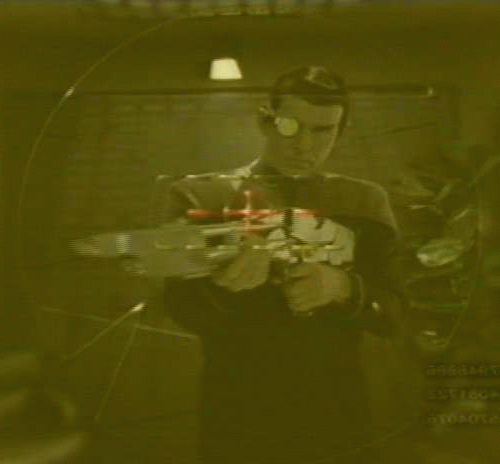
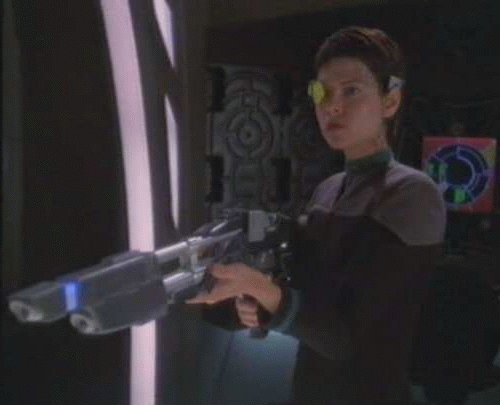
Equipment: The Tatical Display Unit or T.D.U. can be added to your standard tricorder. This unit will relay information from the tricorder to a monocular eye peice that covers the user's eye. The infomation presented to the monocular lense is a direct feed from the tricorder which would be attached to the waist line of the user.Attached to the user's weapon is a targeting laser. This laser will be represented on the monocular lense as a red crosshair. The tricorder offers no more information than it's setting is capable for. The lense has a slight green tint to it. Other than that it does not hinder the natural vision of the user. The TDU can be used with any Federation Phaser Rifle. It is not standard to use with a type II phaser. However, versions can be adapted to function with the type II. Battle Dress Uniform (BDU): Outer covering of the marine, it is automated to blend in with the environment, whether it is urban, winter, etc. Underneath the armor, a marine wears a two-piece water resistant body suit and gloves.Tactical Helmet: This is worn in the field by
every marine in every combat situation. It's main purpose to obviously protect
the head, but it also has communication abilities. Combat armor:
Phase Energy Protection: Disperses Federation Phasers set
on stun Phase
Energy Protection: Can repel a Federation Phaser on Setting 5 for a
duration of one-second repeatedly without the armor loosing
Communication Equipment: The helmet contains all the marine's communications equipment. Though it has an open face, the microphone can be set to a high enoughsensitivity that all the marine must do is sub-vocalize in order to be heard. The earpieces are designed so that nobody but the wearer may hear incoming communications. The helmet can be programmed with multiple channels, accessible through both a control on the wearer's forearm, or a switch on the side of the helmet. The comm unit is encrypted, and has the same range as a standard communicator badge. TSS (Tactical Stealth System): Other electronics are located in each variation of the armored vest and on certain points on the body (one on each limb in the uniform, one part of the helmet system, one in the vest). These small electronic devices (size of a checker), are used to block enemy sensors from clearly picking up lifeforms. Similar to stealth-type aircraft in principle, the enemy signal does not relay back to the enemy. However, this is only useful when the enemy is in a normal status, because once they have specifically dedicated their sensors to quickly scan the area for lifeforms (Therefore going to a "Red Alert" of some sort) , they will be able to overload the stealth electronic systems and receive a signal back of marine positions.ACS (Automated Camouflage System): Although the camouflage scheme on a marine automatically changes schemes as the marine travels from different environments, he is capable of manually setting camouflage schemes via the controls on the forearm.Equipment: Infantry Backpack: This is just what it sounds like. It is a large pack worn by marines. It has a large central storage area, and several smaller pockets. Its straps have a quick release so that the marine can drop it immediately should the need arise. Canteen: This holds and refrigerates a liter of water. Compass/GPS: In case the helmet's systems are unavailable, each marine carries a small compass with the ability to find its current coordinates through any available ships or satellites in orbit. Shovel: This is a small titanium shovel. It is used to dig trenches. A phaser can sometimes be used for this job, but it wastes power and draws attention. Flashlight: A flashlight that can attach to either the wrist or a rifle. Thermal blanket: A survival blanket that keeps you nice and warm at night. Medical kit: This contains a hypospray with painkillers and antitoxins, a roll of bandages, a dermal regenerator, and a medical sensor. Expanded Medical Kit: Used by medics, this contains extra supplies of all the items found in the standard kit, plus a full medical tricoder, local and general anesthetics, a laser scalpel, and some tools often needed to create medicines from local vegetation. Field Rations: Normally contains 3 sufficient meals. Two-man tent: These are deployed on some missions. They are resistant to the environment, weigh little, and roll up small enough to easily hook to the side of a backpack. Standard Equipment Issue Below is the gear for
a standard Infantryman. Senior NCOs and Officers, officially, their primary
weapon is a sidearm. However, they can take
Note: All information on this list and any other Marine
equipment/weaponry list applies when a marine is outfitted for a combat
situation. The normal outfitting of a marine on most simms is the
gray-shouldered, green-collared black uniform with a holstered
phaser.
Marine unit
numbers:
|














 Marine
Personnel Weapons
Marine
Personnel Weapons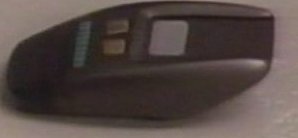
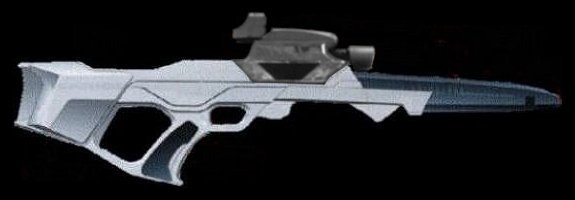
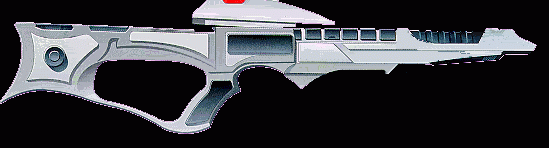
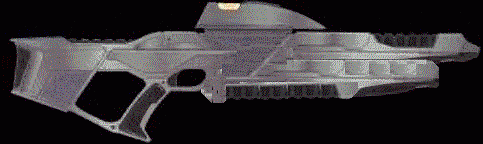
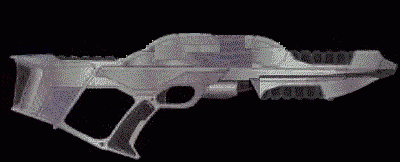 After several operations involving close quarters battle [CQB] that resulted in unacceptable losses, Star Fleet Marine Corps resolved to manufacture a lighter,
more effective version of the standard phaser rifle. The result of this decision was the Mk I CQB Carbine
The twelve stage plasma accelerator has been placed further back in the stock, over the power cell contained in the stock. The targeting unit has been placed
forward under the muzzle. Also on the top of every unit, there is a hard point for any sight deemed tactically necessary (though with CQB this will be seldom
employed). Typically a laser designator or tactical aiming-light are used instead given the more intuitive benefit of actually showing where the shot will
hit. Another difference from the normal phaser rifle is that the long-range fire aiming mechanisms are not present in the Mk I CQB Carbine since the weapon is
intended for close to short range engagements. At the muzzle end, various sensors for electromagnetic and subspace detection are placed and act as a
tricorder unit, freeing the hands of a user to concentrate on aiming instead of fumbling with one. This targeting unit incorporates sensors capable of detecting
and tracking life forms and can perform the equivalent of tricorder short range biological scans. Like its Type 3 Phaser Rifle cousin, the Mk I CQB Carbine has
two grips, one forward near the muzzle, and one placed forward of the butt. The layout of the weapon is of a bullpup configuration.
The real improvement for CQB, however, is the capability to fire in pulse mode as opposed to a continuous beam. This allows faster target engagements and
quicker follow up shots. The down side to this is that the Carbine lacks the variable settings of its rifle counter part.
Size: .6 m (butt collapsed) x .2 m x .1 m
Weight: 3 kg
Power: Enlarged Sarium Krellide power cell
Power consumption: 500 watts per shot
Casing: Classified organic sensor-opaque covering
Range: 200 m
Settings: 1-18
Sensors: Subspace/Passive Electromagnetic cluster at muzzle
After several operations involving close quarters battle [CQB] that resulted in unacceptable losses, Star Fleet Marine Corps resolved to manufacture a lighter,
more effective version of the standard phaser rifle. The result of this decision was the Mk I CQB Carbine

The twelve stage plasma accelerator has been placed further back in the stock, over the power cell contained in the stock.  The targeting unit has been placed
forward under the muzzle. Also on the top of every unit, there is a hard point for any sight deemed tactically necessary (though with CQB this will be seldom
employed). Typically a laser designator or tactical aiming-light are used instead given the more intuitive benefit of actually showing where the shot will
hit. Another difference from the normal phaser rifle is that the long-range fire aiming mechanisms are not present in the Mk I CQB Carbine since the weapon is
intended for close to short range engagements. At the muzzle end, various sensors for electromagnetic and subspace detection are placed and act as a
tricorder unit, freeing the hands of a user to concentrate on aiming instead of fumbling with one. This targeting unit incorporates sensors capable of detecting
and tracking life forms and can perform the equivalent of tricorder short range biological scans. Like its Type 3 Phaser Rifle cousin, the Mk I CQB Carbine has
two grips, one forward near the muzzle, and one placed forward of the butt. The layout of the weapon is of a bullpup configuration.

The real improvement for CQB, however, is the capability to fire in pulse mode as opposed to a continuous beam. This allows faster target engagements and
quicker follow up shots.  The down side to this is that the Carbine lacks the variable settings of its rifle counter part.
		Size: .6 m (butt collapsed) x .2 m x .1 m
	Weight: 3 kg
		Power: Enlarged Sarium Krellide power cell
		Power consumption: 500 watts per shot
		Casing: Classified organic sensor-opaque covering
		Range: 200 m
		Settings: 1-18
		Sensors: Subspace/Passive Electromagnetic cluster at muzzle
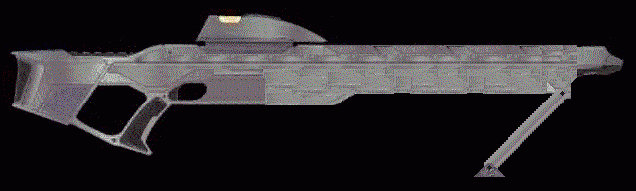
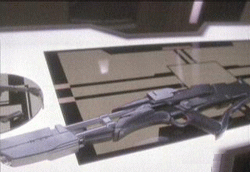 The newest Phaser Sniper Weapon was developed using some data from the Compression rifle program and the body of the failed TR.-116 projectile rifle.
First of all, a new LiMg 502 crystal was synthesized that rectified energy bolts in a constant alternating subspace frequency.Though extremely expensive
to synthesize, it has been produced in small amounts that can be mounted in phaser sniper rifles The weapon also incorporates a series of self adjusting
graviton emitters that change their own frequency as well. Each of the emitters is set at a different frequency and contributes equally to the formation of
a graviton shell. As each graviton frequency resonates around the rectified energy, this keeps the subspace vibration of normally ungravitated phaser blast
from degrading, thus keeping its cohesion longer after release. Like the Compression Rifle, a buffer system is setup to force a charge buildup in the
pre-fire chamber, resulting in a much more energetic discharge.
The LiMg 502 crystal does not have the luminous properties of its cousin the fushigi-no-umi family. This gives the sniper superiority in terms of
concealment. The approach vector of his blast will not be traceable except by highly sophisticated sensors designed to pick up fluctuations in temperature,
atmospheric stimulation, and subspace distortion. In the field, the Mk IV Phaser Sniper Weapon is unmatched currently for its ability to give commanders a
tactical option of concealed fire. Sights range anywhere from iron (non-magnification) to WSV (Wide Spectral Visual) to PEM (Passive
Electromagnetic) sensors.
Size: .92 m x .2 m x .1 m
Weight: 5 kg
Power: Enlarged Sarium Krellide power cell
Power consumption: Variable according to setting
Casing: Classified organic sensor-opaque covering
Range: 2000 m
Settings: 1-16
The newest Phaser Sniper Weapon was developed using some data from the Compression rifle program and the body of the failed TR.-116 projectile rifle.
First of all, a new LiMg 502 crystal was synthesized that rectified energy bolts in a constant alternating subspace frequency.Though extremely expensive
to synthesize, it has been produced in small amounts that can be mounted in phaser sniper rifles The weapon also incorporates a series of self adjusting
graviton emitters that change their own frequency as well. Each of the emitters is set at a different frequency and contributes equally to the formation of
a graviton shell. As each graviton frequency resonates around the rectified energy, this keeps the subspace vibration of normally ungravitated phaser blast
from degrading, thus keeping its cohesion longer after release. Like the Compression Rifle, a buffer system is setup to force a charge buildup in the
pre-fire chamber, resulting in a much more energetic discharge.
The LiMg 502 crystal does not have the luminous properties of its cousin the fushigi-no-umi family. This gives the sniper superiority in terms of
concealment. The approach vector of his blast will not be traceable except by highly sophisticated sensors designed to pick up fluctuations in temperature,
atmospheric stimulation, and subspace distortion. In the field, the Mk IV Phaser Sniper Weapon is unmatched currently for its ability to give commanders a
tactical option of concealed fire. Sights range anywhere from iron (non-magnification) to WSV (Wide Spectral Visual) to PEM (Passive
Electromagnetic) sensors.
Size: .92 m x .2 m x .1 m
Weight: 5 kg
Power: Enlarged Sarium Krellide power cell
Power consumption: Variable according to setting
Casing: Classified organic sensor-opaque covering
Range: 2000 m
Settings: 1-16
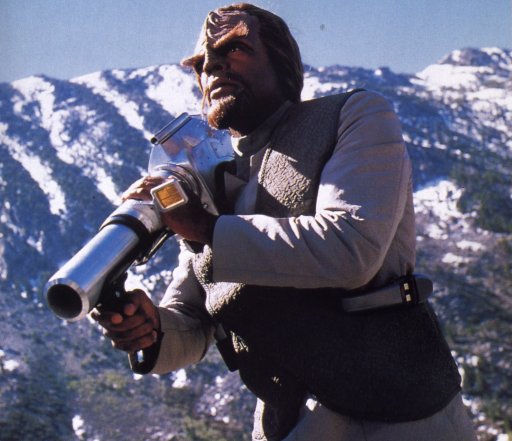
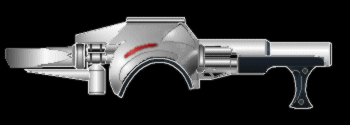 This large, shoulder mounted weapon resembles an ancient Earth bazooka. Much of the technical data on this weapon remains classified, under Starfleet security
directive 24168.9 Using a portable magnetic charge inducer, the weapon fires a collimated beam of Isomagnetic energy which affects the targets’ inner ear,
effectively stunning the opponent. On moderate settings, it causes temporary impairment of the target’s central nervous system. When fired at its highest
setting, the Isomagnetic disintegrator changes the target’s protonic charge, reducing it to a cloud of dust and static. The beam affects a 1 meter diameter
area upon impact. The unit is powered by a heavy duty sarium krellide power cell inserted just to the rear of the shoulder mount.
Size: 1.28 c long; 5 liters in volume
Weight: 3.85 kg
Power: heavy duty Sarium Krellide power cell
Power consumption: Variable according to setting
Casing: Classified organic sensor-opaque covering
Range: 145 m
Settings:
1= stun a human for five minutes
2= stun a human for fifteen minutes, or Klingon for five minutes.
3= stun a human for thirty minutes, or a Klingon for fifteen minutes
4= vaporize 200 cubic meters of steel or rock
5= vaporize 400 cubic meters of steel or rock; 200 meters of Duranium.
6= vaporize 600 cubic meters of steel or rock; 400 meters of Duranium.
This large, shoulder mounted weapon resembles an ancient Earth bazooka.  Much of the technical data on this weapon remains classified, under Starfleet security
directive 24168.9 Using a portable magnetic charge inducer, the weapon fires a collimated beam of Isomagnetic energy which affects the targets’ inner ear,
effectively stunning the opponent.  On moderate settings, it causes temporary impairment of the target’s central nervous system.  When fired at its highest
setting, the Isomagnetic disintegrator changes the target’s protonic charge, reducing it to a cloud of dust and static.  The beam affects a 1 meter diameter
area upon impact.  The unit is powered by a heavy duty sarium krellide power cell inserted just to the rear of the shoulder mount.
	Size: 1.28 c long; 5 liters in volume
Weight: 3.85 kg
Power: heavy duty Sarium Krellide power cell
Power consumption: Variable according to setting
Casing: Classified organic sensor-opaque covering
Range: 145 m
Settings:
1=	stun a human for five minutes
2=	stun a human for fifteen minutes, or Klingon for five minutes.
3=	stun a human for thirty minutes, or a Klingon for fifteen minutes
4=	vaporize 200 cubic meters of steel or rock
5=	vaporize 400 cubic meters of steel or rock; 200 meters of Duranium.
6=	vaporize 600 cubic meters of steel or rock; 400 meters of Duranium.

 HEFRAG: