Consequently, hunting information concerning a specific area is priceless. To make matters worse, Texas has limited acerage set aside for its hunting public. Naturally, the small areas that are available concentrate large numbers of competing hunters. Fort Hood is no exception to this. All of these factors combine to make hunting on public land in Texas a tough proposition.
Facing a miserable first season at Fort Hood, I felt that I needed other options. So, in desperation, I visited the Solano Ranch and, after a quick tour, booked a hunt for the last week of October 2000. I had easily embraced the Texas Game Ranch myth hook, line and sinker. Luckily military duties prevented me from hunting that first bow season. I was forced to cancel the guided hunt and sadly lost my deposit.
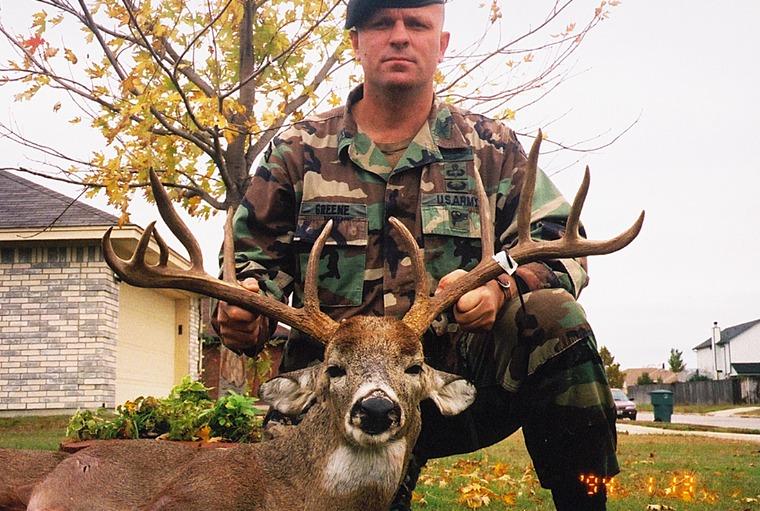
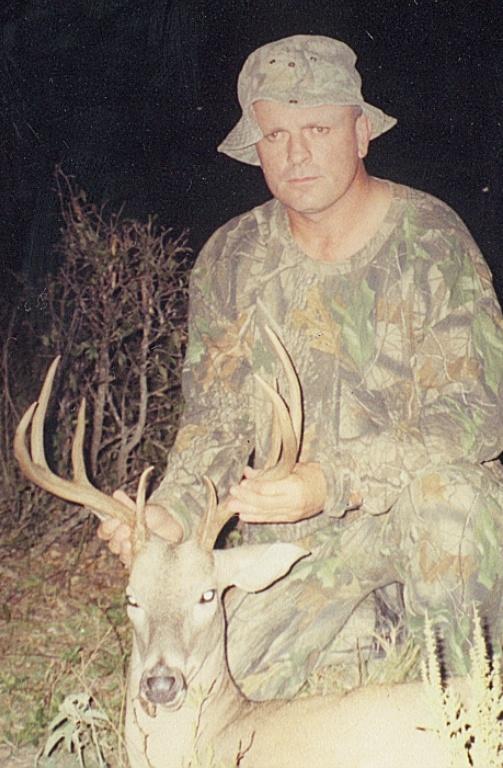
On Nov. 7, 2000, my luck changed when I met a veteran Fort Hood-area bowhunter who had recently taken a huge 15-point, non-typical, 168-inch buck. He tagged the impressive deer in an area on Fort Hood that I had access to for the rest of the season. I knew the buck's progeny roamed freely from area to area, so the next day I located a stand on the Leon River and almost immediately took a nice nine-point. I had easily tagged a great buck and two does during that first, abbreviated season. My initial assessment of Fort Hood was wrong.
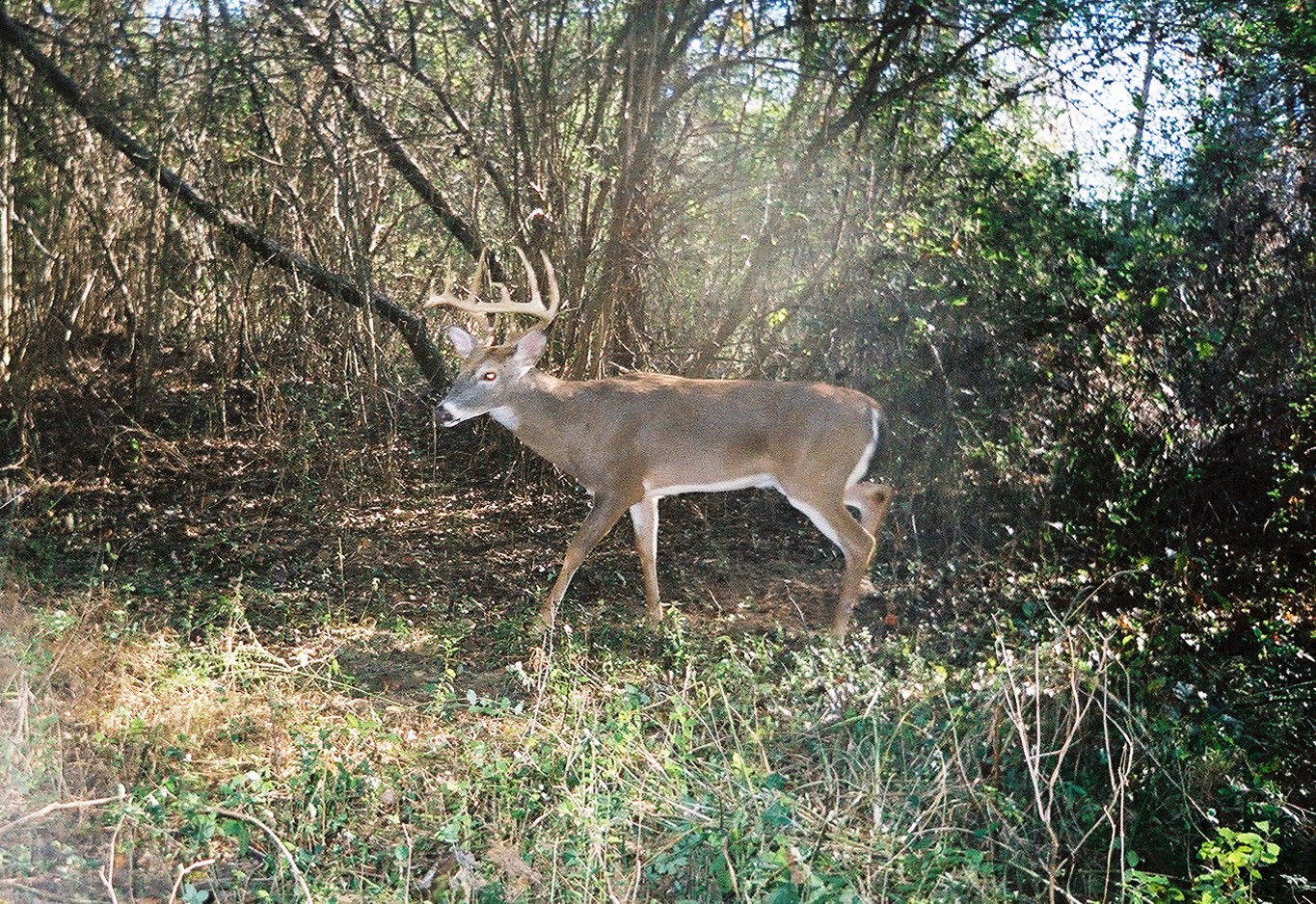
I doubled my efforts for the upcoming 2001 season. I had finally figured out how the "Texans" did it and started seeing quality deer. At noon Jan. 10, less than 50 yards away, stood the biggest buck that I had ever seen . I field judged him at 190 inches-plus.
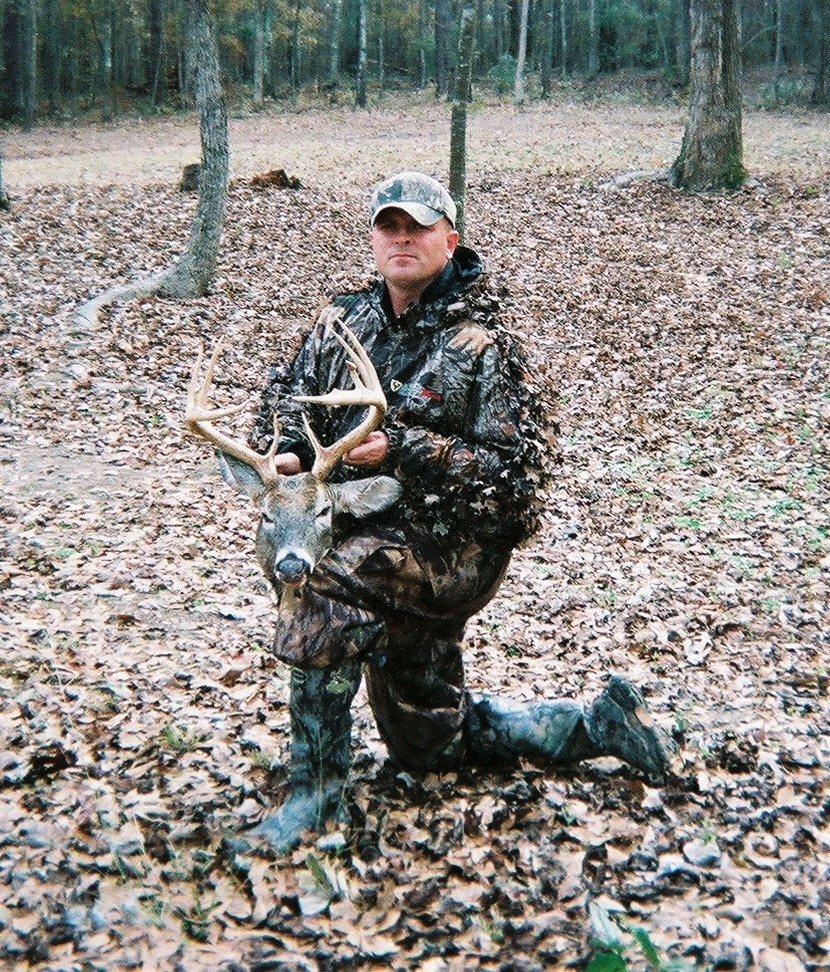
He was a mainframe 12-point with equal six-inch drop tines. Its G2s were well over 16 inches long and had an inside spread of at least 24 inches. Amazingly, less than a month later, I located two other bucks in the 160-inch class. The 190-inch brute and his two buddies were instantly placed at the top of my hit list. I knew the bucks were special but could not have imagined a rack with an inside spread of 31-1/2 inches!
On the first day of our 2001 bow season, at last light, the 190-inch monster magically appeared. Unfortunately, it was extremely warm and sticky that day. The great buck easily winded me before slipping "like a ghost" back into the mesquites. I knew that staying scent-free was the key to hunting big bucks, however, in Texas the warm days of October make staying scent-free nearly impossible. The wide racked buck materialized during that second and somewhat abbreviated season. I did manage to take a fat doe that first weekend and later saw lots of deer.
On Oct. 20, 2001 disaster struck. Witnesses to that fateful day's events say that after my morning hunt, I took two new hunters out to my northern stands on Fort Hood. I was home by 1 p.m. preparing myself for an evening hunt. I departed at 2 p.m. and drove to my "ultra secert" big buck area. Mistake number one: No one knew where my big buck stands where located. At 2:30 p.m., while climbing into my treestand, a six-inch oak limb sheared clean, sending me tumbling 27 feet to the ground. Mistake number two: I had a safety harness on, but never used it in the climbing mode. I regained consciousness about 12 hours later on a dark and very cold night. I had a jagged laceration on my head and my ears were bleeding. The right side of my entire body was numb and useless. My neck and head throbbed immensely, A hunter's worse nightmare was now my own reality! Seriously injured, I knew help would never come in time. I had a cell phone in my truck, but didn't have the faculties to find the truck, let alone use a cell phone.
My family went to bed early that evening. My wife assumed , and rightfully so, that I was on the trail of yet another deer. It is unacceptable for me to leave an arrowed game animal in the field. Consequently, I will follow the blood trail until the animal is recovered. So, it was not uncommon for me to come home late from hunting. Mistake number three: I failed to discuss with my family or any of my friends about what to do if I was unreasonably late. Alone, disoriented and desperate, I couldn't understand why I was out there or why most of my body was asleep and unresponsive. I could clearly hear a pack of coyotes working near to me. They were yapping, whining and acting really crazy. Even in my dazed and confused mental condition, their intentions were clear. The hunter had easily and dangerously been morphed into the hunted. At the time, the only thing I knew for certain was that if I was going to see another sunrise I had to get moving.
I used a variety of techniques to traverse the terribly "dark and forbidden" terrain. I started out by slowly and cautiously walking, then crawling and at times even grabbing the earth with my good hand to pull myself forward. When I couldn't take the pain anymore, I would collapse in agony. I desperately wanted to slip into a deep, deep sleep and hopefully escape my horrific ordeal. I instinctively knew that sleep would equate death, and death was not an acceptable course of action. My wonderful wife and our six beautiful children were safely tucked into their beds at home. I had to get help.... and the sooner the better. After struggling throughout the night over the densely vegetated and broken terrain, I stumbled onto a paved road well over seven miles away from my stand. Luckily, another hunter was heading out to his stand. He stopped, rendered aid and called the ambulance for me. At about 6 a.m. the next morning, my struggle to survive was over. Simply put, it was the longest and darkest night in my life. After three hospitals in as many days, I was finally admitted to the Brooke Army Medical Center in San Antonio. In a drug-induced state, I begged my neurosurgeon to at least fix me up enough to finish out the bow season. He grinned and said, "you should seriously consider retiring from bowhunting"
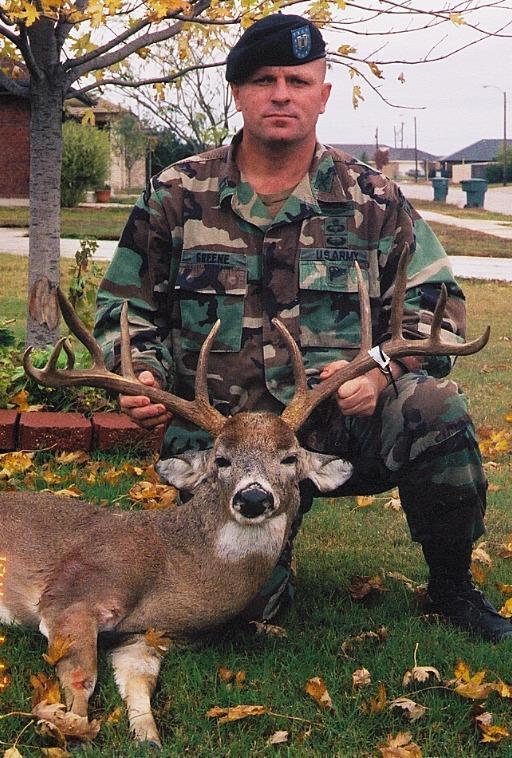
After 10 hours of surgery, three titanium plates, nine titanium lag bolts and two disc of cadaver bone, I had a reconstructed neck. To top it all off, I had a whole bunch of temporary and permanently damaged nerves. Statistically speaking, I should be dead.....or at best a quadriplegic for life. I patiently endured the recovery process last year knowing that a monster was out there with my name on it. In mid-2002, despite my best efforts, I could not effectively draw, anchor and aim my bow. I worked feverishly during the month of August and finally gained enough strength to hunt with my bow again. By opening day of the 2002 season, I could barely draw, aim and shoot my bow. I took a doe that first weekend in spite of the pain. from opening day until Nov. 26, I let 32 bucks, four of which were in the 130-inch class, and well over 220 does walk into and out of my "no miss" range of 30 yards. I saved my single buck tag, hoping that one of the mega bucks would make that "fatal" mistake. On Nov. 26, the wide-racked monster did just that. |