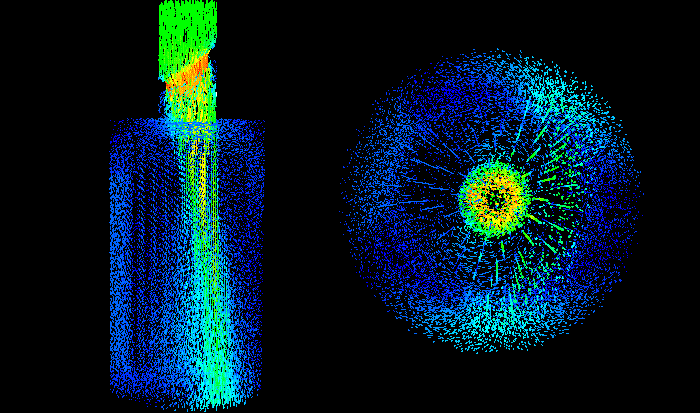
AIR VORTEX FOR PLASTIC PRODUCTION
Avaible Pages
JOB REF. CFD194674005
ABSTRACT
Problem Description:
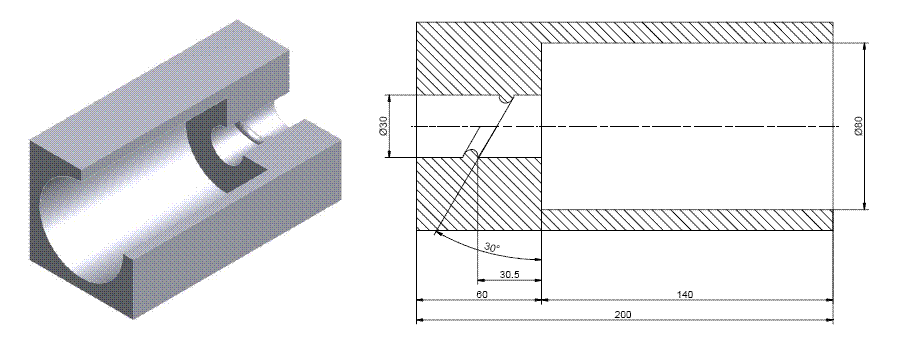
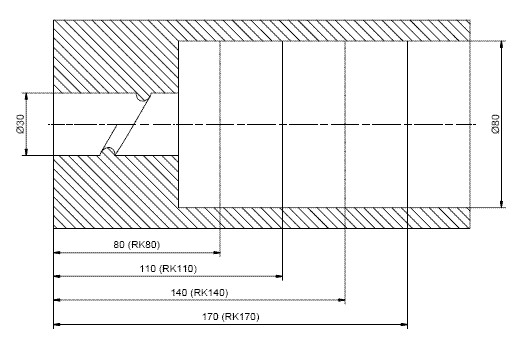
Consider cool air flow through a conduit. Near the outlet area there is a small conduit constriction (sweep), sweep orthogonal angle, conduit sweep coordinate and sweep cross section geometry (sweep inside diameter too) are customer variables and they depend to the flow outlet directions and velocity (input data).
The inlet flow is very turbulent (high turbulent rate), and the turbulence increase in the conduit with energy dissipation, the prediction of the pressure loss is important now.
The sweep constriction must have the follow characteristics: It give to the flow a deflection and a small (but very important) VORTEX geometry for the flow in the outlet area.
The target is the validation of the geometry.
| ITEM | INPUT DESCRIPTION | RANGE / VALUE | UNIT |
| 3 | Room Geometry | See DWG | mm |
| 4 | Inlet Speef | 28 | m/s |
METHOD
High turbolence and complex flow geometry need a tubolence model for the solver.
In general, k-epsilon models are good for plane and radial jet problems. The various models do not perform well for strong adverse pressure gradients, and are therefore not recommended for separated flows.
Wall functions can be applied to any of the k-epsilon turbulence models, but is only recommended for use with the high-Reynolds number k-epsilon turbulence model or on coarser sequence levels for the low-Reynolds number models.
We use the STANDARD K-EPSILON viscous model with Enchanced Wall Treatment (Pressure Gradient Effects as Option).
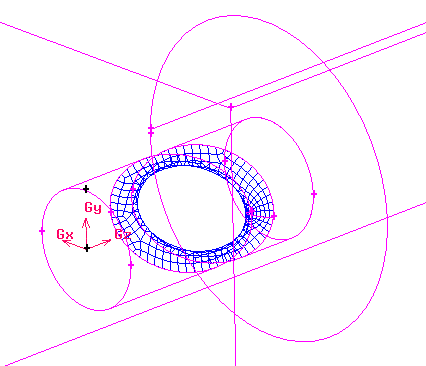
GRID GENERATION
Mesh generation steps:
| 1 | Tetrahedral mesh for the inlet surface |
| 2 | Quality grid check |
| 3 | Volume mesh for flow space |
| 4 | Quality grid check |
Mesh Details:
| 89388 | mixed cells, zone 2, binary. |
| 11962 | triangular wall faces, zone 3, binary. |
| 1348 | triangular pressure-outlet faces, zone 7, binary. |
| 182 | triangular velocity-inlet faces, zone 8, binary. |
| 187342 | mixed interior faces, zone 10, binary. |
| 4116 | quadrilateral parent-face faces, zone 11, binary. |
| 4116 | face child pointers, parent zone 11, child zone 10, binary. |
| 29406 | nodes, binary. |
| 29406 | node flags, binary. |
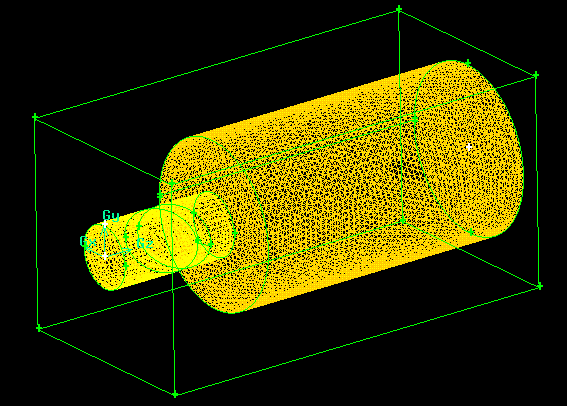
See images and table for detail. The mesh is generated with Gambit 2.2.30.
| Data Set | Description | Value |
| BOUNDARY | Boundary "A" Type | Velocity - Inlet |
| BOUNDARY | Boundary "B" Type | Axis |
| BOUNDARY | Boundary "F" Type | Pressure - Outlet |
CFD SET-UP AND SOLVE
Before solving (Fluent 6.2.16) we have to solve the following steps:
| Data Set | Description | Value | Note |
| Solver | Solver type | Segregated | N.A. |
| Solver | Space | 3D | See Method chapter for detail. |
| Models | Viscous | k-epsilon STD | See Method for chapter for detail. |
| Models | Cmu | 0.09 | N.A. |
| Models | C1-Epsilon | 1.44 | N.A. |
| Models | C2-Epsilon | 1.92 | N.A. |
| Models | TKE PN | 1 | N.A. |
| Models | TDN PN | 1.3 | N.A. |
| Models | Wall function | Enhanced Wall Treat. | Option: Pressure Gradient Effects |
| Models | Energy | "Turn off" | N.A. |
| Materials | Name | Air | Find Air in material database. |
| Materials | Density | Ideal Gas | The ideal gas equation is used for the density calculation from static pressure and temperature. |
| Materials | Cp | 1006.43 | [J/Kg*K] |
| Materials | MW | 28.966 | [Kg/Kg*mol] |
| Operating Conditions | Operating Pressure | 101325 | [Pa] - See the fluent manual for the Operating Pressure definition and set-up. |
| Boundary Conditions | Inlet Velocity Magnitude | 28 | [m/s] CFD Optimized Value |
| Boundary Conditions | Outlet Pressure | 0 | [Pa] - Gauge Pressure |
| Solution Controls | Pressure Under Relaxation Factor | 0.3 | See the fluent manual for definition and set-up. |
| Solution Controls | Density Under Relaxation Factor | 1 | See the fluent manual for definition and set-up. |
| Solution Controls | Body Force Under Relaxation Factor | 1 | See the fluent manual for definition and set-up. |
| Solution Controls | Momentum Under Relaxation Factor | 0.7 | See the fluent manual for definition and set-up. |
| Solution Controls | Turbulence Kinetic Energy | 0.8 | See the fluent manual for definition and set-up. |
| Solution Controls | Turbulence Dissipation Rate | 0.8 | See the fluent manual for definition and set-up. |
| Solution Controls | Turbulence Viscosity | 1 | See the fluent manual for definition and set-up. |
| Solution Controls | Discretization | STD / First Order Upwind | For all equations. |
| Initialization | Compute From | Inlet | Inlet is in most cases the best choice. |
| Initialization | Initial Gauge Pressure | 0 | [Pa] - Usually is the initial value not important for the final result. |
| Initialization | Initial Axial Velocity | 28 | [m/s] - Usually is the initial value not important for the final result. |
| Initialization | Initial Radial Velocity | 0 | [m/s] - Usually is the initial value not important for the final result. |
| Monitors | Convergence Criterion | 1.00E-05 | For all equations. |
| Iteration | Iteration Number | 1542 | N.A. |
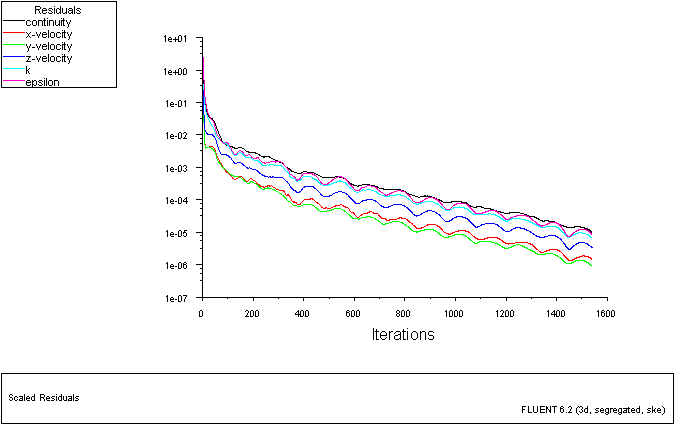
The convergence plot lock like well, we satisfy the convergence criterion (for all equations) in 1542 iterations:
RESULT
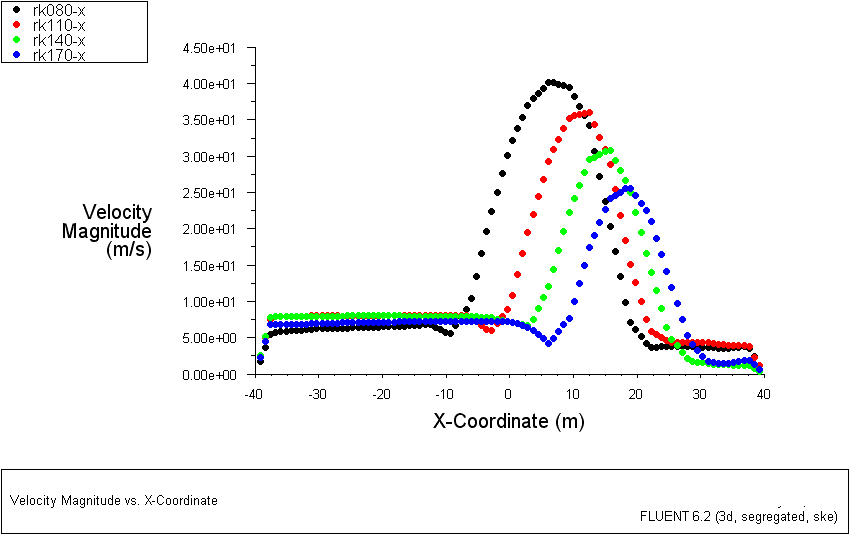
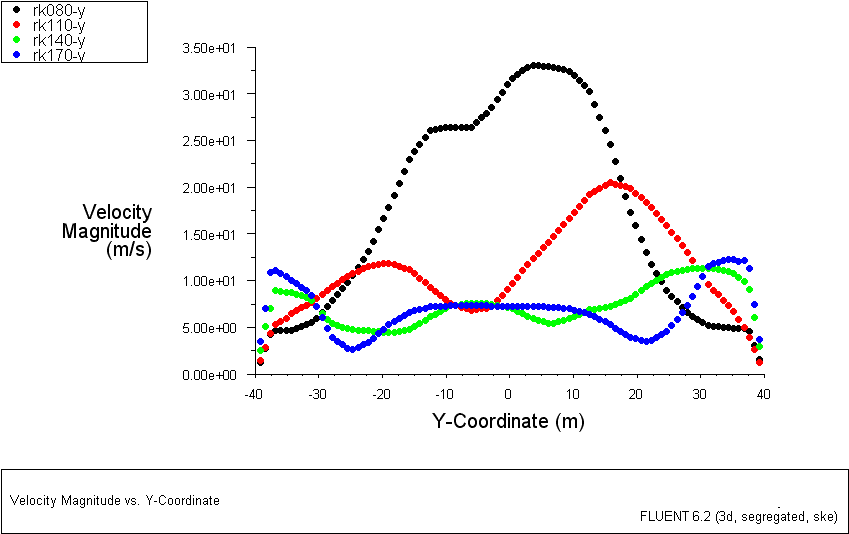
For the selection of the output data we have to plot:
Vectors of Velocity, Absolute Pressure, Dynamic Pressure.
Velocity Plot Data at different z-value (for x and y lines).
VECTOR DATA
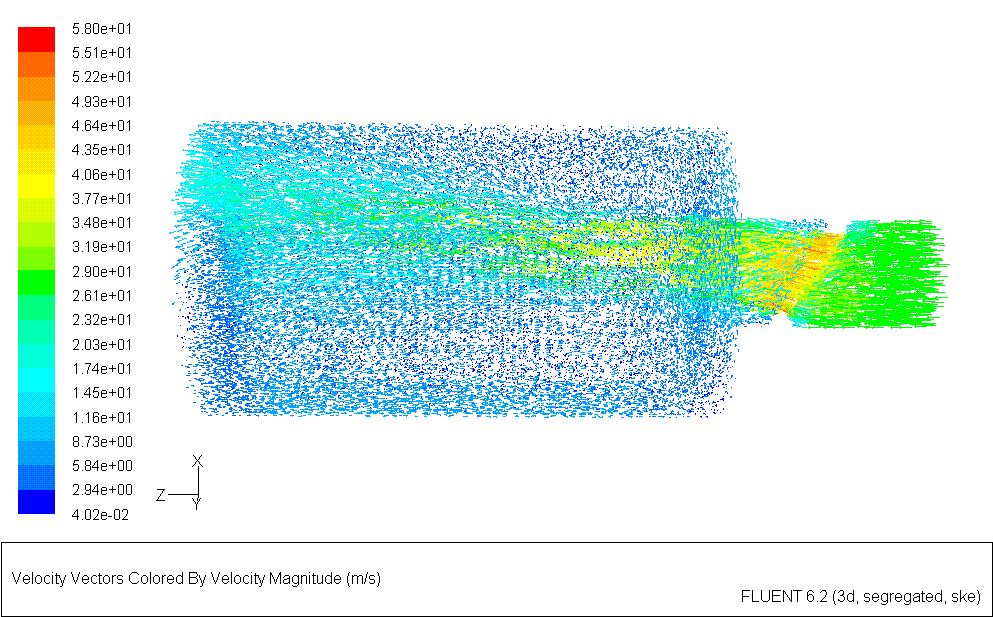
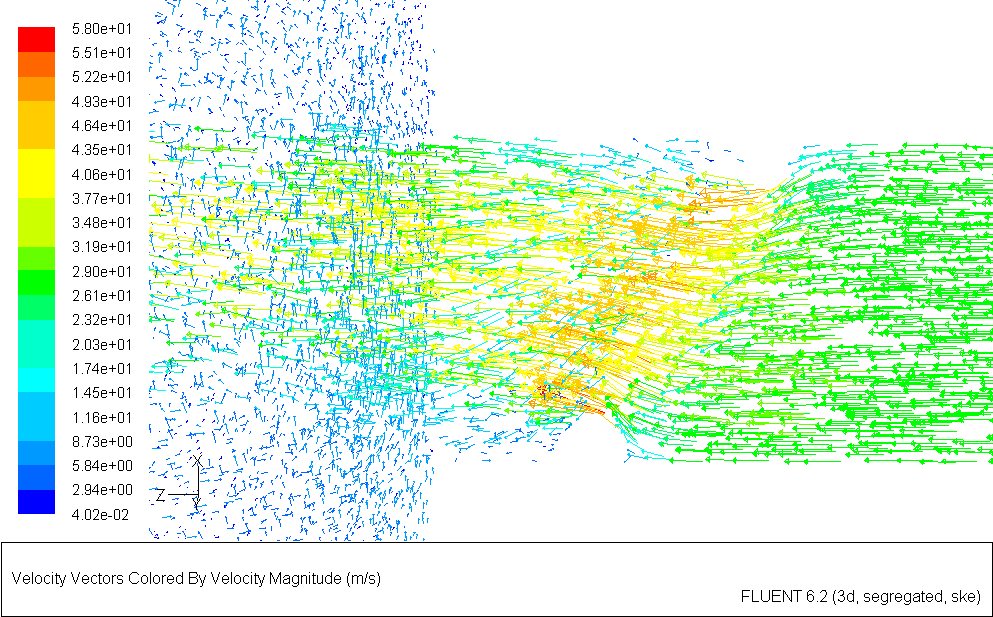
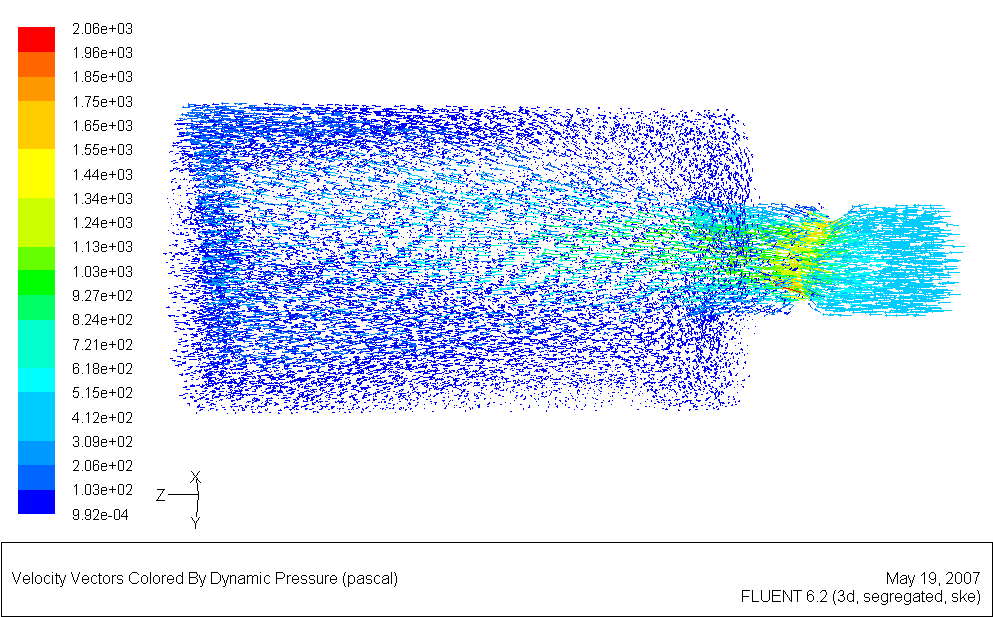
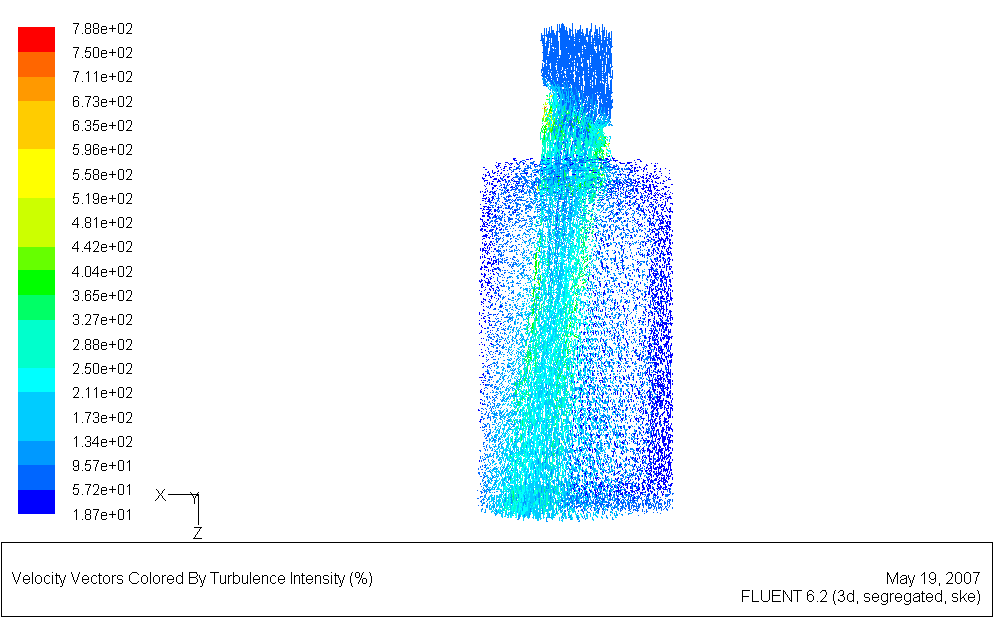
VECTOR DATA
CONCLUSION
The results look like well and we don't need additional experiment or analytical calculations. We needed 3 geometry modification to obtain this final results.