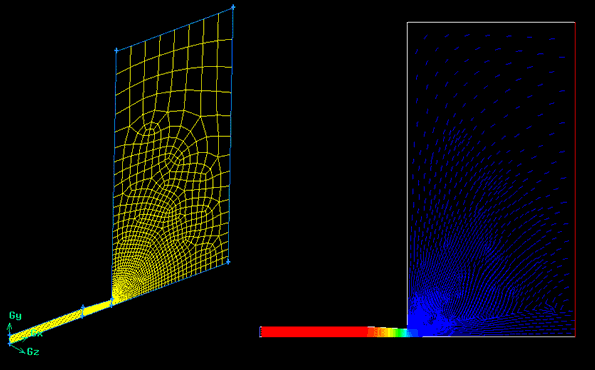
AIR COOLING FOR PLASTIC PRODUCTION
Avaible Pages
JOB REF. CFD194674001
ABSTRACT
I needed for this case a way to show the interrelationship between air pressure (static and dynamic), velocity, temperature and we wanted to show that experiment are unnecessary and the CDF prediction is enough good.
Problem Description:
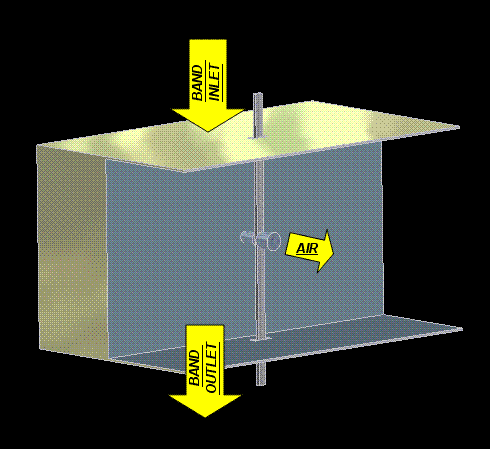
Consider cool air flow through a convergent nozze.
The air flow passes through the nozzle and into the cooling room.
We obtain a strong direct convection for the plastic band. The plastic band
velocity is orthogonal to the air flow the producer select the band speed.
The plastic band is small as compared with the flow dimensions.
The air flow can’t be to strong to avoid a band deformation. The reference
dimension for this condition is the dynamic pressure.
- Max band allowable force = 30N
| ITEM | INPUT DESCRIPTION | RANGE / VALUE | UNIT |
| 1 | Band Dimensions | Varius | mm |
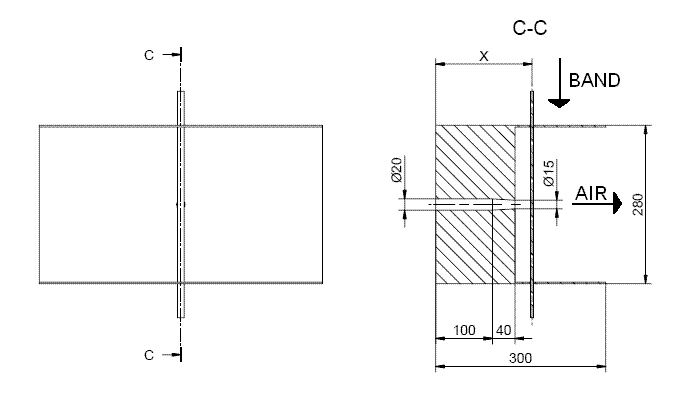
| 2 | Nozzle Dimension | See DWG | mm |
| 3 | Room Geometry | See DWG | mm |
| 4 | Band Speed | [0,0.01] | mm/s |
| ITEM | OUTPUT DESCRIPTION | RANGE / VALUE | UNIT |
| 1 | Nozzle-Band Distance | [10,130] | mm |
| 2 | Air Speed | [0,40] | m/s |
| 3 | Air Temperature | [0,20] | °C |
METHOD
The Reynolds number for this flow is large (in the convection flow area), so we expect viscous effects to be confined to a small region near the wall.
So we model the CFD problem as inviscid.
We don't study the flow near the upper and lower wall region of the cooling room, so we can leave out the square geometry of the room and use the axisymmetric space for the modeling.
GRID GENERATION
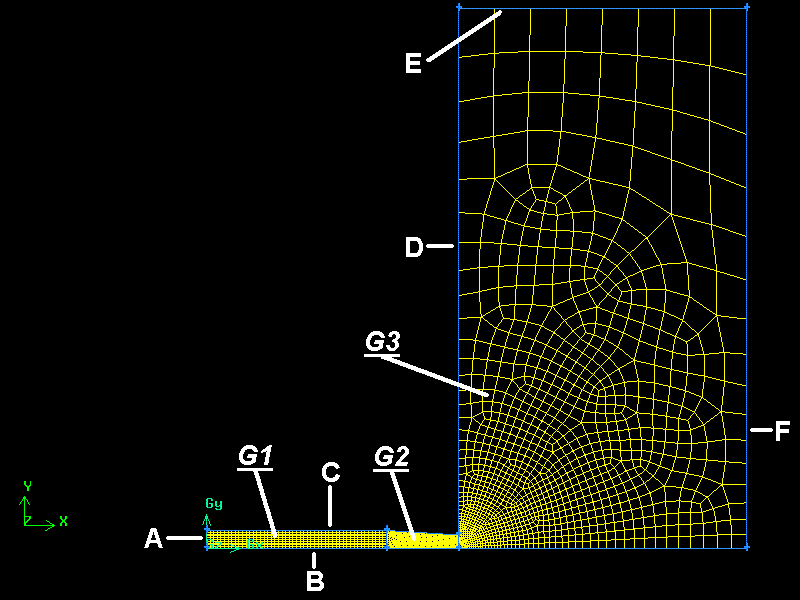
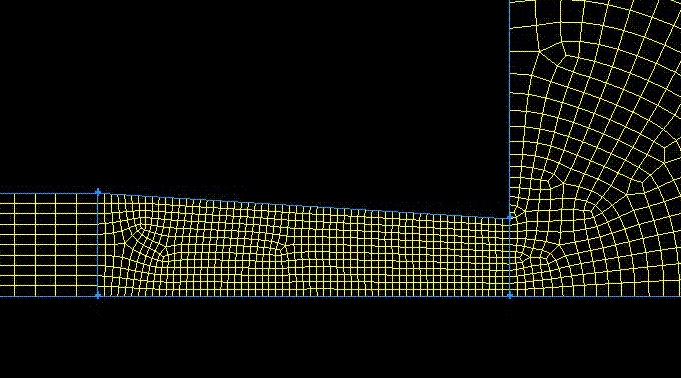
For this problem we separate three different area and we generate three different meshes composed of 4-noded quadrilatera (Quad) elements. See images and table for detail. The mesh is generated with Gambit 2.2.30.
| Data Set | Description | Value |
| GRID G1 | Element Geometry | Quad |
| GRID G1 | Element type | Map |
| GRID G2 | Element Geometry | Quad |
| GRID G2 | Element type | Pave |
| GRID G3 | Element Geometry | Quad |
| GRID G3 | Element type | Pave |
| GRID MERGE | Cell Number | 2387 |
| GRID MERGE | Face Number | 4946 |
| GRID MERGE | Nodes | 2560 |
| BOUNDARY | Boundary "A" Type | Velocity - Inlet |
| BOUNDARY | Boundary "B" Type | Axis |
| BOUNDARY | Boundary "C" Type | Wall |
| BOUNDARY | Boundary "D" Type | Wall |
| BOUNDARY | Boundary "E" Type | Wall |
| BOUNDARY | Boundary "F" Type | Pressure - Outlet |
CFD SET-UP AND SOLVE
Before solving (Fluent 6.2.16) we have to solve the following steps:
| Data Set | Description | Value | Note |
| Solver | Solver type | Coupled | N.A. |
| Solver | Space | Axisymmetric | See Method chapter for detail. |
| Models | Viscous | Inviscid | See Method for chapter for detail. |
| Models | Energy | "Turn on" | For compressible flow, we need to couple the energy equation to the continuity and momentum equation. |
| Materials | Name | Air | Find Air in material database. |
| Materials | Density | Ideal Gas | The ideal gas equation is used for the density calculation from static pressure and temperature. |
| Materials | Cp | 1006.43 | [J/Kg*K] |
| Materials | MW | 28.966 | [Kg/Kg*mol] |
| Operating Conditions | Operating Pressure | 101325 | [Pa] - See the fluent manual for the Operating Pressure definition and set-up. |
| Boundary Conditions | Inlet Velocity Magnitude | 30 | [m/s] CFD Optimized Value |
| Boundary Conditions | Inlet Temperature | 273 | [K] CFD Optimized Value. |
| Boundary Conditions | Outlet Pressure | 0 | [Pa] - Gauge Pressure |
| Boundary Conditions | Outlet Temperature | 300 | [K] - Ambient Temperature |
| Solution Controls | Pressure Under Relaxation Factor | 0.3 | See the fluent manual for definition and set-up. |
| Solution Controls | Density Under Relaxation Factor | 1 | See the fluent manual for definition and set-up. |
| Solution Controls | Body Force Under Relaxation Factor | 1 | See the fluent manual for definition and set-up. |
| Solution Controls | Momentum Under Relaxation Factor | 0.7 | See the fluent manual for definition and set-up. |
| Solution Controls | Energy Under Relaxation Factor | 1 | See the fluent manual for definition and set-up. |
| Solution Controls | Temperature Under Relaxation Factor | 1 | See the fluent manual for definition and set-up. |
| Solution Controls | Discretization | STD / First Order Upwind | For all equations. |
| Initialization | Compute From | Inlet | Inlet is in most cases the best choice. |
| Initialization | Initial Gauge Pressure | 0 | [Pa] - Usually is the initial value not important for the final result. |
| Initialization | Initial Axial Velocity | 30 | [m/s] - Usually is the initial value not important for the final result. |
| Initialization | Initial Radial Velocity | 0 | [m/s] - Usually is the initial value not important for the final result. |
| Initialization | Initial Temperature | 273 | [K] - Usually is the initial value not important for the final result. |
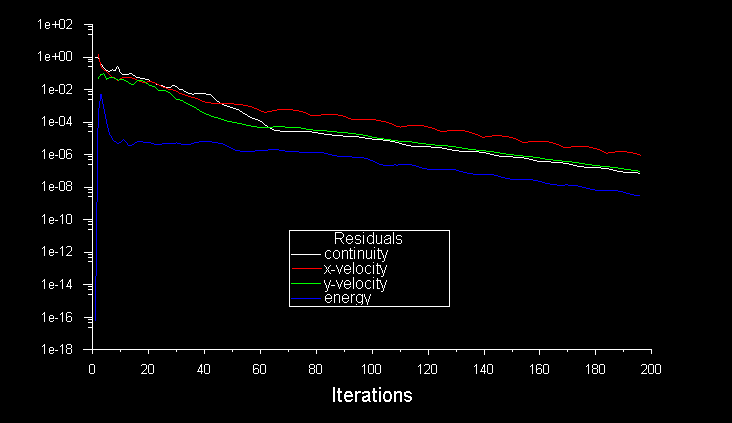
| Monitors | Convergence Criterion | 1.00E-06 | For all equations. |
| Iteration | Iteration Number | 200 | N.A. |
The convergence plot lock like very well, we satisfy the convergence criterion (for all equations) in 196 iterations:
RESULT
For the selection of the output data we have to plot:
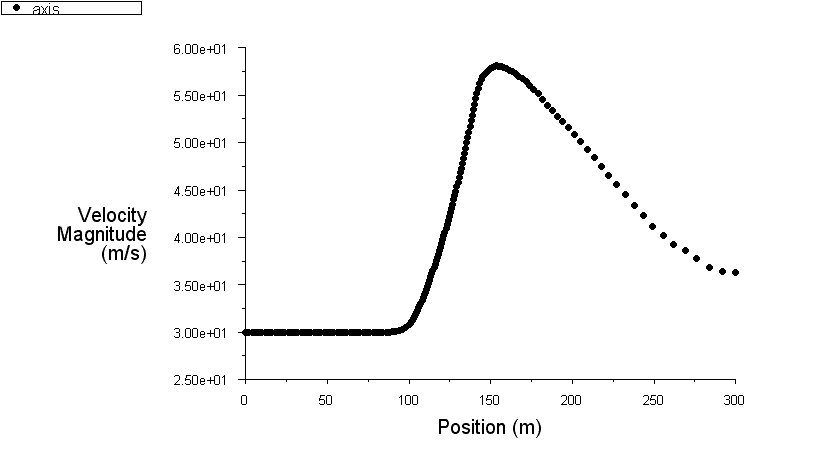
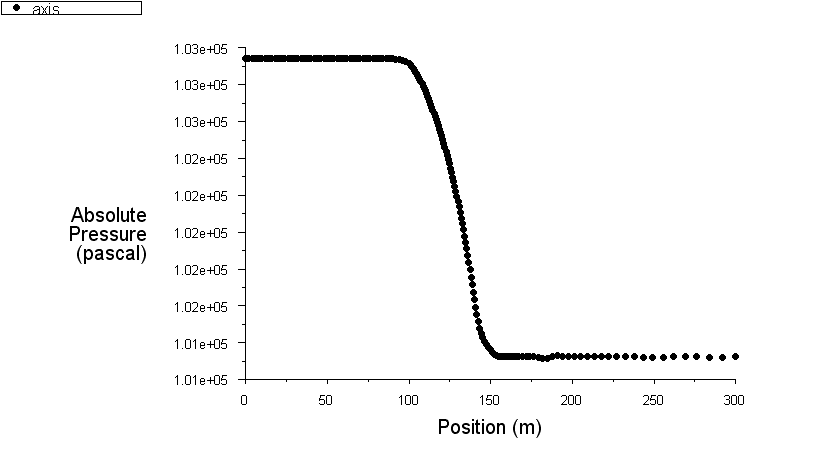
XY Plot along the centerline of Velocity, Absolute Pressure, Dynamic Pressure and Temperature.
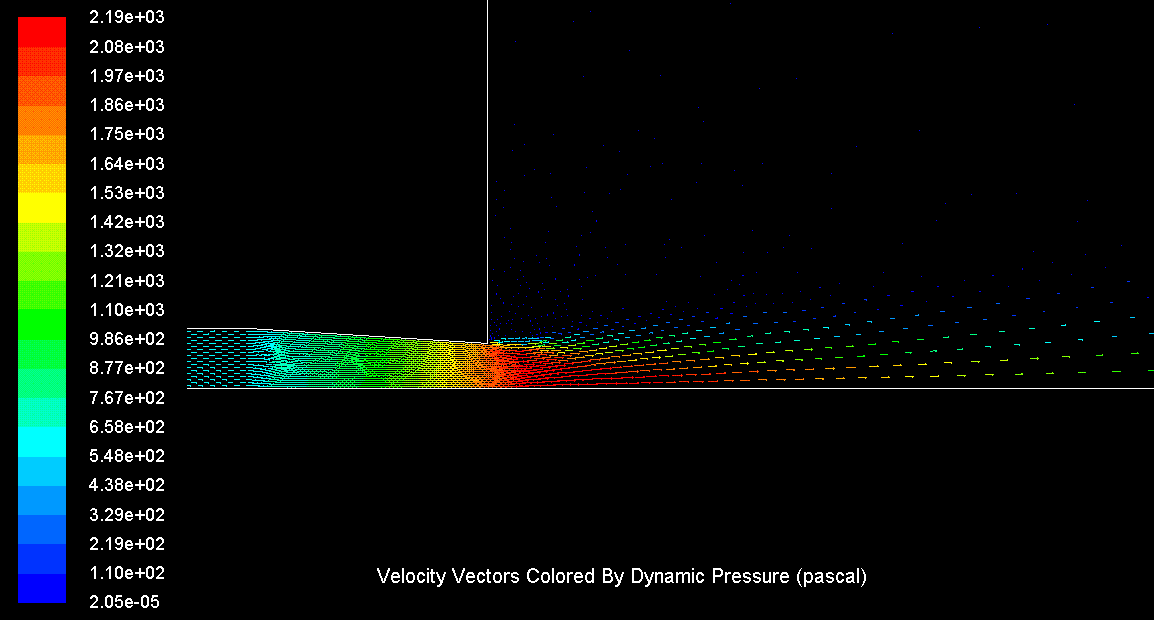
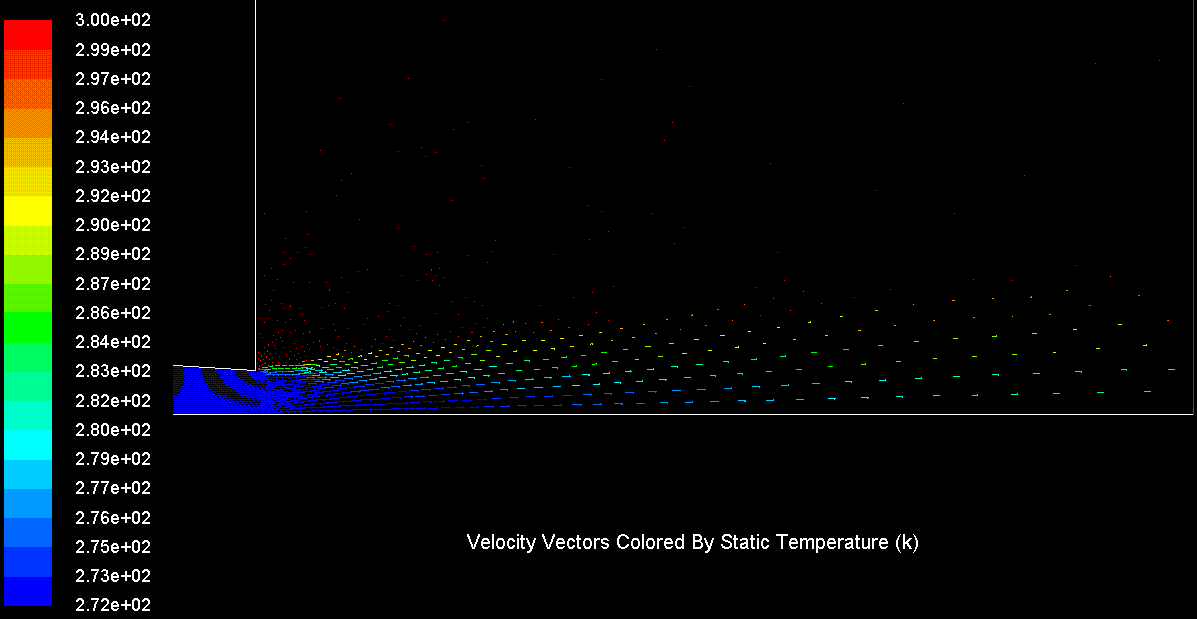
Vectors of Velocity, Absolute Pressure, Dynamic Pressure and Temperature.
All data help to the final problem configuration.
PLOT DATA
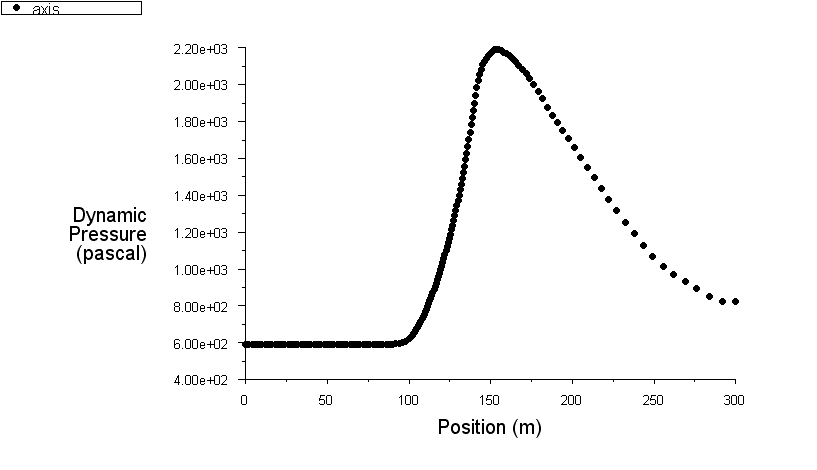
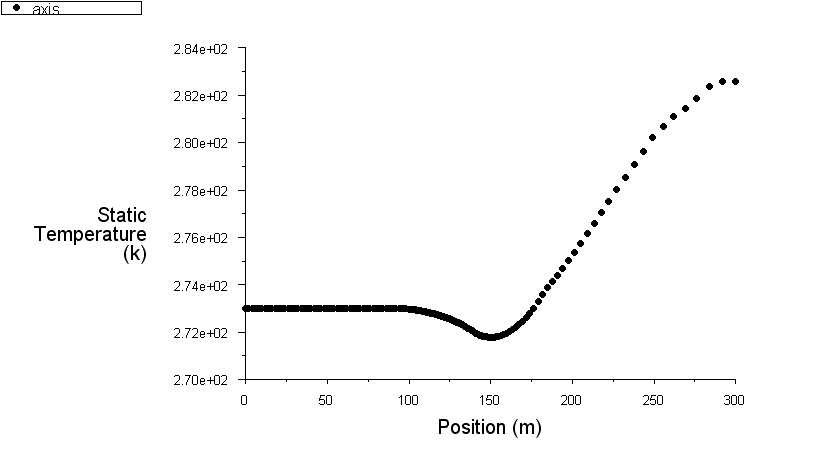
VECTOR DATA
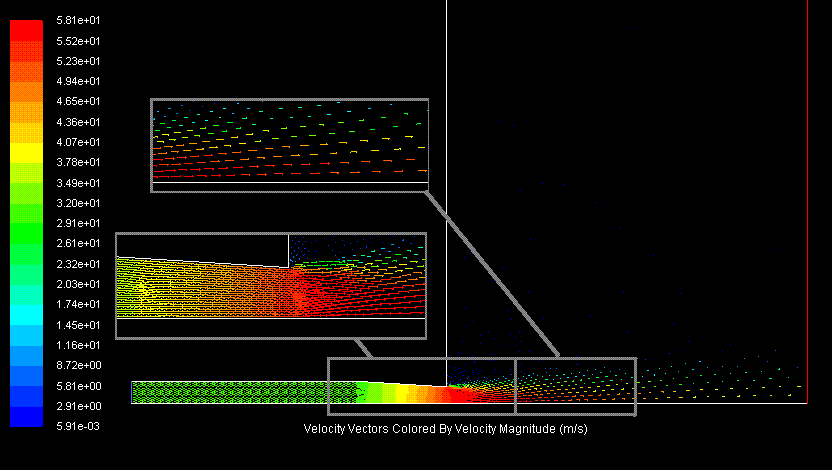
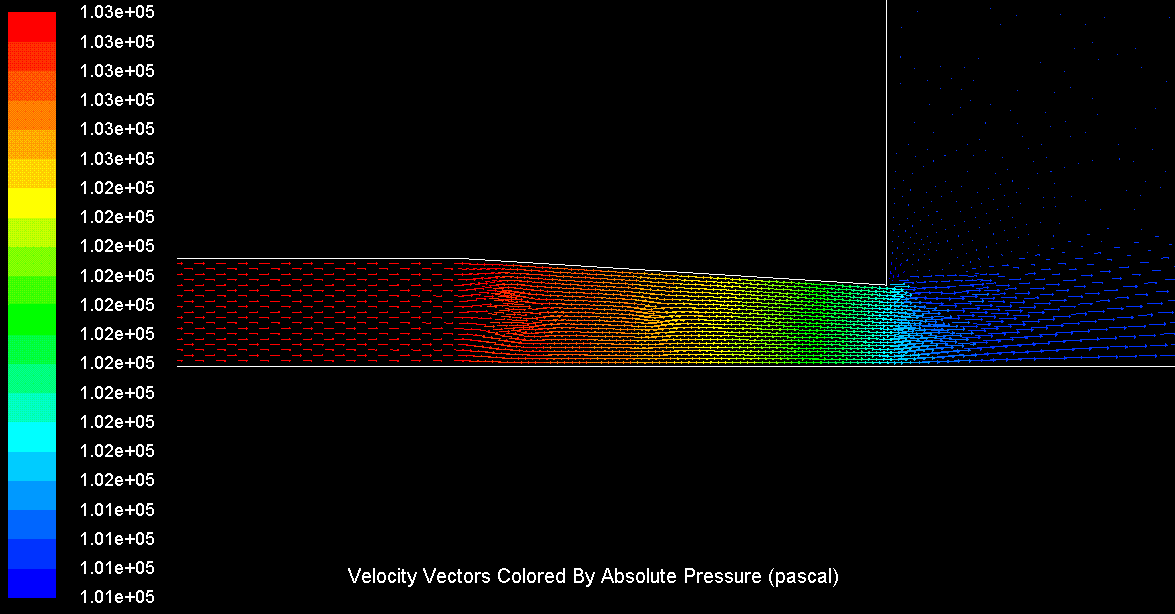
CONCLUSION
The results look like very well and we don't need additional experiment or analytical calculations.
| ITEM | OUTPUT DESCRIPTION | RANGE / VALUE | UNIT |
| 1 | Nozzle-Band Distance | 60 | mm |
| 2 | Air Speed | 30 | m/s |
| 3 | Air Temperature | 0 | °C |
The Nozzle-Band Distance is ideal for security distance, air velocity, air temperature and convection requiments, in respect of the dynamic pressure.