|
|
|
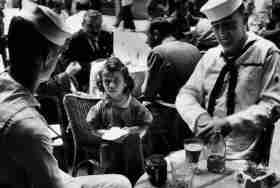
A tender and hard image at the same time of a child that
begs for charity in the 1948 Naples. The economic and social conditions of the
Italian Republic quickly degenerated after the end of the war, removing every
illusion from the million of persons who had followed the communists during the
hard struggle of liberation (Einaudi)
|
|
|
|
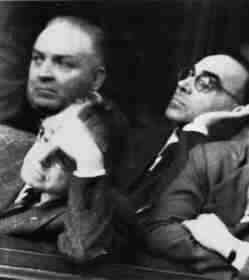
Togliatti in a curious sitting during a session of the
Italian Constituent Assembly. The complete trust of the communist leader in the
possibility of an alliance with De Gasperi was the origin of a lot of the hesitancies
of the PCI in 1948. (International Photographic agency)
|
|
|
|
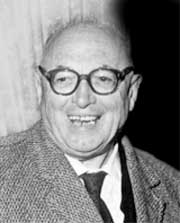
A pleasure-loving Pietro Nenni in a photo taken some years
before the death. His attempt of alliance with the communists in the 1948 elections
would have brought more damages than advantages to the socialist party.
|
 |
|
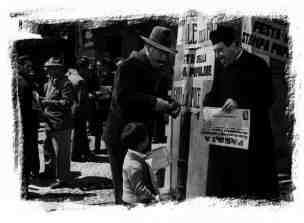
A scene from the famous movie “Don Camillo” that
speaks with irony and sarcasm about the opposition between communists and clergymen
in the second postwar period. Unfortunately, in the reality, the relationships
between the two political movements was less loyal than what is represented in
the film.
|
|
|
|
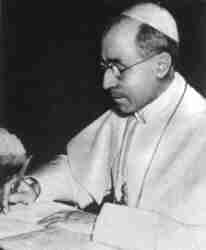
The active intervention of Pious XII in the 1948 electoral
campaign was decisive to address the undecided electors of Catholic faith. (Agence
Intercontinentale)
|
|
|
|
Mario Scelba was Minister of the Home Affairs during the
1948 elections. He replaced all prefects named by the Committee of National Liberation
with men of trust, creating that category of “Iron Prefects” who were
particularly intransigent with all workers' demonstrations of the period preceding
the elections, warrenting the public order with very hard methods.
|
|
|
|
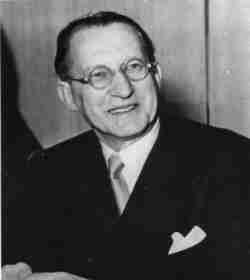
Alcide De Gasperi resulted the true winner of the 1948
elections. Without particular worths, he knew how to assemble on the Christian
Democracy all consents of the anti-communist strengths and of the undecided voters.
|