== UX50 Whine ==
JustaNoob:
Mixel:
I'm not about to pop open my UX-50 display, so here are some meanderings.
An LCD display system has three basic blocks:
Inherent to the Backlight System is the actual lamp (Cold Cathode Fluorescent). The lamp is driven by a DC-AC inverter. Since inverters create an AC output, they have a sinewave signal source and accordingly an associated frequency generator.
Possible noise sources: inverter of CCF tube
Since folks report the whine without the backlight on, then it's most likely to be the inverter.
Note that there are well known concerns:
Frequency generally has no effect on the brightness, efficiency or life of the CCF tube, however the frequency of the voltage and current applied to and through the tube can have a major factor in the compatibly between the tube and the display, graphic engine and graphic information displayed on the LCD module. The operating frequency of the inverter should be chosen to be completely compatible with the LCD module and graphic material used and displayed in the system.
Higher frequencies can put restrictions on the packaging and interconnecting lead capacitance between the inverter and the CCF tube.
Waveform, both current and voltage, can not only affect the performance of the tube but can generate unacceptable radiated electrical noise which might have adverse effects on the rest of the systems and be very costly to fix or remove for agency approvals and certifications. A properly designed and selected inverter can minimize the waveform distortion created by the dynamic nature of the tube and provide an inverter CCF tube combination with minimum impact to the system and the surrounding environment. Although the dc to ac inverter produces a pure sine-wave the dynamic nature of the CCF tube distorts both the output current and output voltage. (ref: http://www.ergpower.com/pdf30/confer.pdf)
In looking at pda inverter module specs, seems like they run between 80 and 120+ kHz.
Scrolling horizontal lines are often caused by interaction between the inverter frequency and the horizontal H-synch frequency.
Temperature effects and effect on whine:
Inverter Grade Thyristors are used in CCF power modules. Thyristors have a negative temperature coefficient. So their resistance increases with decreasing temperature. I wouldn't venture to know if temperature compensation is built into the UX-50's inverter.
On the otherhand, liquid crystal viscosity varies with temperature. So LCD controlling voltage must be increased as temperatures decrease to maintain optimum contrast. I would surmise that the frequency increases beyond the audible range to provide the increasing output voltage.
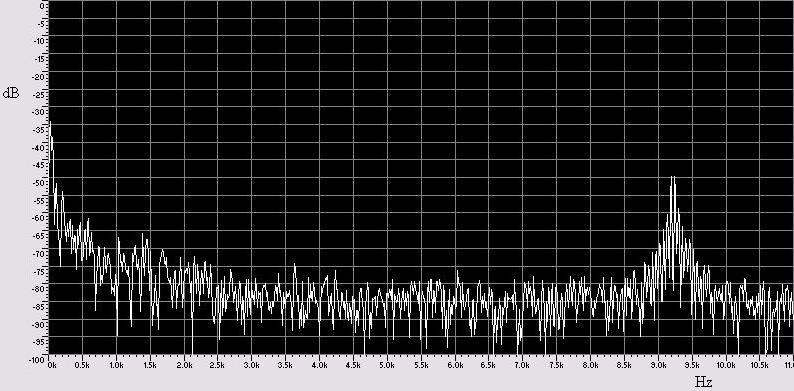
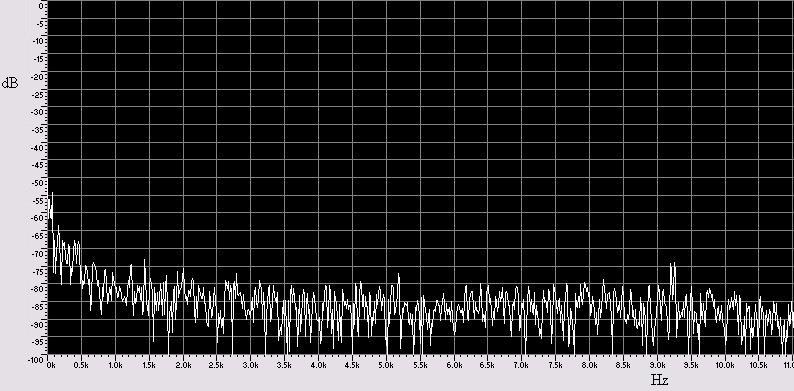
Interesting things about 9.2 kHz:
Piezo transformers in a pda "inverter module" http://focus.ti.com/lit/ml/slym061/slym061.pdf
Piezoelectric transformers can be made of pzt and...
Piezoelectric Transformer is a device that enables a low voltage input to generate into a high voltage output through the utilization of a piezoelectric transducer's resonance phenomenon. A Piezoelectric transformer has two electrodes. The primary electrode is polarized to the thickness direction where as the second electrode is to the length direction. Strong mechanical oscillation is generated at the secondary side, when a resonance frequency voltage is introduced at the primary side. In order to produce proper matching oscillation at the secondary electrode, the voltage of the direct piezoelectric effect at the first electrode must be rational to its length dimension. (ref: http://www.zhennan.net/product/inverter/traninver.htm)
These folks are running at 50-100 kHz resonant frequencies.
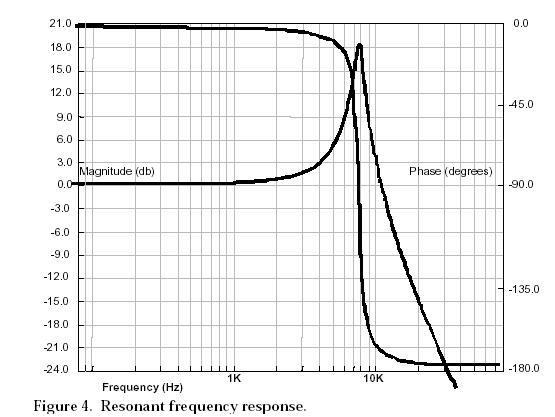
PZT comes in many flavors, depending on doping elements and applied strain, but get a load of this frequency response: