Two Deaths by Rafique Islam 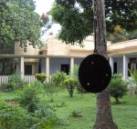
For whom the school- bell tolls
I had met Mokhles Ahmed on my last visit to Canada. I might not have remembered him at all if not for the reason that he attended the same Technical High School in Tejgaon. By the time he entered the school, its name had been changed to Intermediate Technical College. It was still the same school with science labs, drafting studios and wood/metal workshops. We were talking after dinner in my sister-in-law’s house in Toronto. He talked about the joy of being an engineer and being able to work with his hands. He enjoyed the hands-on experience he got in the woodwork and metal shop at our school. I liked them too but liked the drafting class more. We were lucky to have such great facilities and tools. He worked his whole life as an engineer in three continents and finally settled in Canada. He even did gardening every year in a plot of land the city allocated him. He would plant seeds in late spring and harvest the vegetables in summer. I found something common with engineer Mokhles. I told him about the Website our old school keeps on the Internet with my pictures and drawings of the campus. I promised him that if I ever visited Dhaka, I would make a trip to our school and take pictures of the tools and machines and send them to him. He also talked about the gymnasium and playground where we would get physical education. He appreciated how his life had been shaped by the hands-on practical education he got at Intermediate Technical College. I did not know if I would ever see him again but he made quite an impression on me. I felt a sense of duty to take pictures of the school for him.
My children wanted to visit Singapore and Tokyo this summer. My wife wanted to visit her ailing father in Dhaka. I planned the family vacation on Singapore Airlines to Dhaka with stopovers in Singapore and Tokyo. I planned on visiting my school and wrote to the principal a month in advance about my desire to see the campus and take pictures of the machines and tools. I hoped to get good pictures to share with Mokhles. I have no immediate family in Dhaka and apart from buying some Bengali movies and songs, and visiting my old university campus, visiting Intermediate Technical College would be the highlight of my Dhaka visit. My kids were looking forward to shopping in Singapore and Tokyo. Dhaka is just a stopover for them with nothing to do or see except visiting their ailing grandfather.
Our first stop is Singapore and it is simply an island paradise. Everyone from customs officer to bus driver is friendly. The weather is perfect and shopping is heavenly. Food is varied, cheap and tasty. On the day we are supposed to leave for Dhaka, we realize we would have enjoyed spending more time here. My wife is up at 5am in the morning and wants to go shopping for more things. We had been to Mustafa Department Store the night before and she remembered it is open 24 hours a day. It turns out early morning is better time to shop there. It is practically deserted and we can find whatever we are looking for. By the time we are done with shopping and eating breakfast it is still only 7am. I hail a cab from the street and give him the name of the hotel. Looking at all the shopping bags he asks why we would go shopping at such early hours and when there is a taxi fare surcharge. My wife tells him about us leaving for Bangladesh this afternoon and the need to buy some supplies and 220-volt adapters for laptop, games and tools we brought from USA. The driver tells us how he has been to USA and Dhaka recently. His son is doing PhD in USA and his uncle is a pilot for Singapore Airlines. He had been to Dhaka once 30 years ago when he was young. He thought Dhaka was such a nice place to visit in the past but now it does not compare with Singapore, Bangkok or Kualalampur. I ask him what he thought was the reason for the decline. As the taxi zooms past the tree-lined parks, he declares “two things” with a grin on his face “20 year plan and stable government.” Before I can ask him to elaborate we are already at the hotel. We have to pack up and get ready to go to Dhaka and face the grim realities there.
Dhaka turns out to be a nightmare. It is humid and unbearably hot. The only relief from the sound of machinery from our neighboring house under construction is when power goes off. Then we are left to deal with the added discomfort from no fans and no TV. Water supply is sporadic and the traffic is a mess of gridlocks at each intersection. I start to get irritated when a simple thing like making tea turns out to be chore with my relatives giving orders to servants. My family is eager to get out of the city and find some peace and quite in a tea estate in Srimongol. I wait for the principal’s call but after not hearing from him, I decide to visit the school on my way back from Kamalapur train station. I buy train tickets for the next day’s train to Srimongol and ask the ticket seller for a local train ticket to Tejgaon where the school is located. It is just one station away but only local trains stop there and the next train is hours away. It would have been a real homecoming for me to arrive at Tejgaon station just like I had done in 1960. I had gotten off the train from Dhaka and walked past the school on my way to Kalabagan. The school building was the most remarkable building there. I had asked my father if I could attend that school. He told me that it is a pre-engineering school and required passing an entrance exam to enter. If I did pass the test, I would be on my way to become a rich engineer. I did pass the test and went on to enter the engineering faculty for one year until I realized how memorizing electrical formulas was not my idea of being an engineer. I needed a practical profession with creativity. I abandoned my studies, took the train to Srimongol to tell my startled father stationed there that I wanted to be an architect instead. It was a turning point in my life where I was not going to abandon my passion for money. For the next three months my father tried in vain to convince me to change my mind while I taste the Finest Tippy Pekoe teas from the gardens and sketch the workers.
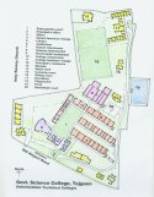
Those memories of distant past are jolted by the unpleasant ride in a 3-wheeler motorbike to the campus. The school has been invaded from all sides by uncontrolled growth of houses and shops. It takes me a while to recognize the building but I am in for the shock of my life when I walk inside the campus. The principal is gracious enough to invite me in and offer to show me around the campus. He had received my letter but was busy with tests for college level students. He calls in some schoolteachers and asks them to accompany me to the classes, studios and the workshops. I had been waiting for this for a long time and every step, turn and sight brings back memories from my childhood. The classrooms, desks, garden, library, auditorium and teachers’ room all have fond memories associated with them. The campus was designed 50 years ago with southwest overhangs facing wings and spaces in between for ventilation. Another wing has been added to accommodate the college portion but it is oriented the opposite direction defying the original layout and logic. The physics and chemistry labs were locked up and no one could find the keys. They are not used anymore. I am eager to visit the wood and metal workshops. I used to look forward to practical class days to work with the planers, chisels, saws in the wood shop and drill, welder, foundry furnace and metal bender in the metal workshop.
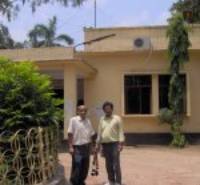
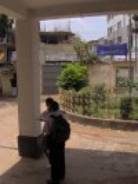
Beyond the rows of laboratories, broken desks, chairs are piled up in the corridors. It seems like no one came here for a long time. As the doors to the workshops are opened, doves fly away from the dark workshops confirming my suspicion that nobody uses these rooms anymore. There is no electricity and in the dim light through the open door, I can see the old equipments. They are all rusted and covered with cobwebs. Such expensive machines are not available even in universities but here they are left to rust and decay. I take my cameras and take pictures with flash. I walk from one machine to another reading the names on them. I feel like I am walking in a graveyard. I can read the manufacture’s name on each equipment. I am overwhelmed with sorrow at the sad state of affairs. How we had so much fun working with these. The principal has sent a teacher to get me back to his office so that we could talk more over a cup of tea. I wanted to see the playgrounds but access to that part of campus is locked off.
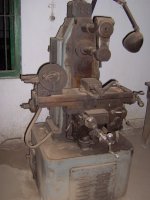
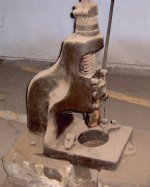
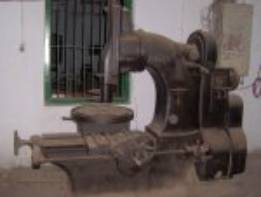
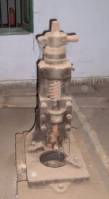
I do not know how to explain my sorrow to the principal. I ask him how is it possible for students not to want to work with their hands on these machines. The principal is not sure how to explain the situation but education policies are beyond his scope. The school has been converted into a science school and practical knowledge is not a part of science education anymore. Parents detest the idea of their children wasting time on manual labor and sports. The gymnasium has been converted into dorms. All they want is to aim for 5 point GPA so that the students can get to good universities. After that, they can get higher education overseas and get PhD’s so that they do not have to “work” for a living. Working is frowned upon both for earning a living and even as a hobby. He tells me to look around and see all the workers without education who work to death for few dollars a day while people with education do not know how to do anything. The school was set up with a noble vision that graduates with knowledge and practice would be able to use hands and brains to solve the problems in real life. The principal is new and did not know the history of the school. I have to leave shortly and go home to start packing for my trip to Srimongol. I have to make another journey down memory lane to take the same train I took 30 years ago to see my father to tell him that I wanted to peruse a profession that I combined education and practice.
The duration of my stay in Bangladesh becomes a testament to the disconnect between education and work. The educated people do not work and people who work to death do not have any education. Between PhD holder professors at the universities who have never made a cup of tea in their lives and laborers in the street who work to death without finding another way out of their burden, I find myself bonding more with the latter group. Higher education alone does not accomplish any jobs and backbreaking manual labor without knowledge does not produce quality goods. I made the mistake of asking for Finest Tippy Pekoe tea at the Tea Board Guest House in Srimongol to be informed that the only tea produced now is the dust type. After looking at the poor tea workers toiling all day hard at work, I feel bad about the low quality of tea they produce as the end product.
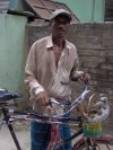
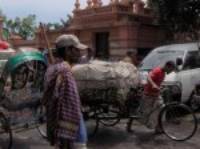
The workers seem to enjoy my company and attention when I tell them I want to take their picture. They all are glad to be able to work. Most of my time is spent on rickshaws and each of the drivers has a story of his life to tell. As hard as it is to get a cab in Dhaka without paying ransom, it is refreshing to deal with hardworking human beings with a life. I still have to see some relatives and places that are spread around town, which would require me to rent a car for a day. My relatives arrange a taxicab for me for the whole day. I would be able do my shopping and visit all my relatives. I have to pay a flat rate fee plus gas money.
The taxi driver is from the disaster-prone coastal area and makes his living by driving tourists around Dhaka. When he tells me that his car runs only on petroleum, I start to doubt his honesty. After reluctantly paying ten times for fuel over the normal cost of CNG, I get annoyed at his insistence that I visit Mujib Bhaban. Most tourists may be thrilled by that offer; I am tight with my time and need to do a lot of visiting and shopping. He does not even have a map so that I could plan my day’s itinerary based on location and traffic delays at intersections. With gridlocks at each intersection, I am worried about time. News on the radio continuously blares out the locations of gridlocks. Instead of paying attention to that, he tries to play the only tape he has which is a speech by Mujib. I ask the driver to pull up to the next available music/video store so that I could buy some music tapes for his taxi and some DVD’s for me. My anger boils over when the video storeowner offers to sell me Taxi Driver instead of Ajantrik. When he sees my disinterest, he tries to sell porno movies instead claiming these movies are better since they are more expensive and more people demand them. It could be the way I stormed back into the cab and asked the driver to get to the next destination, the taxi driver detects my anger. He apologizes for the sad state of affairs in Dhaka. He being from the coastal area, put the blame first on natural disasters, secondly on the devastating war of independence and lastly on too many people in a small area.
Our next stopover is Tokyo and everything on the taxi-driver’s list applies to Japan. We are amazed at how efficient, organized and pleasant everything is. After losing a war, Japanese people faced grim reality of overpopulation in a small unfertile land prone to regular natural disasters. The first building such as the Tokyo Train Station was copy of European buildings. Twenty years later, when it hosted the Olympic Games, Japanese architects designed original and unique building for the games. Riding in a bullet train at 250 miles per hour, subway at rush-hour traffic and clean taxis driven by white-gloved drivers, I am seeing what combination of hard work and technical knowledge can do for a small overpopulated, disaster-prone nation even after losing a war.
My children have been duly impressed by Japan. The cleanliness, order and convenience make it the climax of their trip. We have been on the go for the last few days and the kids want to sleep till 8 am. I am up at early morning looking at the city below from our high-rise hotel room. There is a school right below the hotel and at 7am the playground is filled with kids. Some are running in groups, others are exercising. I remember we used to play baseball, cricket and soccer at our school. After so many decades, I am looking down on what our school should have looked like now. I had hoped to let Mokhles know about our school but now I am not sure how to break the bad news to him. Our flight back to USA is this afternoon and there is a message on our phone that the airport bus would pick us up from the lobby at 3 pm. After the children are up, we eat breakfast and walk around the royal palace gardens. We watch in amazement how each rock, tree and shrub is manicured to zen-like perfection with no trash or garbage anywhere. We could have spent all day there but by noon, we hail a cab back to the hotel. We need to take showers, eat lunch and be ready at the lobby by 2.50 pm.
The taxi driver is an old man who must have survived the war. He does not speak English but takes the card of the hotel from my hands, puts in the information in a keypad and starts the car and meter. I am amazed at how he does not start the meter before the taxi moves. I am amazed again by the display of best route to take on the navigational system monitor. At high noon, there may be traffic jams in central Tokyo but this old driver is using technology to navigate us thru the best route possible. He is not interested in wasting our time and money. When we get to the hotel, he opens the doors automatically, gives me back exact change of 300 yens from the 1500 yens I had given him. The idea of tips has not corrupted his mind or heart. He may have lost the war but not his ethics and sense of duty.
When we get back from lunch at a small restaurant next to the hotel, the staff has already brought the luggage downstairs and tagged them for transfer to the airport. Everything here works like clockwork and we are ready and waiting at the lobby by 2:30. We have nothing to do but wait for the bus. My kids want to visit the shop in the lobby to purchase some gifts for their friends. I have a lot of change in my pocket and decide to make a call on the pay-phone in the lobby. There is no one at home in Arizona and I decide to call Canada. My sister-in-law answers the phone. She was not expecting me to call her at such weird hour in Canada. She is happy to hear my voice and is glad when she hears her father is doing better. She has a bad news for me and wants to know if I remember engineer Mokhles who I met at her house last year. He had a stroke and passed away last week. I am just dumb founded at the news. I ask her to explain how someone so active and in good health could die so unexpectedly. She tells me how he had gone to the park to check up on his vegetable garden and fell down. His family saw that he was having trouble moving his hands. They suspected he was having a stroke and called 911. They took him to the emergency room but he did not survive.
A beeping tone on the phone tells me my time is about to expire on the 500-yen coin. I should put more coins and find out about him but my mind starts to drift. I can imagine him as a young boy 40 years ago working with his hands on the machines at our school. The joy and thrill of being able to work with his hands had stayed with him for the last 40 years. In a land halfway around the world, his hands finally have become numb. He might not have wanted to live if he had lost control of his hands. I am somehow relieved that I do not have to break the bad news about our school to him. He might have suffered a stroke at the news of his favorite school’s demise. I put the phone down and try to compose myself on the lobby sofa where my wife is waiting. My wife wants to know why I look so shaken. I tell her I called her sister in Toronto and things are fine in Toronto. Her sister is happy to hear about her father’s health. My wife has no clue that there have been two deaths but she never met them and would not know who they were.