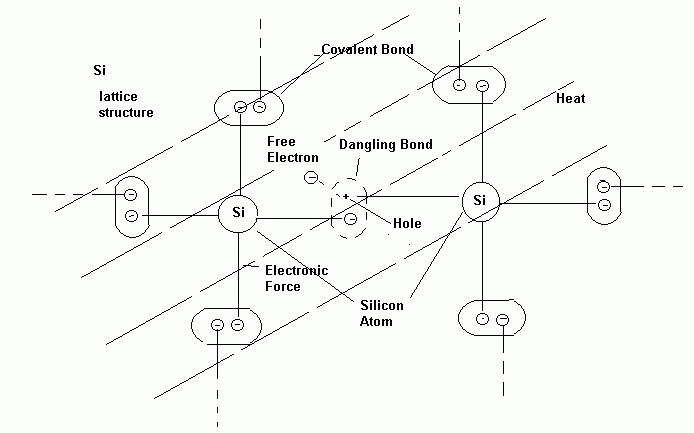
The common method to increase the conductivity of a semiconductor is to undergo it in the process called doping. Doping material, or dopant, or impurity element is added in a control environment to an intrinsic semiconductor material during doping. During crystallization of the doped semiconductor material, i.e., Silicon,
Each atom has shared its valence electrons to the impurity atom forming also a covalent bond. Phosphorus (P) atom replaces some silicon and donates extra negative electrons (See figure A-5).
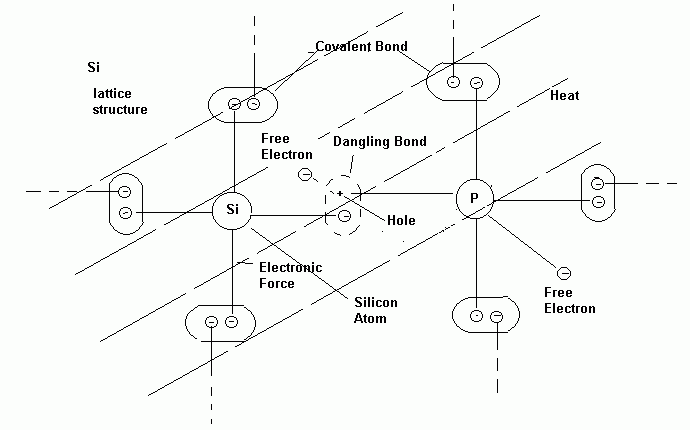
The product is an N-type extrinsic Si. In an N-type Si, free electrons are the majority current carriers and holes as the minority current carriers with number increases in an increase of temperature.
In p-type silicon, trivalent atoms such as aluminum (Al) lead to an increase of holes, which are positive in polarities (See figure A-6). P-type Si has many holes than free electrons.
Pentavalent elements used as dopants are referred to as donor impurities/dopants and trivalent elements as acceptor impurities or dopants. Minority current carriers increase in number when temperature of the material increases.
Holes may attract nearby valence electrons or free electrons in the process called recombination, holes and free electrons vanished with energy releases in terms of heat and light.
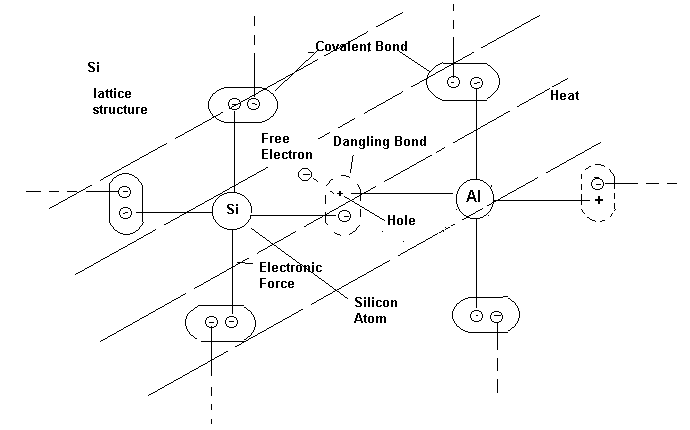
Figure A-6. P-type Si Crystal