
My Peppermint Herb
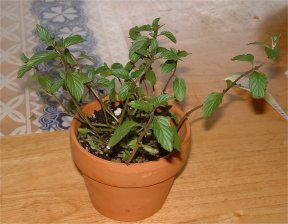
Picture taken on 6/28/03

I bought my peppermint herb plant on 6/25/03. Since it is still very small I can't make a use out of it right away. I also read that Breastfeeding mothers should not use, eat, or drink pepperment herb while breastfeeding. It may slow down your milk. So be cautious!!
Here are the notes I took about my herb plant:
Common Names:
Balm mint
Brandy mint
Curled mint
Lamb mint
Lammint
Phudina (Sanskrit name)
Wu-pa-ho (Chinese name)
Parts of the plant used:
Leaves, oil, and flowering tops
Uses:
Oil of peppermint adds refreshing cool flavor to cordial compositions. A sprig of fresh herb adds character to juleps.
Increases stomach acidity, irritates mucous membranes and the gastrointestinal tract. Use for chills, colic, fever, nausea, diarrhea, heart trouble, rheumatism, convulsions, spasms, dizziness, vomiting, travel sickness, dysentery, cholera, dysmenorrhea, palpitations of the heart, the grippe, hysteria, insomnia, neuralgia, and headaches. Used for colds, flu, sore throat, laryngitis, gas and mild digestive disorders.
The leaves can be made into a salve or a bath additive for itching skin conditions.
Extracts experimentally effective against herpes simplex, Newcastle disease, and other viruses. The oil stops spasms of smooth muscles. Externally, helps rheumatism, neuralgia, headaches, and migraines. Peppermint tea is a valuable old-time beverage which tends to relieve stomach gas, flatulence, and resultant distress. As a harmless, caffeine-free beverage it will not cause restlessness or keep you awake at night.
A wholesome tisane for every member of the family. For young children, 1 or 2 tbsp. of the tea can be sweetened with honey.
When queasiness, nausea, a feeling of fullness, or severe vomiting are presenting problems, a single cup of peppermint tea, drunk in sips and as warm as possible, will dispel these acute disturbances.
Peppermint tea promotes bile flow, improves bile production in the liver, and also exercises a positive influence on pancreatic function. Avoid peppermint in all forms if internal ulcers are present.
Formulas or Dosages:
Collect the leaves on a hot, sunny day, preferably just before flowering time.
Infusion: steep 2 to 3 tsp. leaves in 1 cup water. Take 1 1/2 to 2 cups per day, but for no more than 8 to 12 days consecutively. After that time, wait at least a week before resuming, or heart problems may result.
Peppermint tea: Use 1 oz. herb in 1 pint of boiling water and sweeten with some honey. Take in wineglassful doses.
Oil: take 3 to 4 drops on a sugar cube with hot tea. For gas pains, take 1 or 2 drops in 1/2 glass of water.
Extract: take 5 to 15 drops of the liquid extract in a cup of water.
Tincture: take 10-50 drops, depending on age and the severity of the problem.
Warning:
May interfere with iron absorption.
Oil is toxic if taken internally in large doses; causes dermatitis. Menthol, the major chemical component of peppermint oil, may cause allergic reactions. Avoid prolonged use of the essential oil as an inhalant.
Mint should not be given to children for more than a week at a time without a break. Do not give any form of mint directly to young babies.
Peppermint can reduce milk flow; take internally with caution if breast feeding.
Check with the pediatrician before giving peppermint to a child.
  
Here is my grade for my homework:

I got this award from Susan. Thank you Susan!!!

 

|
|