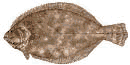
Some flounder leave the bays during the fall for spawning in the Gulf of Mexico. They spawn for the first time when two years old. Young flounder feed mainly on crustaceans, but as they grow fish become more important in their diet. Adult flounder enter shallow water at night where they lie, often partially buried, and wait for meal to come along.
Although most of the adults leave the bays and enter the Gulf for spawning during the winter, some remain behind and spend winter in the bays. Those in the Gulf will reenter the bays in the spring. The spring influx is gradual and does not occur with large concentrations that characterize the fall emigration.
How to Catch.
Flounder are taken by rod and reel or by gig. When fishing with rod and reel, light tackle offers both the greatest sport and best chance for catching flounder. Both artificial lures and natural bait can be used. Over barren bottoms, leaded plastic worms are often very effective. In heavily vegetated areas, shallow-running spoons are best.
Flounder prefer live to dead bait. Live shrimp retrieved slowly along the bottom often produce excellent results.
Although many are taken by rod and reel, "floundering" or gigging offers the best challenge for this species. The flounder is vulnerable to this technique because it often enters the shallows at night to feed. Both the skills of the angler and the hunter are called for here.
Lanterns are used in searching for flounder and gigs ranging from single-pronged to modified hay forks are used to spear the fish. The anglers wade quietly along the shallows looking for flounder. Once the flounder is within the light from the lantern, normally it will not move, affording the fisher a chance to "gig" the fish. Although this sounds like a sure-fire method, many fish are missed because they go undetected until they swim away or because of inaccurate gigging by an overanxious angler.
The more advanced flounder fisher man may mount his lanterns on the front of a flat-bottomed skiff. The skiff is then poled through the water in search of fish or is pushed by a small motor. Floundering from a boat is much easier than wading. It allows the angler to cover more area and search bottoms that are too soft for wading.
When and Where to Catch.
Although flounder can be taken by rod and reel in almost any portion of the Grand Isle region, it is more often productive to fish around jetties or oyster reefs that extend from shore into the back bays of Grand Isle. Flounder do not swim continuously so they tend to accumulate in such places in their search for food. During the fall, when flounder are moving to the Gulf for spawning, the best catches are made in the assortment of channels and passes leading to the Gulf. During the spring, wading anglers work the edges of channels, as the fish are moving back into the bays.
Floundering is best during the migration from October to December. During the spring and summer the best catches with gigs are made in the back bays. Areas with grass along the shoreline are good producers, and a bottom that is slightly silty or muddy generally is better than a hard sand bottom. The mouths of small bayous and sloughs often yield flounder.
Since water clarity is very important to the success of any floundering trip, floundering should be done on calm nights. When fishing on windy nights, anglers should try to work small protected bays and shorelines.
The best catches are made during an incoming tide and on dark nights as opposed to moonlit nights. However, do not hesitate to flounder on an outgoing tide.