|
blood to flow easily back to
the heart. The temporarily increased load on the heart acts to
strengthen the heart muscle and to improve the circulation
within the heart muscle.
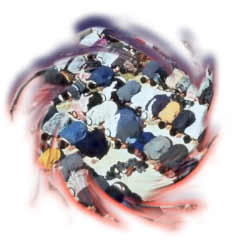
During the month of Ramadan, additional prayers are performed
after salatul Ishaa, called Taraweeh prayers which vary from 8
rakat (unit of prayer) to 20 rakat with a few minutes break
after every 4 rakat for chanting and extolling the Majesty of
Allah. After Iftar (breaking of fast) the blood glucose level
continues to rise from the food ingested. Just before the Iftar
meals, the blood glucose and insulin levels are at their lowest
level. After an hour or so after the Iftar meal, the blood
glucose begins to rise and also plasma insulin. Liver and the
muscles take up the circulating glucose. The blood sugar reaches
high levels in an hour or two and the benefits of Taraweeh
prayers come into effect. The circulating glucose is metabolised
into carbon dioxide and water during the Taraweeh prayers.
Hence the Taraweeh prayers help in expending the extra calories
and improve flexibility, coordination, reduce stress-related
autonomic responses in healthy persons, and relieve anxiety and
depression.
Physical and Emotional Well-Being
The gentle exercises performed in Taraweeh prayers improve
physical fitness, emotional well-being and increase the
longevity of the Namazi (one who performs the Salat or Namaz).
When a little extra effort is made, as in performing the
Taraweeh prayers, there will be a betterment in the endurance,
stamina, in flexibility and strength. It was noted that the five
daily prayers (Salat) produce the same physiological changes
without any undesirable side effects as those produced by
jogging or walking at about three miles per hour. Recent
research studies performed on 17,000 Harvard alumni who entered
college between 1916-1950 give strong evidence that only
moderate aerobic exercise, equivalent to jogging about 3 miles a
day, promotes good health and may actually add years to life.
Men who expended about 2000 kcal of energy on a weekly basis
(equal to a daily 30-minute walk, run, cycle, swim, etc.,) had
one-quarter to one-third lower death rates than classmates who
did little or no exercise. In addition to the health-boosting
qualities of the Salat, the Namazi will be trained to be ever
ready for any unexpected physical exertion such as sudden
lifting of children, chairs, or catching a public transportation
vehicle. The elderly will accomplish this more securely and
efficiently. Hence this is an advantage for the elderly to
maintain their physical fitness for a longer period of time. It
has been observed that those who fast and perform the Taraweeh
prayers report feeling much convalescing and robust.
The Elderly
As human beings grow older, their physiological activity
diminishes, as a result their bones become thinner and if not
taken care of will suffer from osteoporosis (which causes the
fractures of the bones when they fall in the elderly due to a
loss of bone mineral content and consequent sponginess of the
bones. The bone then becomes structurally unstable, brittle and
susceptible to fractures). Primary osteoporosis is most common
among postmenopausal (due to reduction in oestrogen) women or
those who have undergone a bilateral oophorectomy (both the
ovaries removed). Women are six times more likely than men to
develop Type I osteoporosis. The three major prevention
strategies of osteoporosis are a high dietary intake of calcium
and vitamin D, regular exercise and oestrogen replacement in
postmenopausal women. The skin also becomes fragile and
crinkled. The repair processes of the body become slower and
immune responses are decreased. In the elderly their physical
activity is reduced as a result they have lower levels of
Insulin Growth Factor 1. Reserve functions of all vital organs
decrease and the elderly are more susceptible to mishaps and
ailments. Because of repeated and regular movements of the body
during Salat the muscle strength, tendon power, joint
flexibility and the cardiovascular reserve are improved. Hence
Salat and Taraweeh prayers enable the elderly to enrich the
quality of life and to meet with unforeseen difficulties such as
falls which could injure their bodies. Therefore Taraweeh
prayers will improve their endurance, self-respect and
self-confidence in being self-reliant.
Adrenaline is secreted even by minor activity. The secretion
outlasts the incitement. Even after the Taraweeh prayers are
over the effects of adrenaline and noradrenaline are manifest.
(Adrenaline also called epinephrine is produced by the adrenal
glands. The middle part of these glands, the adrenal medulla,
secretes the hormone, which is chemically almost identical to
the transmitter substance noradrenaline produced at the ends of
sympathetic nerves. Adrenaline secretion into the bloodstream in
stress causes acceleration of the heart, constriction of
arterioles, and dilation of the pupils. In addition, adrenaline
produces a marked increase in metabolic rate thus preparing the
body for emergency.) Even the thought or the intention of
performing the Taraweeh prayers is sufficient to activate the
sympathetic nervous system. Sympathetic nervous system (thoraco-lumbar
nervous system) is one of the two division of the autonomic
nervous system, which supplies motor nerves to the smooth
muscles of internal organs and to the heart muscle. Sympathetic
nerve fibres arise via spinal nerves in the thoracic and lumbar
regions. Their endings release mainly adrenaline, which
increases heart rate and breathing rate, raises blood pressure,
and slows digestive processes, thereby preparing the body for
"fight or flight" and antagonising the effects of the
sympathetic nervous system. The adrenaline would redistribute
the blood in the body to the active muscles, would mobilise
liver glycogen if necessary in order to provide glucose for the
active tissues, would diminish fatigue in skeletal muscles and
would facilitate alveolar ventilation relaxing bronchiolar
muscle, and would initiate cardiovascular changes. Exercise
induces a more effective functioning of beta-adrenoreceptors
located on cell membranes.
Beneficial effects of Gentle Exercise
The Taraweeh prayer is considered to be gentle exercise. The
beneficial effects of gentle exercise on the body are many which
are elaborated here.
Effects on Skeletal Muscle
Once muscles atrophy inspite of the availability of ample
proteins. During the Salat and Taraweeh, every muscle in the
body contracts isotnically and others isometrically. This gentle
exercise also enhances endurance and diminishes tiredness. It
helps the incapacitated to make the most of their remnant
capabilities. The blood flow in strung muscle is low. During the
prayers the blood flow is greatly increased to the muscles.
Blood flow sometimes increases even before the start of Taraweeh
prayers, with just the thought of performing the Taraweeh
prayers. In addition to needing fats, proteins, and
carbohydrates, the human body requires minerals such as
Potassium for nerve and muscle activity. It is found in fruits,
meats, seafood and milk. Potassium deficiency leads to muscular
and neurologic disorders. Potassium is also important in the
transmission of nerve impulses and is a major positive ion in
intracellular fluids. Potassium is involved in cellular enzyme
activities, and it helps regulate the chemical reactions by
which carbohydrates is converted to energy and amino acids are
converted to protein. Also Potassium ions cause vasodilation of
arterioles. During the Taraweeh prayers, systolic Blood pressure
may rise (the larger number in B.P.) a little and the diastolic
Blood Pressure(the lower number in B.P.) may remain unchanged or
even fall. However after the Taraweeh prayers are over, the B.P.
may drop to just below normal levels which is a welcome sign.
Taraweeh prayers improve respiratory efficiency; circulation in
the capillaries surrounding the alveoli, or air sacs, is
increased, and this brings about enhanced gas exchange and
deeper breathing. The increase in the maximal consumption of
oxygen is what makes the Namazi feel better. Those who perform
the Taraweeh prayers, apart from the prescribed Salat, are more
alert and active than those who do not perform the Taraweeh
prayers, even after the age of retirement. Taraweeh prayers
improve physical strength and joint stability and reduce the
risk of injury to the tendons and connective tissues. After age
40, the bone mineral density falls with age. Taraweeh prayers
increase bone mineral density in both menopausal and in elderly
women and prevents osteoporosis and maintains normalcy in bone
structures. Osteoporosis results in hip fractures in women after
menopause and in elderly men. The risk of osteoporosis is
substantially reduced by regular Salat and Taraweeh prayers. The
prayers improve lubrication of joints, movement, and maintain
flexibility. Deep vein thrombosis (the most common cause of
ulceration of the legs in the elderly) is prevented by
performing Salat and Taraweeh prayers.
Metabolic Effects
Salat improves body weight control and expend calories without
proportionate increase in appetite. A combination of moderate
dietary restriction, both at the Iftar and Sahur (early morning
breakfast before the start of fast) meals, accompanied by the
Taraweeh prayers, should achieve weight reduction. This will
also reduce both fat and body weight, but fat-free weight will
remain constant or may even increase slightly. Hence during
Ramadan one should not overeat at the Sahur and Iftar meals and
continue to perform Salat and Taraweeh prayers in order to lose
some of the excess weight.
It is well known that exercise prevents coronary heart disease (CHD),
increases high density lipo-proteins (HDL or healthy
Cholesterol), increases maximum oxygen uptake, slows the heart,
lowers the B.P. slightly, decreases ventricular ectopic
activity, enlarges the lumen of the coronary arteries and
increases cardiac output. Exercise also improves carbohydrate
tolerance and improves late-onset diabetes, and helps cases of
chronic respiratory diseases. Beneficial changes have been
recorded in the lipid profile, B.P., clotting factors, weight
reduction and insulin sensitivity of muscles and other tissues
in persons who exercise regularly. Growth Hormone secretion is
elevated by fasting and it is further elevated by Taraweeh
prayers. As Growth Hormone is necessary for collagen formation,
this may be an important factor as to why the skin of those who
fast regularly during Ramadan and perform the Taraweeh prayers
do not get wrinkled, even when they grow old.
Mental Health
It is a known fact that exercise improves mood, thought and
behaviour. Exercise improves the quality of life, induces
greater sense of well-being and energy, reduces anxiety and
depression, influences mood favourably and contributes to
self-esteem and an aura of confidence; improves memory in the
elderly especially with constant repetition of the Ayaat
(verses) from the Glorious Quran and other Ayaat which exalt His
Glory. This constant repetition of the Quranic Ayaat would help
to screen the mind from the incoming thoughts. It has been found
by a Harvard University researcher, Dr. Herbert Benson that
repetition of a prayer, Ayaat of the Quran or remembrance (Dhikr)
of Allah or muscular activity coupled with passive disregard of
intensive thoughts causes a "relaxation response" that leads to
the lowering of Blood Pressure and decreases in oxygen
consumption and a reduction in heart and respiratory rates. All
these are combined in the Taraweeh prayer which is an ideal
condition for "relaxation response." It combines repeated
muscular activity with repetition of Salat, chanting of words of
glorification of Allah and of supplications. The Taraweeh prayer
puts the mind in a relaxed state. This calm state of the mind
may be partly due to the release of encephalins, beta-endorphins
(endogenous morphines) and others into the blood circulation.
Endorphins are any one of the neuropeptides composed of many
amino acids, elaborated by the pituitary gland and acting on the
central and peripheral nervous systems to reduce pain.
Endorphins are categorised as alpha-endorphin, beta-endorphin,
and gamma-endorphin which produce pharmacologic effects similar
to morphine. Beta-endorphin found in the brain and GI(gastro-intestinal)
tract is the most potent of the endorphins and is a powerful
analgesic(pain killer) in humans and animals. For example during
childbirth many women release endorphins reducing a woman's
sensation of pain. The release of endorphins is associated with
an euphoria. During childbirth, women who give birth with little
or no medication sometimes label this euphoria a "birth climax."
Conclusion
Islam is the only religion where physical movements of Salat and
Taraweeh prayers are combined with spiritual exercise. When
Salat and Taraweeh prayers are practised throughout a person's
life, recurring every few hours or so, trains a person to
undertake the difficult task of meditation during physical
manoeuvres of Salat and Taraweeh prayers, so that the Namazi(one
who performs the Salat) benefits both from spiritual as well as
physical exercise. Salat and Taraweeh prayers are unique in that
tension builds up in the muscles during physical manoeuvres on
the one hand, while tension is relieved in the mind due to the
spiritual ingredient, on the other hand. The following benefits
have been noted among those who perform the Taraweeh prayers:
burning off calories and losing weight, maintaining muscle tone
and body composition, joint flexibility (stiff joints are often
the result of disuse, not arthritis), increasing metabolic rate,
improving circulation, improving heart and lung function and
aerobic capacity, decreasing heart disease risk profile,
increasing your sense of self-control, reducing your level of
stress, increasing your ability to concentrate, improving your
appearance, reducing depression and resistance to depression,
helping you sleep better and suppressing your appetite. Evidence
is also accumulating that those who perform regular Salat along
with voluntary prayers can conserve and actually retard the loss
of bone mass in the elderly, thus staving off the ravages of
osteoporosis that afflicts both men and women. It is also
possible to retard the aging process and confer some protection
to health in later life. Those who have performed Salat (Fard
and Wajib), Sunnah and Nafl and Taraweeh prayers throughout life
get protection and a positive effect in terms of health and
longevity. They reverse the life-shortening effects of cigarette
smoking and excess body weight. Even people with high blood
pressure (a primary heart disease risk) reduced their death rate
by one-half and their risk of dying from any of the major
diseases is reduced. They also counter genetic tendencies toward
an early death.
Hence Salat (Fard, Wajib), Sunnah, Nafl and Taraweeh prayers are
necessary for Muslims to preserve life and their desirable
qualities into old age.
Source: irfiweb.org
|