All the contents of this site are free to be copied and to be shared around.
Created November 2008 by Fizree Rashid.

What Is Islam?
In The Name Of God, Most Gracious, Most Merciful
O mankind! We created you from a single soul, male and female, and
made you into nations and tribes, so that you may come to know one
another. Truly, the most honored of you in God's sight is the greatest
of you in piety. God is All-Knowing, All-Aware (49:13)
WHAT IS ISLAM?
Islam is not a new religion, but the same truth that God revealed through all His
prophets to every people. For a fifth of the world's population, Islam is both a religion
and most important, a complete way of life. Muslims follow a religion of peace, mercy,
and forgiveness, and the majority have nothing to do with the extremely grave events
which have come to be associated with their faith.
WHAT DOES 'ISLAM' MEAN?
The Arabic word 'Islam' simply means 'submission', and derives from a word meaning
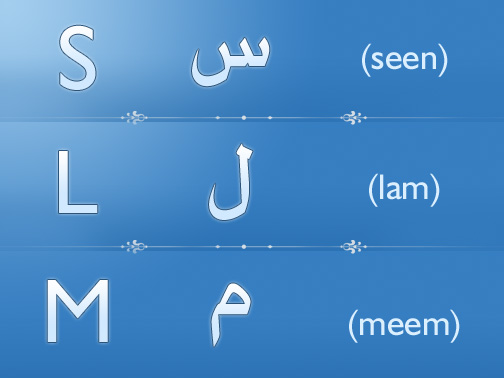
'peace'. Islam is an arabic word came from the root, seen lam meem.
When it reaches the perfected state of 'Islam', it means, Surrender, submission,
Obedience, Sincerity and Peace. This describe a proper behaviour of the one
who believes in the Almighty God. They are surrendering their will to the God's will,
and they are submitting to God's commandments, they are doing this in true
obedience and in sincerity, even if no one were watching, they will still do it and
they would do it in peace. All these words comprise the meaning of Islam.
Mohammedanism' is a misnomer because it suggests that Muslims worship
Muhammad rather than God.
WHAT DO MUSLIMS BELIEVE?
Muslims believe in One Unique, Incomparable God, Allah; in the Angels created by Him; in
the prophets through whom His revelations were brought to mankind; in the Day of
Judgment and individual accountability for actions; in God's complete authority over
human destiny and in life after death. Muslims believe in a chain of prophets starting
with Adam and including Noah, Abraham, Ishmael, Isaac, Jacob, Joseph, Job, Moses,
Aaron, David, Solomon, Elias, Jonah, John the Baptist, and Jesus, peace be upon
them. But God's final message to man, a reconfirmation of the eternal message and a
summing-up of all that has gone before was revealed to the Prophet Muhammad
through Gabriel.
THE 'FIVE PILLARS' OF ISLAM
1. Faith
2. Prayer
3. Zakat
4. The fast
5. The pilgrimage (Hajj)
WHAT IS THE KA'ABAH?
The Ka'abah is the place of worship which God commanded Abraham and Ishmael to
build over four thousand years ago. The building was constructed of stone on what
many believe was the original site of a sanctuary established by Adam. God
commanded Abraham to summon all mankind to visit this place, and when pilgrims go
there today they say 'At Thy service, O Lord', in response to Abraham's summons.
WHO IS MUHAMMAD?
Muhammad was born in Makkah in the year 570, at a time when Christianity was not
yet fully established in Europe. Since his father died before his birth, and his mother
shortly afterwards, he was raised by his uncle from the respected tribe of Quraysh. As
he grew up, he became known for his truthfulness, generosity and sincerity, so that he
was sought after for his ability to arbitrate in disputes. The historians describe him as
calm and meditative. Muhammad was of a deeply religious nature, and had long
detested the decadence of his society. It became his habit to meditate from time to
time in the Cave of Hira near the summit of Jaba al-Nur, the 'Mountain of Light' near
Makkah.
HOW DID HE BECOME A PROPHET AND A MESSENGER OF GOD?
At the age of 40, while engaged in a meditative retreat, Muhammad received his first
revelation from God through the Angel Gabriel. This revelation, which continued for
twenty-three years, is known as the Qur'an. As soon as be began to recite the words
he heard from Gabriel, and to preach the truth which God had revealed to him, he and
his small group of followers suffered bitter persecution which grew so fierce that in
the year 622 God gave them the command to emigrate. This event, the Hijra,
'migration', in which they left Makkah for the city of Madinah some 260 miles to the
north, marks the beginning of the Muslim calendar. After several years, the Prophet
and his followers were able to return to Makkah, where they forgave their enemies
and established Islam definitively. Before the Prophet died at the age of 63, the
greater part of Arabia was Muslim, and within a century of his death Islam had spread
to Spain in the West and as far East as China.
WHAT IS THE QUR'AN?
The Qur'an is a record of the exact words revealed by God through the Angel Gabriel
to the Prophet Muhammad. It was memorized by Muhammad and then dictated to his
Companions, and written down by scribes, who cross-checked it during his lifetime.
Not one word of its 114 chapters, Suras, has been changed over the centuries, so that
the Qur'an is in every detail the unique and miraculous text which was revealed to
Muhammad fourteen centuries ago.
WHAT IS THE QUR'AN ABOUT?
The Qur'an, the last revealed Word of God, is the prime source of every Muslim's faith
and practice. It deals with all the subjects which concern us as human beings: wisdom,
doctrine, worship, and law, but its basic theme is the relationship between God and
His creatures. At the same time it provides guidelines for a just society, proper human
conduct and an equitable economic system.
ARE THERE ANY OTHER SACRED SOURCES?
Yes, the Sunna, the practice and example of the Prophet, is the second authority for
Muslims. A Hadith is a reliably transmitted report of what the Prophet said, did, or
approved. Belief in the Sunna is part of the Islamic faith.
EXAMPLES OF THE PROPHET'S SAYINGS
The Prophet said:
'God has no mercy on one who has no mercy for others'.
'None of you truly believes until he wishes for his brother what
he wishes for himself'.
'He who eats his fill while his neighbor goes without food is not
a believer'.
From the Hadith collections of Bukhari, Muslim, Tirmidhi and Bayhaqi.
WHAT DOES ISLAM SAY ABOUT WAR?
Like Christianity, Islam permits fighting in self-defense, in defense of religion, or on
the part of those who have been expelled forcibly from their homes. It lays down strict
rules of combat which include prohibitions against harming civilians and against
destroying crops, trees and livestock. As Muslims see it, injustice would be
triumphant in the world if good men were not prepared to risk their lives in a righteous
cause.
The Qur'an says:
Fight in the cause of God against those who fight you, but do not
transgress limits. God does not love transgressors (2:190)
If they seek peace, then seek you peace. And trust in God for He
is the One that heareth and knoweth all things (8:61)
War, therefore, is the last resort, and is subject to the rigorous conditions laid down by
the sacred law. The term Jihad literally means 'struggle', and Muslims believe that
there are two kinds of Jihad. The other 'Jihad' is the inner struggle which everyone
wages against egotistic desires, for the sake of attaining inner peace.
WHAT ABOUT FOOD?
Although much simpler than the dietary law followed by Jews and the early
Christians, the code which Muslims observe forbids the consumption of pig meat or
any kind of intoxicating drink. The Prophet taught that 'your body has rights over you',
and the consumption of wholesome food and the leading of a healthy lifestyle are seen
as religious obligations. The Prophet said:
'Ask God for certainty (of faith) and well-being; for after
certainty, no one is given any gift better than health!'
HOW DOES ISLAM GUARANTEE HUMAN RIGHTS?
Freedom of conscience is laid down by the Qur'an itself:
There is no compulsion in religion (2:256)
The life and property of all citizens in an Islamic state are considered sacred whether a
person is Muslim or not. Racism is incomprehensible to Muslims, for the Qur'an
speaks of human equality in the following terms:
O mankind, We have created you from a male and a female and have made you into nations and tribes
for you to know one another. Truly, the noblest of you with God is the most pious. Truly, God is All-Knowing,
All-Aware (49:13)
Islam provides many human rights for the individual. The following are some of these human rights that Islam protects.
The life and property of all citizens in an Islamic state are considered sacred, whether a person is Muslim or not. Islam
also protects honor. So, in Islam, insulting others or making fun of them is not allowed. The Prophet Muhammad said:
also protects honor. So, in Islam, insulting others or making fun of them is not allowed. The Prophet Muhammad said:
'Truly your blood, your property, and your honor are inviolable.'
Narrated in Saheeh Al-Bukhari, #1739, and Mosnad Ahmad, #2037.
Islam rejects certain individuals or nations being favored because of their wealth, power, or race. God created human
beings as equals who are to be distinguished from each other only on the basis of their faith and piety.
The Prophet Muhammad said:
'O people! Your God is one and your forefather (Adam) is one. An Arab is not better than a non-Arab and a non-Arab
is not better than an Arab, and a red (i.e. white tinged with red) person is not better than a black person and a black
person is not better than a red person, except in piety.'
Narrated in Mosnad Ahmad, #22978.
One of the major problems facing mankind today is racism. The developed world can send a man to the moon but cannot stop
man from hating and fighting his fellow man. Ever since the days of the Prophet Muhammad , Islam has provided a vivid example
of how racism can be ended. The annual pilgrimage (Hajj) to Makkah shows the real Islamic brotherhood of all races and nations,
when about two million Muslims from all over the world come to Makkah to perform the pilgrimage.
Islam is a religion of justice. God has said:
Truly God commands you to give back trusts to those to whom they are due, and when you judge between people,
to judge with justice... (4:58)
And He has said:
...And act justly. Truly, God loves those who are just. (49:9)
We should even be just with those who we hate, as God has said:
...And let not the hatred of others make you avoid justice. Be just: that is nearer to piety.... (5:8)
The Prophet Muhammad said:
'People, beware of injustice, for injustice shall be darkness on the Day of Judgment.'
Narrated in Mosnad Ahmad, #5798, and Saheeh Al-Bukhari, #2447.
And those who have not gotten their rights (i.e. what they have a just claim to) in this life will receive them on the Day of
Judgment, as the Prophet said:
'On the Day of Judgment, rights will be given to those to whom they are due (and wrongs will be redressed)...'
Narrated in Saheeh Muslim, #2582
HOW DO MUSLIMS VIEW DEATH?
Like Jews and Christians, Muslims believe that the present life is only a trial
preparation for the next realm of existence. Basic articles of faith include: the Day of
Judgement, resurrection, Heaven and Hell. When a Muslim dies, he or she is washed,
usually by a family member, wrapped in a clean white cloth, and buried with a simple
prayer preferably the same day. Muslims consider this one of the final services they
can do for their relatives, and an opportunity to remember their own brief existence
here on earth. The Prophet taught that three things can continue to help a person even
after death; charity which he had given, knowledge which he had taught and prayers
on their behalf by a righteous child.
To learn more about the teachings of Islam, please read:
"Towards Understanding Islam," by Abul A`la Mawdudi
"Concept of Islam," by Mahmoud Abu-Saud
"Islam: Basic Principles and Characteristics," by Khurshid Ahmad.
"Islam: An overview," by Muhammad Ibrahim H.I. Surti.
or visit: