ISIS MOON TEMPLE
GODDESS WORSHIP
THROUGH THE AGES

THROUGH THE AGES
The earliest societies and religions were matriarchal, kings were sacrificed, and the moon was thought to control the sun. A few thousand years ago many goddess oriented civilisations were destroyed by aggressive Indo-European tribes who worshipped aggressive sky gods, and thus females lost their sacredness. These newer world religions were monotheist: Judaism, Islam and Christianity, with one god who was male, and took shape in the Iron Age when men dominated societies in Europe and the Middle East. Some fathers of the early Christian church even argued that women had no souls. Goddess cultures tended to be egalitarian, earth-centred and non-violent.
 SHAKTI (power) in Hinduism is the power of the goddess, the female attribute PURUSHA (cosmic self). The supreme goddess herself and deity of Tantric Hinduism - every god and human has shakti, but women have more than men. The sun�s shaktis are heat and light. Hindu and Buddhist Tantrism emphasises the division of the universe into male and female forces that maintain its unity by their interaction. Shakti is also a woman�s sexual energy and the TANTRAS (web/warp) describe magical and sexual yoga practices imitating gods (Parvati/Sakti, female half of the divine Androgyne/Hermaphrodite (Hermes/Aphrodite), and her husband Shiva/Siva, Lord of the Dance). A YOGINI (female teacher) is depicted in 18th c. Tantric Buddhist carvings with serpentine energy (KUNDALINI - snake) emanating from her YONI (Sacred Space. The cowrie shell is a yonic symbol. Star Fire/Vehicle of Light/Gold of the Gods is the menstruum, the potency of which gave rise to vampire myths. Jade Fluid is the woman's saliva, nourishing to the man. The masculine equivalent, lingam, means wand of light).
Sometimes the serpent is depitced swallowing it's tail as a symbol of eternity and rebirth - Ouroboros. Ancient AUSTRALIAN Aboriginal rock paintings similarly show the powerful sexuality of women in explicit detail. Their creative spirit of the DREAMTIME was the RAINBOW SERPENT, Ngaljod, of fertility, water, rain and thunder. They believe that songs created all living things and they still sing to encourage plant and animal life. Many religions feature the snake representing knowledge/wisdom/healing, or double snake in HIEROS GAMOS sacred marriage/cosmic union (CADUCEUS), as their supreme goddess, often androgynous, capable of creation without a male partner. For the GREEKS man represented order NOMOS, while women and animals were PHYSIS, wild, threatening and lawless like Bacchae, inversely the CELTS and others believed women were especially close to the sacred landscape, and in many religions the goddesses were zoomorphic. The MORRIGAN to the Celts were triple goddesses but sometimes one goddess; sometimes three of different ages, also appearing in many different cultures as Fates/Moriae/Parcae, Tres Matres, Three Marys of the Sea, etc., The idea of a Holy Trinity did not form part of Israelite theology and only became a Christian concept as the gospel spread into the pagan world, where a holy triad or family was a well established device. Celtic goddesses were always depicted as the same size as their male partner.
In early religions it was understood that life must emanate from both male and female sources - the primary male god was associated with the sun or the sky and the primary goddess had her roots in the earth, the sea and fertility. Some Old Testaments name god's co-creator as HOKHMA (Wisdom). In TAOISM, the I CHING describes that the universe is kept in balance by opposing forces of YIN and YANG (YUM/YAB) - YIN is female and watery, the force in the moon and rain which reaches its peak in winter; YANG is masculine and solid, the force in the sun and earth which reaches its peak in summer. Countless nude, fecund statuettes of the MOTHER GODDESS have been discovered at pre-historic sites all over the world e.g. the voluptuous, nude CYCLADIC fertility goddesses found at Neolithic Greek burial sites. Some figures show a long phallic head and neck symbolising that the Great Goddess is both male and female with the power to create all - the cosmic Androgyne found in many religions - Nommo in Mali, Africa and Gaia (Earth) in Greece who gave birth alone to Chronos (Time) and Uranus (Space). (Gaia, Tartarus and Eros followed Chaos - Erebus and Nyx (night) were born of Chaos.) In Egypt the creator god Atum was both male and female, with different manifestations.
In ancient SUMER, the cradle of civilisation, there were 4 leading gods representing heaven, air, water and earth - Ti/Ninti was the goddess of the earth (double serpent - also known as Ninhursag), the other three were male, An god of heaven, Enlil god of air and Enki god of water. Next were the 3 sky deities for the moon (Nanna the father), the sun (Utu the son) and the daughter, Inanna in the EPIC OF GILGAMESH, (Ishtar in Mesopotamia/Akkad, Isis in Egypt) Queen of Heaven and goddess of love, procreation and war. Temple rites were conducted by sacred prostitutes, eunuchs, priestesses, priests, singers and musicians. Ninti means Lady of the Rib or Lady who Makes Live (ti meaning rib or to make life) - she is associated with EVE (Hawwah), Mother of All Creation. Lilith, a descendant of Dragon Queen of Creation Tiamat, (Sumerian/Hebrew - wind/night), Adam�s first wife, was debased (like the fabled wicked step-mother, as a warning) in Jewish legend as a succubus; a wind demon; and in BABYLON (Sumer) as a child slaying demon, Lamashtu; although represented by the continuous-life Matrioshka doll-nests in Russia. It is said that God created her out of the earth like Adam, but she refused to submit to him and fled. Some stories say she became friends with Eve secretly. Her daughters were the wives of Cain and Abel.
Early writers say Cain and Abel had twin sisters, Luluwa and Aklemia, and that Seth had a sister Noraia. Lilith is said to be the mother of the GREEN MAN, the god of vegetation in Britain and elsewhere. She is associated with EVE, Tiamat, Echidna and Lamia. A symbol of the modern Jewish women�s movement, Lilith was handmaiden to the MATRONIT, Jehovah�s consort.
Jehovah/Yahweh is a form of YHWH which originally represented the Heavenly Family - Y/El, father; H/Asherah, mother; W/He, son and H/Anath, daughter. Anath (Anahita in Persia) was Queen of the Heavens and her brother He, was King of the Heavens. He and his father El, merged to become Jehovah. Asherah/Ashtoreth (double serpents - wisdom) and Anath were then joined to become Jehovah�s consort, the SHEKINAH/MATRONIT. Sarah (Princess), wife/sister of Abraham, revered as a goddess of health and fertility, is said to be embodied in Shekinah (Indwelling). Celts worshipped Shekinah at dolmens/cromlechs. The Holy of Holies in Solomon�s Temple represented the womb of ASHTORETH/ASHERAH, who was also the Phoenician goddess of love and fruitfulness, Astarte in Greece and Rome, Atar Gatis (a mermaid) in Syria. Ashtoreth was identified with Greek goddesses Hecate (witchcraft) and Selene (moon = Roman Luna) - often associated with each other; Artemis (wild nature, harvest, hunting as Agrotora, wild animals especially bears as Kalliste, fishermen as Britomartis (Sweet Maiden, moon goddess, snake-mermaid)/Diktynna, (who may be one person or lovers) childbirth, chastity, youth and young women = Roman Diana, and Aphrodite (love/beauty = Roman Venus). Selene (who loved Endymion) had a sister Eos (Roman Aurora) goddess of dawn - both were daughters of Theia. The Phoenician goddess of the moon was Tanit. Creator goddesses have always been associated with the moon, for obvious reasons even to its control of tides and water - and horses too especially to the Celts, because of their moon shaped hoof prints.
Ashtoreth was counterpart to Ishtar, (Isis in Egypt, Ashtart in Israel; Athtar in Arabia and Astar in Abyssinia - change to male!) Great Mother, goddess of fertility and Queen of Heaven who was chief goddess of the Akkadians, Assyrians and Babylonians (Mesopotamia/Iraq). Mara was goddess of the sea. To the Assyrians Ishtar represented the goddess of hunting and war. To the Babylonians she was represented by the evening or morning star Venus, Mother Goddess, naked with prominent breasts and often suckling a child. Also known as Queen Semiramis. TIAMAT/THALASSA, the Dragon Queen, was the salt water dragon/goddess of chaos in Babylon/Mesopotamia whose death gave rise to the creation of the world. Serpents, dragons and the holy crocodile Draco evolved into the PENDRAGON Celtic kings giving rise to the Red Dragon of Wales emblem. To the Greeks Thalassa was the daughter of Aetha (upper sky) and HEMERA (day). Nyx/Nox (night) was mother of Hemera and Aether and daughter of Chaos. She was one of the seven elements (fire, water, earth, sky, sun, moon and night), and goddess of illness, suffering, dreams, quarrels, murder, sleep, death, misfortune� Her daughter was Fate/Ananke/Necissitas (Roman Fatum). To the Scythians Artimpassa was goddess of love and the moon, while the Semitic goddess of war was Agasaya.
Greek ARTEMIS, Roman DIANA, goddess of the moon, easy childbirth, chasity, the hunt, wild animals, guardian of springs an streams, Apollo�s twin, sister of Venus and Minerva, daughter of Jupiter) was also known as Orthia/Orthosia, Limnaia (goddess of marshes), Potamia (river goddess), Munychia (moon goddess), Brauronia, Amarynthia and Leukophyrne. Her double edged axe, representing 2 moons, LABRYS, (from the same word as Labyrinth, is a lesbian symbol - Britomaris and Arethusa are among her lovers. Artemis was worshipped by the AMAZONS (meaning moon-maidens), including Melousa, Velasca and their Queen Hippolyta, daughter of Ares. California was named after the Amazon Queen Califa. CALLISTO (Beautiful One) beloved of Artemis, promised to remain a virgin but Zeus impregnated her in the form of Artemis. Furious Artemis demanded to know who made her pregnant and Callisto replied that Artemis herself had. The wronged Callisto and her son Arcas became the Great and Little Bear constellations revolving around the Pole Star, separated by a star called Draco, the Holy Crocodile. (Ursa Major is also known as the Plough or Big Dipper). Some congenial modern witchcraft/neo-pagan WICCA female only groups call themselves DIANIC and worship the goddess DIANA exclusively. Wiccan followers comprise ecologists and feminists, emphasising the sacredness of nature and the coexistence of the sexes, appreciating the symbolism and psychological realities behind the goddesses and gods of antiquity, eschewing Satanism. Other neo-pagan groups have arisen out of early Egyptian, Greek, Nordic and Celtic beliefs.
APHRODITE, sister of Athena, daughter of Dione and Zeus, (some say Gaia and Uranus and that she was sister of the Meliae and the Furies), was worshipped as Aphrodite Urania, Queen of the Heavens and transcendental love, Aphrodite Pandemos/Porne, Queen of the whole people/common lust. Her surname was Callipygos (Beautiful Buttocks) and her totem animal was the swan. The poetry of SAPPHO of LESBOS was dedicated to her. She had children by Ares, god of war. Aphrodite�s daughter was Peitho/Suada/Suadela goddess of persuasion and other children include Harmonia (harmony/healing), Eros/Cupid god of love, Hymen god of marriage, Hermaphroditus (son of Aphrodite and Hermes - who became man and woman when a Nymph he rejected prayed to be united with him) and Priapos, god of fertility and gardens. VENUS was originally goddess of gardens and fields, later identified with Aphrodite, love and beauty. Worshipped as Venus Genetrix, mother of founder of Rome; Venus Felix, bringer of good fortune; Venus Victix, bringer of victory, Venus Verticordia, protector of feminine chastity, and Barbarta of bearded cross dressers who wished to repel their husbands. Daughter of Jupiter, sister of Minerva, Diana, Mercury, Apollo and Bacchus/Dionysus (god of fertility and wine - the Bacchanalia/Orgia/Dionysiac Mysteries, like many MYSTERIES, were originally celebrated by women, here known as Bacchae/ Bacchantes/Maenads), and mother of Cupid/Eros/Amor who loved Psyche (mother of Volputa goddess of pleasure) whose name meant soul, later butterfly. The planet Venus is the morning star, also called Lucifer, the fallen angel. In astrology Venus is the whore, the rose and the temptress, and is associated with blood (venous), venom, vengeance, vendettas, venal and veneration.
Cotys was another fertility goddess with rites celebrated by the Baptai. Pisces represents Aphrodite and her son Eros. Gaea/Ge/Gaia (Roman Terra/Tellus) in Greek mythology was the personification of Mother Earth, followed from Chaos, and was wife/mother of Father Heaven, Uranus. Followed by TARTARUS (underworld) and EROS god of love. Gaea and Uranus were parents of the 12 Titans (including Phoebe and Coeus parents of Leta/Leto, and Rhea mother of the Olympian gods including Hestia, Demeter, Hera and Zeus), the Cyclopes and the Giants. Associated with Pandora, the other daughters with Uranus, were Tethys, Themis, Theia and Mnesmosyne(sometimes Titans), but she had other offspring alone without sex, such as Charybdis and Echidna. She also had children with her son Pontus, and Typhon from her brother Tartarus. Another daughter is Dione, mother of Aphrodite. From the blood of Uranus Gaea brought forth the goddesses, the Erinyes/Furies (daughters of the night/earth) - Tisiphone (avenger of murder), Megaera (jealous one) and Alecto (increasing in anger) who also represented fertility and later became the Eumenides, kindly ones, protectors of the suppliant. (Some say Aphrodite also - the nymph Daphne is said to be mother of Tisiphone). Her daughter Electra, an Oceanid nymph, bore IRIS, goddess of the rainbow, and the 3 HARPIES (goddesses of the storm and punishment). IRIS was the female counterpart to Hermes/Mercury, the winged messenger who carried the CADUCEUS, the winged, double serpent staff of healing/knowledge (Swan). She brought the healing power of the Mother Goddess to earth via a rainbow carrying the caduceus, symbolising wholeness. Hermes took the staff and taught healing to Asklepios, son of Apollo, who taught his daughter Hygiea (Roman Salus) goddess of preserving good health - her sisters were Jaso (Roman Meditrina) associated with restoring good health, and Panacea. Their mother was Epione. The Pythia, the priestess oracle at Delphi, was first dedicated to Gaia, then Themis, Phoebe, then Apollo.
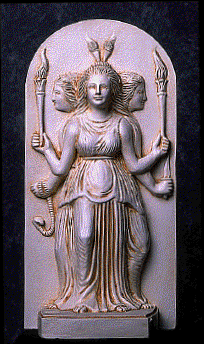
Fauna/Fatua was a Roman goddess identified with Gaea; Hecate/Trivia/Triformis (goddess of witchcraft, mother of Scylla); Cybele/Ops; Maia (hence May) mother of Hermes, wife of Zeus; Semele, mother of Dionysus, wife of Zeus; Bona Dea (healing serpent); Magna Mater; Mater Matuta; Pales (cattle rearing, sometimes male!) and others. Known as the kind goddess from earliest times because of her benevolence over all of creation, Fauna�s festivities on the first of May were celebrated with wine, music and mysterious ceremonies by women and girls. Her offspring were the Fatui, deities of the fields, sometimes good, sometimes evil, later known as Fays, with the power of witchcraft and prophecy. Morgan le Fay (fata morgana) is associated with ancient legend. Flora was a Roman goddess also associated with spring, flowers, youth and May Day. Rhea, daughter of Gaea, a Titan in Greek mythology is Mother of the Olympian Gods including DEMETER/Chloe (Blooming) (Roman CERES, whence cereal, her festival in April was Cerealia), Alma Mater, goddess of the earth/grain, married to her brother Cronos - Demeter was worshipped by women only in the THESMORPHORIA orgies. Like Fauna, Rhea/Rea is identified in Roman mythology with Kybele/Cybele (Roman Ops) Great Mother of the Gods, goddess of nature and fertility, presiding over mountains and fortresses and known as Mater Turrita, her avatar is the lion. Corybantes - eunuch priests, led orgiastic rites in Cybele�s honour. Rhea, wife of Saturn/Kronos, was also known as Dindumene and Berekuntia.
Rhea's daughter HERA (Roman Juno), goddess of marriage, was married to her brother Zeus; their son was Ares and daughters were Hebe/Ganymeda/Dia (Roman Juventus) goddess of youth, and Eileithyia/Ilithyia/Eleutho goddess of childbirth (sometimes associated with Artemis/Diana). Worshipped predominantly by women, Hera the female equivalent of Hero, was also known as Eileithyia, Partheia and Gamelia/Zygia/Teleia. Her companions at Argos were Iris, the Graces and the Seasons. The Roman equivalent of HERA was JUNO was worshipped as Juno Pronuba, presiding over marriage; Juno Lucina, aiding women in childbirth; Juno Regina, counsellor and protector of Rome; and Mater Matuta. Daughter of Rea/Rhea, Juno was sister to Vesta/HESTIA (Roman goddess of the hearth) of the Vestal Virgins, Ceres, Jupiter, Neptune and Pluto. Her festival in June was called the Matronalia. With Minerva and Jupiter she was one of the Capitoline triad in Rome, which replaced the old triad of Jupiter, Mars and Quirinus. Virgins were often priestesses in many relgions as their undissipated sexual power was thought to make them more potent. CARDEA was the goddess of the threshold. Persephone/Kora (maiden = Roman Proserpine/Libera) goddess of the underworld, was Demeter�s daughter by Zeus, and together they were worshipped in the rites of the Eleusinian Mysteries, originally by women. Persephone was associated with Hermoine/Cordelia. The SIRENS were nymphs, daughters of the Muse Calliope, (with the bodies of birds, later fish - mermaids) and playmates of Persephone punished by Demeter for not protecting Persephone. Roman goddess of the shades was Libitina/Lubentina.
Hera and Demeter�s goddess/co-wives with Zeus their brother, were Dione (mother of Aphrodite), Themis a Titan goddess of divine justice (mother of SEASONS/Horae - Dike, justice; Irene/Pax, peace; Eunomia, good order; and FATES/Moirae/Parcae - virgin, mother, crone, Tres Matres, also said to be the daughters of Night), Mnemosyne, a Titan goddess of memory (mother of MUSES/Pierides, goddesses of arts and sciences - Clio, history; Calliope, epic poetry; Euterpe, lyric poetry; Melpomene, tragedy; Terpsichore, choral songs and dance; Erato, love poetry; Polyhymnia, sacred poetry; Urania, astronomy and Thalia, comedy), Maia (mother of Hermes), Leta/Leto/Latona (darkness - daughter of Titans Phoebe and husband/brother Coeus, and mother of twins Artemis and Apollo), Eurynome (mother of THREE GRACES/CHARITIES, goddesses of joy, charm and beauty - Aglaia, splendour; Euphrosyne, mirth and Thalia, good cheer) and Metis (mother of ATHENA = Roman MINERVA). ATHENA/XENIA, sister of Aphrodite, who sprang full grown from the head of Zeus was known as Pallas Athena and Parthenos - the maiden/virgin. In Rome Minerva was one of the Capitoline triad with Juno and Jupiter); and primary goddess of Greek cities (as Polias: her effigy, Palladium, protected Athens), industry (as Ergane), wisdom, war (with her shield Aegis) and arts, especially agricultural and crafts of women, particularly spinning and weaving. Often associated with birds, especially the owl, she invented the plough, the flute, taming animals, building ships and making shoes, also known as Tritogeneia/Tritonia; Soteira, saviour; Glaukopis, blue-eyed goddess; Hippia, tamer of horses; and Mechanitis, ingenious. She is sometimes depicted as the male god Mentor. The Greeks believed she was one of the Aeons, Sophia (Wisdom) (qv). Associated with Athena is Nike (Roman Victoria) goddess of victory, daughter of Oceanid nymph, Styx.
In Rome MINERVA (goddess of intelligence, handicrafts, arts and trades: sister of Diana and Venus, daughter of Jupiter) was one of the Capitoline triad with Juno and Jupiter. Zeus� human wives were Alcmene, Antiope, Callisto, Aegina, Europa, Io, Laodamia, Niobe, Pluto, Taygete, Danae, Leda (mother of Helen and Clytemnestra), Electra (mother of Harmonia also said to be daughter of Aphrodite) and Semele, mother of Dionysus. Zeus often took animal form - with Leda a swan, with Europa a bull. Minor Roman goddesses were Eris (Roman Discordia) goddess of strife, wife of Zeus and mother of Ate goddess of infatuation, mischief or guilt; Litae goddess who recompensed subjects of Ate; Leukothea goddess of sailors; Tyche/Virilis (Roman Fortuna) goddess of luck, worshipped by brides, sister of the Fates, another sister was Astareae, goddess of justice; Nemesis/Adrasreia/Rhamnusia goddess of punishment and hubris; Daphne, the laurel; Enyo (Roman Bello/Bellona) goddess of war; Fama/Pheme goddess of fame or report; Lympha of the healing power of water; Lina the goddess of flax weaving; Klothes goddess of spinning; Horta of gardens; Penia of poverty;Scabies of skin disorders; Opthalmitis of eyesight; Hesperides goddess of the region of the West, and her daughters the Hesperides/Atlantides/Pleiades, who ruled over the bountiful Gardens of the Hesperides. The nymph Pharmaceia of the poison spring gave birth to the Pharmacides goddesses of witches and drugs. Fraud was the Roman goddess of betrayal, with the body of a serpent and tail of a scorpion; Strenua the Roman goddess of vigour; Veritas the Roman goddess of truth; Pecunia the Roman goddess of money.
Lesser divinities in Greece and Rome were the Nymphs - Oceanids of the ocean, daughters (including Kalypso, Electra and Styx) of the Titans, Thethys and Oceanus son of Gaea; Nereids/Dorids of the Mediterranean (50 daughters of Doris, wife of the Old Man of the Sea son of Gaea - most famous were Galatea; Thetis, mother of Achilles; Amphitrite goddess of the sea, wife of Poseidon (brother of Zeus) - their son was Triton, she was known to the Romans as Salacia/Neverita/Venilia); Potameides of the rivers; Naiads of springs and freshwater streams; Oreads of mountains and grottoes (most famous - Echo, mother with Pan of Iambe, who pined for Narcissus); Dryads/Hamadryads of the forests and trees (one was Pomona, goddess of garden fruits, another Byblis of water/love); Leimoniads of meadows and flowers; Napaeae/Auloniads of mountain vales; Limnads of lakes, marshes and swamps; Atlantids belonging to Pleiads; Pleiads daughters of Pleione, sisters/daughters of Hyas; and Hyads/Dodonids, daughters of Aethra. The Nymphs� brothers were the goat legged Satyrs. Nymphae is another name for the LABIA MINORI (hence nymphomania). Deianeira was a Nereid. Daughters of Keto or Echidna mother of Hydra, two of the GORGONS were immortal but Medusa was mortal, and Pegasus, winged horse son of Poseidon, sprang from her head when Perseus, son of Danae and Zeus, cut it off. The names of the 3 Graeae, sisters and guardians of the Gorgons meant alarm, dread and horror. The Minoan Civilisation of Crete primarily worshipped goddesses - one was Rhea, another was a snake representing fertility, who gave birth to the Minoan bull representing power. The Minotaur (a man with the head of a bull) of the Labyrinth was the son of a bull and Pasiphae, daughter of Perseis and Helios the sun god (brother to Selene (moon) and Eos (dawn)). Pasiphae�s daughters were Ariadne and Phaedra. Europa was the Minoan moon goddess.
SHAKTI (power) in Hinduism is the power of the goddess, the female attribute PURUSHA (cosmic self). The supreme goddess herself and deity of Tantric Hinduism - every god and human has shakti, but women have more than men. The sun�s shaktis are heat and light. Hindu and Buddhist Tantrism emphasises the division of the universe into male and female forces that maintain its unity by their interaction. Shakti is also a woman�s sexual energy and the TANTRAS (web/warp) describe magical and sexual yoga practices imitating gods (Parvati/Sakti, female half of the divine Androgyne/Hermaphrodite (Hermes/Aphrodite), and her husband Shiva/Siva, Lord of the Dance). A YOGINI (female teacher) is depicted in 18th c. Tantric Buddhist carvings with serpentine energy (KUNDALINI - snake) emanating from her YONI (Sacred Space. The cowrie shell is a yonic symbol. Star Fire/Vehicle of Light/Gold of the Gods is the menstruum, the potency of which gave rise to vampire myths. Jade Fluid is the woman's saliva, nourishing to the man. The masculine equivalent, lingam, means wand of light).
Sometimes the serpent is depitced swallowing it's tail as a symbol of eternity and rebirth - Ouroboros. Ancient AUSTRALIAN Aboriginal rock paintings similarly show the powerful sexuality of women in explicit detail. Their creative spirit of the DREAMTIME was the RAINBOW SERPENT, Ngaljod, of fertility, water, rain and thunder. They believe that songs created all living things and they still sing to encourage plant and animal life. Many religions feature the snake representing knowledge/wisdom/healing, or double snake in HIEROS GAMOS sacred marriage/cosmic union (CADUCEUS), as their supreme goddess, often androgynous, capable of creation without a male partner. For the GREEKS man represented order NOMOS, while women and animals were PHYSIS, wild, threatening and lawless like Bacchae, inversely the CELTS and others believed women were especially close to the sacred landscape, and in many religions the goddesses were zoomorphic. The MORRIGAN to the Celts were triple goddesses but sometimes one goddess; sometimes three of different ages, also appearing in many different cultures as Fates/Moriae/Parcae, Tres Matres, Three Marys of the Sea, etc., The idea of a Holy Trinity did not form part of Israelite theology and only became a Christian concept as the gospel spread into the pagan world, where a holy triad or family was a well established device. Celtic goddesses were always depicted as the same size as their male partner.
In early religions it was understood that life must emanate from both male and female sources - the primary male god was associated with the sun or the sky and the primary goddess had her roots in the earth, the sea and fertility. Some Old Testaments name god's co-creator as HOKHMA (Wisdom). In TAOISM, the I CHING describes that the universe is kept in balance by opposing forces of YIN and YANG (YUM/YAB) - YIN is female and watery, the force in the moon and rain which reaches its peak in winter; YANG is masculine and solid, the force in the sun and earth which reaches its peak in summer. Countless nude, fecund statuettes of the MOTHER GODDESS have been discovered at pre-historic sites all over the world e.g. the voluptuous, nude CYCLADIC fertility goddesses found at Neolithic Greek burial sites. Some figures show a long phallic head and neck symbolising that the Great Goddess is both male and female with the power to create all - the cosmic Androgyne found in many religions - Nommo in Mali, Africa and Gaia (Earth) in Greece who gave birth alone to Chronos (Time) and Uranus (Space). (Gaia, Tartarus and Eros followed Chaos - Erebus and Nyx (night) were born of Chaos.) In Egypt the creator god Atum was both male and female, with different manifestations.
In ancient SUMER, the cradle of civilisation, there were 4 leading gods representing heaven, air, water and earth - Ti/Ninti was the goddess of the earth (double serpent - also known as Ninhursag), the other three were male, An god of heaven, Enlil god of air and Enki god of water. Next were the 3 sky deities for the moon (Nanna the father), the sun (Utu the son) and the daughter, Inanna in the EPIC OF GILGAMESH, (Ishtar in Mesopotamia/Akkad, Isis in Egypt) Queen of Heaven and goddess of love, procreation and war. Temple rites were conducted by sacred prostitutes, eunuchs, priestesses, priests, singers and musicians. Ninti means Lady of the Rib or Lady who Makes Live (ti meaning rib or to make life) - she is associated with EVE (Hawwah), Mother of All Creation. Lilith, a descendant of Dragon Queen of Creation Tiamat, (Sumerian/Hebrew - wind/night), Adam�s first wife, was debased (like the fabled wicked step-mother, as a warning) in Jewish legend as a succubus; a wind demon; and in BABYLON (Sumer) as a child slaying demon, Lamashtu; although represented by the continuous-life Matrioshka doll-nests in Russia. It is said that God created her out of the earth like Adam, but she refused to submit to him and fled. Some stories say she became friends with Eve secretly. Her daughters were the wives of Cain and Abel.
Early writers say Cain and Abel had twin sisters, Luluwa and Aklemia, and that Seth had a sister Noraia. Lilith is said to be the mother of the GREEN MAN, the god of vegetation in Britain and elsewhere. She is associated with EVE, Tiamat, Echidna and Lamia. A symbol of the modern Jewish women�s movement, Lilith was handmaiden to the MATRONIT, Jehovah�s consort.
Jehovah/Yahweh is a form of YHWH which originally represented the Heavenly Family - Y/El, father; H/Asherah, mother; W/He, son and H/Anath, daughter. Anath (Anahita in Persia) was Queen of the Heavens and her brother He, was King of the Heavens. He and his father El, merged to become Jehovah. Asherah/Ashtoreth (double serpents - wisdom) and Anath were then joined to become Jehovah�s consort, the SHEKINAH/MATRONIT. Sarah (Princess), wife/sister of Abraham, revered as a goddess of health and fertility, is said to be embodied in Shekinah (Indwelling). Celts worshipped Shekinah at dolmens/cromlechs. The Holy of Holies in Solomon�s Temple represented the womb of ASHTORETH/ASHERAH, who was also the Phoenician goddess of love and fruitfulness, Astarte in Greece and Rome, Atar Gatis (a mermaid) in Syria. Ashtoreth was identified with Greek goddesses Hecate (witchcraft) and Selene (moon = Roman Luna) - often associated with each other; Artemis (wild nature, harvest, hunting as Agrotora, wild animals especially bears as Kalliste, fishermen as Britomartis (Sweet Maiden, moon goddess, snake-mermaid)/Diktynna, (who may be one person or lovers) childbirth, chastity, youth and young women = Roman Diana, and Aphrodite (love/beauty = Roman Venus). Selene (who loved Endymion) had a sister Eos (Roman Aurora) goddess of dawn - both were daughters of Theia. The Phoenician goddess of the moon was Tanit. Creator goddesses have always been associated with the moon, for obvious reasons even to its control of tides and water - and horses too especially to the Celts, because of their moon shaped hoof prints.
Ashtoreth was counterpart to Ishtar, (Isis in Egypt, Ashtart in Israel; Athtar in Arabia and Astar in Abyssinia - change to male!) Great Mother, goddess of fertility and Queen of Heaven who was chief goddess of the Akkadians, Assyrians and Babylonians (Mesopotamia/Iraq). Mara was goddess of the sea. To the Assyrians Ishtar represented the goddess of hunting and war. To the Babylonians she was represented by the evening or morning star Venus, Mother Goddess, naked with prominent breasts and often suckling a child. Also known as Queen Semiramis. TIAMAT/THALASSA, the Dragon Queen, was the salt water dragon/goddess of chaos in Babylon/Mesopotamia whose death gave rise to the creation of the world. Serpents, dragons and the holy crocodile Draco evolved into the PENDRAGON Celtic kings giving rise to the Red Dragon of Wales emblem. To the Greeks Thalassa was the daughter of Aetha (upper sky) and HEMERA (day). Nyx/Nox (night) was mother of Hemera and Aether and daughter of Chaos. She was one of the seven elements (fire, water, earth, sky, sun, moon and night), and goddess of illness, suffering, dreams, quarrels, murder, sleep, death, misfortune� Her daughter was Fate/Ananke/Necissitas (Roman Fatum). To the Scythians Artimpassa was goddess of love and the moon, while the Semitic goddess of war was Agasaya.
Greek ARTEMIS, Roman DIANA, goddess of the moon, easy childbirth, chasity, the hunt, wild animals, guardian of springs an streams, Apollo�s twin, sister of Venus and Minerva, daughter of Jupiter) was also known as Orthia/Orthosia, Limnaia (goddess of marshes), Potamia (river goddess), Munychia (moon goddess), Brauronia, Amarynthia and Leukophyrne. Her double edged axe, representing 2 moons, LABRYS, (from the same word as Labyrinth, is a lesbian symbol - Britomaris and Arethusa are among her lovers. Artemis was worshipped by the AMAZONS (meaning moon-maidens), including Melousa, Velasca and their Queen Hippolyta, daughter of Ares. California was named after the Amazon Queen Califa. CALLISTO (Beautiful One) beloved of Artemis, promised to remain a virgin but Zeus impregnated her in the form of Artemis. Furious Artemis demanded to know who made her pregnant and Callisto replied that Artemis herself had. The wronged Callisto and her son Arcas became the Great and Little Bear constellations revolving around the Pole Star, separated by a star called Draco, the Holy Crocodile. (Ursa Major is also known as the Plough or Big Dipper). Some congenial modern witchcraft/neo-pagan WICCA female only groups call themselves DIANIC and worship the goddess DIANA exclusively. Wiccan followers comprise ecologists and feminists, emphasising the sacredness of nature and the coexistence of the sexes, appreciating the symbolism and psychological realities behind the goddesses and gods of antiquity, eschewing Satanism. Other neo-pagan groups have arisen out of early Egyptian, Greek, Nordic and Celtic beliefs.
APHRODITE, sister of Athena, daughter of Dione and Zeus, (some say Gaia and Uranus and that she was sister of the Meliae and the Furies), was worshipped as Aphrodite Urania, Queen of the Heavens and transcendental love, Aphrodite Pandemos/Porne, Queen of the whole people/common lust. Her surname was Callipygos (Beautiful Buttocks) and her totem animal was the swan. The poetry of SAPPHO of LESBOS was dedicated to her. She had children by Ares, god of war. Aphrodite�s daughter was Peitho/Suada/Suadela goddess of persuasion and other children include Harmonia (harmony/healing), Eros/Cupid god of love, Hymen god of marriage, Hermaphroditus (son of Aphrodite and Hermes - who became man and woman when a Nymph he rejected prayed to be united with him) and Priapos, god of fertility and gardens. VENUS was originally goddess of gardens and fields, later identified with Aphrodite, love and beauty. Worshipped as Venus Genetrix, mother of founder of Rome; Venus Felix, bringer of good fortune; Venus Victix, bringer of victory, Venus Verticordia, protector of feminine chastity, and Barbarta of bearded cross dressers who wished to repel their husbands. Daughter of Jupiter, sister of Minerva, Diana, Mercury, Apollo and Bacchus/Dionysus (god of fertility and wine - the Bacchanalia/Orgia/Dionysiac Mysteries, like many MYSTERIES, were originally celebrated by women, here known as Bacchae/ Bacchantes/Maenads), and mother of Cupid/Eros/Amor who loved Psyche (mother of Volputa goddess of pleasure) whose name meant soul, later butterfly. The planet Venus is the morning star, also called Lucifer, the fallen angel. In astrology Venus is the whore, the rose and the temptress, and is associated with blood (venous), venom, vengeance, vendettas, venal and veneration.
Cotys was another fertility goddess with rites celebrated by the Baptai. Pisces represents Aphrodite and her son Eros. Gaea/Ge/Gaia (Roman Terra/Tellus) in Greek mythology was the personification of Mother Earth, followed from Chaos, and was wife/mother of Father Heaven, Uranus. Followed by TARTARUS (underworld) and EROS god of love. Gaea and Uranus were parents of the 12 Titans (including Phoebe and Coeus parents of Leta/Leto, and Rhea mother of the Olympian gods including Hestia, Demeter, Hera and Zeus), the Cyclopes and the Giants. Associated with Pandora, the other daughters with Uranus, were Tethys, Themis, Theia and Mnesmosyne(sometimes Titans), but she had other offspring alone without sex, such as Charybdis and Echidna. She also had children with her son Pontus, and Typhon from her brother Tartarus. Another daughter is Dione, mother of Aphrodite. From the blood of Uranus Gaea brought forth the goddesses, the Erinyes/Furies (daughters of the night/earth) - Tisiphone (avenger of murder), Megaera (jealous one) and Alecto (increasing in anger) who also represented fertility and later became the Eumenides, kindly ones, protectors of the suppliant. (Some say Aphrodite also - the nymph Daphne is said to be mother of Tisiphone). Her daughter Electra, an Oceanid nymph, bore IRIS, goddess of the rainbow, and the 3 HARPIES (goddesses of the storm and punishment). IRIS was the female counterpart to Hermes/Mercury, the winged messenger who carried the CADUCEUS, the winged, double serpent staff of healing/knowledge (Swan). She brought the healing power of the Mother Goddess to earth via a rainbow carrying the caduceus, symbolising wholeness. Hermes took the staff and taught healing to Asklepios, son of Apollo, who taught his daughter Hygiea (Roman Salus) goddess of preserving good health - her sisters were Jaso (Roman Meditrina) associated with restoring good health, and Panacea. Their mother was Epione. The Pythia, the priestess oracle at Delphi, was first dedicated to Gaia, then Themis, Phoebe, then Apollo.
Fauna/Fatua was a Roman goddess identified with Gaea; Hecate/Trivia/Triformis (goddess of witchcraft, mother of Scylla); Cybele/Ops; Maia (hence May) mother of Hermes, wife of Zeus; Semele, mother of Dionysus, wife of Zeus; Bona Dea (healing serpent); Magna Mater; Mater Matuta; Pales (cattle rearing, sometimes male!) and others. Known as the kind goddess from earliest times because of her benevolence over all of creation, Fauna�s festivities on the first of May were celebrated with wine, music and mysterious ceremonies by women and girls. Her offspring were the Fatui, deities of the fields, sometimes good, sometimes evil, later known as Fays, with the power of witchcraft and prophecy. Morgan le Fay (fata morgana) is associated with ancient legend. Flora was a Roman goddess also associated with spring, flowers, youth and May Day. Rhea, daughter of Gaea, a Titan in Greek mythology is Mother of the Olympian Gods including DEMETER/Chloe (Blooming) (Roman CERES, whence cereal, her festival in April was Cerealia), Alma Mater, goddess of the earth/grain, married to her brother Cronos - Demeter was worshipped by women only in the THESMORPHORIA orgies. Like Fauna, Rhea/Rea is identified in Roman mythology with Kybele/Cybele (Roman Ops) Great Mother of the Gods, goddess of nature and fertility, presiding over mountains and fortresses and known as Mater Turrita, her avatar is the lion. Corybantes - eunuch priests, led orgiastic rites in Cybele�s honour. Rhea, wife of Saturn/Kronos, was also known as Dindumene and Berekuntia.
Rhea's daughter HERA (Roman Juno), goddess of marriage, was married to her brother Zeus; their son was Ares and daughters were Hebe/Ganymeda/Dia (Roman Juventus) goddess of youth, and Eileithyia/Ilithyia/Eleutho goddess of childbirth (sometimes associated with Artemis/Diana). Worshipped predominantly by women, Hera the female equivalent of Hero, was also known as Eileithyia, Partheia and Gamelia/Zygia/Teleia. Her companions at Argos were Iris, the Graces and the Seasons. The Roman equivalent of HERA was JUNO was worshipped as Juno Pronuba, presiding over marriage; Juno Lucina, aiding women in childbirth; Juno Regina, counsellor and protector of Rome; and Mater Matuta. Daughter of Rea/Rhea, Juno was sister to Vesta/HESTIA (Roman goddess of the hearth) of the Vestal Virgins, Ceres, Jupiter, Neptune and Pluto. Her festival in June was called the Matronalia. With Minerva and Jupiter she was one of the Capitoline triad in Rome, which replaced the old triad of Jupiter, Mars and Quirinus. Virgins were often priestesses in many relgions as their undissipated sexual power was thought to make them more potent. CARDEA was the goddess of the threshold. Persephone/Kora (maiden = Roman Proserpine/Libera) goddess of the underworld, was Demeter�s daughter by Zeus, and together they were worshipped in the rites of the Eleusinian Mysteries, originally by women. Persephone was associated with Hermoine/Cordelia. The SIRENS were nymphs, daughters of the Muse Calliope, (with the bodies of birds, later fish - mermaids) and playmates of Persephone punished by Demeter for not protecting Persephone. Roman goddess of the shades was Libitina/Lubentina.
Hera and Demeter�s goddess/co-wives with Zeus their brother, were Dione (mother of Aphrodite), Themis a Titan goddess of divine justice (mother of SEASONS/Horae - Dike, justice; Irene/Pax, peace; Eunomia, good order; and FATES/Moirae/Parcae - virgin, mother, crone, Tres Matres, also said to be the daughters of Night), Mnemosyne, a Titan goddess of memory (mother of MUSES/Pierides, goddesses of arts and sciences - Clio, history; Calliope, epic poetry; Euterpe, lyric poetry; Melpomene, tragedy; Terpsichore, choral songs and dance; Erato, love poetry; Polyhymnia, sacred poetry; Urania, astronomy and Thalia, comedy), Maia (mother of Hermes), Leta/Leto/Latona (darkness - daughter of Titans Phoebe and husband/brother Coeus, and mother of twins Artemis and Apollo), Eurynome (mother of THREE GRACES/CHARITIES, goddesses of joy, charm and beauty - Aglaia, splendour; Euphrosyne, mirth and Thalia, good cheer) and Metis (mother of ATHENA = Roman MINERVA). ATHENA/XENIA, sister of Aphrodite, who sprang full grown from the head of Zeus was known as Pallas Athena and Parthenos - the maiden/virgin. In Rome Minerva was one of the Capitoline triad with Juno and Jupiter); and primary goddess of Greek cities (as Polias: her effigy, Palladium, protected Athens), industry (as Ergane), wisdom, war (with her shield Aegis) and arts, especially agricultural and crafts of women, particularly spinning and weaving. Often associated with birds, especially the owl, she invented the plough, the flute, taming animals, building ships and making shoes, also known as Tritogeneia/Tritonia; Soteira, saviour; Glaukopis, blue-eyed goddess; Hippia, tamer of horses; and Mechanitis, ingenious. She is sometimes depicted as the male god Mentor. The Greeks believed she was one of the Aeons, Sophia (Wisdom) (qv). Associated with Athena is Nike (Roman Victoria) goddess of victory, daughter of Oceanid nymph, Styx.
In Rome MINERVA (goddess of intelligence, handicrafts, arts and trades: sister of Diana and Venus, daughter of Jupiter) was one of the Capitoline triad with Juno and Jupiter. Zeus� human wives were Alcmene, Antiope, Callisto, Aegina, Europa, Io, Laodamia, Niobe, Pluto, Taygete, Danae, Leda (mother of Helen and Clytemnestra), Electra (mother of Harmonia also said to be daughter of Aphrodite) and Semele, mother of Dionysus. Zeus often took animal form - with Leda a swan, with Europa a bull. Minor Roman goddesses were Eris (Roman Discordia) goddess of strife, wife of Zeus and mother of Ate goddess of infatuation, mischief or guilt; Litae goddess who recompensed subjects of Ate; Leukothea goddess of sailors; Tyche/Virilis (Roman Fortuna) goddess of luck, worshipped by brides, sister of the Fates, another sister was Astareae, goddess of justice; Nemesis/Adrasreia/Rhamnusia goddess of punishment and hubris; Daphne, the laurel; Enyo (Roman Bello/Bellona) goddess of war; Fama/Pheme goddess of fame or report; Lympha of the healing power of water; Lina the goddess of flax weaving; Klothes goddess of spinning; Horta of gardens; Penia of poverty;Scabies of skin disorders; Opthalmitis of eyesight; Hesperides goddess of the region of the West, and her daughters the Hesperides/Atlantides/Pleiades, who ruled over the bountiful Gardens of the Hesperides. The nymph Pharmaceia of the poison spring gave birth to the Pharmacides goddesses of witches and drugs. Fraud was the Roman goddess of betrayal, with the body of a serpent and tail of a scorpion; Strenua the Roman goddess of vigour; Veritas the Roman goddess of truth; Pecunia the Roman goddess of money.
Lesser divinities in Greece and Rome were the Nymphs - Oceanids of the ocean, daughters (including Kalypso, Electra and Styx) of the Titans, Thethys and Oceanus son of Gaea; Nereids/Dorids of the Mediterranean (50 daughters of Doris, wife of the Old Man of the Sea son of Gaea - most famous were Galatea; Thetis, mother of Achilles; Amphitrite goddess of the sea, wife of Poseidon (brother of Zeus) - their son was Triton, she was known to the Romans as Salacia/Neverita/Venilia); Potameides of the rivers; Naiads of springs and freshwater streams; Oreads of mountains and grottoes (most famous - Echo, mother with Pan of Iambe, who pined for Narcissus); Dryads/Hamadryads of the forests and trees (one was Pomona, goddess of garden fruits, another Byblis of water/love); Leimoniads of meadows and flowers; Napaeae/Auloniads of mountain vales; Limnads of lakes, marshes and swamps; Atlantids belonging to Pleiads; Pleiads daughters of Pleione, sisters/daughters of Hyas; and Hyads/Dodonids, daughters of Aethra. The Nymphs� brothers were the goat legged Satyrs. Nymphae is another name for the LABIA MINORI (hence nymphomania). Deianeira was a Nereid. Daughters of Keto or Echidna mother of Hydra, two of the GORGONS were immortal but Medusa was mortal, and Pegasus, winged horse son of Poseidon, sprang from her head when Perseus, son of Danae and Zeus, cut it off. The names of the 3 Graeae, sisters and guardians of the Gorgons meant alarm, dread and horror. The Minoan Civilisation of Crete primarily worshipped goddesses - one was Rhea, another was a snake representing fertility, who gave birth to the Minoan bull representing power. The Minotaur (a man with the head of a bull) of the Labyrinth was the son of a bull and Pasiphae, daughter of Perseis and Helios the sun god (brother to Selene (moon) and Eos (dawn)). Pasiphae�s daughters were Ariadne and Phaedra. Europa was the Minoan moon goddess.

