Teacher: Ms. B
Demographics: Ms. B's second period class is a lower level 11th grade U.S History. A diverse class of 18 students (eight male: three African American, two Asian, three Caucasian, ten female: five Caucasian, three Asian, and two African American) in the middle of the American industrial revolution.
Ms. B started the class with a brief question and answer session on the recent happenings with the war on Iraq. The student's interests were peaked as the day before was a turning point in the war, with Baghdad taken by U.S. troops and the feeling that the majority of the conflict was coming to a close.
After ten minutes spent on current affairs Ms. B opened up a lecture on Industrialization, the key concept for the students to understand from this lesson, furthering comprehension of the previous nights reading. The students were guided in structured note taking as Ms. B outlined the material on the board and assisted with connecting the information to the reading. As homework before reading a portion of the text, (Ms. B photocopies sections at a time rather than each student having their own text) the students were asked to define industrialization in their notes, read the text and redefine as necessary. Students volunteered their pre-reading definition and defended their thoughts on the meaning of the word. After a brief lecture (ten minutes or so) the students broke into groups to make lists, graphic organizers, or write paragraphs on what method of industrialization had the greatest effect on the United States and the American public.
I had the opportunity to get into most of the groups, to listen in on their thoughts. Most groups felt railroads were the key to industrialization. One pair of boys wrote about their "trifecta": Carnegie, Vanderbilt, and Rockefeller and the impact these men had on the nation. One girl heading the conversation in a group of three girls, made the connection how the railroad created jobs on many levels, from steel making, to operating trains, to the opportunity store owners have to sell different products that were not available before the railroads.
The lesson was a great example of a few literacy techniques. Word exploration and brainstorming were used simultaneously as pre-reading strategies and writing-to-learn strategies. Students made connections to the reading and were able to grasp Ms. B's lecture using schema to seek and select, organize, and finally retain information on Industrialization. (Vacca & Vacca pg20-22, 171-172)
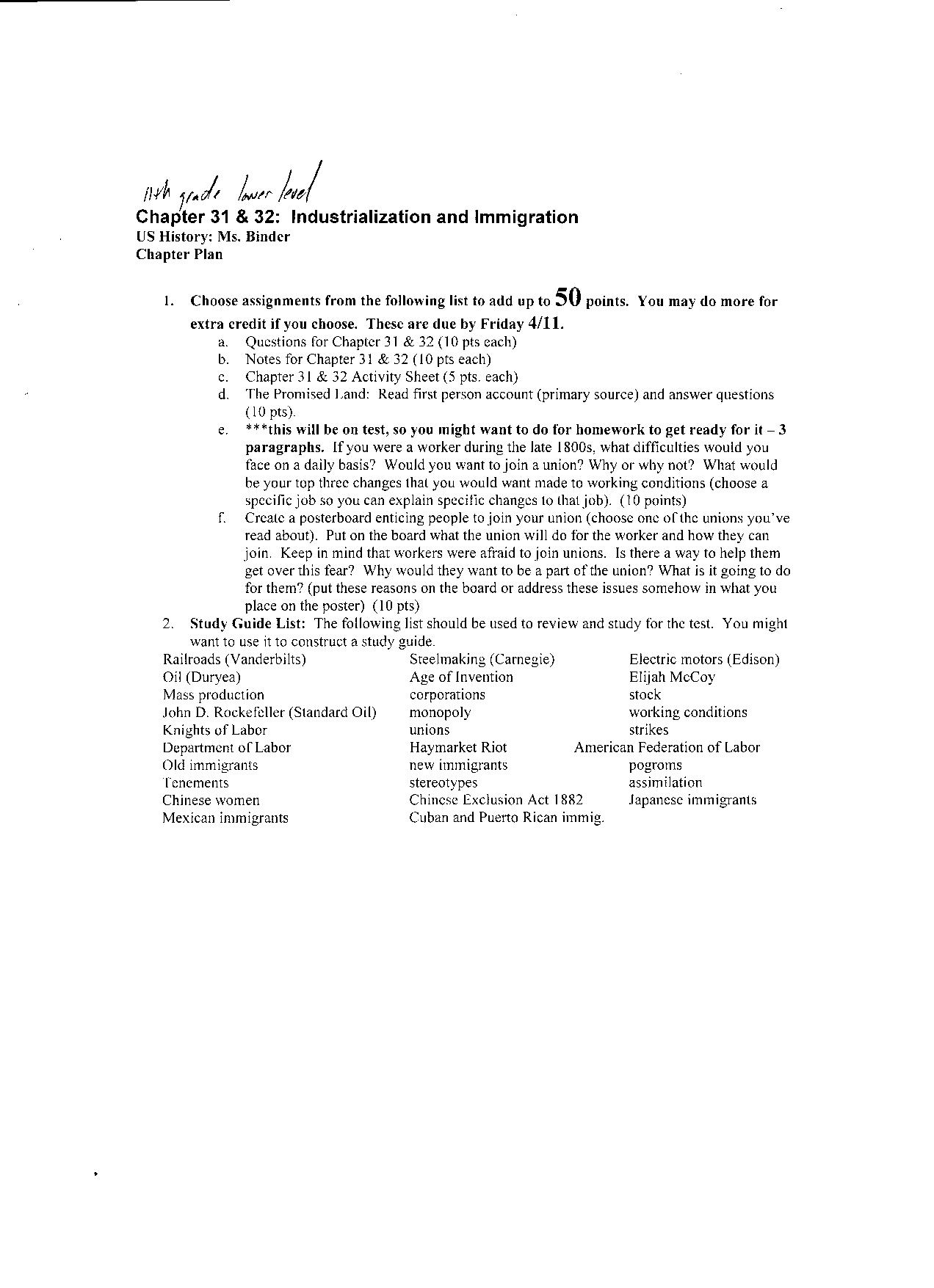
Every activity in Ms. B's class allows for variation in learning styles. Student can graphically portray their thoughts, or write about their connections in traditional forms. I felt this lesson was very successful, and assessments of progress were delivered frequently as Ms. B made her way from group to group listening to each group's thoughts on the keys to industrialization and why they were important. Ms. B gave me a copy of the chapter plan that has assignments for the chapter. Students can choose assignments and there are options varying from poster presentations, questions to answer, and thought provoking reflective questions. Students can complete as many assignments as they want for extra credit and creative writing about anything in the chapter, as well as about current events is always an option. Below is an example of a current event piece as well as the chapter plan.