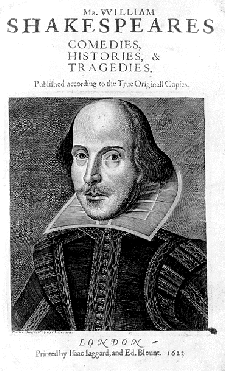
 Shakespeare, in addition to being a gifted
playwright (note spelling), was also a talented poet and actor.� To read some samples
of his finest poetic work, click on the buttons to the left of this text. You will find
activities in relation to the sonnets below.
Shakespeare, in addition to being a gifted
playwright (note spelling), was also a talented poet and actor.� To read some samples
of his finest poetic work, click on the buttons to the left of this text. You will find
activities in relation to the sonnets below.
Here you will find some of his greatest sonnets and the text of his first (known) published work - the long, passionate poem, "Venus and Adonis."
In the frame below you will find a list of possible activities which you may be interested in pursuing or which you may discuss in class. Talk with your teacher before completing any written work. These activities will also be useful for review purposes, as Challenge English assignments, or as additional aspects of Shakespeare to consider if, for instance, you've read Romeo and Juliet before.
Questions to discuss and possible activities to complete as (and after) you have read the sonnets: |
| 1. What do these poems have in common that makes them sonnets? |
| 2. Find out what the difference is between a Petrarchan sonnet and a� Shakespearean sonnet. |
| 3. Can you find recurring themes or underlying ideas in these poems? |
| 4. Identify the rhyming couplets in each sonnet. |
| 5. Find out what the difference is between an octet and a sestet. |
| 6. Try to write a sonnet of your own based on a model by Shakespeare. |
| 7. Write a parody of one of the famous sonnets. |
| 8. Find and identify two sonnets in Romeo and Juliet. |
�
�