Creating Integrated Healthcare Environment: Introduction of Children Therapy Garden in Malaysian Nucleus Hospitals ROSHIDA ABDUL MAJID
[email protected]
ISMAIL SAID
[email protected]
Dept. of Architecture
Faculty of Built Environment
Universiti Teknologi Malaysia
80900 Skudai, Johor Bahru
Abstract
Garden has been recognized as a creation of environmental healthcare that supplements the process of healing practice in the ward (Moore, 1999). Research on children therapy garden strongly agreed on the effectiveness of play therapy garden as the healing tools for hospitalized children. Even though there still no scientific approval but play therapy garden is seen as a mechanism which lead to the children well being. However, the integration of building and natural environment is lacking in healthcare institution in Malaysia. The recuperative power of exterior spaces in the hospital compounds in the country is mostly ignored. The favorable climate throughout the year and abundance of green in the tropical setting are not capitalized by the health industry as part of healing process. Thus, this paper will explain the role of garden in nucleus hospital environment to help in recuperation process of sick children. The integrated planning and design of the garden and hospital ward is seen as a holistic approach of environment consequences towards healing process. Hence, the paper will focus on the creation of comfortable, secure and recuperative values through the methods of planning and design. Finally the paper will conclude by outlining some design criteria for achieving appropriate play therapy garden in nucleus context.
Introduction
Garden therapy has been identified as part of the healing mechanism since 1940’s in Europe and the United States (Rivlin 2000). The therapy includes horticulture practice where patients were allowed to sow seeds and tended the growing plants. Due to the successful of horticulture therapy in the mid 1950’s, Lady Allen of Hurtwood (a landscape architect) led a successful movement to introduce the healing role of children’s garden. As the basic theory and methodology of horticulture therapy were studied, planning and design applicable to the children’s therapy garden was developed. Until now the therapy garden has been increasingly utilized as an important mechanism for healing in many pediatric wards and healthcare center especially in developed countries such as Sweden, England, North America countries and Japan (Moore 1999).
The core of the stimulating environment of outdoor spaces for health care purposes is little being practice in pediatric wards of Malaysian hospitals. Within the 125 hospitals in the country, less than 5 hospitals provide gardens in their healthcare environments. Generally, most hospitals focus on clinical treatments, either physiological or psychological type, to recuperate sick children in pediatric wards. The caregivers in the health industry largely ignore the recuperative power of garden in the hospital compound. Such opportunity has not being capitalized by 12 nucleus hospitals in Malaysia even though they have ample garden spaces for outdoor experiencing for healing purposes. The spaces are left without integration with the wards.
Realizing on the potential of the healing power of outdoor space, a team of researcher from Research Management Center at Universiti Teknologi Malaysia carried out a study on role of children therapy garden as an environmental intervention. The study was conducted from December 2000 to April 2002. The intent of the research is to prove that therapeutic garden is an effective platform in enhancing the recovery rate of sick children in nucleus hospitals.
This paper discusses on the findings of the study which based on theoretical studies and empirical information gathered from two case studies at two nucleus hospital, Hospital Segamat and Batu Pahat Hospital.
Nucleus Hospital
Characteristic and Function: The nucleus hospitals are acute-care and palliative hospital type providing medical services to cure sickness and to recovery the well-being of patients including children. It is a relatively new concept hospital serving towns and districts in Malaysia with population of 50,000 to 380,000 people. They are located at the fringe of the town, 4 to 6 km from the town center, which can be accessed without entering the town center. Hence each hospital is located away from the town’s collector roads resulting quiet setting and small volume of traffic. The planning layout is considered sprawling with low-rise buildings built over a large tract of land ranging from 17 to 24 hectares. The division of the nucleus hospital is depending on number of bed, namely, 93 and 314-bed types. The 314-bed hospital is equipped with two pediatric wards, one for neonates (1 to 30days old) and the other for children age 1 month to 12 years old. This is hospital type that the study investigate the effect of garden to patients from 1.5 to 12 years old, categorized as toddlers (1.5 to 5 years old) and preschoolers (6 to 12 years old).
The nucleus hospital compound is divided into four landuse zones, composed of three types of buildings, namely, core medical care, ancillary and accommodation. The core buildings are located in the center of the site surrounded by accommodation for doctors, nurses and supporting staff, parking spaces and recreational grounds. Ward is one of the buildings in the core type and each hospital has five types of ward including pediatric, post natal, ante natal, and general wards. All the wards are planned in a linear layout served by a spine, a covered pedestrian called street. The street begins with a porch, which is drop-off for patients and visitors. The wards and other core buildings are called templates that sited in a grid, linear layout on both sides of the street. This layout facilitates the circulation system for all hospital users. Each template including the ward is separated by an open space or garden, size varies from 308 to 740m2. The initial planning purpose of this layout is to provide opportunity for patients and staff to interact with the outdoor environment while being in the ward. Unfortunately, such opportunity has not happened for pediatric ward since the garden is not properly constructed as environmental intervention as outdoor therapy space for sick children. Due to the unattractive condition of the garden, the hospital management mostly ignored it as a potential for recuperation purpose as being seen in Batu Pahat Hospital (BPH) and Segamat Hospital (SH).
Condition in Pediatric Ward: Each pediatric ward provides 26 beds for sick children including 4 isolation beds. The ward is located on the ground floor (first floor) of two-floor building facing to the garden. Visual access is only available through glass louvered window approximately 1.0m from the floor level. Hence most patients only able to view the exterior from their beds. The beds are laid in rows facing to the windows and each row is separated by 3.5m width of circulation space for patients and caregivers, and equipment. This is the one out of two space in the ward for the patients and their parents to move when they get bored staying at their beds. Doctors and nurses from both hospital commented that the space is not sufficient for play purpose and is crowded by visitors during visiting hours. Such situation deprived the children and their parents to get sense of privacy and intimacy. The patients need spacious play space for them to move freely away from their beds.
The other space for recreation is a playroom located at far end of the ward facing to the garden (See Figure 1). This room is equipped with television, some plastic toys and children books. It is a preferred space for the parents to be away from the beds after their children are given medication by the doctors or nurses. Generally, the hospital management allowed three stages of free time to move away from the bed that is from 9:00am to 11:30am, 12:30pm to 2:30pm and 4:30pm to 5:30pm. Thus non bed-ridden patients have about 5.5 hours a day to move freely and depart from the clinical treatments.
Children as Patients
This research focuses on the effect of garden as an environmental intervention in enhancing the recovery rate of sick children admitted to the nucleus hospital in Malaysia. Data of 1999 and 2000 from eight nucleus hospitals found that more than 14500 children were treated in the pediatric ward per year. In year 2000, BPH and SH has treated 2286 and 2663 patients respectively. The children are admitted into the ward for clinical treatment due to diseases, congenital problems and injuries. The diseases include acute abdomen, febrile fits, acute gastro enteritis, and infectious diseases of respiratory tract such as branchopneumaria, pneumonia, tonsillitis, bronchitis, and pharyngitis. The injuries include cut and bruise and fractures from motor accidents are among the common problems that children are admitted. The clinical interventions for the sick children are classified into five type of therapies, namely, physiotherapy, pharmachotherapy, psychotherapy, diet therapy and occupational therapy. The pharmachotherapy for the patients is drug medication in form of IV drips, lotions and disinfectants, tablets and injections. These interventions are part of the pediatric ward’s objectives to provide clinical service that help to recuperate children in the shortest time. Thus length of stay is the endpoint for the hospital. Record from year 2001 inventory found that the length of stay of ill children at BPH is 3.10 days and HS achieved for 2.64 days. During the research period, patients in the pediatric wards in both hospitals are cared by doctors, occasionally by pediatricians and trained nurses.
They are having difficulties not only with their physiological but also psychological well-being. Most of them are having emotion disturbance because of the loneliness, pain and agony, restless, trauma, lost confidence and sometimes immobile. Base on the observation, even though they are sick but their behavior and need still like normal children (Lindheim, Glaser, and Coffin, 1972). Moore (1999) in his research found that play activity is the most promising and effective to make the children happy and active. In play, anything goes, there are no real consequences. This is why therapists use play to help children who have undergone traumatic experiences while they are warded in the hospital (Lindheim, Glaser, and Coffin, 1972).
Children have a natural curiosity that requires direct sensory experience rather than conceptual generalization. The informal and natural setting of garden is the most satisfying because children have unmediated opportunities for adventure and self-initiated discovery, exploration and experimentation (Rivlin, 2000). Outdoors space offers the full opportunities for the children to apply their sensory experience of nature – touch, sight, smell, taste and hearing. Exploration for these senses are provided by the therapeutic gardens of the two hospitals.
The design of the two gardens begins by looking at theoretical studies on play mode of children. Studies from Piaget (1962) and Rivlin (2000) categorized the play into three types, namely, sensorimotor play; pretend play and games with rules.
Sensorimotor Play: Piaget (1962) aptly described sensorimotor play as children are experimenting with bodily sensation and motor movements, and with objects and people. Children use action schemes, such as running, jumping, hopping, pushing and grasping to make interesting things happen in order to experience the sensation and pleasure of movement. Play structure for example like parallel bars and swing has been utilized by therapy garden at Batu Pahat Hospital to provide varieties of sensorimotor play.
Pretend Play: In this complex type of play, children carry out action plans, take on roles, and transform objects as they express their ideas and feelings about the social world (Garvey, 1984). Family-related themes in action plans are popular with young children by taking rules like mother who will do cooking, father who will work, and dolls as baby. Pretend play with symbolic themes of construction is also popular with preschoolers, who use blocks, miniature cars and people to create situations related to their experience.
Games With Rules: Games with rules are the most prominent form of play during middle childhood (Piaget, 1962). The main organizing element in game play consists of explicit rules, which guide children's group behavior. They can learn reasoning strategies and skills from strategy games. Children in Malaysia do practice such a game like hopscotch called galah panjang that they have to learn and follow the rules of game. The resulting effect of the games play is social interactions and allows children to tolerate and understand their friends or siblings needs.
Therapy Garden Design Criteria
Base on the theoretical studies and analytical data from the children therapeutic garden at the two hospitals, the study suggested seven factors that influence the design of the garden. These factors can be considered as design criteria. Applying these criteria would lead to a successful design of garden that help in healing process of sick children in the pediatric wards.
Space and Organization : The garden should provide sufficient space for individual and group activities. A lawn area greater than 10m in length would suffice for children to run or walk or even roll on the ground. The space should provide plenty of opportunity for social interaction and enjoyment of nature through play activities such as jumping, climbing, running, seating, and walking. The open lawn becomes the base for all play spaces in the garden linking by planting of varied masses and heights, colors and textures (See Figure 1).
Interaction of Activity: Therapy garden for hospitalized children must offer a range of activities including play. Provision of these activities must incorporate with the healing process considering safety, suit to physical ability, and types of impairment and enjoyment of play. Running, jumping, rolling, hopping are the example of activities involve with sensorimotor play whereas pretend play is about playing with dolls, miniature vehicles and others. In addition, games with rules involve with more complex play such as hopscotch, chess, and checker (Figure 2).
Sensory Stimulation: Sensory stimulation is about the exploration of the therapy garden through the five senses sight, smell, taste, hear and touch (Moore 1999). Children applied all their senses during play activites. When they walk barefooted on lawn make would feel the texture of grass. A view to a composition of herbs and flowering shrubs would make them recognized hue of colors and textures. This recognition is cognitive that they can recall similar plant massing in their familiar place particularly their house gardens. This action brings the home setting into the hospital environment, thus making the patients not feeling so isolate from their homes. Colorful flowers and painting give sense of variety, contrast, solidity, somberness and solemnity. Sounds of wind chimes and bristling effect of palm fronds when blown by wind will produce interesting, soothing effect. Cognitive development must resonate with red experience (Moore 1999) and therapy garden is the genius loci that can stimulate all senses of the patients.
Circulation and Accessibility: Circulation and the accessibility is based on the nature of children’s behavior. The exploration of the garden is more interesting if the garden circulation is adjusted base on integration of activities but not directional path. A random circulation enhances the behavior of the children for giving freedom for them to select their space to play. Hence, in the nucleus hospital gardens, the movement of patient are non restrictive, for example, a patient may run on the lawn towards the treasure chest (urn). He may run to another chest or to another play equipment without obstruction from any garden features. The circulation allows them to move at their own pace and liking.Garden Setting: Beside explorative and safety, the design of children therapeutic garden should consider the factor of adaptability. Thus dimension and configuration of garden structures, play space and play equipment must correspond to the anthropometrics of the children. Therefore, height of the pavilion’s deck would be not more than 450mm high for the children to reach and also suit to their parents. Enclaved space should also be provided for patient and their parents to be alone. Enclosure can be done using hedging by foliage and flowering shrubs in dense massing. In addition it is acceptable to design a space where children can participate at risk, for example, climbing a rope play equipment over a thick sand bed. In addition, a landform with duress or mounds evokes feeling of being protected and embraced by the earth.
Planting Layout and Composition: Plantings are what make the garden distinctive from the outdoor environment. The planting can be used as manipulative play structures and homes for birds and creatures and tool to invite nature into the lives of people. Fruit trees such as Spondias (kedondong) would attract the patients to go to secluded garden corner. The attempt to reach the fruit and able to pluck it is an achievement and subsequently improve the patient self-esteem.
Form, Color and Sound of Garden Features: Form and color of garden features directly stimulate the children senses. The cubical form of the pavilion shows them the basic volumetic shape of structures and the natural color of its planks and posts gives them the actual hue of timber color. Rounded treasure chest with brown colors blended with the surrounding plant massing give a sense of harmony. Spider-webbed rope play equipment makes the value of the play equipment more interesting because the children may deduce their knowledge to the actual spider web in smaller scale. Another play structure which can evoke children’s sensory are parallel climbing and swing structure. The natural color of the timber can instill the understanding of nature beauty.
Different forms of play equipment not only provide different modes of play but also denote the type of play activities that the features offer. Thus variety of forms results to multiple types of play modes and interests. Likewise, variety of colors creates recognition of play features among the hue of green of planting masses. Thus a brown, rounded clay urn would be easy distinguished in the background of foliage low shrubs and ferns. Audio sensory of patients is stimulated by wind chimes and buzzing of insect particularly carpenter bees when they harvest nectar from large flowers in the morning hours.
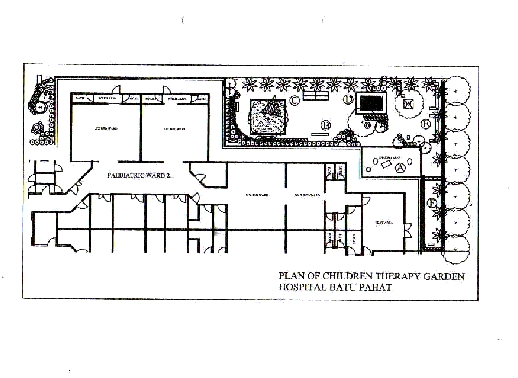
Figure 1 shows the layout of children therapeutic garden at Hospital Batu Pahat
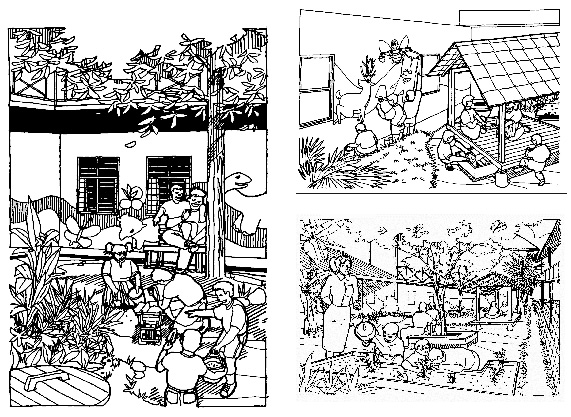
Figure 2 A, B and C are examples of play activities found in the therapy gardens at Batu Pahat Hospital and Segamat Hospital
Conclusion
Play therapy garden has been recognized as an environmental intervention to promote the optimum healing environment to maintain normal living patterns and to minimize psychological trauma of sick children. The qualities of the environment are playful, childlike, restful and inspiring that will encourage children to feel hope about their recovery and calm down the pain and anxiety. Introduction of garden in hospital environment would facilitate the recovery process of sick children and enhance the working condition of hospital staff in nucleus hospital.
References
1. Altman, Irwin and Joachim F. Wohwill (1980), Children and The Environment, Plenum Press, New York
2. Canter, David and Sandra Canter (1979), A Review of Research, Designing For Therapeutic Environment, John Willey and Sons, Great Britain
3. Dilani, Alan (2000), Physichosocially Supportive Design, Proceeding World Conference on Cultural Design, Scandinavian Health Care, Nov. 17-21, 2000, Seoul
4. Marcus, Clare Cooper & Marni Barnes (1999), Healing Gardens: Therapeutic Benifits and Design Recomendations, John Wiley and Sons, Ins. New York
5. Moore, Robin C. (1996), Compact Nature – The Role of Playing and Learning Gardens on Childrens Lives, Journal of Therapeutic Horticulture, American Horticulture Therapy Association, USA
6. Wheeler, E.T. (1964), Hospital Design and Functional, McGraw Hill, New York