Visual Composition of Malay Woodcarving in Vernacular Houses in Peninsular Malaysia
Ismail Said
[email protected]
Department of Landscape Architecture, Faculty of Built Environment
Universiti Teknologi Malaysia, 81310, Sekudai, Johor, Malaysia
This paper is presented at Second International Seminar on Vernacular Settlement, University of Indonesia, Faculty of Engineering, Depok, Indonesia, Feb. 16-17, 2001
Abstract
Timber houses of the Malays in Peninsular Malaysia are equipped with carved components that serve both functional and aesthetic purposes and become a determining factor in defining the architecture. The physical form of woodcarving is governed by four factors, namely, principal forms and layout, type of incision and perforation, types of motif and design principles regulating its composition. The Malay craftsmen in the states Kelantan, Terengganu, Perak and Negeri Sembilan apply these factors in their carvings that result to similarities which differences in visual composition of the carvings. The major similarities include application of four principal forms of carving pattern and seven shapes of carving layout. On the other hand, the differences occurred in types of motif and types of incision.
Meaning of Woodcarving
Woodcarving is a part of the architecture of a traditional Malay house or mosque in Peninsular Malaysia. It is among the prominent craft done by Malays depicting their keenness for beauty and skillful observation toward the natural surrounding and its elements. The beauty is manifested on hardwood timber through incising or cutting the timber using sharp tools conforming to specific pattern and composition. The love to manifest the beauty is part of devotion of a Malay craftsman to the Creator and as a gift to his fellowmen (Mohd Taib, 1997). Flora motifs and symmetrical layout dominated the carving pattern indicating certain values governed its design.
Typical Malay timber architecture such as house and mosque would be composed with more than 20 carved components. These components are categorized into three types including structural, elemental and decorative. They can be seen on the façade of the buildings such as fascia boards, gable-end boards, door leaves, ventilation panels over doors or windows, and perforated wall panels. The ventilation panel and perforated wall panel are fenestration members of the house to allow breeze to circulate into and out from the building. Furthermore, they allow sunlight to pass through its perforation and consequently lit the interior. Simultaneously, intricate shadow is cast on the house floor that further adds beauty to the interior. Thus carved components of the timber buildings performed both functional and aesthetic purposes. Without the woodcarving the architecture is not complete; it is the part of the language of Malay architecture.
The abundance of hardwood species in the Peninsular Malaysia’s rainforest has allowed the Malays to practice woodcarving as a craft. The practice may have originated during the Langkasuka Empire as early as 14th century in the northeastern states of the peninsular. The knowledge and skill to reveal amorphous forms, either from nature or science, into tangible forms that can be seen and touch is transferred through apprenticeship process. The natural tropical settings provide forms of flora, fauna and cosmos that become source of inspiration to depict real or abstract form onto the timber boards. In addition, geometric and calligraphic forms are applied as motifs in the woodcarving. The physical forms of the carving are governed or controlled by four factors, namely, principal forms and layout, type of incision and perforation, types of motif and design principles regulating its composition. These factors are discovered in a research done by the author, Visual Composition of Malay Woodcarving in Traditional Houses in Peninsular Malaysia, completed in May 2001.
This paper explains the four factors that characterized the form of Malay woodcarving and subsequently become the visual and intrinsic features for identification. The findings of the research are based on investigation of 16 traditional houses in the states of Kelantan, Terengganu, Perak and Negeri Sembilan of Peninsular Malaysia.
Principal Forms and Shape of Carved Components
In term of iconography, Malay woodcarving form derived from four principal forms including stupa, makara, lotus and gunungan. These forms are that basic form of Hinduism motifs that were derived through thoughtful observation by the craftsmen towards their living surroundings (see Figure 1).
Stupa Gunungan Makara Lotus Figure 1: Principal forms of Malay woodcarving
The stupa form can be found in house component such as buah buton or newel of stair or gate. These are decorative components that enliven the interior of the building. Buah buton is attached to the end of kingpost hiding the tenon and motise joint to a tie beam of the roof structure. It is the only volumetric component that becomes the jewel of carving, beautifying the interior of the house. The motifs generally applied to the buah buton are stupa (3 to 5 tiers) and lotus.
The gunungan is a silhouette of a mountain or tree of life; a symbol of status (Ismail Said, 2001). Gateway of house compound is vividly carved in gunungan but other components including ventilation panel of door or window and door leaf also applied this form. The makara refers as center of cosmological imagination for a mythology of sea-monster in Pattani and Kelantan. Gable-end boards on Terengganu or Kelantan house distinctively depicted the form of makara that enhance the façade of the building. This component differentiates the form of the house in Terengganu and Kelantan over houses in Perak and Negeri Sembilan. Lotus is the symbol of purity and its form is applied to a variety of house components including door leaf, fascia board, ventilation panel and buah buton. Apart from house components, the form is carved at the foot of tombstone and base of a kris hilt.
The making of carved components in the Malay houses based on a least seven geometrical and flora shapes, namely, square, horizontal and vertical rectangle, circle, octagonal flora, semi-circle and triangle.The square and rectangle are the common layouts for many components particularly door leaf, ventilation panel and wall panel. They are easier to carve since the outline is straight. Façade of Terengganu and Kelantan houses are dominated by these perforated components in flora motifs. Their layout and size of the components are proportionate with the elevation of the building and volume of its interior space. The skillful thought of the house builder/craftsmen carved sufficient among of fenestration to allow cross ventilation to give thermal comfort to residents without depending on mechanical means. The perforation also allows sunlight to lit the interior space of the house.
Occasionally, flora octagonal or circle layout is carved for special components such as base of ceiling-lamp. Such carving can be found in aristocrat houses in Terengganu such as at house of Dato Biji Sura in Kuala Terengganu town. The intricacy of the shape and carving denotes the skillfulness of the Malay craftsman and affordability of the house owner.
Apart from the shapes, the carvings are generally laid in symmetry on at least one axis. The axis orientates the carving pattern, repeating the pattern on left to the right or on the top to the bottom of a component. Figure 3 illustrates a perforated carving of a wall panel of Wan Embong house in Kuala Terengganu. Most of ventilation panels, wall panels, door and window leaves, and flat railings are done in symmetrical format with flora motifs.
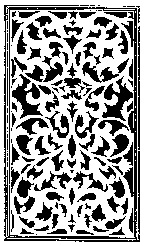
Figure 3: A sample of perforated wall panels; a symmetry form laid on an axis and carved in flora motifs.
Type of Incision
The woodcarving in the Malay traditional houses can be recognized further by its depth and complexity of incision. The research has identified three types of incision, namely, relief, perforation and combination. The process of carving begins by drafting a motif with pencil on a timber board. Then the timber is incised with chisel or knife called pisau wali following the pencil outline. The depth of incision varies from one component to another, for example, incision on door leaf ranged from 5 to 8 mm deep. More than one motif is incised onto the timber board. The carving may possess more than one layer, each layer is added denotes increase in complexity to carve. The incision may punch through the timber board creating perforation such as in railing and ventilation and wall panels. The thickness of the perforated components is 15 to 30mm. These components are common seen in Terengganu and Kelantan houses carved in simple perforation without any relief form. But carved components of some houses of aristocrat and palaces of the sultan are attached with a combination of relief and perforation forms which are carved by master craftsmen rather than the apprentices. The relief carvings are overlapped to sometime four layers. Chengal is the favorite timber species for the making of carved components because it has fine texture fiber and resists the attacks from powder-post beetles and fungus.
Generally, door leaf and tiang seri (main post of the house) is more intricately carved than other components including wall panel, ventilation panel, stair stringer and gable. Thus the complexity of carving can signify the hierarchy of importance of the component to the architecture.
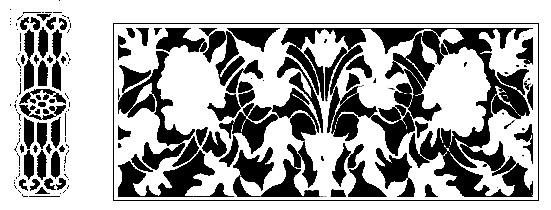
Figure 4: Railing (right picture) is carved in perforation whereas a ventilation panel of a door (left picture) is done in combination of relief and perforation forms.
Type of Motifs
Malay craftsmen applied five types of motif, namely, flora, fauna, calligraphy, geometric and cosmos onto the carved components. Flora dominated the scene of Malay woodcarving, not only for house components but also on other crafts or equipment including weapons, boat and house utensils. The abundance of plant species in the house compound and nearby forest has inspired the craftsmen to manifest the its into the craft. The parts of plant that are manifested include the fruit, stem, tendril, leaf, and more conspicuously the flower. Fruit of pomegranate, flower of lotus, sunflower, ketumbit, ketola and bakawali, leaf of getamguri and stem and tendril of ipomea are depicted in variety of abstract form on the house components. Pomegranate is chosen as motif because of the interesting fruit shapes and bright orange flowers. Lotus is selected due to the auspicious flower form and color, and its sacredness. Furthermore, weeds such as ketumbit with bright yellow flower and getamguri with wavy foliage are recognized by Malay craftsmen in Terengganu and Kelantan, and translated their beauty into the tangible art. Likewise, craftsmen in Perak and Negeri Sembilan favored bright yellow flowers and twining character of ketola and large, bright sunflowers to be depicted onto doorleaf and ventilation panel. Thus Malay craftsmen are observing the beauty of their surrounding and symbolize the intangible value into a physical product that can be appreciated by others.
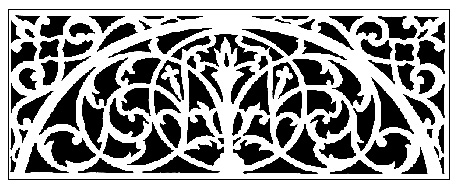
Figure 5: A ventilation panel of Dato Biji Sura house carved in flora motif
Fauna is rare in Malay woodcarving because the prohibition of Islamic teaching to depict figurine motif. But a few craftsmen still carved fauna motifs such as rooster, a group of ducks waddle in a row, or a lizard head. The interesting behavior of the animals inspired craftsmen to manifest them into their carvings. These motifs are generally carved in abstract form, thus the fauna form is difficult to recognize as a figure. Wall panel at Tukang Kahar house in Negeri Sembilan abstractly depicted two roosters that unlikely to recognize in a glance.
Calligraphy is also applied as motif at wall and ventilation panels at Kelantan, Terengganu and Negeri Sembilan houses. It is either carved in relief, perforated or combination of both. The Malay craftsmen manifest Quranic verses into wood panel written in several Arabic styles. An excellent example is a wall panel at a house in Kampung Pulau Panjang, Kelantan whereby a Quranic verse is carved in perforated form and laid symmetrically on an axis (see Figure 6).
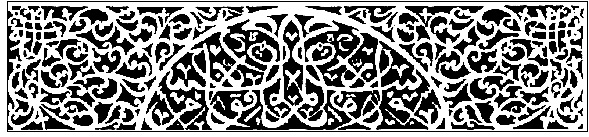
Figure 6: Example of wall panel carved in traditional calligraphy motif.
This carving demonstrated their devotion to Islam and adoration to the Quran as a collection of God sayings. The legacy of calligraphy in Malay letter writing has contributed to the making of woodcarving and selected it as one of the motifs (Raja Fuziah, 1997).
Apart from the arabesque motifs, geometric motifs are also applied by Malay craftsmen doorleafs, ventilation panels, wall panels, railing and partitions. The configuration can be a series of diagonals repeatedly copied throughout the component. Swastika and star are more complex motifs that dominate the carving configuration, for example, on a ventilation panel of a wall. Repetition of similar motif creates sense of beauty and contrast against adjacent foliate or calligraphic motifs. Motif of swastika is originated from Chinese woodcarving that can be seen in ventilation panels at an aristocrat house called Kota Lama Duyong in Terengganu. Geometrical carving is more likely easier to carve than the other four types and thus repetitive components such as railing are done by apprentice or sometimes wife of the master craftsman.
Cosmos motif is least seen in Malay woodcarving. In contrast, Chinese shophouses and temples in Peninsular Malaysia are rich is such motifs particularly the symbols of sun, clouds and waves. The depiction of this motif in Malay carving illustrates the influence of Chinese craftsmanship and pluralism of cultural value in the vernacular architecture. Ventilation panel at Mohd Ali Kulup Mat Yassin’s house in Perak is an example where flora leaf and flower are combined with and cosmic cloud.
Design Principles Regulating Carving Composition
Visual composition of woodcarving can be understood by analyzing the design principles that regulate its form and pattern. The research found three to four fundamental principles regulating the design of the carving including symmetry and balance, repetition, and order and harmony. The beauty of a piece of carving such as ventilation panel can be easily seen on its layout, either symmetry or asymmetry. Most of the house components are carved in symmetry layout, suggesting a vivid balance layout. Thus the carving pattern is laid in at least one axis, suggest simplicity in design. But sometimes a master craftsman would devote his time to carve a ventilation panel with four axes. Hence, the degree of difficulty to carve a layout consisting of four axes is higher than a single axis, denoting the skillfulness of the craftsman. But this does not necessary mean that carving with more than two to four axis is more intricate than those with an axis. For example, a ventilation panel at Tengku Anjang Palace in Terengganu is done on an axis with intricate flora motifs (see Figure 7). The carving pattern begins from the center which is a vase and then turn right and left in an identical and balance composition comprising of a flower surrounded by leaves and tendrils. It is a combination relief and several overlap
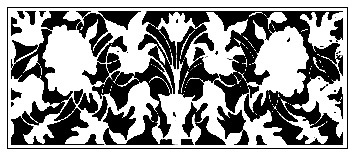
Figure 7: A ventilation panel carved in flora motifs and laid on an axis at Tengku Anjang Palace in Terengganu
The Malay woodcarving is sometimes being carved in asymmetrical format and in a balance composition. The visual richness and energy is a high, if not, better than a symmetrical layout. Again, this type of carving is attended by the master craftsmen manifesting a genuine skill that becomes sample for their apprentices to copy.
Another visual quality of the Malay woodcarving is repetition of same motif, layout and form throughout the building. Railings of varendah at Terengganu and Kelantan houses are made up of timber board carved in simple flora or geometry motifs. The same design is copied to all railings resulting an order and visual dominance toward the architecture. Thus shoot of fern, flower of ketumbit and leaf of getamguri are carved on a timber board and later copied to similar size board. Then all the boards are arranged and attached to the wall or varendah of the house. The collection of a simple design carving has become a visually complex composition, giving distinctive character to the architecture of the house. Similarly, wall ventilation panels at Perak and Negeri Sembilan houses are repeatedly carved following a same design that dominate the façade of the house, creating a sense of unity.
The final design principle applied by Malay craftsmen in their carving is order and harmony. This is done by placing a major or important motif in the center of carving which is surrounded by subsidiary motifs. For example, a lotus blossom is placed in the center of Perak carving demonstrating the auspiciousness of the flower and surrounded by its leaves and tendrils of ketola. Such harmonious character is achieved in Mohd Ali Kulup Mat Yassin’s house whereby the craftsmen intentionally use the lotus flower as center- piece encircled by ketola leaves in all the ventilation panels. Likewise, bakawali flower which is considered a high status plant is either boldly carved in the center or repeatedly depict on the doorleaf or ventilation panel of Terengganu or Kelanatan house. The composition is completed by tendrils and leaves of getamguri functioning as background for the bakawali’s flowers. This principle of order is well understood by the craftsmen in each state or region in Peninsular Malaysia. The order signified the language of woodcarving that is different to certain degree from one state or region to another. Furthermore, utilizing similar motifs throughout all components in a house, for example, lotus and ketola flowers in Perak houses would draw the sense of harmony both to beauty of carving and the building. Whatever the appearance, simple or intricate, all Malay woodcarvings are designed in balance and proportion to the house architecture. Repetition of motifs throughout a component brings unity, harmony and rhythm to the carving.
In addition, the size of motif is always proportionate to size and form of the carved component. Thus a motif of getamguri foliage or ketola blossom would be large on a doorleaf and relatively small on a ventilation panel since the former is larger than the later. Furthermore, the craftsmen carefully relate the size of the carved component to the elevation or facade of the house demonstrating a strong sense of rhythm in art of woodcarving.
Prospect of Woodcarving in Urban Housing
The vernacular value of woodcarving could be applied to modern urban dwellings in Peninsular Malaysia. There are more than 800,000 units of urban houses are built in Malaysian cities and towns in the Seventh Malaysia Plan 1996-2000 and the number is expected to increase in the Eighth Malaysia Plan 2001-2004. More than 80% of the houses are row or terrace units that their cross ventilation property is much lower than the traditional houses. Thus by introducting carved fenestration panels such as perforated top-hungs on door and windows and gables would improve the air circulation in the building (Ismail Said, 1999). This action would eventually bring better thermal comfort to the urban housing community living in the tropical, hot and humid environment.
Apart from improving the cross-ventilation system, relief woodcarving can be introduced to doorleaf. The intricacy of foliated motif or simplicity of geometric motif would give character and identity to a living unit. The carved doorleaf would signify a Malay house over other ethnic groups dwelling units living in a multi-ethnic community. Furthermore, the carving would create variety to the monotonous house architecture that is built in mass using similar design. It will break the monotony of the terrace house elevation by adding vernacular value to the architecture.
Conclusion
The Malay woodcarving in traditional houses in Peninsular Malaysia is an art which is based on four principal forms, seven standard shapes, quality of incision and perforation, types of motif and its design is regulated by three to four principles of visual composition. These vernacular craftsmanship values are learned and practiced by the craftsmen in the states of Kelantan, Terengganu, Perak and Negeri Sembilan for the construction of the timber architecture and its components. The form of the house and its carved components signified the architecture language and identity of timber building. This identity could be transferred to modern housing architecture particularly on the fenestration components such as ventilation panels of wall and top-hungs of door and window, and gables. The revival of woodcarving can be further enhanced by introduction of carved doorleaf that not only add beauty to the house, it identifies the ethnicity of the Malay resident. This revival would create demand for the carving and thus revitalize the craft and support the livelihood of Malay craftsmen in the country. Understanding the physical and visual qualities of Malay woodcarving is necessary for architect and craftsmen to propagate the intrinsic values of the craft to new generation.
Note: This paper is presented at Second International Seminar on Vernacular Settlement, Faculty of Engineering, University of Indonesia, 16 -17 February 2002
References
1. Ismail Said, Reintroduction of Ventilation Components for Terrace Houses in Malaysia, Third Int. Symposium on Asia Pacific Architecture, April 7-9, 1999, Honolulu, Hawaii
2. Ismail Said, Research Report: Study of Timber Species in Malay Woodcarving in Peninsular Malaysia, Research Management Center, Universiti Teknologi Malaysia, May 2000
3. Ismail Said, Research Report: Visual Composition of Malay Woodcarving of Traditional Houses in Peninsular Malaysia, Research Management Center, Universiti Teknologi Malaysia, March 2001
4. Lim Jee Yuan, The Malay House, Institut Masyarakat Pulau Pinang, 1987
5. Mohd Taib Osman, Islamic Civilization in the Malay World, Dewan Bahasa and Pustaka, 1997
6. Syed Ahmad Jamal, Rupa and Jiwa, Dewan Bahasa dan Pustaka, 1992
