GARDEN AS AN ENVIRONMENTAL INTERVENTION IN HEALING PROCESS OF HOSPITALISED CHILDRENIsmail Said
Associate Professor
Department of Landscape Architecture, Faculty of Built Environment,
Universiti Teknologi Malaysia, 81310 UTM Skudai, Johor
Email: [email protected]
for
KUSTEM 2nd Annual Seminar on Sustainability Science and Management, Environment Détente: Quo Vadis Ecological Economics and Sciences, 6-7 May 2003, Awana Kijal Golf and Country Resort, Kemaman, TerengganuAbstract
Hospitalisation often erodes the feelings of toddlers and young children causing regressive behaviours and stress, which result in reduced cognitive performance, helplessness, restlessness, crying, anxiety, and elevated blood pressure. Having the ill children experiencing a garden setting, either in a passive or an active mode, can arouse their senses that nurture their inductive and deductive, motor-impulses development and reflective thinking capabilities. These interactions have resulted in psychological peacefulness and adjustment by the children including being more cooperative toward medication, less crying, more active and cheerful, and more obedient to caregivers. The behavioural responses are considered positive clinical outcomes that foster recovery rate of the hospitalised children. Hence, the garden can be viewed as an environmental intervention in enhancing the healing process of ill children in hospital environment.
Keywords: therapeutic garden, ill children, psychological well being, recuperation, environmental intervention
INTRODUCTION
Since several centuries ago, man has known to recognise the restorative power of nature including the healing benefits of plants such as in the civilisations of Mesopotamia, Persia, Greece, China, and India. The Greeks had established healing centres in temple complexes from the end of sixth century B.C. to the end of the fifth century A.D. (Venola, 1999). Monasteries in the Middle Ages treated the patients within their garden cloisters where the patients’ rooms were offered with plenty of sunlight and fresh air, lawns, seasonal plants and places to sit or walk (Whitehouse, 2001). Although the advancement of modern medicine in hospitals of many western countries has subdued the nurturing properties of nature, some hospitals valued the properties and integrate their buildings with gardens and courtyards (Marcus, 1999; Burnett, 1997). Hence, hospital outdoor spaces are made into various types of garden including roof garden, roof terrace, healing garden, meditation garden, viewing garden, tucked-away garden, and atrium garden. Whenever possible the wards are planned to allow better view of scenic scenes of the surrounding landscapes including forests, parks and gardens. Such integration is done in Malaysian nucleus hospitals at Batu Pahat and Segamat which are constructed on 27-hectare grounds away from the town centres and surrounded by semi-rural landscapes (Ismail et al., 2002). The integration is based on the premise that experiencing with the landscape, either in a passive or an active mode, would reduce stress that many patients experience during their recuperation in the hospitals. The introduction of such gardens in the hospital complexes suggests the recognition of healing quality of nature to sick people either in the physiological or psychological mode of recuperation. Several healthcare studies in the United States including Ulrich (1984), Francis and Paine (1997), and Marcus and Barnes (1995) found reductions in stress levels and health-related complaints among patients and staff who were provided with windows overlooking gardens or access to gardens. Although the evidence on restorative qualities of gardens is small but there is a growing body of empirical research that supports the healing potential of gardens in hospital settings (Whitehouse, 2001).
The clinical outcomes when patients experience the garden, either by viewing or physically interacting, would include (1) decreased length of stay, (2) increased psychological and physical peacefulness, and (3) increased psychological adjustment. A study on children therapy garden by Ismail et al., (2002) found that acute paediatric patients have shown some positive psychological peacefulness and adjustments when they are allowed to play and rest in the garden during their recuperating process in the nucleus hospitals. These outcomes are suggestive evidence that the garden would foster healing process of ill children in hospital environment. Such intervention is resourceful to health services in Malaysia that incorporate the environment with the conventional clinical treatments to treat patients in more than 140 hospitals in the country. This paper discusses the physiological impact of garden as an environmental platform (tool) in the healing process of hospitalised children. The children therapy gardens at Batu Pahat Hospital and Segamat Hospital are utilised to verify the significance of the garden as an environmental intervention.
EFFECT OF HOSPITALISATION TO CHILDREN
Illness and hospitalisation are among the most profound stresses of human life. Hospitalisation often erodes patient’s feelings of controls due to the aspects of loss of privacy, loss of control over eating and sleeping times, loss of information, and way finding difficulties in complex and unfamiliar hospital buildings. These aspects cause stress to the adult patients that lead to several negative impacts including depression, anxiety, helplessness, reduced cognitive performance, elevated blood pressure, higher levels of circulating stress hormones, and suppression of immune functioning (e.g. Ulrich, 1999). To young patients, the hospital environment is seen as an alien setting that inflicts pain and segregation from their families. The sight of people on gurneys and the complicated apparatus required for treatment terrifies both the very young and the adolescent (Lindheim et al., 1972). Prevailing odours of antiseptic such as iodine and povidone, detergents and tetraethyl spirit used in the paediatric ward scare toddlers and young children, especially for first time patients. They may associate the alien smell with pain and suffering. Staying in the ward with other patients whom they have never seen or met before also compounds the terrifying experience. A cry from another patient may be interpreted as a signal of a feeling of desertion or pain. Regular visits by doctors and nurses are seen as events when they are forced to take medicine or be inflicted with pain by the injection.
The effects of hospitalisation have seen to cause regressive behaviours among toddlers and young children. Some of the behaviours include excessive night time fears, increased clinging to and dependence on parents, loss of bowel and bladder control, or intensified thumb-sucking (Lindheim et al., 1972). This threat may extend to a continuing fear of mutilation and anxiety produced by the unknown and frightening aspects of the hospital environment. Such stress can be ameliorate by allowing the patients to view or experience the nature settings such as garden. In their Attention Restoration Theory, Kaplan and Kaplan (1989) and Kaplan (2001) have come to a conclusion that viewing wilderness could offer restorative effect, emotional relief from overloaded informative environment that cause fatigue. Ulrich (1992) supported this theory and introduces Stress Coping and Restoration Theory that views nature as a positive distraction that improves the emotional state of a perceiver who viewed the natural features. To achieve the positive distraction, Lindheim et al. (1972) suggested that a hospital should provide the children with challenging and stimulating environment where they can develop and test their skills, develop physical coordination and strength, and engage in dramatic and imaginative ideas. Such environment is installed for the ill children treated in the paediatric wards of Batu Pahat Hospital and Segamat Hospital. Knowing the physical characteristics of the gardens would allow us to understand the involvement of these patients with them that have foster their recuperation process.
THERAPEUTIC GARDENS
The gardens at Batu Pahat Hospital and Segamat Hospital are platforms to investigate the restorative power of healing process in ill children. Both hospitals administer acutely ill patients whose average length of stay is 3.1 days. The patients are allowed to go to the gardens about 4.5 hours during the day accompanied by their parents or ward staff. Both gardens are located beside the paediatric wards, surrounded on three sides by two-storey buildings and overlooking the surrounding landscapes. Hence, large areas of both gardens are shadowed by the building except at noon. Prevailing winds often blow through the gardens providing tolerable and favourable temperatures even on a sunny day.
Plants and garden structures including play equipment define the spatial zoning of the gardens. The zones are multipurpose lawn area, play structure area, sand play area, gardening area, and resting area with timber pavilion. Plant selection is based on the effect of stimulation to children senses including (i) foliage shrubs as background for colourful shrubs, (ii) fragrance and bright flowering shrubs for olfactory stimulation and as accent vegetative features, (iii) lawn as flat, soft textural surface for tactile recuperative effect, (v) matured trees and tall palms as features to provide shade or indicate boundary and landmark, (vi) small fruit trees such as banana to supply edible fruits, and (vii) climbers with large flowers laden with nectar to attract insects and birds. Furthermore, common house garden species are selected to give the feeling or impression of a home-like environment to the patients.
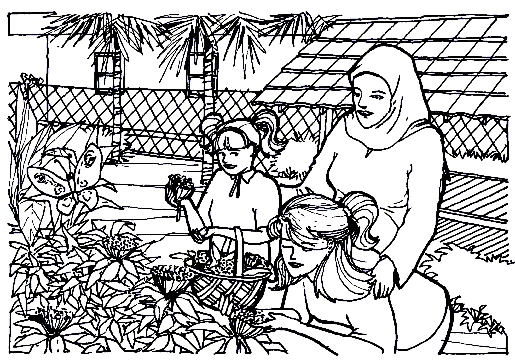
Figure 1.0: Children can generalise that a shrub bears flowers and leaves and thus form as an element in a gardenThe gardens are platforms for the children to apply five types of playing and learning styles, namely, deductive, inductive, visual and auditory, impulsive, and reflective. When they are brought into the garden they will recognise the different forms and colours of the plants and the garden structures as shown in Figure 1.0. Thus, they can deduce that the garden is made up of plants and man-made elements for which they can play with and thus would forget their boredom or pain. This is a form of fascination identified by Kaplan (2002) as one of the four properties of restorative setting. When the children pick flowers from low shrubs such as periwinkle and jasmine but not from a tree, they will understand that the shrubs are shorter than the tree. This inductive behaviour would make the children enjoy themselves playing in the gardens. The various forms, colours and aroma of the plants and play equipment supply plenty of information to the children to learn through their five senses particularly the sight and auditory. The gardens also allow the children to run and roll on the lawn areas. These are active plays involving plenty of movements that may exhaust the children and give them satisfaction. Such activities would improve the motor skills and muscle development impaired by their diseases. The activities are compatible to the interest or inclination of the children. Compatibility of the garden as a play space is another property of restorative setting (Herzog, et al., 2002). The garden is also equipped with familiar plants such as banana and hibiscus, and animals such as bees and birds that the children would recall their memories upon things that associate with their homes. The thinking of a home-like environment would relief the children from feeling departed from their familiar settings. Hence, the garden is an extension of sufficient, well-planned outdoor setting that engages the children’s minds.
Several play equipment are installed in the garden such as rope play equipment, slide, swing, spring riders, hopping urns, treasure chests, balancing bench, mural and giant checkers (See Figure 2.0). With the vegetations, the children could participate in all three types of play, sensorimotor play, pretend play, and games with rules play. Here the children are free to select which garden features to play and thus allowing them to move from one play zone to another at their own pace. Their movements are not restricted by any footpath but free to walk on the lawns. The sensorimotor play is the most common and active type for children of all ages that allow them to experiment with bodily sensation and motor movements. Preschool patients, age four to five, would engross in pretend play such as picking flowers and sand from the sand pit and bring them to the timber pavilions. Here they carry out actions plans, take on roles, and transform the plant and earth materials to symbolic things, for example, food. This play becomes socio-dramatic where objects begin to influence the roles those children assume. The games with rules play is least seen in the gardens since older children are afraid or shy to mix with others.
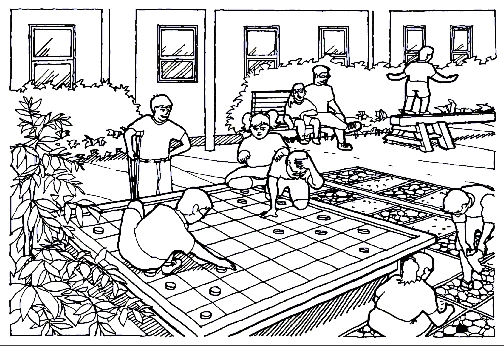
Figure 2.0: Playing giant checker is a form of games with rules play that allows children to socialise in the garden
RESPONSES OF PATIENTS TOWARD THE GARDEN
The therapeutic garden is a platform for the hospitalised children to participate in the passive or active play activity and away from the confinement of the wards. Such participation would mitigate stress due to hospitalisation. In the study at the gardens of the two nucleus hospitals, it is found that the ill children showed positive psychological responses including (i) more cooperative and obedient toward medication and thus easier to administer, (ii) less crying since they are able to play outside the ward, and (iii) physically active as shown in their play activities. These findings are determined by the ward staff, doctors and nurses, whom observed the behaviour of the paediatric patients for eight weeks. Table 1.0 shows the evaluation of ward staff on the responses of the patients after participating in the gardens.
Types of Behaviour Strongly Disagree Disagree Somewhat Agree Agree Strongly Agree Percentage Agree Cooperative 0 0 6 27 10 100 Happier 0 0 1 27 10 100 Less Crying 0 0 3 19 21 100 Physically Active 0 0 12 13 17 100 Independent 0 1 15 19 7 98 Obedient 0 1 17 16 9 98 Table 1.0: Responses of ward staff on patients’ behaviour toward the gardens (n=43)
In addition to this evaluation, the ward staff (n=42) also gives several positive remarks including;
1. The children are not bored. They always look forward to go to the garden.
2. The children are more cheerful and cooperative.
3. The children are easier to handle.
4. The children are happy. Some of them feel that they are not sick.
5. Since the patients are happy and cooperative, the ward environment is more cheerful – a nicer and better place to work.The staff evaluation and remarks are suggestive evidence that participating in the garden activities would stimulate the patients to feel engaged and fascinated with the outdoor environment and its features. This engagement and fascination have resulted in positive behaviours that would lead to a better psychological well being of the patients.
To substantiate the staff’s evaluation, responses from the patients or their parents were also obtained from interviews and questionnaires. From a descriptive analysis, it is found that 94% of the patients (n=360) preferred to be and play in the garden, 95% (n=349) like going to the hospital or do not mind going to the hospital after the inception of the garden. The attributes of the garden that result to the positive responses toward the gardens, with p<0.001, are refreshing scent, fresh air, full with light, cheerful environment, scenic views, home feeling and place for variety of play activities. The responses are clinical outcomes that can be concluded as (1) increased psychological and physical peacefulness, and (2) increased psychological adjustment. Although the ultimate outcome, shorter length of stay, is not achieved in this experiment, the emotional adjustment and peacefulness shown by the paediatric patients are encouraging and progressive signs on the potential of garden for restorative process.
DISCUSSION
Robin Moore (1999) has categorised therapy garden for children into four types, namely, play, horticulture, nature and animal. Hence, in term of healing process and capability, the gardens of these nucleus hospitals are classified as play therapy type which is the most common one in a hospital environment. In the perspective of physical form and quality of physiological and psychological well being to the children, there is no discrete division between these gardens because vegetation is the denominator in defining the spaces in the gardens.
The success of the garden as an environmental intervention is influenced by three aspects, (1) proper site planning of the garden that ensures hierarchy of spaces, and sense of security and safety, (2) diversified composition of natural and man-made elements that provides variety of play activities, either familiar or innovative types, and (3) interaction with microclimatic factors including light, temperature, rain and wind. In spatial perspective, the garden is an open space that can be viewed and be reached easily from the wards. It is a place where the patients’ senses are positively stimulated by the natural and man-made features and their compositions and by the climatic factors. The garden is a respite, dominated by plants, where it holds the patient’s attention and interest without the experience being stressful. The patients could be engaged and fascinated by the varied forms and colours of vegetation that offer fragrance, fruits, and shade from the sun. Fragrances often trigger memories of particular times, events, places or feelings (Hass et al., 1996). Hence, the patients could detach temporary from the indoor condition, which is usually more confined or crowded than the garden. Here they could attain privacy and relaxation while enjoying the beauty of nature and man-made elements.
The garden can also be viewed as a place where the patients could maintain a balance between familiarity and change. Seeing some of the plants and animals such as birds and insects similar to the ones available around their homes would link to familiar conditions and would lower their anxiety to go home. As an outdoor space, the garden can support active activities such as gardening for adults and sensorimotor play for children. These activities allow the patients to socialise with others and thus would share their feelings about their illnesses. For children, the experiencing with gardens allows them to learn about the environment, the cycles of development, and about themselves (Pentz and Straus, 1998).
The garden is flooded with sunlight that allows the patients to sense the spaciousness of the outdoor with diversity of features that stimulate and fascinate the children and thus feel cheerful (Fjortoft, 2000). Even bedridden patients can get emotional benefits from the scenic view of the gardens which draws their attention by viewing through the windows. These pulls of attention in turn led to very brief interludes that can provide a respite from the illnesses, thus providing a micro-restorative experience (Kaplan, 2001). The children have a selection of four to seven play zones with a variety of planting compositions and play equipment. Such compositions create diversity in forms, colours and textures that allow the children plenty to select. The plants, animals, sunlight and wind have created a play space where the children can sense that the garden is alive and natural. Even the shadow patterns from the garden structures and plants fascinate the children as they change in shapes as the sun moves. This phenomenon provides opportunities for the children to sense motion, variety, orientation and discovery (Moore, 1996). Here, the children are free to select which garden features to play and thus allowing them to move from one play zone to another at their own pace. Their movements are not restricted by any footpath but free to walk on the lawns.
With the vegetations, the children could participate in all three types of play, sensorimotor play, pretend play, and games with rules play. The sensorimotor play is the most common and active type for children of all ages that allows them to experiment with bodily sensation and motor movements. The slide, swing and hopping urns are some of the equipment allowing them to practice this play. Preschool patients, age four to five, would pick flowers and sand from the sand pit and bring them to the timber pavilion. Here they practice pretend play, a more complex play, where they carry out actions plans, take on roles, and transform the plant and earth materials to symbolic things, for example, food. This play becomes socio-dramatic where objects begin to influence the roles children assume. The games with rules play is least seen in the gardens since older children are afraid or shy to mix with each other. This is a competitive play where children are required to organise, to negotiate and to agree on playing criteria with the garden equipment.
CONCLUDING REMARKS
Garden can be an effective environmental intervention to healthcare in Malaysia hospitals through proper planning and management of the garden as well as the patient. The year-round favourable climate allows the patients to continuously gain psychological benefits by viewing or physically participating in the garden. Our preliminary findings on the effectiveness of the garden to foster the healing process of paediatric patients open a wide avenue for further research on the power of natural environment to restore psychological and physiological well being of hospitalised patients. These findings may result in big savings in medical expenses of the government. Such impact can be seen in the nucleus-hospital scenario; 12 units are distributed throughout the nation providing medical services to more than 22,000 children as in-patients per year. If the garden could reduce 1.0 day per patient in the recuperation period, this would mean a saving of 22,000 days of treatment in the nucleus hospital system.
Finally, it is important to do collaborative research on the planning and design of environment dealing with health services, pertaining to both psychological and physiological well beings of patients, caregivers and even visitors in the hospital environment. The collaboration would include professionals from the built environment sector such as landscape architects and architects, and the health service sector such as psychiatrists, paediatricians, therapists, and hospital managers.
Acknowledgements
The author would like to thank the Ministry of Science, Technology and the Environment, Malaysia and Research Management Centre, Universiti Teknologi Malaysia on granting the financial support under the IRPA grant scheme to conduct the study on children therapeutic garden from December 2000 to November 2002.. The research team comprises of Ismail Said, Razali Adul Hamid (PhD), Ismail Mohamad, and Roshida Abdul Majid from Universiti Teknologi Malaysia, and Siti Zaleha Mohd Salleh (MD) and Dul Hadi Mat Junid (MD) from the Ministry of Health Malaysia. Special appreciation to Zareena Omar for her thorough editing of this manuscript.
REFERENCES
1. Burnett, J.D. (1997). Therapeutic Effects of Landscape Architecture, In: Marberry, S.O., Healthcare Design, John Wiley & Sons, New York.
2. Fjortoft, I., Jostein S., (2000). The Natural environment as a playground for children: Landscape description and analyses of a natural playscape, Landscape and Urban Planning, 48, 83-97.
3. Francis, Carolyn (1997). Child Care Outdoor Spaces, People Places: Design Guidelines for Urban Open Spaces, 2nd Edition, Edited by Clare C. Marcus, John Wiley and Sons, New York.
4. Hass, K.L. and McCartney, R. (1996). The Therapeutic Quality of Plants, Journal of Therapeutic Horticulture, 8:61-67.
5. Herzog, T.R., Chen, H.C., Primeau, J.S. (2002). Perception of the Restorative Potential of Natural and Other Settings, Journal of Environmental Psychology, 22, 295-306.
6. Ismail S., Siti Zaleha M.S., Dul Hadi M.J., Razali, A.H., Ismail, M., Roshida, A.M. (2002) Study on the Effectiveness of Therapeutic Garden as a Platform to Recuperate Ill Children in Nucleus Hospital Environment, Research Report Universiti Teknologi Malaysia Vote 72338, Johor, Malaysia, unpublished research report.
7. Kaplan, R. and Kaplan, S. (1989). The Experience of Nature: A Psychological Perspective, Cambridge University Press.
8. Kaplan, Rachel (2001). The Nature of the View from Home: Psychological Benefits, Environment and Behavior, Sage Publications, Vol.33, No. 4, July, 507-542.
9. Lewis, Charles. A. (1994). The Evolutionary Importance of People-Plant Relationships. In: Flagler, J. & Poincelot, R., People-Plan Relationships: Setting Research Priorities, Food Product Press, New York.
10. Lindheim, R., Glaser H. H., and Coffin, C. (1972). Changing Hospital Environments for Children, Harvard University Press, Massachusetts.
11. Marcus, Cooper C. and Marni Barnes (1999). Healing Gardens: Therapeutic Benefits and Design Recommendations, John Wiley and Sons, Ins. New York.
12. Moore, Robin C. (1996). Compact Nature – The Role of Playing and Learning Gardens on Children’s Lives, Journal of Therapeutic Horticulture, American Horticulture Therapy Association, Vol. III, USA.
13. Pentz, T. and Straus, M.C. (1998). Children and Youth and Horticultural Therapy Practice. In: Simson, S.P. and Straus, M.C. (Eds.), Horticulture as Therapy: Principles & Practice, New York: The Food Products Press.
14. Rubin, H.R, Owens A.J, Golden G. (1998). Status Report: An Investigation to Determine Whether the Built Environment Affects Patients’ Medical Outcomes, Quality of Care Research, The Johns Hopkins University.
15. Thomson, J. (1994). Natural Childhood, The First Practical And Holistic Guide For Parents of The Development Child, Simon and Scuster Inc., New York.
16. Ulrich, R.S. and R.F. Simons (1986). Recovery from stress during exposure to everyday outdoor environments. In: J. Wineman, R. Barnes, and C. Zimring (Eds.). The Costs of Not
17. Knowing: Proceedings of the Seventeenth Annual Conference of the Environmental Design Research Association. Washington D.C.: Environmental Design Research Association.
18. Ulrich, Roger S., Simons, R.F., Losito, B.D., Fiorito, E., Miles, M.A., Zelson, M. (1991). Stress Recovery during Exposure to Natural and Urban Environments, Journal of Environmental Psychology, 11, 201-230.
19. Ulrich, R. S. (1992). How Design Impacts Wellness, Healthcare Forum Journal, Vol. 35, No. September.
20. Ulrich, R.S. (1999). Effects of Gardens on the Health Outcomes: Theory and Research. In: Cooper-Marcus, C., Barnes, M. (Eds.). Healing Gardens: Therapeutic Benefits and Design Recommendation, John Wiley & Sons, New York, pp 27-86.
Venolia, Carol (1994). Healing Environment, The Center For Health Design, Martinez, California.21. Whitehouse, S., Varni, J.W., Seid, M., Cooper-Marcus, C., Ensberg, M.J., Jacobs, J.R., and Mehlenbeck, R.S.,(2001). Evaluating a Children’s Hospital Garden Environment: Utilization and Consumer Satisfaction, Journal of Environmental Psychology, 21, 301-314.