Cultural-Ethnic Landscape of Terrace Housing Community in Peninsular Malaysia
Ismail Said (Associate Professor)
Department of Architecture, Faculty of Built Environment
Universiti Teknologi Malaysia, 81310, Sekudai, Johor, MALAYSIA
Email: [email protected]Abstract
Cultural-ethnic landscape symbolizes the belief and cultural values of an ethnic group living in a community. The landscape is an expression of people's idea and work; illustrating intrinsic understanding and relationship of people to their fellow beings and environment. Such landscape is significant to the human community development and more challenging to establish it in a multi-ethnic society such as terrace house neighborhood in Peninsular Malaysia than in homogenous society. This research investigates the characteristics of terrace house gardens from three ethnic groups, namely, Malays, Chinese and Indians. Through inventory and analysis of 23 neighborhoods in Peninsular Malaysia, it is found that 52% of the terrace houses have gardens. The design of garden and its features are partially influenced by ethnicity belief of the resident. The differences are in selection of plant species which are determined by the religious belief and ritual rite of the ethnic group. In hierarchical importance, the plant species are planted in the house garden for five reasons or uses, namely, (i) decoration, (ii) food, (iii) medicine and cosmetic, (iv) ritual, and (v) provision of shade.
Introduction
Cultural landscape symbolizes the belief and cultural values of an ethnic people in a homogenous or heterogeneous society. It is an expression illustrating intrinsic understanding and relationship of ethnic people towards their living environment. Rural settlements in Peninsular Malaysia such as villages of Malay and Chinese and plantation settlements of Indian possess some cultural landscape characteristics. Generally, a village living environment of the Malays is composed of vernacular timber houses laid in garden of fruit trees and edible shrubs and herbs. Most of plant species are planted in random layout with simple application of site planning. Tall palms and large shade trees are planted at appropriate distance that they would provide some shade but allowing some amount of sunlight to reach the house and its compound. Such distance avoids dead branches or palm fronds falling onto the roof, either causing damage to roof or clogging the roof gutter. Other than providing food to the residents, the trees and herbs are source of medicine and use as material in ritual ceremonies.
The Indians in Malaysia also possess strong relationship with plants that are cultivated in the house gardens. The common species characterized their gardens include kacang kelo (Moringa ptergosperma), thulsi (Ocimum santum) and susun kelapa (Ervatamia coronaria) that supply fruit for cooking or leaves and flowers for religious rites. The Chinese would prefer to plant pomegranate (Punica granatum), sealing wax palm (Cyrtostachys lakka) and Euphorbias in their gardens. They believe that the plant may bring fortune to resident or castaway bad spirit from entering the house. The Chinese would also place red altar in the garden for worshipping, giving a distinctive character different from the Malays and Indians. Therefore, the rural house gardens in Peninsular Malaysia would signify the ethnicity of the resident and would create sense of belonging to the living community. Thus residential garden is a cultural landscape; it is a microcosm of family living by integrating the house with the exterior space. The planning and design of the landscape could be a subconscious understanding of man relating him with the physical environment and his fellow being.
In Malaysia, the cultural landscape is widely practice in the rural areas but lack in the urban residential communities. Limited space and less time for gardening are among the factors that cultural landscape is scarce in urban neighborhood. In addition, street landscape done by local authorities in towns and cities in Peninsular Malaysia only consider the provision of shade with little or lack of attention on the importance of cultural-ethnic relationships. Residential communities in the towns are housed in mass housing. Most of the houses called terrace house are built in rows linking to each other by party wall. They are built repetitively in similar form and façade treatment creating a living environment with monotonous architecture. The mass housing scheme in towns and cities in Peninsular Malaysia began in early 1970s, which resulted to high density living communities (18 to 24 units per acre) resulting to a living community lacks in identifiable and personalization landscape. Unlike the rural housing, terrace houses possessed small space for gardening; frontyard can be as small as 9 m2 and sometimes without kitchen garden. Within the constraints, many residents tried to establish gardens with ethnic characteristics, creating sense of place to the neighborhood. The potentiality on variations of cultural garden in the urban community is high because of the multi-ethnic society living in the terrace houses. Thus this papers explains the characteristic and role of ethnic landscape in urban residential community in Peninsular Malaysia. The discussion is based on a research finding that the author has obtained in December 2000 from a study Determining Cultural-Ethnic Landscape in Terrace Housing Community in Malaysia. The study focuses on three ethnic groups namely, the Malays, Chinese and Indians living in terrace houses. It identifies the factors that influence the layout of garden, planting composition and type of garden accessories. Selection of plant species and garden design is determined by three major reasons, namely, functional, aesthetic and ritual. This paper will discuss on the rationalization on selection of plant species and garden accessories and how they are laid in the garden.
Ethnic Gardens in Terrace Houses
The demand for affordable house in towns and cities of the nation continuously increased beginning from the rapid migration of rural population to urban areas since early 1970s. Statistic from Mid-term Seven Malaysia Plan (1996-2000) indicated that by end of year 2000, about 800,000 housing units is required to be built throughout Malaysia. Eighty five percent (85%) of the units are classified as terrace (link or row) houses that are further categorized into low cost, low-medium cost, and medium cost. They are linked by party walls comprising 16 to 28 units per row. A typical floor dimension of a one-storey low-medium type unit is 4.6x16.8m on a lot measuring 4.6x22.9m. Generally, a unit of terrace house consists of five rooms, namely, living and dining room, two to three bedrooms, a kitchen and one to two bathrooms. The living and dining is fused to one space that becomes multifunctional space where the households spend most of their time. The frontyard is comprised of porch and driveway and garden measuring 6.1 meters in length and width similar to the house lot. The low-medium unit has a small garden space about 12 to 15 m2, about 15% to 20% to the size of the building floor area. This is the private (personal) space for the family to rest and play, drying clothes, and gardening. This tiny space could not accommodate even a medium size tree (crown diameter about 5.0m) because tree’s canopy will block much of the sunlight into the house. Thus many residents resort to potted planting, and sometimes encroach to the reserve space on the road shoulder. The reserve space, about 1.5m in width and average size of 4.5m2, is the planting zone for street planting. Sometimes kitchen garden is included in the lot located at the back of the building. Here the residents put up the cloth line and plant some herbs. It is much smaller than the frontyard, about 1.5m in length.
End lot terrace house is blessed with large space for gardening. Generally, the garden size is more than 130m2, as big as the building floor area. Thus residents have leverage to do more plantings including fruit trees such as mango (Mangifera indica), jambu air (Eugenia aquea) and coconut (Cocos nucifera). The garden is border by variety of flowering shrubs and herbs with lawn area as wide as 6.0m width that become the play space for the residents. Generally, the lawn is composed of native grass species, cow grass (Axonopsus compressus), a hardy species that can survive for many years. Sometimes, residents preferred fine texture grass such as Zoysia species for better embellishment in the garden. Other than the plants, the residents introduced several garden accessories including fishpond with cascade or fountain, swing, altar, fence and wall, and shelter in the garden.
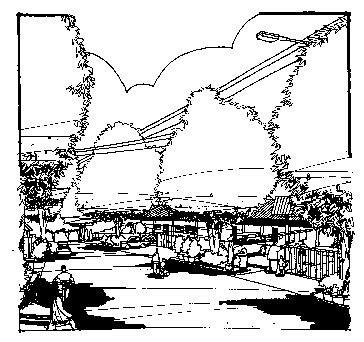
Local road in terrace housing neighborhood is characterized by medium to large size trees planted by local authority. The main purpose is provision of shade, thus only non-fruiting species are specified for street planting. Repetition of similar species along the road shoulders in many neighborhoods of a town resulted to similar outlook that lacks own character and identity. A dramatic change happens when the residents remove the existing planting and replace with their own planting composition on the road shoulder. The residents would focus on planting fruit trees with herbs or foliage shrubs under them. An excellent example is a neighborhood at Taman Rakyat neighborhood in Merlimau, Melaka whereby mango trees characterize one of the local roads. Almost all residents planted the trees in front of their houses, competing to produce the best fruits as illustrated in Figure 1. In April, when the trees bear fruit a distinctive ephemeral character for 3 to 4 weeks emerges and enlightens the neighborhood with mango of many shapes.
Figure 1: View of a local road shaded by mango trees at Taman Merlimau's neighborhood
Occasionally, vegetable gardens are also cultivated on the road shoulder with varieties of species such as onion (Allium cepa), pineapple (Ananas comosus), okra (Hibiscus esculantus), yam (Caladium), maize ( Zea mays), pandan (Pandanus fragrans) and many other herbs. The composition further adds the landscape variety of terrace housing neighborhood, differentiating one over another. It simultaneously develops sense of place for the residents to feel the sense of belonging to their communities.
The landscape can be recognized further through planting and garden accessory compositions that selected by Malays, Chinese and Indians to make their gardens.
Planting Composition
Plant is the distinctive element that dominates and features the terrace-housing neighborhood in Peninsular Malaysia. Research finding indicated that 52% of terrace houses of the multi-racial community have appropriate gardens in the frontyard of the dwelling. The residents utilized a total of 162 plant species of shade and fruit trees, flowering and foliage shrubs and a variety of herbs, climbers and groundcovers. In comparison, there are about 100 plant species in rural house compounds even though there are more space for gardening in the rural setting. Thus urban terrace house dwellers introduce many varieties of plant in small quantity. The establishment of the garden is more significant in those neighborhoods that have been resided for more than 5 years. Consequently, landscape in low-cost terrace neighborhood is more developed than medium-cost neighborhood, indicating the residents give more attention and commitment to their gardens.
The utilization of plant in the terrace-housing neighborhood is categorized into 5 types, namely, decoration (32%), food (22%), medicine and cosmetic (22%), ritual (16%) and provision of shade (8%) in the order of dominance of use. The Malay and Chinese place decoration the highest score due to the preference of beauty by planting flowering and foliage shrubs either in clay pots or on ground. In contrast, the Indian emphasized the medicinal and ritual values of plant more than its beauty.
For decoration, the residents prefer bright flowering shrubs including bougainvillea, hibiscus, ixoras, allamanda and rhizomes especially alphinias and heliconias. In addition, several multicolored foliage shrubs or herbs such as crotons and coleus are also introduced into the garden. The cultivation of flowering shrubs spilled over outside their house compound onto the road shoulder as shown in Figure 2. Generally, the plant is source from nurseries or obtains from neighbor's garden. Giving and exchanging plant species is a common practice and tradition in Malaysia especially among the rural communities. The practice happens when a resident visited his neighbors and keen to get some cutting or sapling from their friend gardens. Easy growing plant such croton and polyscias are grown from cutting. The act of exchanging plant creates warm and coherence relationship among the residents living a multi-racial community. Thus sense of unity can be accomplished in the neighborhood through the aesthetic value of plant species.
Figure 2: Residents of terrace house normally used the road shoulder as extension of their gardens
In the lore of the plant beauty, variety can also be seen in the ethnic landscape. The Chinese would prefer plant with red color such as sealing-wax palm, bougainvillea, Euphorbia species, Adenium obesium and poinsettia. The plants are believed to bring fortune to the household or shy away evil from intruding into the house. One distinctive fruit tree planted at gate of the Chinese house is pomegranate which either planted on ground or in large clay pot. Several beliefs are attached to the plant including as symbol of fertility and as promise of faithful offspring to the fanily. It is an important element in funeral ceremony that its leaves are soak in water and taken as bath after attending burial. This act will cast away bad spirits and stop from entering the house.
On the other hand, white flowering shrubs especially jasmines and ervatamias, distinctively characterized the Indian gardens (see Figure 3). These flowers are material to make garlands called malai which are worn by Indian ladies as hair accessories and for offerings at the temple. The religious festival asociated to the temples are Ponggal, Mahashivatri and Thaipusam. Two other herbal species that define the character of Indian terrace-house garden are khrisna thulasi (Ocimum sanctum) and nochi. Thulasi is traditionally revered as synonym for beauty, purity and prosperity (Soundra, 1982). Devoted Hindus would always cultivate this plant in their gardens because it is intimately associated with religious worship and offerings. Other mythical beliefs include the plant has supernatural power to protect the residents from struck by lightning and prevent evil spirits from entering the house. Thus the plant is usually planted on ground or in clay pot as accent garden species, not within the mass of other species. One or two plant per species is enough to supply flowers or leaves for ritual rites, prayers and medicine (Tan, 1991).
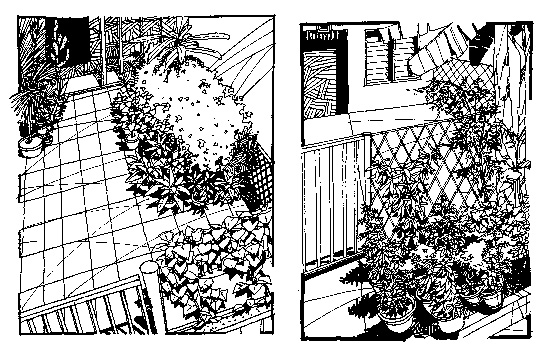
Figure 3: A composition of thulasi, nochi, banana trees, moringa and jasmine in a garden of terrace house can significantly signify an Indian house
Apart from the flowering shrubs and herbs, fruit trees also characterized the Indian terrace garden. The trees include mango, banana, neem, Sesbania grandiflora and Moringa pterogosperma that supply fruits as food and leaves for ritual and religious purposes. The banana trees are planted for fruits either eaten fresh or as ingredient to make cakes. Their leaves are used for wrapping food or even as platter serving rice and curry. The Indian regards the banana tree as a symbol of prosperity and fertility demonstrated by the numerous fruits in a bunch. Thus a pair of banana tree with fruits are cut and tied to the gateposts of the bridegroom house and another pair at the temple gate. The neem trees are planted on road shoulder to provide shade, their leaves are used as medicine for various diseases and as antiseptic to clean cut and wound. Fresh mango leaves are tied in string and attached to doorframe to cast away evil from entering the house.
Planting of medium-size canopy trees on the road shoulders and climbers on trellis or pergola would obviously provide shade and ameliorate the microclimate of the residential community. Under the foliage canopy temperature is lowered by 3 to 40C than directly under sun reaching 340C at noon. This gives better thermal comfort for the people especially children to play even in mid afternoon when the temperature of the day at its peak.
Garden Accessories
The Malays seems do not possess any distinctive garden accessories that make their gardens different from the Chinese and Indians. Since the Malays practice Islam, they are prohibited from believing physical items such as plant or altar for submission to God. Some house gardens are facilitated with seat, either made from timber or concrete, placed under shade tree or palms. This space becomes a gathering node for the household and their neighbors. A simple swing made from a pair of rope and timber plank tied to a branch of the shade tree might be seen in the Malays garden. There are a few end-lot houses with vegetable gardens and chicken coops. Thus the quality of rural lifestyle is brought into the urban neighborhood. Although the chicken may cause disturbance to the neighbors some of the terrace house residents persist to raise the animal for food or hobby. Some would also raise birds in decorative cages hang from porch's rafters. This is a hobby that also shared by some Chinese.
The most conspicuous garden accessory in Chinese terrace house is the red altar, mostly placed on post or pedestal. It is usually placed at the corner of the house garden in relation to Feng Shui principle. Buddhist priest determines the placement of altar. Since red is the color of the happiness and prosperity, some Chinese residents hanged red cloth and a mirror at the front door. The scene is more attractive and vivid during Chinese New Year celebration when residents hang golden lucky charms at the door. Chinese would differ from the Malays in the choice of garden accessories particularly plant containers. The Chinese residents prefers decorative clay pots, noticeably with dragon motif. Small fishponds with cascades and fountains are also common in the Chinese gardens signifying the values of water and fish in their beliefs.
The Indian would differentiate their garden by introducing colorful prayer motives especially the icon of elephant on the gate columns. Occasionally, Indian residents of terrace houses placed disposed clay or metal pots, with painted white spots, on fence posts to cast away evil spell. This ritual practice would also guard the residents from demons or ill feeling of people toward the residents.
Concluding Remarks
It is important to recognize and understand the role of cultural-ethnic garden toward physical and social character development of terrace housing community in Peninsular Malaysia. This research shows that the Malay, Chinese and Indian are practicing the value of making cultural landscape in their neighborhood. Individual gardens and street planting on local road form the cultural landscape. The garden and its planting symbolize the will and effort of the terrace house residents to create their own living space. It is an expression of the household to participate in the development of a community. Its character signifies the ethnicity of the resident. Resident of a terrace house would be proud to proclaim that the garden is done through his idea and belief. Furthermore, the cultural garden and architecture form a living community that ultimately creates sense of belonging or spirit of place for the three ethnic groups to live and interact. This intangible product is necessary to be held by each individual living in a heterogeneous society. Residents are free to practice their belief through the making of the garden. This freedom is a prerequisite factor to promote and maintain harmony in the multi-ethnic community. Although most gardens are self- design and construct, the selection and arrangement of plant species and placement of landscape features conform to cultural and religious values. Gradually the character of the garden changes as the plants grow bigger or the owner modifies the design. But the principle in selection of plant species for the garden remains.
After knowing the existence of cultural landscape in terrace house community it is essential for landscape architect, urban planner and architect to consider these landscape values in the planning and design of urban residential areas. Local authorities should integrate the cultural landscape values during zoning and preplanning of residential estate. They should make the planner and designer aware that establishment of cultural landscape is a positive mode to integrate people in multi-ethnic community. It must be noted that community development is not only through planning and layout of building and utility but it is accomplished through sense of pride and belonging of every resident to their community.
Acknowledgement
The author would like to thank Research Management Centre of Universiti Teknologi Malaysia on funding the study.
References
1. Burkill, I. H., Malay Village Medicine, Garden's Bulletin Straits Settlements, Volume 6, 1930, P: 264-268.
2. Cheu, Hock Tong, Chinese Beliefs and Practices in Southeast Asia: Studies on the Chinese Religion in Malaysia, Singapore and Indonesia, Pelanduk Publications, 1993.
3. Low, Albert, Practical Feng Shui for the Home, Pelanduk Publications, 1995.
4. Mong, Lee Siow, Spectrum of Chinese Culture, Pelanduk Publications, 1986.
5. Ong, Hean-Tatt Chinese Plant Symbolisms ; A Guide To The Symbolic Value of Plants in Chinese Culture, Pelanduk Publications, Selangor, 1999.
6. Rapoport, A. Human Aspects of Urban form, Oxford: Pergamon Press, 1977.
7. Wei, Tsuei, Roots of Chinese Culture and Medicine, Pelanduk Publications, 1992.
8. Winstedt, Richard and Che Seong Tham, The Malays: A Cultural History, Gham Brash Publishers, 1981.
9. Yuan, Lim Jee, Rediscovery Malaysia's Indigenous Shelter Garden, Institut Masyarakat, 1987.
10. Yong, Tan, What Flowers Mean to Malaysian, Flowers Malaysian Meanings, Quill Publishers, 1991.