SITE PLANNING AND ARCHITECTURE OF RESORT IN MANGROVE FORESTS
Ismail Said
Department of Architecture, Faculty of Built Environment,
Universiti Teknologi Malaysia, Skudai, Johor Bahru, Malaysia.
e-mail: [email protected]Muhammad Ali A. Rahman
Department of Urban & Regional Planning,
Kulliyyah of Architecture and Environmental Design,
International Islamic University Malaysia, Gombak, Kuala Lumpur, Malaysia.
ABSTRACT
Mangrove forest is a coastal wetland ecosystem dominated by halophytic vegetation growing in brackish or saline waters. This complex ecosystem is formed by integration of variety of plant and animal communities living either as aquatic or terrestrial life. The survival of living organisms, plants and animals, is directly influenced by physical and climatic factors that become the limiting factors for their growth. The forest also supports human community whom depends on the plants and animals for sustenance. Hence, it is a resourceful ecosystem for tourism including modification of its resources into resort. Three factors are suggested for consideration to minimize the detrimental impacts on the sensitive ecosystem. The factors include site planning, type of architecture and construction method that not only relate to the physical and climatic elements but also social attributes of local communities. It could accommodate resort development when proper site planning and appropriate architecture are applied into the ecosystem. Proper site planning means the layout of buildings is in relation to the intensity of human activity and building development. The architecture should be of low-rise building inserted among the tree stands and spread throughout the site rather than concentrate in small areas. Local skills and knowledge should be sort from the surrounding communities that applied hand-held tool techniques to construct the buildings. All architecture should be raised on stilts to allow free flow of tides and possibly natural ventilated so that visitors could experience and feel the real ambience of the mangrove forest setting.
KEYWORDS
Resorts architecture, Site planning, Mangrove forest ecosystem, Local human community
INTRODUCTION
Mangrove forest in Malaysia is a complex estuarine ecosystem that offers opportunity for ecotourism activities. Some 600 000 hectares of the forest occupied the part of coastal zone of Peninsular Malaysia, Sarawak and Sabah. Since time immemorial, man depends on the forest for many socio-economic importance including supply of timber, supporting commercial fish and prawn fisheries, protecting the coastline from erosion and providing 50 different products of use to local inhabitants (Malaysian Wetland Dictionary, 1987). Tourism has expanded to all landscape resources in this country including the estuarine habitat. The wetland is a tidal habitat of complex interaction of vegetation and animals that their survivals are directly influenced by the physical and climatic factors. Experiencing the forest environment will draw nature-loving tourists to the physical, biotic and climatic factors of the forest. In addition, local human population inhabited the forest could be one of the interest for the tourists to see and experience their lifestyles. Thus there are several areas of mangrove in Malaysia are developed into resort to cater the ecotourism activities. The areas include Marang in Terengganu, Langkawi Islands, Matang Mangrove Forest Reserve in Perak, Kuala Selangor Forest Reserve in Selangor and several forest areas in eastern coast of Sabah.
Although ecotourism is defined as human activity that does not denigrate the landscape resource and biocentric rather than homocentric in philosophy, the detrimental effects to the sensitive ecosystem do exist. In principle, ecotourism is concerned about avoiding damage to the environment wherever possible and ensuring that any unavoidable damage is repaired (WWF Malaysia, 1999). Intrusion of man-made features such as buildings and road and bridges into the tidal habitat caused some degree of modification to the vegetation, wildlife and hydrology and soil structure. Without doubt, the ecotourism bring social-economic revenue to the nation and mangrove forest should be one of the natural resources use as recreational amenity. Oftentimes, resort development in Malaysia destroyed the ambience of the natural setting, which is the essence of visiting the place (Ismail, 1999). How much intrusion and modification upon the physical and biotic resources of the ecosystem is allowed when resorts are constructed in the forest? Can architecture be inserted, rather than intruded, into the forest to minimize the detrimental effects? What are the construction methods to build the building and infrastructure that caused damage to the ecosystem within the tolerance range of plants and animals? How resort contributes to the social well being of the local human community living in the estuarine wetland? These are questions that planner, architect and landscape architect should think before and during the development of resort while sustaining the mangrove forest. This paper will discuss the issue in the following steps; (i) ecosystem of mangrove forest, (ii) site planning of resort, (iii) method of building construction, and (iv) resort management in response to local human community. A successful ecoresort, Marang Resort and Safaris in Terengganu, is used as case study to justify the idea of this paper.
ECOSYSTEM OF MANGROVE FOREST
Understanding on the mangrove forest characteristics is essential to recognize the potentialities and constraints that the resource can offer for ecotourism. The discussion will focus on the relationship between the physical and climatic factors with the biotic factors, namely, plants and animals.
The mangrove forests thrive in the intertidal coastlines (Yap, 1991) and estuary, inundated by seawater. These are habitat of variety of salt-tolerant halophytes growing in brackish or saline waters on hydric soils. The plants have adapted to the frequent inundation by seawater and saline environment through several features including root systems, propagation method and leaf structures. The common tree species are Rhizophras and Avicennia and a palm species, Nypa fruticans. The plant community supports two types of wildlife, namely, aquatic such as fish, crustaceans, mollusks, snakes and crocodiles, and terrestrial animals including birds, lizards, primates, otters, cats and suiid. The dependence of the animals upon the plants and climatic factors results to a highly productive ecosystem (about 2000 g/m2/yr) higher than either the adjacent fresh or marine waters (Bush, 1997). A prominent example of the ecosystem is the estuary of Kinabatangan River, which is one of the largest estuaries with mangrove in Sabah. It is the niche for many wildlife including proboscis monkeys, orang-utan, elephant, flat-headed cat, oriental darter, eight species of hornbill, many waterbirds, estuarine crocodile and fisheries. The estuary has great tourism potential and is attracting large numbers of local and foreign tourists (WWF Malaysia, 1999). Another example is the Kuantan River mangrove in Kuala Selangor, which is the habitat of many animals notably the fireflies that become the main attraction of the place.
The dynamism of the wetland habitat is directly influenced by the physical-biotic and climatic factors. The physical-biotic factors that influence the planning and design of structures in the forest are water and hydrology, soil, and vegetation and wildlife. Water in the mangrove ecosystem determines the existence of the life in the estuary. Daily fluctuation of water levels by tide and current, and fresh water from the river constantly nourishes the aquatic plants and animals by supplying nutrients to micro- organisms. The nutrients are also derived from forest detritus, consisting of leaves and branches from the mangroves. The organisms are plankton and benthic algae, the primary producer of the aquatic food chain, supporting varieties of neustons, nektons and benthos. The larger aquatic animals become food for higher trophic levels animals, either in the water or on land and in the trees. Thus intervention on the ecosystem must not impede the flow of tides into the plant and animal habitats. Water diversion structures, such as channels, ditches and levees are used to alter the hydrology of the wetland. Such structures should be limited to minimize the hydrologic alteration in the ecosystem.
Many species of trees in the forest have adapted the saline and inundated conditions by having stilt root and pneumatephores. The interweaving structure of stilt roots not only supports the tree but offer refuge for juvenile fish, crabs, shrimps and mollusks from predators and strong occasional waves. In fact, the root system helps protect coastlines from erosion, storm damage, and wave action. Furthermore, the some species of mangrove trees such as Rhizophoras have special root called pneumatephores that enable the tree to extract salt and receive freshwater from the saline environment. They also contain many small breathing pores, lenticels, to allow oxygen to diffuse into the plant. Lenticels are highly susceptible to clogging by crude oil and other pollutants and attacks by parasites.
The hydric soils of the mangroves are generally composed of silt on sandy layers. Vivipary seedlings of some species that begin germination on the tree itself able to readily propagate on the silty soils. This is an adaptive mechanism to prepare the seedlings for dispersal in the harsh saline environment. The soft mud and tidal inundation limit most visitor access to navigable waterways.
Aesthetically, the estuarine wetland and its vegetation formed a pristine environment with slight diurnal change in temperature ranging from 23oC in early morning to 330C at noon. Generally, the scenic views are confined or framed by the mangrove trees and nypa palms that grow along the banks of the water channels. Night setting is tranquil with the sound of insects and other nocturnal animals and sound of wave splashing the banks. The ambience of the mangrove setting change significantly during November to February when the monsoon takes its course. The raindrops ripple calmness of the water and sound of some animals subsides by the sound of winds and rain.
The forest also becomes habitat for human settlement throughout the estuarine wetland such as Matang in estuary of Perak River and Kinabatangan estuary in eastern region of Sabah. The local people built their architecture on stilt using the native material especially mangrove and nibong (Oncosperma tigillarum) for stilt and heavy to medium hardwood for boardwalks and decks. The peoples depend directly from the mangrove; harvesting fisheries from the water, wood from the forest for making charcoal and firewood, and building materials from timber and nypa fronds, and sugar from nypa’s inflorescence (Whitmore, 1977). Recently, there is significant number of tourists visiting the mangrove creating some job opportunities for the local people.
Therefore, determining the characteristic of physical factors (water and soils) and biotic factors in a site is essential step to recognize the potentialities and constraints of the ecosystem for resort development. The inventory and analysis of the factors shall be thoroughly conducted on site and later discuss the possible planning strategies to install buildings and infrastructures. The socio-economics of the local human community must be part of the resort planning and design considerations.
SITE PLANNING OF RESORT
The major planning and design consideration to develop an ecoresort in the estuarine wetland is to conserve the relationship between the physical and biotic factors within the limitation of climatic factors. Conservation of these relationships will ensure no linkages in the food chains or food webs are broken and no change in the microclimate of the ecosystem. Thus the approach would be minimal disturbance and modification to the physical and climatic factors by inserting the architecture and infrastructure rather than intruding into the estuarine biome.
The fundamental approach in site planning is to divide the site in relation to the intensity of human activity and building development. If the accessibility is from land, the typical planning is to divide the site into three zones, namely, public, semi-public and private. The public zone is the entrance space for the visitors to enter the resort complex located on the highest ground. Here amenities such as parking, guard house or even staff accommodation are placed and well segregated from the semi-public and private zones. The ground would receive the least occurrence of inundation thus minimize the blockage of the tide. To accommodate the parking space, access road and buildings, the ground would sometimes require backfilling. Here the intervention to the natural system of the forest will intrusive but necessary. Thus minimizing the number of vehicles parking in the space would require less backfilling to create the platform for the infrastructures. The segregation also result to minimal interference from vehicle’s noise. Thus guests of the resort will feel the serenity of the forest natural setting.
If the accessibility to the resort by boat, the public zone would be not in the site; guests embark into the boat at communal jetty. Guests are straight taken to the semi-public zone and disembarked to the core building for registration.Guests of the resort are later lead to semi-public zone where the core buildings are located. This is a transition zone between the public and private zones. Here registration, dining space and sport and recreational facilities such as swimming pool are housed to cater the needs of the guests. The volume of architecture will be the largest in this zone laid sprawling throughout the designated areas. Dining and gathering spaces should take advantage of the views either towards the tree stands, far distance view of the river and sea, or looking at the intimate view of water channels and change of water levels.Finally, the guests will reach the accommodation unit located in the private zone. Privacy and intimacy of living space are considered first in the planning. Guests are allowed to experience the natural setting by practicing passive activities including site-seeing, meditating, fishing, and canoeing. Accommodation unit called chalet or suite are laid in juxtapose position orienting towards the scenic views. Orientation and final layout of chalet must be decided on site after analysis of the views, vegetation and wildlife, and microclimate of the site. Spacing interval for the chalet would depend on the denseness of the tree stands. In a site with matured Rhizophoras stand could accommodate the interval of 10 to 15 meters whereas a more sparse stand would require larger interval. Marang Resort and Safaris (MRS) in Terengganu distanced its chalet at about 10 meters apart in a forest stand composed of mixture of Rhizophora, Avecinnia and several species of coastal trees and palms. The resort does not disturb the nypa stand that niche a colony of primates and lizards. Within this interval, privacy and sense of intimacy is clearly felt by the guests (Ismail, 1999). The area of tree stand cleared is equivalent to the size of building and its boardwalks. Figure 1 illustrates a typical example of architecture of resort and circulation facility appropriate for the mangrove forest.
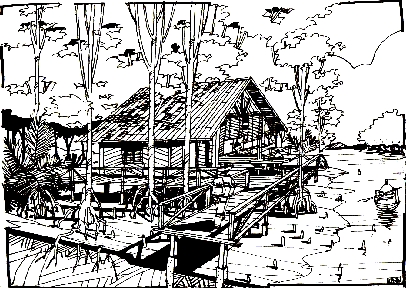
Figure 1 : An example of architecture for resort in mangrove forest
Boardwalks and footbridges link the buildings in the mangrove resort. The circulation facility is about 1.5 meters wide built on stilts to allow free movement of tide into the tree areas. Boardwalks should be made from treated durable wood, either floating or raised on stilts above high tide, and follow sinuous not straight routes. Felling of trees to clear routes for boardwalks and other structures should be minimized; the seaward lines of trees should not be disrupted. Traversing the resort site on foot through the circulation route enables the guest to experience serenity of the forest at variety of viewpoints.
Walking on the bridge one could see the aquatic life particularly brackish-water fish and lizards searching for food or prey. Watching from the chalet ‘s deck one could be amazed by the activity of some species of primates such as proboscis monkey feed on the Rhizophoras leaves or nypa fruits. Occasionally, large iguana could be seen snatching the monkeys when they come too close to the ground during low tide. At low tide the guests will be fascinated the communities of mollusks and crustaceans. Throughout the day and evening the tranquility of the mangrove is orchestrated by many sounds of birds and insects. All the phenomenon are offered by the mangrove forest plant and animal communities bringing interesting and unique experience to the nature-loving tourists.
ARCHITECTURE AND CONSTRUCTION METHODS
Sprawling layout and small size structures are the two design considerations for the wetland resort. Massive architecture should be distributed into small scale building in the designated area. This practice would cause minimal modification to the water flow, soil structure and plant and wildlife communities of the forest. This architecture form is the typical structure built by local people living in the estuarine wetland. Buildings should generally not be higher than the tree canopy, and the concept of buildings and boardwalks should be that they become structures within the forest. Observation towers may protrude above the tree canopy, but should be few in number, and unobtrusive in appearance.
MRS laid their chalet along the Kerengga River only in the Rhizophoras stands, leaving the nypa community for wildlife habitat. All buildings are built within one storey high, not exceeding the height of the Rhizophoras stand. The dimension of a typical chalet is 5 x10m (16 x 31.5 feet) occupying an area of 50m2 which is ample to accommodate two guests. Only stilts, either planted to the soil structure or laid on concrete footing and stump, are used to support the architecture, boardwalks and bridges. Again the stilts do not impede the flow of tide and nutrient to the root systems of the mangrove keeping the ecosystem undisturbed.
To achieve the ambience of a village setting, MRS chalets are designed in the spirit of a typical Malay house with spaces being defined in hierarchical layout, namely, public, semi-public and private spaces (Zamhuri, 1997). In the chalet, the verandah acts as deck is the public space for guest to view the surrounding. As the guest enters the building, the lounge becomes a transitional space, a semi-public zone, separating the bedroom from the deck. Thus the guest is able to feel the solitude staying in the building.
Utilizing the forest products such timber for the construction of stilt system and nypa fronds for attap would economize the construction cost of the resort. But structural components of building including post, beam and wall should be made from durable material such as hardwood. Post and beam construction method is the recommended to construct the building since this is the typical technique applied by villager living in the forest. Consequently, constructing the resort building similar to the size of a house would bring opportunities for local people to get employment during the construction stage. The local people could even supply building materials such as mangrove tree and nibong (Oncosperma tigillarum) for stilt and nypa fronds for attap. MRS applied this practice during the first phase of construction consisting of 25 units chalets and a core building in 1991.
The chalets were built in traditional Malay way using only hand-held tools and light machinery by carpenters and craftsmen recruited from the surrounding villages (Zamhuri, 1997). The traditional approach helps to minimize disturbance to the natural features particularly vegetation, water quality and soil structure. Most of the materials, including timber and roof tiles, are sourced locally. They were transferred across the river on rafts and temporary pontoon bridges. Other than a concrete stump for the foundation, the floor, the wall and roof structure of the chalet is made form cengal, a heavy hardwood species, in which easy to work even in making detailings. Light and small size (130 x 230mm) clay tiles, formed the 300 pitch roof of the chalet. The tiles are easily to install and replace, and readily protect the interior form heat and rain within the human comfort zone.
The feeling of comfort and safety is a major concern in accommodating visitors to a wilderness setting. All buildings should naturally ventilated; with many openings including louvered windows and doors, perforated walls and gable. The architecture facilitates the sea breeze to ventilate the building that reduces temperature 20 to 40C lower than the unshaded area. One-horsepower air-conditioning unit could be installed to each chalet to give extra comfort to guest for use during the night. In MRS resort the timber floor of chalet’s bedroom is carpeted and the bathroom is equipped with hot-water shower. Only low-wattage incandescent lamps were used to draw the sense of serenity of the night.
Sewerage system is the most difficult problem facing the resort development in wetland. Many resort used septic tank system to dispose the sewerage. Thus the most suitable location for buildings is the inland belt of the forest whereby the septic tank can be placed in the ground without being flooded by high tides. Excavated mud from the construction of the sewerage system must not be left in exposed heaps. Such mud oxidizes when dry and causes acid sulphate conditions, contaminating water and making it unsuitable for many forms of life.
SOCIAL-ECONOMICS CONTRIBUTION AND RESORT MANAGEMENT
The establishment of resort in a mangrove forest could provide job opportunities to local people living within the vicinity of the development. Since the buildings are constructed manually using hand-held tools, many semi-skilled workers and craftsmen could be part of the work team. MRS project employed many local workers and some craftsmen in Marang, Terengganu during the construction stage. During the process the locals able to gain new knowledge of construction including set up of electrical and plumbing systems. When the buildings are completed, almost 70% of the workers are recruited as the resort staffs for operation and management (Zamhuri, 1997).
The locals may also benefit from the development by having venue to sell their crafts to the tourists coming to the resort. Purchasing the crafts such as utensils, mats, fish traps and baskets using indigenous materials and design could enhance the experience of the visitors. This is an income generating practice benefiting the local people. The locals could also benefit from the ecotourism by bringing the tourists on their boats traversing in the forest and river channels especially during high tides. Tourists may discover more than their expectations on the trip because the locals know detail phenomena and things in the mangrove forest more than the resort management. Thus resort management should integrate their programs with the services that local people can supply. This includes allowing local fishermen to sell their catch straight to the restaurant of the resort. The mutual relationship will sustain all parties, local residents and resort visitors and staff, forming an integrating community.
Among the maintenance works in the resort is the collection and disposal of litter. Litterbins should be proof against monkeys and other wildlife. Garbage and litter should be disposed away from the site. In addition, the management should inform the guests that biting insects must be accepted as a part of the mangrove ecosystem, and visitors may require advice on how to avoid or reduce the problem by using appropriate clothing and repellents. The guidelines on health and safety should be home in mind with respect to insect-borne diseases.
CONCLUDING REMARKS
Mangrove forest is resourceful landscape for ecotourism. The physical, biological and climatic factors could be modified to certain limit to accommodate the recreational activities and buildings and structures. Modification of the physical-biotic factors especially vegetation, water and soil should be minimal that will not disturb the ecosystem of the plant and animal communities. Tide flows should not be hindered by any man-made structures so as to allow the plant roots and aquatic microorganisms to attain enough nutrients and air.
The introduction of buildings in the estuarine sensitive ecosystem should approach by zoning the site into public, semi-public and private zones. The zoning approach will ensure that buildings and structures of resort integrate to the physical and climatic characteristics of mangrove forest as well as the need of guests experiencing the natural wetland resource. The architecture should be planned and designed by inserting into the vegetation above the highest water level rather than intruding into the ecosystem. Furthermore, the resort architecture should be designed to integrate climatic factors, wind and temperature, as part of the resource of the tropical biome. Thus all buildings, especially accommodation unit, should be naturally ventilated allowing the guests to feel the real ambience of the estuarine climate.
Resort development could bring social-economic gains to local community residing in the forest. Resort management should program the ecotourism activities by giving opportunities the local residents to participate in providing necessary materials and services. These planning, design and management would not only sustain the estuarine ecosystem but also the human population of the place.
REFERENCES
1. Bush, M.B., (1997). Ecology of a Changing Planet, Prentice Hall, New Jersey, 1997.
2. Ismail Said, (1999). Ecoresort in a Coastal Wetland in Malaysia- A Case Study at Marang Resort and Safaris, Terengganu, Malaysia, Proceedings of the Research Seminar on Construction, Material and Technology, 3-4 Feb., Universiti Teknologi Malaysia.
3. Haron A. H., (1981). The Matang Mangrove Forest Perak: The First 10-Year Period 1980-1989, Perak State Forestry Department, Malaysia.
4. Malaysian Wetland Directory, (1987). Published by Dept. of Wildlife and National Parks, Peninsular Malaysia.
5. Mill, R.C. (2001). Resorts Management and Operations, John Wieys & Sons, Inc. New York.
6. Protected Areas in Peninsular Malaysia – An Overview (1998), published by WWF Malaysia (Project No. MYS374/97): Critical Ecosystems for Conservation, Malaysia.
7. Saenger, P., E.J. Hegeri, and D.J. Macintosh (eds), (1998). Proceedings of the Asian Symposium Environment, Research and Management, Univ. of Malaya, UNESCO.
8. Whitmore, T.C., (1977). Palms of Malaya, Oxford Univ. Press,.
9. Yap, Son K., (1991). Plants for Coastline Planting in Malaysia, FRIM Technical Report Information No.23, FRIM, Kuala Lumpur,.
10. Zamhuri, A., (1997). Report of Marang Resort and Safaris, AsSaffa design Practice, Selangor, Malaysia, unpublished.