Telegraph Office
Sam Morse and the U.S. Army Signal Corp
Lightning Brigade |
Commanders OBD Record |
Old Reynolds |
Old 1 Corp OBD Record |
Old Doubleday |
Old Scorecard |
Old AoP Muster |
Home |
 |
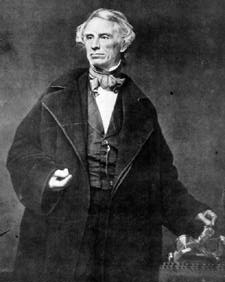
Samuel Morse was born on April 27, 1791, and was the son of a Minister and author. He was a very talented artist, and much admired at Yale for his work. After graduation from Yale in 1810, he finally managed to convice his father to let him study art in England. So, off to London he went in 1811 to study Art. |
Union HeadQuarters |
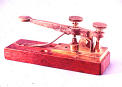
Samuel Morse was accepted to the Royal Academy of Arts. After a couple of years of hard work, he was finally rewarded. One of his professors liked Morse's statue of Hercules so much, he encouraged young Samuel to enter the statue in the gold medal competition of the Adelphi Society of Arts. The Duke of Norfolk pinned the Adelphi Gold Medal on the young colonist before an audience of English nobility.As an artist, the Dying Hercules was accepted in 1813 for the Royal Acadeny art exhibit. It was noted by an English art critic, that the painting was amongst the 9 best of over a thousand paintings. And, in 1815, another of his paintings was accepted for exhibit which was called The Judgement of Jupiter. In 1825, his painting of the Marquis de Lafayette was placed in the New York City Hall. Morse wanted to do more, but there were many lean years, too. During the lean years, from 1815 thru 1825, young Morse heard that four huge paintings were to be in the Rotunda of the Capitol, which was being built. So, off to Europe he went to study again. Returning in 1832 aboard the ship Sully, Morse learned through a dinner conversation at sea, that men had discovered they could send electricity instantly over a known length of wire. The fire was lit, but disappointment was around the corner. John Quincy Adams was reported to have said that he didn't think American artists were good enough, so no commission for Morse to do one of the four Rotunda paintings. So, taking a flop on the top floor of his brothers newspaper business, Sam Morse slaved over the telegraph. The University of the City of New York offered him a teaching position for painting and sculpturing. His fees were dependent on pupils. Leonard Gale, a fellow professor became interested in the project, and helped him. There was so much to do and buy. There was no insulated wire at the time, so Morse had to buy wire in pieces, sodder them together, then wrap the wire with thread. In 1837, Morse demonstrated the project to a potential group of investors, who found the project amusing, but turned him down. However, watching the demonstration was a young college student named Alfred Vail, whose father and brother owned a iron and brass works in New Jersey. Vail offered to build a sturdier model of the telegraph, and Morse made them a one quarter partner in the project.
|
Club Links |
ACWargaming Club Home |
Mason-Dixon Tavern |
New and End Game Reports |
Links Express |
U.S.A. Top Gun List |
Morse went to Washington in 1838, hoping to get Congress to appropriate money after a successful demonstration. The members of Congress found it interesting and amusing, but no monies were appropriated. Morse then made a trip to England and France trying to interest or entice investors, but to no avail. In 1842, Morse wrapped the wire with tar and rubber, to waterproof the wire, and ran the line from Governors Island to the Battery, in New York. Hoping that a dramatic demonstration would encourage seed money, the New York papers announced the great demonstration. The ships anchor caught the wire, and the sailors cut it to free it from the anchor. A lot of folks showed up for the dramatic demonstration, but left feeling it was a hoax.Morse made another attempt to interest Congress, in 1843. Finally, after Morse had given up hope, Congress appropriated $30,000 to test the telegraph. With his partners, they strung wire from the US Supreme Court building to Baltimore, Md. On May 24, 1844, Morse tapped out his famous message, "What had God wrought" before a very large group of specators. Within twelve years, Morse and his telegraph were known to all of North America and Europe. Morse is mainly remembered for inventing the telegraph and Morse code, but credit needs to be given to his partners, Gale and Vail. Morse and his partners gained fame and wealth, and were honored by many banquets and celebrations all over the world. There is a statue of Morse in New Yorks Central Park, which was dedicated to him before he died, on June 10, 1871. Bibliography: most of the information presented came from a variety of sources, but the World Book Encyclopedia was my main source of info. |
Union Taverns |
Rosie's Tavern |
AoJ Tavern in a Tent |
General Shermans |
AoS Winchester Arms |
AoT Madame Roxanne's |
QuarterMasters Depot |
C.S.A. HeadQuarters |
Western Theatre HQ |
Eastern Theatre HQ |
Army of Alabama |
Army of Georgia |
Army of the Mississippi |
Army of Northern Virginia |
