Bob Marley
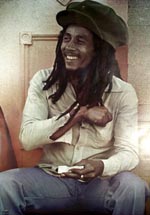
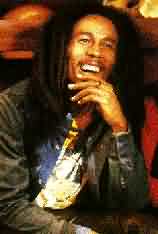
Biography Nine Mile, situated high in the mountains on the beautiful island of Jamaica, is a small friendly village tucked away in the parish of St. Ann. This quaint hamlet is known as the birthplace of Bob Marley. And it is in this very same place that he was later laid to rest. Born on Feburary 6, 1945– May 11 , 1981, Robert Nesta Marley better knonw as Bob Marley was a Jamaican singer, guitarist, song writer and RastaFarian prophet. He is the most widely known writer and performer of reggae music, famous for popularizing the genre outside of Jamaica.
|
 |
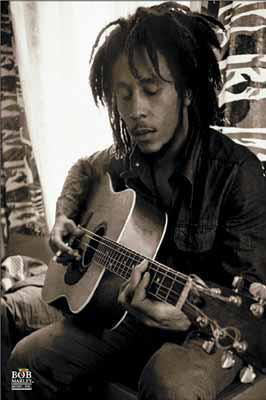
Music Much of his music dealt with the struggles of the impoverished and gave a voice to the oppressed around the world while spreading messages of hope and unity. His songs expressed his experiences of struggles of everyday life in Jamaica in a way that all could relate to, making his music universally loved.
|
 |
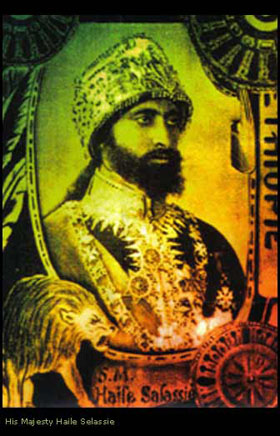
Religion Bob Marley was a member of theRastafari movement, which worships Haile Selassie I of Ethiopia, the former Emperor of Ethiopia to be Jah ( God) incarnate, the returned messiah prophecied in the Bible. Rastafari culture was a key element in the development of reggae, and Marley's adoption of the characteristic Rastafarian dreadlocks and use of marijuana as a sacred sacrament in the late sixties were an integral part of his persona as a famous musician. He would enter every show proclaiming the divinity of Jah Rastafari. Many of Marley's songs contained Biblical references, sometimes using wordplay to fuse activism and religion, as in "revolution" and "revelation": " Revelation, reveals the truth ... it takes a revolution to make a solution" and he is considered a rasta preacher.
|
 |
Concert
KSAN Broadcast 1973
Smile Jamaica Concert 1976
One Love Peace Concert 1978 Reggae Sunsplash II 1979 Bob Marley promised the organizers of Reggae Sunsplash that he would headline the show at Montego Bay. His first show in Jamaica since the One Love Peace Concert. Marley energized the crowd with songs from the forthcoming Survival. LP.
|
 |
Making Music "You can't show aggression all the while. To make music is a life that I have to live. Sometimes you have to fight with music. So it's not just someone who studies and chats, it's a whole development. Right now is a more militant time on earth, because it's Jah Jah time. But me always militant, you know. Me too militant. That's why me did things like Kaya, to cool off the pace. People don't understand that we live in this earth too. We don't sing these songs and live in the sky. I don't have an army behind me. If I did, I wouldn't care, I'd just get more militant. Because I'd know, well, I have 50,000 armed youth, and when I talk, I talk from strength. But you have to know who you're dealing. Maybe if I'd tried to make a heavier tune than "Kaya" they would have tried to assassinate me because I would have come too hard. I have to know how to run my life, because that's what I have, and nobody can tell me to put it on the line, you dig? Because no one understands these things. These things are heavier than anyone can understand. People that aren't involved don't know it, it's my work, and I know it outside in. I know when I am in danger and what to do to get out. I know when everything is cool, and I know when I tremble, do you understand? Because music is something that everyone follows, so it's a force, a terrible force. |
 |