Understanding TMJ
The normal anatomy of the TMJ consists of three major components.
A. The glenoid articulating fossa B. The mandibular condyle and C. The
articular disc.
Temporomandibular Joint problems (TMJ) are diversely classified as intracapsular
and extracapsular conditions. Intracapsular being in the joint structures
like the mandibular condyle, the articular disc and the glenoid fossa.
Extracapsular being in the muscles, tendons and ligaments surrounding and
connecting to the TM joints and mandible itself.
INTRACAPSULAR
These disorders are featured by structural alterations of the temporomandibular
joint which interfere with the form and function and frequently produce
pain. They are made up of four groups of disorders.
 Developmental
Disorders: These problems occur as a result of abnormal development of
the joint.
Developmental
Disorders: These problems occur as a result of abnormal development of
the joint.
Diseases:
These consist of degenerative arthritis, rheumatoid arthritis and neoplasms.
Injuries:
These occur when trauma is induced to the jaw directly or indirectly like
in Whiplash.
Internal
derangements: These occur when the physiologic relationship of the condyle,
disc, and fossa have been lost. Internal problems constitute the vast majority
of this group.
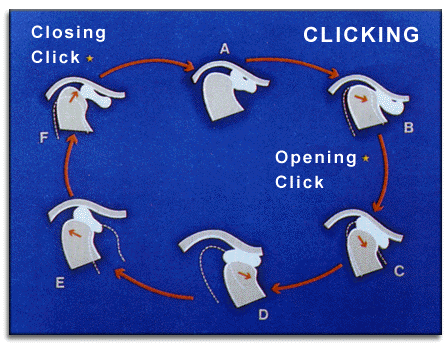
In a typical derangement the disc assumes a position forward of the
condyle due to a problem with the discal attachment. When this is present,
a click is heard during opening movements and usually a softer click is
heard in the closing of the mandible. If this is left untreated, it may
result in a closed lock and alterations in form occur and the onset of
degenerative osteoarthritis usually occur. With this comes the onset of
pain often severe, and the likelihood of surgical intervention becomes
more probable.
EXTRACAPSULAR
These are problems associated with an abnormal bite due to various reasons
like tooth loss or movement, improper or inaccurate dental restorations,
cogenital malocclusions or trauma that alters the relationship of the way
that the teeth fit together. These symptoms can be as follows:
HEADACHE:
Headache is the most common symptom of a TMJ problem. Although any area
of the head may be affected, usually the TMJ headache is located in the
temples and back of the head. Also, a displaced disc in the TMJ may cause
pain in the joint and is referred into the temples, forehead or neck. They
can be so severe that they are treated with little relief for migraine
headaches.
EAR PAIN:
Due to the close location of the ears and the TMJs, an injury to the
TMJ caused ear problems. Symptoms like pain, fullness, stuffiness or even
hearing loss can occur even though medical evaluation of the ear is normal.
FACIAL PAIN:
Facial pain can show on our faces even though the TMJ does not hurt.
Facial pain may be deep or on the surface in the skin. The skin might even
become sensitive to the touch or air blowing acrossed it. Neurologists
are usually contacted in these instances.
EYE SYMPTOMS:
There can be pain behind the eyes or pressure build up and no evident
eye problem detected from the eye doctor. Also there can be unusual eye
deviations to the left, right, up or down that occur.
TEETH:
A damaged TMJ may cause tooth pain due to the change in the bite or
fit of the teeth. The teeth may become sensitive to temperature changes
especially cold. Patients see the dentist and no cause can be found and
frequently unnecessary root canals and extractions are performed to rid
a patient in pain. But now the pain is still there and has gotten worse.
Now is the time to ask yourself, am I suffering from TMJ? Positive answers
to some of the following may urge you to seek advice from a TMJ expert.
Do you have frequent headaches?
Do you have sounds in your
joint(s) when you chew?
Do you have stuffiness or
pressure in your ears?
Do you have buzzing or ringing
in your ears?
Are you dizzy a lot?
Do your jaws lock open or
closed?
Is your mouth stiff to
open?
Do your teeth ache or sensitive
to cold?
Are your facial muscles
tight or sore?
Do you grind or clench your
teeth at night?
Do your ears hurt?
Does your neck, back of
your head, or shoulder hurt?
Have you had a jaw injury?
Have you had a whiplash
injury?
Do your jaws tire easily
or ache after eating?
Are you under a lot of stress?
Have you been diagnosed
with fibromyalgia?
Have you seen a neurologist,
psychologist or psychiatrist for unexplained head pain?
If you have answered yes
to one or some of these then you may very well need the expert help of
a dentist specifically trained in the treatment of TMJ problems.
TMJ TREATMENT MODALITIES
Early treatment is very important and cannot be overstated. TMJ problems
can advance in stages and grow progressively worse. Thus, a minor problem
now could become a major source of pain in the future. Additionally, chances
of successful therapy increase substantially the earlier treatment is accomplished.
After diagnosing the problem, a variety of treatments may be recommended
depending on the extent of correction needed. Initial phases of treatment
are aimed to eliminate the TMJ pain resulting from the actual problem.
In the second stage, the actual treatment to correct the problem is implemented.
Medicines/Muscle Stimulation/Ultrasound
These may be prescribed to alleviate the pain before and during the
actual treatment.
Trigger Point Injections
This is the injection of anesthetic into muscle to eliminate muscle
spasm.
Splint/Jaw Repositioner Appliances
This is a mouth appliance that is custom made to fit between the patient's
upper and lower teeth. It is not only used in diagnosis, but they are also
used as treatment to temporarily eliminate the bite disharmony and resulting
pain. Then once we have achieved a state of muscle relaxation and an acceptable
level of patient comfort then we can determine which forms of permanent
treatment are necessary to maintain long term comfort.
Occlusal Equilibration
The tops of the teeth are reshaped in this procedure. This is done to
alleviate pressure on individual teeth. The reshaping procedure has been
found to be the solution for many conditions which cause discomfort in
the head, neck, and shoulders and the breakdown of dental structures. This
can be likened to a pebble in your shoe and your foot adapts to that pebble
and you may limp. As with a tooth too high for comfort, the jaw also adapts
to the uncomfortable tooth fit but develops muscle pain. During equilibration
the high tooth is reshaped for a better fit and resulting muscle relaxation.
Occlusal Restorations
This involves the placement or construction of teeth by means of crowns,
bridges, implants, inlays, onlays, partial dentures or just routine restorations
to build the bite to a more permanent, healthy, relationship.
Biofeedback
This is the technique of learning to relax the jaw muscles on demand,
especially in times of greater stress.