
���� ���ی�
|
|
���� ���ی�
|
 |
|
|
||
|
ژ� � ����� �� ���ی���
|
���ی��� ����� ���ј (����� ����ی� ����� ��ی�) |
|

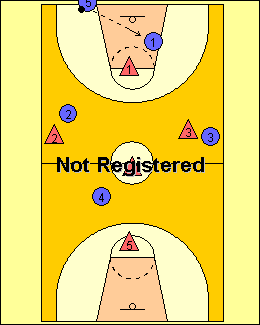
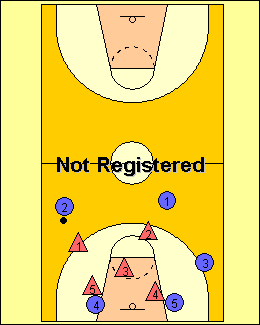
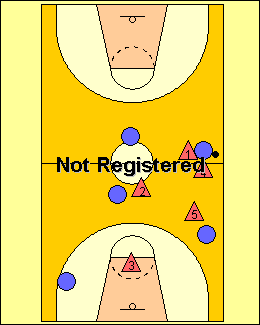
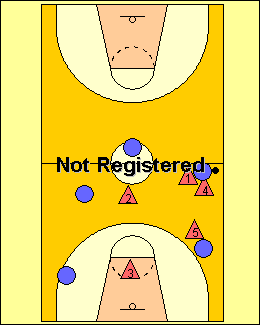
Principles: - force the offense to speed up their game. - force a dribbler to the sideline every time. - double-team a dribbler at sideline. - force the offense to make bad passes. - make it hard for the opponent team to run their set-play. - do not try to steal the ball by reaching in. - anticipate offense long or bad passes for interceptions. FIRST: - let the in bounce pass be open then force the guard to dribble to one side. |
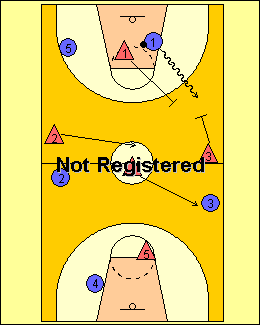
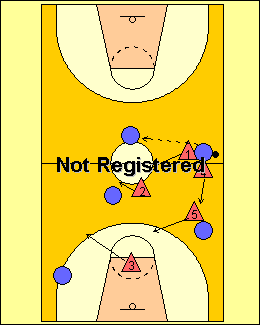
- 2nd row on ballside has to stop the dribble at sideline and double-team with first row. - 2nd row weak-side steps to middle lane. - 4 steps to ballside denying a long line pass. - 5 stays in helping position denying a long skip pass. |
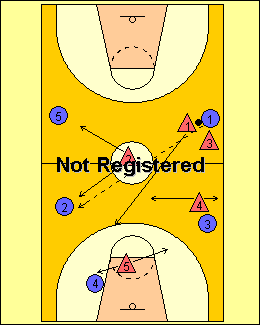
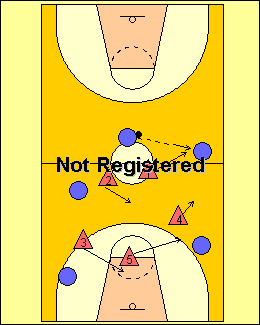
- 4 and 5 deny easy passes on ballside and under the basket. - 2 has two men on weakside looking for an interception from a bad pass - 3 stops ball and double-team. |
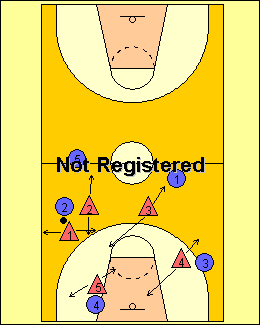
3,4 and 5 stay in front of the offense players denying an easy pass. |
|
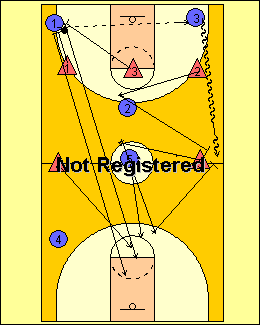
(1) Traps the first pass with 3 in the corner/wing area (2) Drops middle to deny there 2 the ball (3) Traps with one (4) Drops to take away long pass (5) Denies their 5 as the 2nd middle option When they break the first trap sprint to the paint and look for any traps in the corner. |
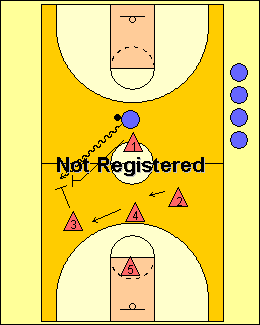
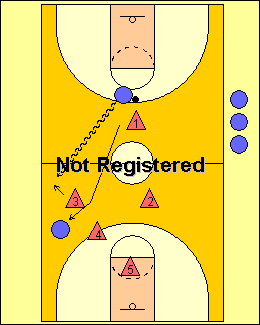
Center X4 stays on the vertical line of the ball as it is brought up the court. As shown below, options out of the 52 half court press are: - hedge (fake the trap) and recover - run and jump switch (Jump) |

Weak side right wing defender X2 plays the pass or cut into the middle. X4 and X2 are the interceptors, X5 is the safety. |

X4 and X3 are the interceptors behind the trap. |
|
|

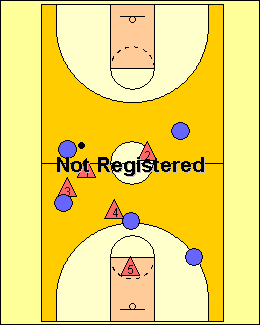
X1 slides down and joins X5 as an interceptor. Weak side wing X2 slides down to replace X5 as safety. If safety X5 moves out to defend/trap the ball handler in the corner, centre X4 would take her place at the ball side low post. |

1. No Fouls-show the official your hands-fouling negates hustle. 2. All defenders must see the ball. 3. Be in an intercept position, ready to shoot the gap. 4. Deflections-steal off the ball, trap on the ball 5. Make the offense dribble 6. Trap the dribble when your teammate is on the dribbler's side, not when trailing (see diagram). 7. Sprint out of traps. 8. Switch on all screens. |

x4 is very active on the ball. x1 wants the ball to be in-bounded below the foul line extended. If so, x4 traps immediately. x2 would rotate up and to the middle of the floor. |
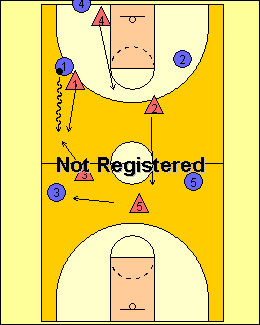
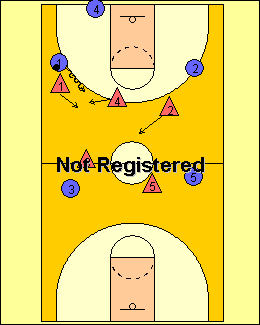
x1 will get right up on 1 to force him to dribble. If x1 gets beat up the sideline then x3 will come up to trap, only if x1 is on the side of 1, not trailing. If x1 is trailing, then x3 will "stunt" or fake at 1 but not commit until x1 recovers to the side of 1. Everyone rotates on the trap. |
|
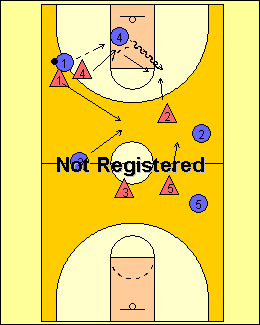
x5 may have to "stunt" at 2 until x2 recovers. |

|
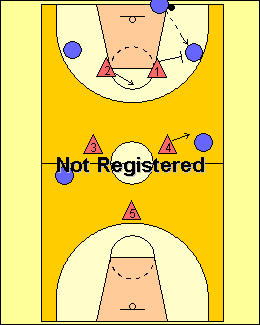
2 takes away short middle. 4 matches up with the player in her area while 3 stays at home. 5 is deep. |
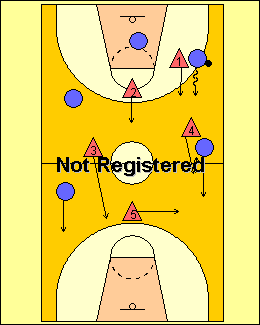
4 is working back and forth between the ball and the girl in her area, effectively denying any pass up the sideline and baiting the ball handler into a trap near midcourt. 5 rotates toward the side of the ball. 3 takes deep middle. |
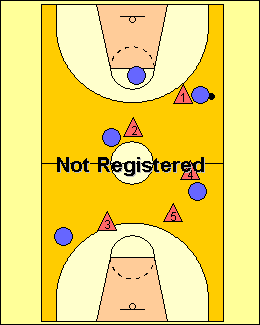
Notice how 2 denies short middle. We will allow a pass back to the inbounder, but we MUST keep the ball out of the middle of the press! 4 is ready to pass her player off to 5, who is rotating over. 3 has deep middle. |
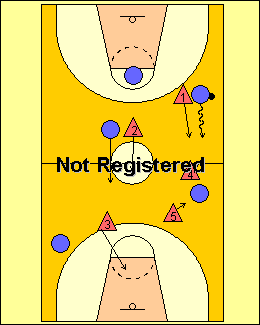
We move the press accordingly. |
5 has her player sealed up, and 2 has the short middle closed up. 3 is in position for the deep pass. Notice that the trap has occurred in the backcourt. Let's look at how we would play this if the player who is trapped passes back to the trailer. |
3, 4 and 5 have rotated to keep the 2-2-1alignment. We keep the press on! |
1 will immediately attack the ball handler, again keeping her on the sideline and forcing her up the court into a trap with 4. 2 has short middle. 5 rotates to cover the sideline on ballside. 3 will take deep middle to protect the basket. |
|
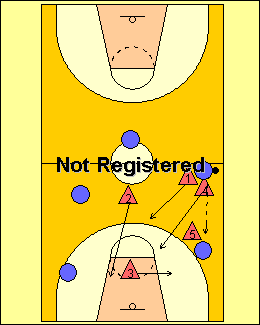
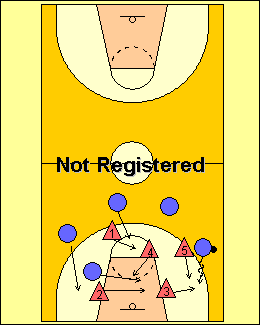
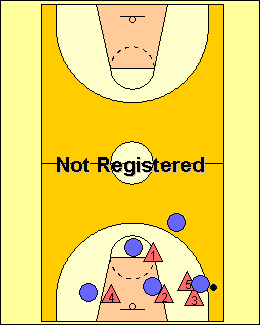
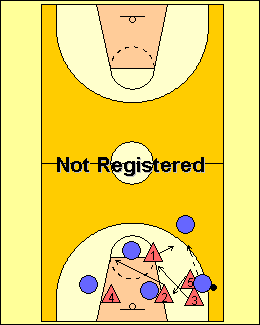
5 has to contain the ball and keep it on the sideline. Ideally we can force the ball handler to the baseline. 2 must sprint to the weakside block. As 2 nears the lane, 3 should slide across to the strong side block. 4 retreats out of the trap to cover the high post ballside. 1 covers the perimeter. |

On a pass out to the perimeter, we would shift into a half court defense, but let's assume we can get the ball handler to attack the baseline. |
|
|
|
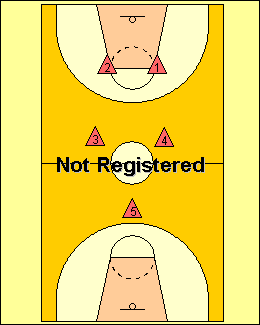
In this sequence, we will illustrate our press with the ball being in bounded to the opponent's right side of the court. |
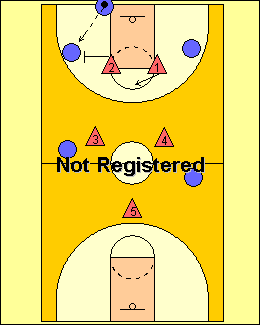
1 begins to take away any short pass into the middle of the court. 3 & 4 would be matched up with anyone in their areas of the zone press. 5 is our basket protector and is also looking to steal any deep pass. |

3 should play 'cat and mouse' on the sideline. She does this by moving back and forth between the ball handler and the player she is trying to deny the next pass to. 3 should be about 2/3 of the way between the ball and the girl she is playing. 5 begins to rotate over to the sideline, looking for that next pass up the sideline. 4 should be rotating back to take away deep middle. She will be our basket protector when 5 rotates to the sideline. |
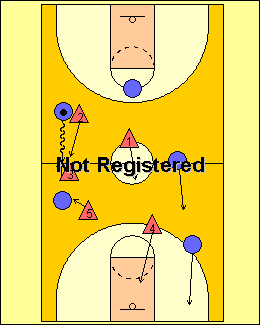
|

5 should be looking to intercept the next pass up the sideline. The ability of the 5 to anticipate this pass and steal it is a main ingredient to the success of '32'. 1 should be denying any pass directly across the court or just in front of the ball, i.e. short middle. 4 takes away deep middle and is now our basket protector. |
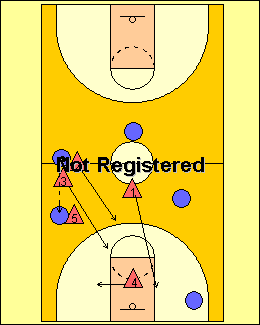
1, who way playing short middle, must now hustle to take away the weakside block. 4 may have to delay her slide across the lane until 1 is closer to the lane. Once 1 is near the lane, 4 slides across the lane to take away the ballside low post. 3 must leave the trap she was in and take away the high post on ball side. 2 looks to take away any pass out to the top or across the perimeter. |
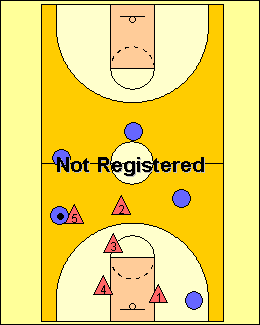
|

1 slides across the lane to front the low post. 3 slides down the lane to cover the weakside block. 2 covers the high post on ballside. |
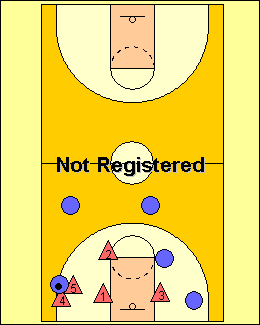
We try to keep the press on all the way to the baseline. |
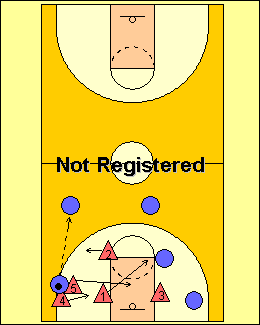
On a successful pass out to the perimeter, we can quickly change to a 2-3 or 3-2 zone. This is easily done by having 2 stay at the ballside elbow and by having 1 slide to the other elbow. 5 & 4 retreat to their interior spots in the zone. 3 would stay on the weakside block for a 2-3 zone alignment, or slide to the top of the key for a 3-2 zone. |
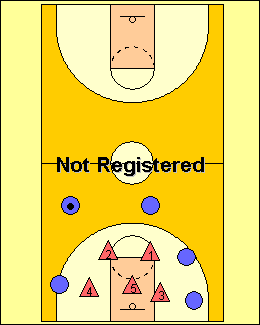
|

The (3) and (2) guard the two players that are the closest to the endline. They must make sure that any ball is caught in front to them. The (1) takes the man in the middle and the (5) takes the deep man. |

(2) will leave his man and go to the lane and looks to intercept the pass coming into the paint area or back to (1) The (1) moves to the side where the ball is and looks for a pass down the side. The (1) or (2) can intercept any pass thrown between them. The (5) moves to the same side the ball is on. |

|

|

Because they had two man back the (5) moves down to guard the pass down the court and the (1) moves over to side of the court where the ball is located. |

The (5) and (3) are also looking to intercept any pass between them. |

|

Everyone stays with their man making sure that they do not get behind them. |

|
|
|
