|
دفاع
|
|

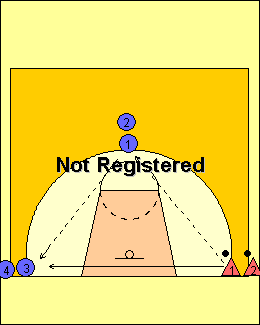
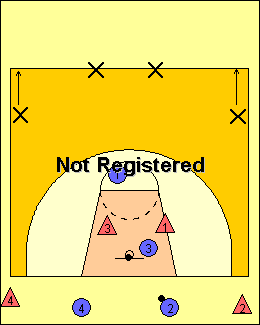
6 or more players Setup: 2 players in each corner of the baseline. 2 players at the top of the bucket. Player 1 will pass to the player at the top of the bucket and goes to the opposite of the court to defend player 3 who receives the ball from the top. |
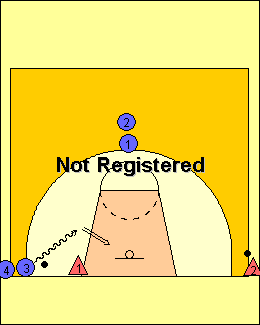
Put the emphasis on the closeout defense of the defender. Rotation: Defender goes to the top of the bucket. Offense becomes defense. And the passer goes to the other corner. |
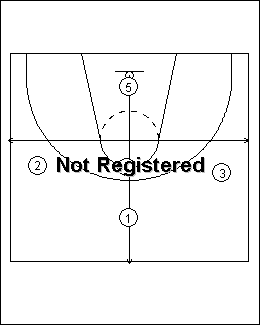
For this defense to work each player must understand the rules of dividing the court. The court is divided above the foul line and below and left side right side. 1 will be Point Player 2 & 3 will be Wings Players 4 will be Middle Players 5 will be Bottom Player |
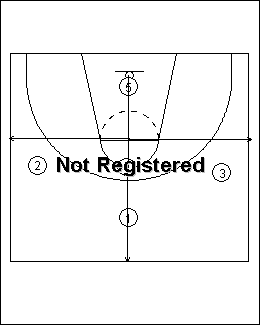
above the free throw line and below the free throw line. The rules for the Wing players involve mainly dividing the court down the middle. |
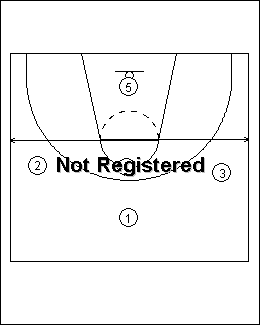
When the ball is above the free throw line the Point Player is on the ball. When the ball is below the free throw line the Point Player denies the pass out of the corner. Middle Player Rules When the ball is above the free throw line the Middle Player denies the pass to the high post. When the ball is below the free throw line the Middle Player denies the pass into the ballside low post. Bottom Player Rules When the ball is above the free throw line the Bottom Player is in front of the ballside block. When the ball is below the free throw line the Bottom Player is on the ball. |
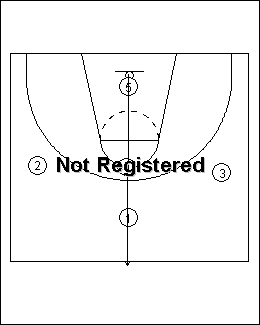
When the ball is on their side of the court the Wing Player is on the ball. When the ball is on the other side of the court above the free throw line the Wing Player plays the cross-court pass. When the ball is on the other side of the court below the free throw line the Wing Player denies the pass into the ballside high post. |
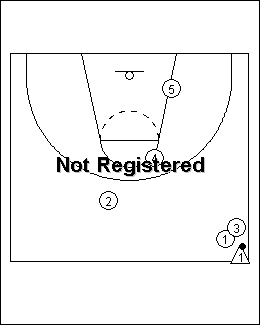
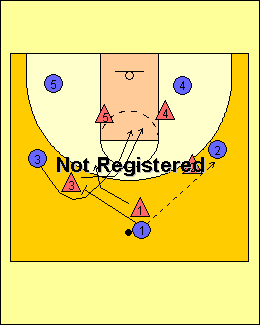
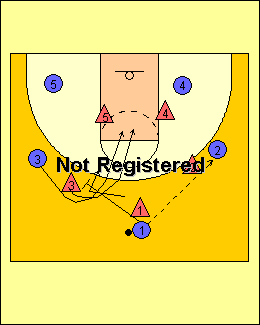
1 and 3 trap ball. Player legs should cross so the offense can't dribble thru. 2 play cross court pass. 4 denies high post. 5 denies low post. |
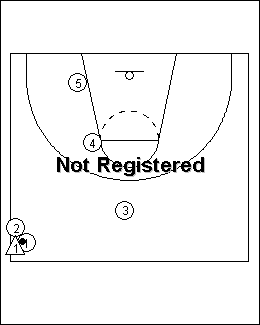
1 and 2 trap ball. 3 balls cross court. 4 denies high post. 5 denies low post. |
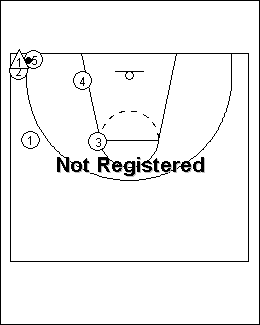
2 and 5 trap the ball. 4 denies low post. 3 denies high post. 1 plays pass back out the trap. |

3 and 5 trap the ball. 4 denies low post. 2 denies high post. 1 plays pass back. |
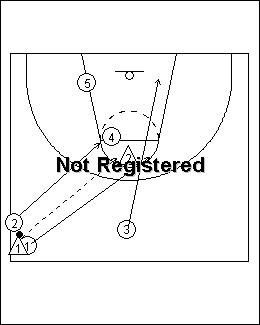
Non trapping wing player ( ie 3) drops to weak side post area. 4 stops advance of the ball. Trapping players ( ie 1 & 2) key and foul line area. Forms a kind of 3-2 zone defense. |
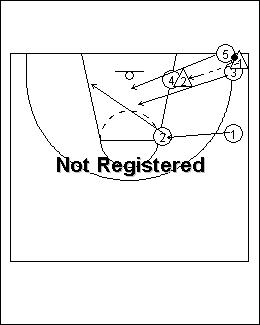
2 sprints to weak-side low post. 5 and 3 sprint to low lane area. 1 goes to foul line area. |
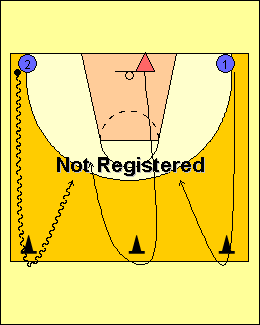
Player 1 must dribble around the cone at halfway and then drive to the basket. Player 2 runs around the cone at halfway and then aims to get ahead of player 1 to give a passing option. X must run around the cone and then guard 2 v 1. They should hedge and try and confuse the offence. You can do this drill at both ends of the floor having both groups run around the same cones so that the players have to get through "traffic" at half way. |
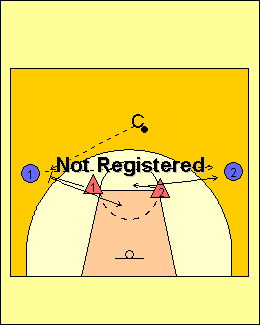
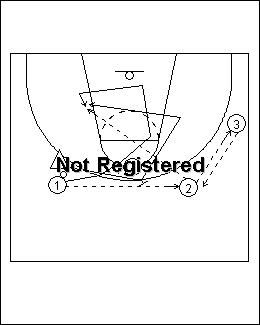
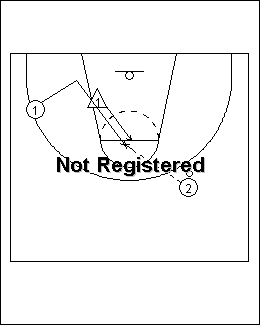
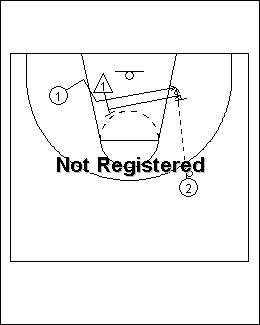
Set up as in diagram. Coach (C) passes to the wing (1). /1\\ must close out high side (no middle penetration). (1) skip passes to (2). Defense adjusts to split-line and closeout to ball. |
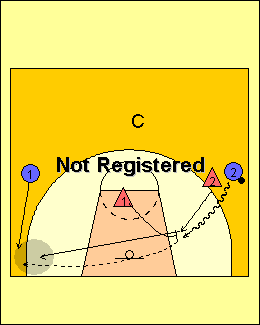
/1\\ must stop the penetration outside the lane and call "JUMP". (2) hook-passes out to (1) who has re-located into the corner for the shot. /2\\ must leave his man (jump) to closeout on (1) as he is now the player with visibility of the ball. |
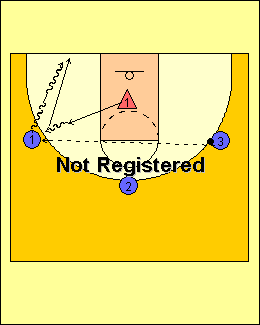
D1 closes out and defends 1 by cutting off the baseline drive. |
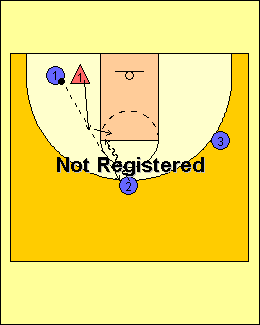
|
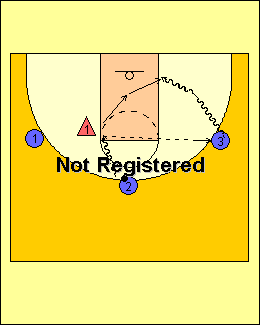
3 penetrates baseline and D1 stops him outside the lane. |
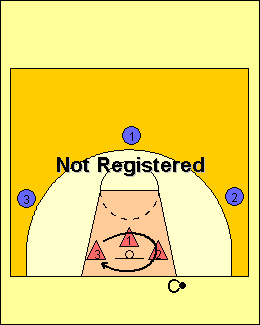
X1, X2 and X3 do slide steps in a circle under the basket. Coach got the ball outside. O1, O2 and O3 are waiting outside for the pass. X1 - X3 "dance" two circles before coach passes the ball. |

X1, X2 and X3 sprint to closeout to the nearest player. |
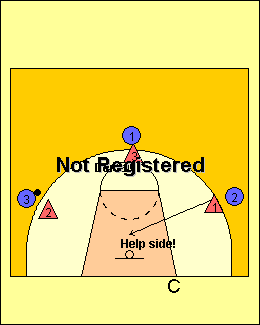
Defenders two passes away rotate as quick as possible into the help side. Then you play 3 on 3 |
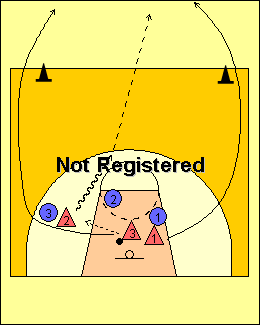
They got 5 seconds to execute at the other end, otherwise they have to do rope skipping for example. Rotation: Offense becomes defense and the next 3 are the new offense. |
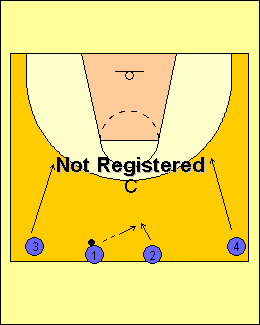
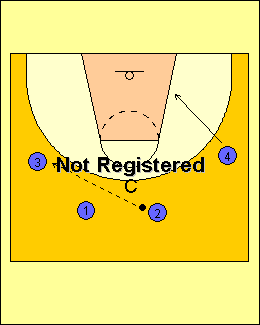
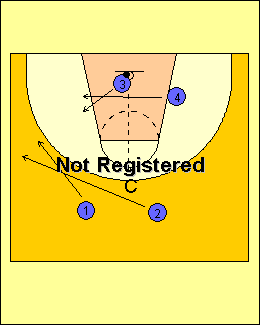
OBJECTIVE: defense of the blind screen (Flex type). LEVEL OF PRACTICES: newcomer = > not recommended initiate = > little recommended expert = > very recommended ORGANIZATION: Work on a half court with the player evenly spread on the midline. 1 has the ball; A coach without a ball is postions at the top of the 3 point circle. DEVELOPMENT: 1 passes to 2, 3 and 4 run in there lane. |
|
|
|
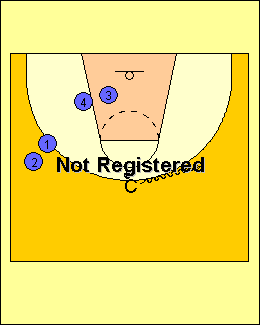
Both players who began on the ball side (1 and 3) are going to defend the other players. |
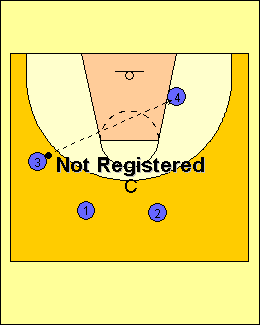
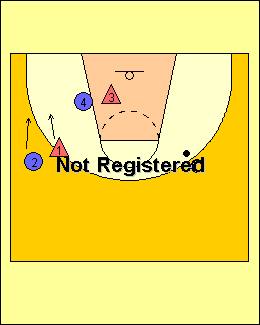
1 defense 2 in the wing. The coach dribbles to the opposite side. |
|
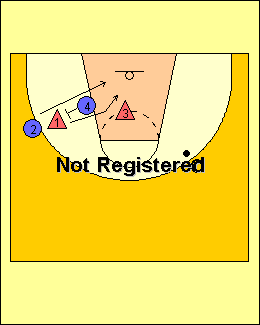
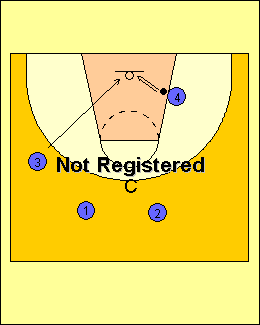
2 uses the block (1 uses the proposed defensive technic proposed by the trainer with or without the aid of 3, to prevent the pass of the coach). |
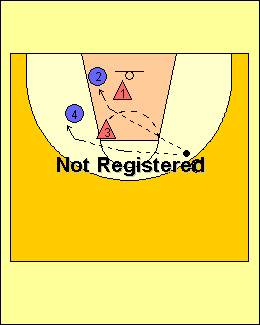
ROTATION: The one who last touched the ball takes the place of the coach. The other four go back to the midline. With the defensive players going to the offensive lanes (non ball side). |
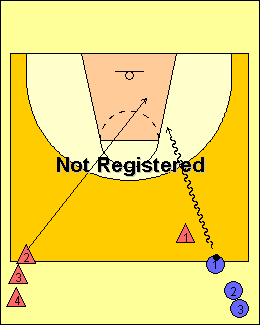
Right Line -- Offense 1 plays dummy defense on offense 1. He lets 1 beat him and yells out HELP! HELPS: Communication. Speed and Balance. Quick Thinking. Rebounding. |
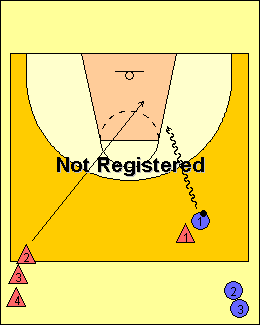
Meanwhile Defense on the left line will star to run towards the basket. 2 defense should yell out, "Help Coming!" or something of that nature. |
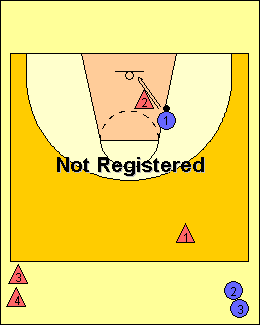
2 should position him appropriately and fall down using proper charging techniques. Make sure he isn't wobbling when he positions himself. |
Defender Boxes out. ROTATION: The person who was second in line plays Dummy defense. The offensive player lines up in the back of the defense line. The defender who went to take the charge lines up in the back of the offensive line. |
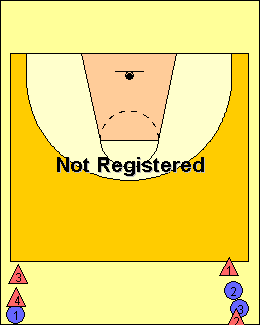
Also always to box out the shooter. The offense should also run full speed. It should help the offensive player control his balance. He practices avoiding the charge with an effective short-range jumper. |
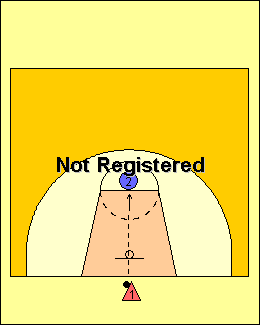
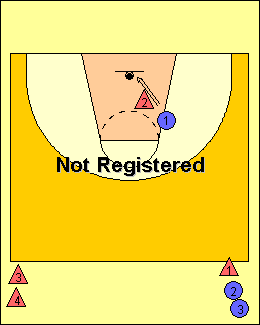
This drill improves the 1 - 1 close out defence. 1 stay's behind the baseline while passing. 1 give's a chest pass to 2. 2 is above the foul line. 1 close out and play's defence against 2 until one of the players will score a point. (note: Also the defence player can score after a steel or a rebound. The one player who score's the point is offence. The drill is over if one of the players scores 7 points. Teaching points: Give a hard pass. No bounce pass. |
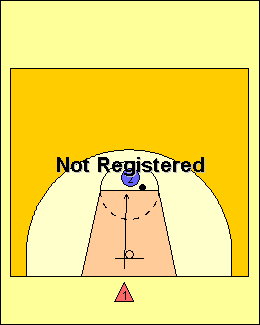
Sprint 3/4 of the distance you have to cover. Then stay low and intimidate with one hand high the shooting player. Don't let player 2 get to the basket for an easy lay-up. Boxing out after the shot. GJH |
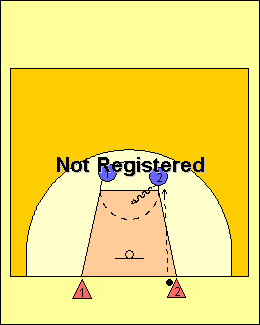
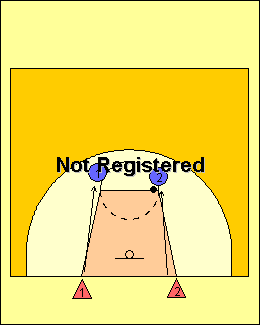
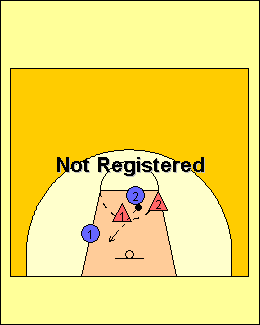
Chest pass from def. 2 to off. 2. 1 and 2 run (close out) toward the off. players. Then they play 2 against 2 until one of the teams score's a point. Also the def. players are allowed to score when the steel or rebound the ball. The team that scores a point becomes or stays the offensive team. You can play until 7 or more points. Teaching points: - def. 1 run toward the help position. (do not run towards the one you guarding. Because off. 2 has the ball). - If the off. team shoots the ball beware that the def. team has to boxes out their player. GJH |
|
|
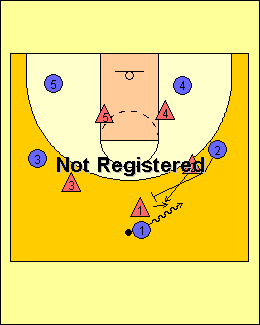
The on-ball defender goes over a screen on the ball, especially if the ball handler is in scoring range. Here attacker O2 sets a screen for ball handler O1. The defender of the screener, X2, calls "Left" and steps out and hedges in front of the screen to fake a switch or trap, forcing O1 to dribble wide around the screen, and giving on-ball defender X1 room to go over the screen. X2 then drops back quickly to stop a pass to the screener. In the 42 trap-and-rotate defense, X2 would trap the ball with X1. |
The defender of the cutter goes through the screen or, especially if the cutter is in scoring range, over the screen. Here attacker O1 passes to O2 then screens away for O3. X1, defender of the screener, calls "Left". If X3 (defender of the cutter) calls "Gap", X1 takes a step back to make room for X3 to go between her and the screen, and pushes X3 through on the hip. |
X3 tries to stay with O3, maintaining a ball-you-check position, or instead "tucks and trails" by directly following ("caboosing") the cutter around the screen. |
|
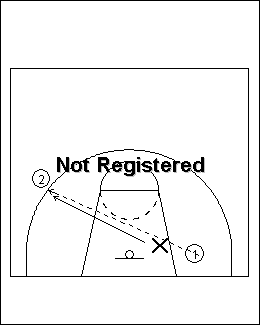
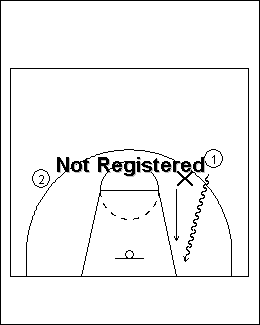
X must scramble accross and stop the shot by O2 |
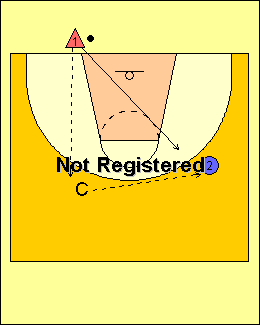
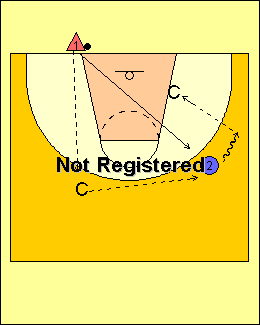
Players line up in 2 lines - one on the baseline and one at the wing. 1 passes the ball to the coach. Coach passes the ball to 2. After passing, 1 must sprint to close out to 2 to stop the shot / drive option. Points of Emphasis: Sprint to the position |
|
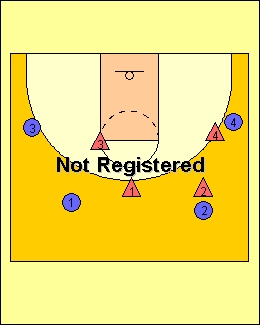
- Offensive Players are allowed to make their passes - Offensive Players should not break from established patterns - 2 starts with ball |
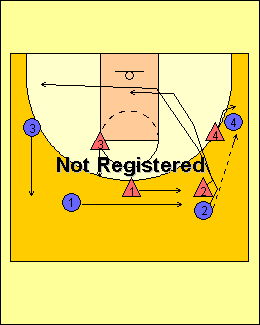
- 2 cuts to basket - Defender 2 denies him position and the pass - 1 cuts to 2's position - 3 cuts to 1's position - 4 holds the ball until coach tells him to reverse it |
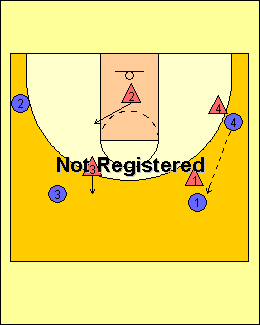
- Defender 3 denies pass - Defender 2 plays two passes away defense |
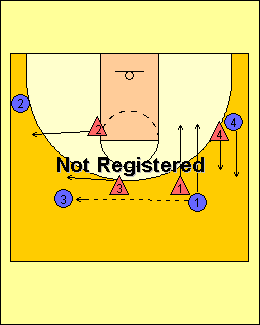
- Defender 3 plays attack man defense - Defender 2 denies pass to 2 - 1 and 4 switch position |
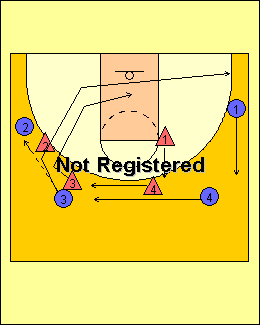
|
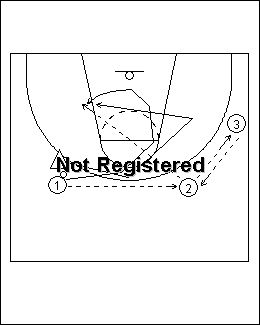
Always stay in front of the cutter. When O1 pass to O2 the defender jumps to the ball (one pass away). when O1 starts the cut slides the defender down the court always in front of the cutter. When O2 pass to O3 the defender stays in front of the cutter. When the cutter cuts to the off-ballside the defender stays in the middle (this depends of your own filosofie, maybe your vision is just out off the key) in pistol defense. pay atention on split vision. The same when O3 pass back to O2, the defender go into the right stance. => ALWAYS SEE BALL AND MAN When O2 gives the skippass to O1, the defender sprint to O1 does a close out and defends man to man defense. |
|
|
|
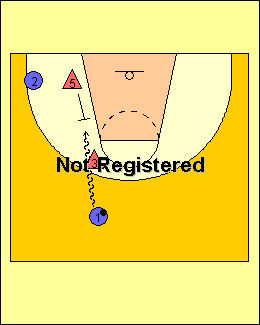
Two on two in half court 1 drives hard past defence #2 5 comes to help on defence and stop 1 drive |
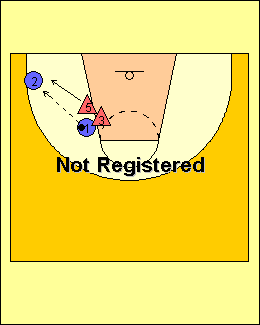
2 is down low ready to shoot the ball 5 must recover to the shoot with a hand up |
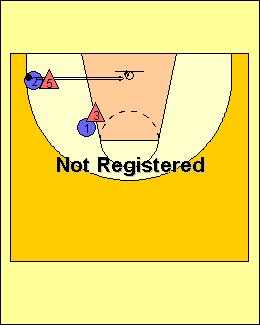
|
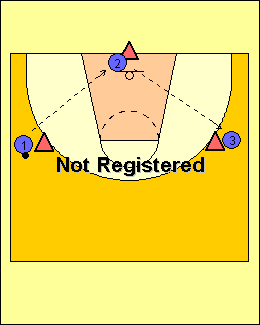
OBJECTIVE: improvement of 1 to 1 defense in the central lane. LEVEL OF PRACTICES: all levels ORGANIZATION: Work on a half court with a minimum of 3 players. The player are located at the pylons (one player under the basket and the other two at the crossing of the side line and the extended free throw line). DRILL: 1 passes to 2 and 2 passes to 3 . |
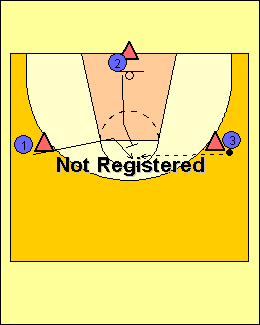
2 comes up to defend 1. |
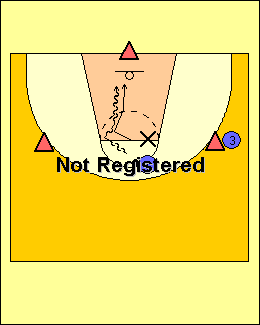
It is also possible to limited the number of dribbles. The defender must prevent the penetration and force the attacker to leave the bucket. |
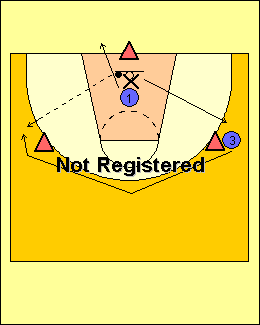
1 takes the place of 2 2 takes the rebound and passes to 3 who already took the place of 1. After the pass 2 goes to the place of 3. |
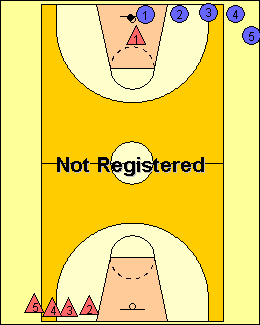
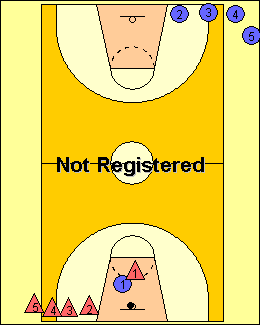
You need 8 to 14 players. These players play one against one on the whole court. The off. player get's only one shot at the basket. Then only an other player may rebound and touch the ball. This player goes as fast as he can toward the other basket for his lay-up. Teaching points: Make them run hard and don't let them wait for the def. player. |
|
|
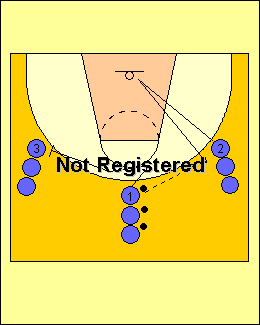
1 to 1 drill followed by 2 against 1 offense. Setup Players with a ball on the basket - basket line at 3-point line facing the basket. Two rows with players at each wing. Ball with 1 Player on the wing (2 or 3) gets free (I-Cut, V-Cut or L-Cut) Pass from 1 to (2/3) at the 3-point line. (In this case 2). |
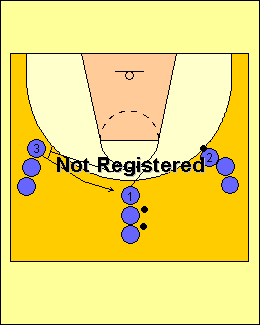
Variation 1: Start Give and Go, but 1 and 3 change position or 1 plays screen away with player 3. |
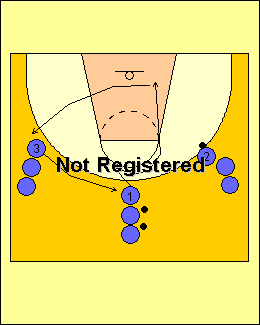
Variation 2: 1 goes for the Give and Go, and cuts to the basket. Player 3 goes to the top and player 1 fills the wing. |
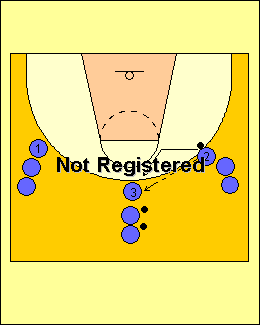
Pass from 2 to 3. Then close out van 2 on 3 on the weak hand of player 3. (When the ball is in the middle always force the weak hand). Note: Close out first sprint then defensive steps; go in a slight curve, not straight to the offensive players. |
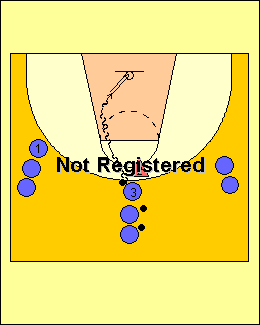
3 plays 1 on 1 against 2 to the basket. 2 tries to let 3 play with his weakest hand (In this case left). |
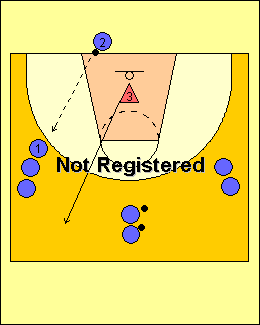
When the offense (3): -1) Makes the basket outlet pass from the baseline form 2 to 1. -2) Loses the ball or misses ball, rebound 2 outlet pass from 2 to 1. 3 becomes defense (has to get in front of the ball). 1 and 2 are the offense and play 2 on 1 to the other basket. After that they rotate into the rows. |
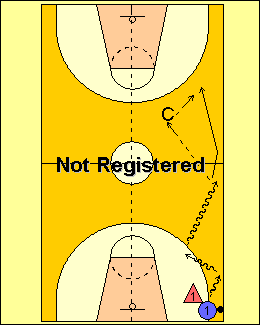
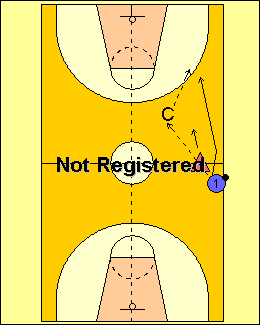
Players work in partners, player 1 vs. 1 in the full court. Their "corridor" is between the sideline and the "split line" (in the middle of the court). Offensive objective is to get to the basket at the other end to score. Defensive objective is to get the stop. Defense follows rules of turning offense as many times as possible in back court and channel in the front court. |
Points of Emphasis: Coaches Study Tour 2005
|
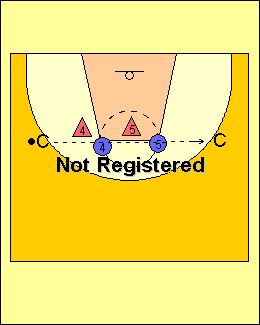
The two coaches will either: The 2 defensive players must play on their player and adjust / react to the ball movement. If the shot is taken they must box out their player and rebound. If defense rebound, they outlet pass to coach and go again. If offense rebounds, play to score. Drill can also be done with posts in the low position. |
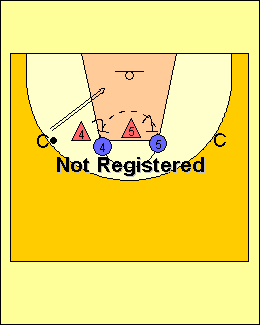
defensive stance - low and balanced Coaches Study Tour 2005
|
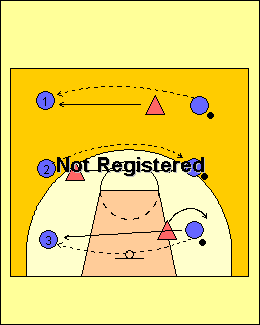
The ball is passed between the two outside players. The piggy-in-the-middle tries to get a deflection in the first instance. |
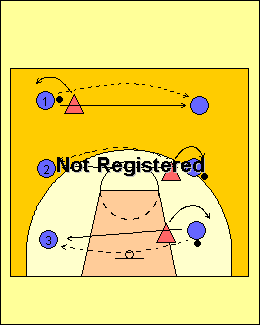
The defense goes over and back, then the original passer goes becomes the piggy-in-the-middle on the third pass. |
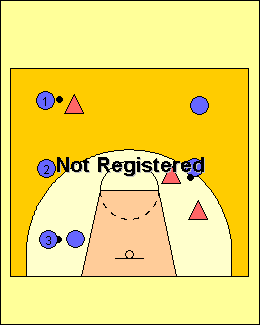
1) Just catches the ball in a two-step count. Defense straddles the lead foot. 2) Catches in two-step count, can pivot. Defense must cover each pivot, straddling the lead foot. 3) Catch, pivot, then hold the ball over the head. Defense comes "IN" when the ball goes over the head staying low with one arm in an arm-bar on the offensive person's chest, the other up mirroring the ball. Defense does NOT stand UP. 4) Catch, pivot, hold ball up then take one power dribble. Defense must go IN when the ball is held UP then quickly give space back when the offense dribbles, staying about an arm's distance away depending on the defensive players quickness. |
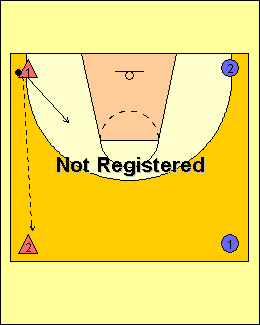
1 ball 4 players (2 offense, 2 defense) X1 passes to X2 and sprints to defend O1. |
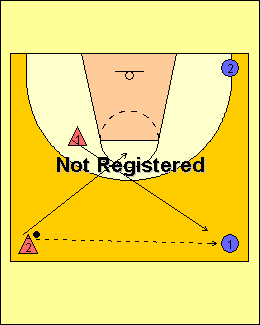
|
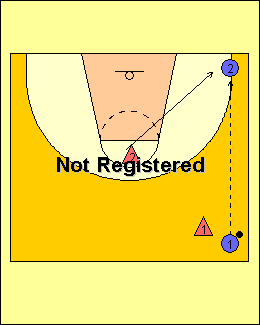
X2 closes out on O2. |
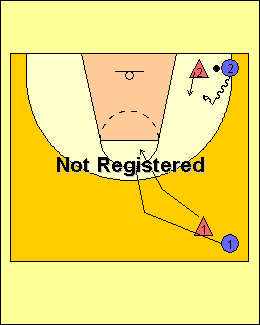
Rotation After the two on two, X1 goes on X2; X2 on O1; O1 on O2 and O2 on X1. |
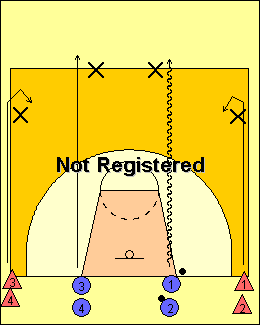
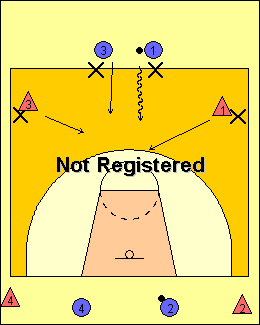
8 or more players Make 4 rows at the baseline. The outside players will be defenders and the inside players play offense. This drill starts with the first 4 players going to the pylons. The defensive players should go as fast as they can. One of the players on the offensive has to dribble the ball to the pylon. |
|
Variations. - Put the emphasis on offense instead of defense. - Play with the placing of the pylons. |
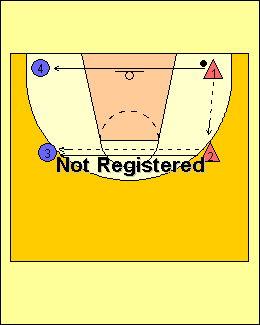
2-2 Closeout-Drill with 2-2 Transition. Player 1 has the ball. 1 passes the ball to 2 and plays closeout on player 4. (First sprint, last part defensive steps) 2 passes the ball to 3 and plays closeout defense on player 3. |
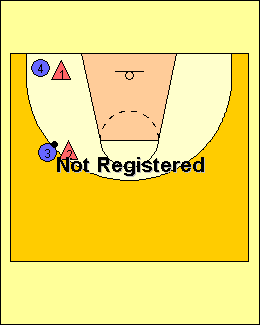
Free play 2-2 till a basket is made or the defense intercepts the ball. |
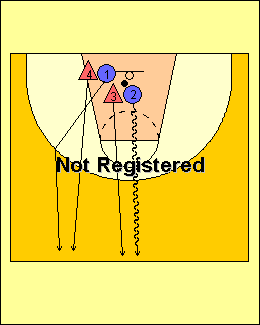
After that 2-2 transition 2-2 of 1 and 2 against 3 and 4. Next group to start. |
|
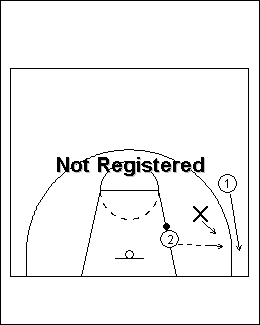
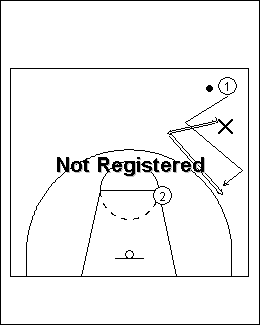
O1 relocates and recevies pass back X digs at post and when pass back occurs must close out O1 O1 and X play for score |

O2 to end of line X must defend 3 in a row before out |
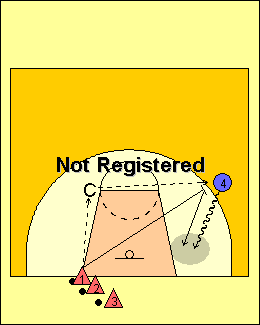
(1) passes to coach who passes to (4). (1) closes-out to (4). Play one-on-one to a result. Variation: (4) shoots directly, 1 boxes out. |
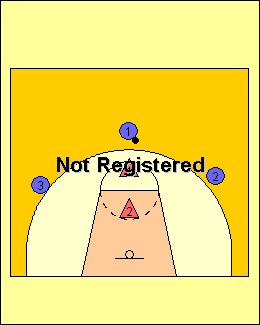
Defense is set in tandem position. |
|
|
|
|
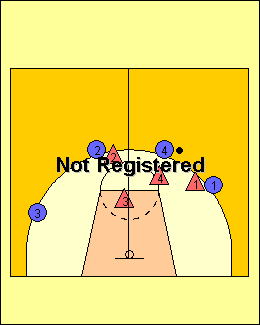
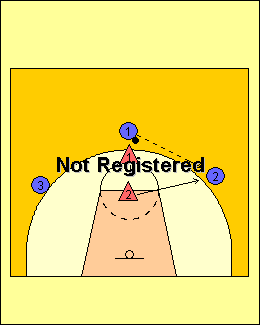
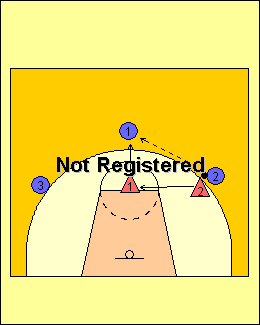
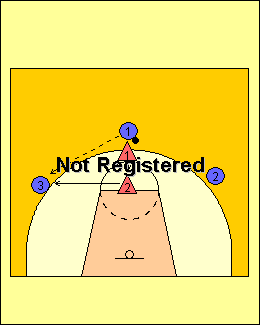
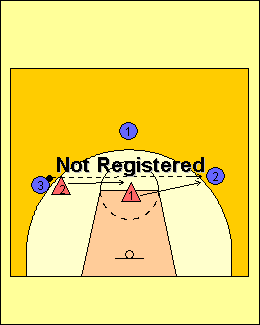
================================ The split-line is the imaginary line that runs down the center of the court, basket-to-basket. The split-line defense is best taught with a shell drill so the players can understand the break-downs that follow. Defender on the ball, D4 (triangle 4), yells "Ball!". D2 yells "Help Left!". D1 yells "Help Right!". Any player (D3) two-passes away is on the split-line, one step off the line between the ball and his player and yells "Split!". |
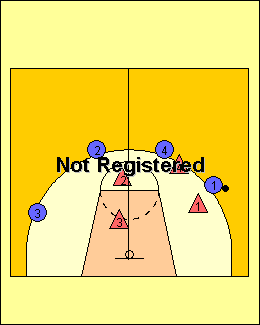
================================ Defender on the ball, D1, yells "Ball!". D4 yells "Help Left!". Any player (D2 & D3) two-passes away is on the split-line, one step off the line between the ball and his player and yells "Split!". |
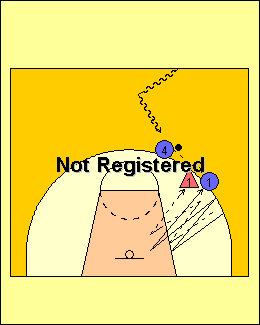
Deny the Pass to the Wing ================================ O4 starts with the ball, dribbled down from 1/2 court to the Guard Spot. O1 executes a "V" cut to get the ball. The defense, D1, attempts to deny the pass to O1. O1 should have to do an initial "V" cut, a back-cut all the way to the basket, then another cut back out to the 3-point line before he gets the ball. Points of Emphasis ============== O1 is allowed to back-cut, but O1 is not allowed to go to the other side of the split-line. Put a second defender on the split-line if required. Insist on a deep "V" cut all the way into the key. If D1 lets O1 get the ball too easily, like the first time he makes the "V" cut, stop the drill and make them do it again. Play one-on-one when O1 finally receives the ball. |
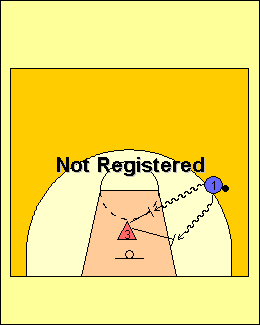
Split-Line Defense 1-on-1 - Stop Penetration ========================================= D3 starts the drill by yelling 'Split!' to signify that he is on the split-line and ready to help. When he helps, he yells 'Jump! O1 drives either to the baseline or to the middle. D3 must stop the penetration and box out on the shot. Points of Emphasis ============== O1 also cooperates by either continuing straight at the basket trying to draw the blocking foul or pulling up directly in front of D1 for the jumper. D3 attempts to take the charge, but does not leave his feet to block O1's jump shot. He must box-out and rebound the shot. |
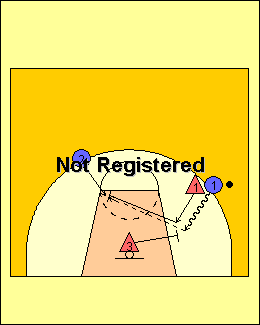
Split-Line Defense 2-on-2 - Close-out the High-Post Receiver, Baseline Drive ================================ D3 starts the drill by yelling 'Split!' to signify that he is on the split-line and ready to help. When he helps, he yells 'Jump!'. O1 drives baseline and D3 jumps to a help position just outside the lane. O2 cuts to the high receivers position just below the foul-line. O1 passes to O2 when stopped by/at D3. D1 stays with O1 until O1 is stopped by D3. He then follows the pass high and closes-out on O2. O2 takes the immediate jump-shot. Points of Emphasis ============== D3 cooperates by not blocking the pass from O1 to O2. O1 cooperates by stopping at D3's trap and making the good pass to O2. D1 must wait until pass is made before attempting the close-out. D3 boxes out O1. D1 does not leave his feet to block O2's jump shot. He must box-out and rebound the shot. |
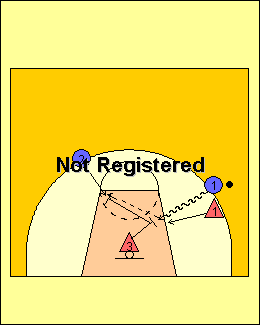
Split-Line Defense 2-on-2 - Close-out the High-Post Receiver, Middle Drive ================================ D3 starts the drill by yelling 'Split!' to signify that he is on the split-line and ready to help. When he helps, he yells 'Jump!'. O1 drives down the middle and D3 jumps to a help position just inside the lane. O2 cuts to the high receivers position just below the foul-line. O1 passes to O2 when stopped by D3. D1 stays with O1. D3 follows the pass high and closes-out on O2 as he is closest and has the best angle. O2 takes the immediate jump-shot. Points of Emphasis ============== D3 cooperates by not blocking the pass from O1 to O2. O1 cooperates by stopping at D3's trap and making the good pass to O2. D3 must wait until pass is made before attempting the close-out. D1 and D3 then box out. |
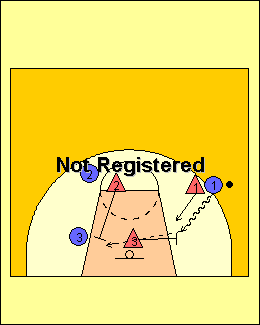
Split-Line Defense 3-on-3 - Close-out the Baseline Receiver ================================ D3 starts the drill by yelling 'Split!' to signify that he is on the split-line and ready to help. O1 drives toward the basket and D3 jumps to a help position just outside the lane and yells 'Jump!' as he moves to stop O1's drive. O2 cuts to the high receivers position just below the foul-line. O1 tries to pass to O3 when stopped by D3. D2 drops to cover O3 and deny the pass. Points of Emphasis ============== D3 cooperates by not blocking the pass from O1 to O3. O1 cooperates by stopping at D3's trap and trying to make the good pass to O3. D2 waits until he sees O1 start to drive before attempting the baseline close-out. D2 must intercept or knock the pass away. |
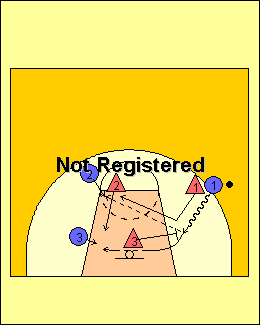
Split-Line Defense 3-on-3 - Close-out the Baseline Receiver ================================ D3 starts the drill by yelling 'Split!' to signify that he is on the split-line and ready to help. O1 drives toward the basket and D3 jumps to a help position just outside the lane and yells 'Jump!' as he moves to stop O1's drive. O2 cuts to the high receivers position just below the foul-line. O1 tries to pass to O2 or O3 when stopped by D3. D2 drops to cover O3 and deny the pass. D1 must recover to O2. Points of Emphasis ============== D3 cooperates by not blocking the pass from O1 to O2 or O3. O1 cooperates by stopping at D3's trap and trying to make the good pass to O2 or O3. D2 waits until he sees O1 start to drive before attempting the baseline close-out. D2 must intercept or knock the pass away. D1 must recover to O2. All box out on the shot. |
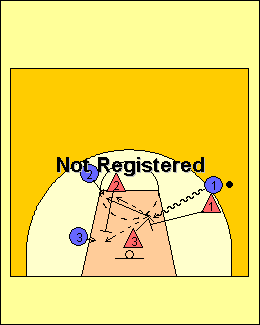
Split-Line Defense 3-on-3 - Close-out All Receivers ================================ D3 starts the drill by yelling 'Split!' to signify that he is on the split-line and ready to help. O1 drives down the middle and D3 jumps to a help position just inside the lane and yells 'Jump!' as he moves to stop O1's drive. O2 cuts to the high receivers position just below the foul-line. O1 tries to pass to O2 or O3 when stopped by D3. D2 drops to cover O3 and deny the pass. D3 closes-out the High-Post Receiver, O2, as he is closest and has the best angle. D1 stays with O1 and boxes out on the shot. Points of Emphasis ============== D3 can cooperate by not blocking the pass at first, but then let them play live. O1 can also cooperate at first by stopping at D3's trap and trying to make the good pass to O3. D2 waits until he sees O1 start to drive before attempting the baseline close-out. D2 must intercept or knock the pass away. D3 must close-out O2 and not leave his feet, but must not leave O1 until the pass has gone. Defense boxes out. Variation: Defense stays on until they recover 3 missed shots / get 3 turn-overs in a row. |
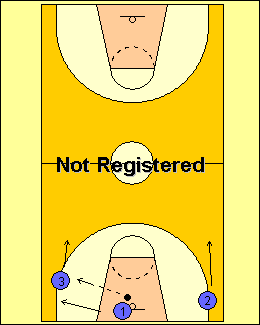
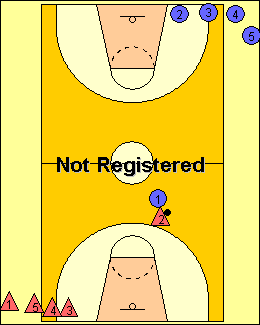
In a weave player 1 passes to player 3 and player 1 runs behind player 3. Player 3 passes to player 2 and player 3 runs behind player 2. Than player 2 passes to player 1 and runs behind player 1 starting the begin situation. |
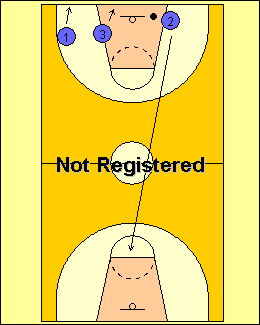
in this case player 2 puts the ball down to the floor. Player 1 and 3 touch the endline and player 3 get the ball. Player 2 sprints back to the opposite bucket. |
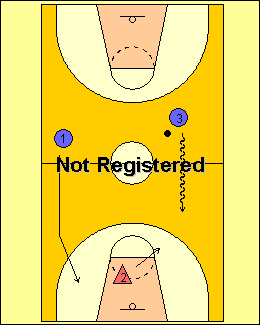
While keeping the court spread. The objective for player 2 is to stop the dribble (and with that the flow of the play) of player 3 |
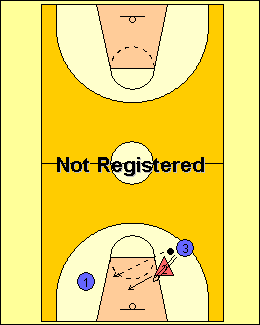
In a two against one the defender falls back to prevent the pass from player 3 to player 1. He does give player 3 the opertunity to take his shot. You can also play this drill halfcourt. |
|
|