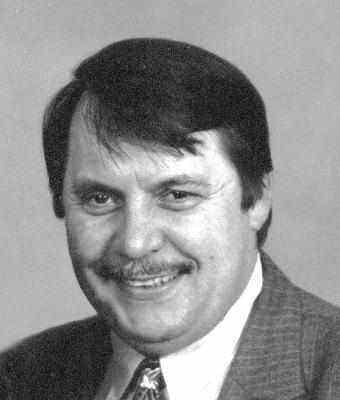
Dr. McClinton scheduled me for exploratory surgery at Union Memorial Hospital in Baltimore. On Thursday, November 15, 2001, 12:30pm, I had the surgery to my right hand (see photo below) to repair the damaged median nerve from the previous CTR. Dr. McClinton performed micro- surgery and re-attached the median nerve. It lasted 3 hours.
On November 20th I had an appointment with Dr. Reginald Davis, a "neurosurgeon" in Baltimore/Lutherville. Dr. Davis [affiliated with Greater Baltimore Medical Center Hospital] said that I should not have had the surgery. But, he was about a week to late, as that appointment was scheduled 2 months before, and that was the only opening available. Anyway, because of the continuous pain, tingling, numbness, pins and needles, throbbing, etc., in both arms/hands, I was referred by Dr. Davis to see [ Howard J. Hoffberg, M.D. ] a "Rehabilitation and Pain Management" doctor, and Dr. A. Lee Dellon, M.D., F.A.C.S. - Institute for Peripheral Surgery, a nerve induction specialist at Union Memorial, to undergo a battery of other tests.
I saw Dr. Hoffberg on Wednesday, December 12, 2001. He deferred a nerve induction test to my hands until after February 2002 in order to allow the recent nerve repair surgery to heal. In the interim he scheduled physical therapy for my shoulder pain.
On Friday, January 25, 2002, I kept my appointment with Dr. Dellon as scheduled. To date nothing has changed, the hand still remains the same even with this new surgery, i.e., continuous pain, tingling, numbness, pins and needles, throbbing, etc., in both arms/hands. Dr. Dellon has now officially documented that I have "a 100% functional occupational loss" in my right hand, and 20% permanent impairment on my left hand.
In February, I again saw Dr. Hoffberg who has concurred with Dr. Dellon's medical assessment, that permanent damage was caused to my hands by Dr. Herron's surgery.
As of August 27, 2002, Dr. McClinton has concluded that "maximum medical improvement" has been reached. And that due to "significant limitations because of pain, stiffness, and numbness in the right hand [it] precludes use of a keyboard in a satisfactory fashion. ... not able to keep up with the required workload... but even more with regards to his job requiring computer usage, he is not able to sense the keys with his middle and ring fingers, and has pain with usage of the hand as well as stiffness and weakness.
Lastly, due to carpal tunnel syndrome in the left hand and ulnar neuropathy at the elbow, we proceeded with operative treatment.
Note: Surgery has not helped...
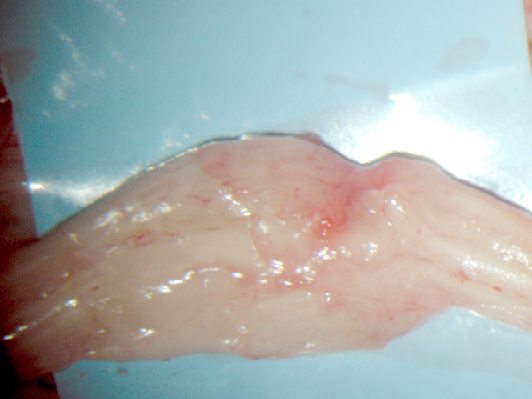
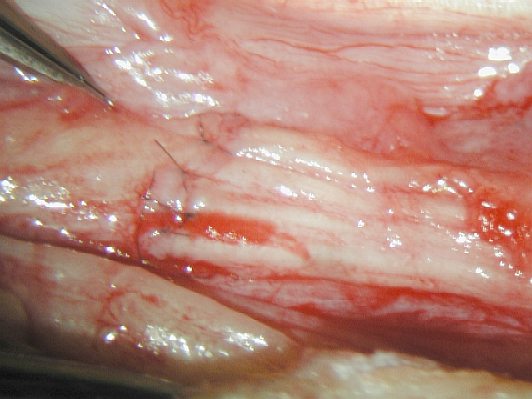
CLICK HERE - Additional images from the CTR surgery
-------- Original Message --------
The section of Dr. Herron's "notes" below shows in part the complete opposite of the actual facts, and mis-represents the truth. In other words, Dr. Herron
has put words in the file what would "protect him" and are not the actual facts as were stated during my visit. The same type of limited text is in the operative report and other
subsequent notes.
I kept telling Dr. Herron that what he had done did not appear to be correct and proper. He then stated that he also was "not
happy with the results" and would therefore refer me to another orthopedic hand surgeon[4] for another evaluation. He also informed me that having numbness, pain, and tingling along the same nerve should not be occurring. I
further believe that the electrodiagnostic nerve conduction tests[5] performed by
Byoung Cho, MD, first confirming my condition as bilateral Carpal Tunnel Syndrome, and now indicating that "the sensory amplitude has improved significantly" has to be a bogus
reading. Because, as I informed him and Dr. Forrest[6],
how can a report show improvement, when I in fact have lost the actual functional use of the fingers on my hand, and also have constant throbbing and pain which does not allow me to
sleep, in addition to all of the other previously described symptons and conditions.
Based on Dr. Herron's referral, I contacted the Orthopaedic and Sports Medicine
Center in Annapolis, MD, and scheduled an appointment with Dr. Jeffrey Gelfand. During the
initial evaluation and discussion on June 2000, Dr. Gelfand stated that it appeared that the damage to the hand / nerves may have been caused by the insertion of the "Indiana tome
tool device."[7] He then proceeded to "prick" me with
several different gauge needles in the fingers to find out if I had feeling in the nerves. After a deep insertion there was feeling and about 20-30 needle puncture marks, with minimal
bleeding. Then upon receiving Dr. Gelfand's report, the written text omitted his initial comments and conclusion. And instead he wrote that "The median nerve does appear to be
intact. However, I am worried that he may have suffered some sort of neuropraxia to the nerve... And this probably represents some sort of vasomotor phenomena...in the hand
such as causalgia."[8] We now know from Dr. McClinton's surgery that the nerve
was in fact damaged. Contrary to Dr. Gelfand's note. And, he totally left out the fact that I am unable to work using my hands, etc., due to the pain, numbess, discomfort, etc. And
although I still have problems with my left hand, everyone seems to discard it as being non-existent. In this case, when the hand continues to show "trauma", it's time to put the "old"
methodology aside and start investigating with a new and meaningful purpose to find out exactly what is wrong; especially when machines are not registering a problem according to
old pre-set "standards."
My agency, the U.S. Office of Personnel Management (OPM), which is just as responsible, had me on a limited work assignment until a "medical
determination" could be established regarding my disability condition, which every doctor from Dr. Herron, to Dr. Gelfand, to Dr. Brushart, M.D. at Johns Hopkins, avoided and did not
properly document. Because I am unable to do my work at the level I used to because of the severed nerve to my hands, I filed for a Disability Retirement in February 2003. The
agency [OPM] made a disability retirement determination which was approved on February 27, 2003, as
the accommodations provided by the Agency were not adequate for the disability. As a result I was forced to retire on disability May 30, 2003. However, the Office of Workers
Compensations Programs (OWCP) refused to place me on the disability rolls as they had indicated they would once I was off the Agency's rolls. Now they claim that because
"reasonable accommodations" were provided that was sufficient not to be placed on the OWCP rolls. I now have to prove that my condition has become worse.
The functional loss and use of my hand, future earnings, mental stress, pain and suffering, loss of consortium, etc., are insurmountable.
Regards,
Ivan Petric
This webpage and any files contained herein are covered by the Electronic Communications Privacy Act, 18 U.S.C. �� 2510-2521. This
information is confidential in nature and intended solely for the use of the individual or entity listed herein. You are requested not to disseminate, distribute or copy this page. Any other
unauthorized use is expressly prohibited.
All Rights Reserved
This document was last updated on:
, 03/10/02
I have summarized the problem caused to my right hand by the surgeon, Bryan R. Herron, MD, as a result of the Carpal Tunnel Release (CTR) surgery he performed on April 6, 2000, and my disability status. As you will notice from the
notes, he did not release me to return to work but also did not complete the forms properly like he should have. Dr. Herron is no longer with the medical firm of Rozran & Spatz
Orthopedics in Prince Frederick, Calvert County, MD. He was practicing with the Chesapeake Orthopaedic &
Sports Medicine Center, in Anne Arundel County, located at 200 Hospital Drive, 2nd Floor, Glen Burnie, MD 21061. But it appears that he has moved again. He is now with
Advance Orthopedic Specialists;
110 Hospital Rd., #204; Prince Frederick, MD 20678; Phone: 410 414 9840; Fax: 410 414 9841.
Note: Chesapeake Orthopaedic is NOT affiliated with the Chesapeake Hand Center in Lutherville, MD.
PETRIC, IVAN (DOB 10/1 1/45) 4/4/00: A 54 year old with carpal tunnel syndrome. He has decided that he is ready for surgical
intervention at this time. He has been scheduled for right carpal tunnel release. He has been explained the risks and benefits of the procedure, understands, accepts the risks and
agrees to proceed. [ Based only on what he said: "Your hand(s) will either be better or no worse off than it is", not what is written on his notes, did I accept to do the procedure.
There was absolutely nothing said that there were would be risks - such as losing the functional use of the hand. ] All of his questions have been answered to his satisfaction. [
This also is not true. I asked him specifically what his success rate was. He stated that everyone on whom he performed surgery all were successful. The only thing that Dr. Herron
guaranteed was that the hand(s) would either be better or no worse off than the current condition, e.g., tingling, pain and needles, and numbness, which was caused due to the
repetitive use of keyboards and mouse. However, nowhere in his notes does any of that information appear. ]
It is of note that Mr. Petric is an analyst. He uses keyboards, has repetitive use activity of bilateral hands in his occupation and has not had
symptoms before the past two years when his amount of hand and wrist activity has increased. There is significant evidence to me that this may [be] work related and an overuse
syndrome. Mr. Petric will follow up for his surgery as scheduled.[1]
In fact, when I actually used my hands to type is when the tingling, pain and needles, numbness and discomfort would occur. Beyond that,
prior to the surgery, my hands were still fully functional. It was after the surgery that I lost the actual functional use of my hand, and all of the problems that I have reported immediately
after the surgery, and since that period are now permanent. Additionally, the only fingers that are not damaged as a result of the CTR were the pinky and the thumb. But when Dr.
Herron wrote what I supposedly said in his notes, he indicated that what I reported was "similar to what he had before surgery but much worse."[2] In fact, that is not the case here because I had the full functional use of my right hand prior to the surgery,
and now after the CTR I do not. Further, when I was being prepped for surgery I informed the anesthesiologist and the hospital staff before-hand, and just prior to the surgery that I
wanted to be conscious during the entire procedure so that I could see exactly what was going on. I was assured that I would only receive a local sedative. But that was not the case. I
was put to sleep, and when I woke up is when I noticed that my hand was not working properly, it felt "totally paralyzed" as it is now, and I informed Dr. Herron of that. I was assured by
Dr. Herron and the Calvert Memorial Hospital medical staff that if was the anesthesia causing the discomfort to my hand, similar to when a dentist gives you a shot of "novocaine"[3] and your mouth is numb.
Spring Hill, FL
352-797-4906 (Phone)
Phone Petition Drive Web
FOOTNOTES
[2]. Dr. Herron's medical notes,
04/11/00.
[3]. Webster's- Etymology: International
Scientific Vocabulary novo- (from Latin novus new) + cocaine, Date: 1906:
also, PROCAINE: its crystalline hydrochloride is used as a
local anesthetic.
[4]. Dr. Herron's
medical notes, 04/25/00.
[5]. Dr. Cho's Nerve Conduction
reports, dated 11/14/00, 06/06/00, and 03/21/00.
[6]. Dr. Forest's Nerve Conduction
Velocity Test, 12/27/00.
[7]. Operative Report, 04/06/00.
[8]. Dr. Gelfand's letter to Dr. Herron,
05/16/00.
